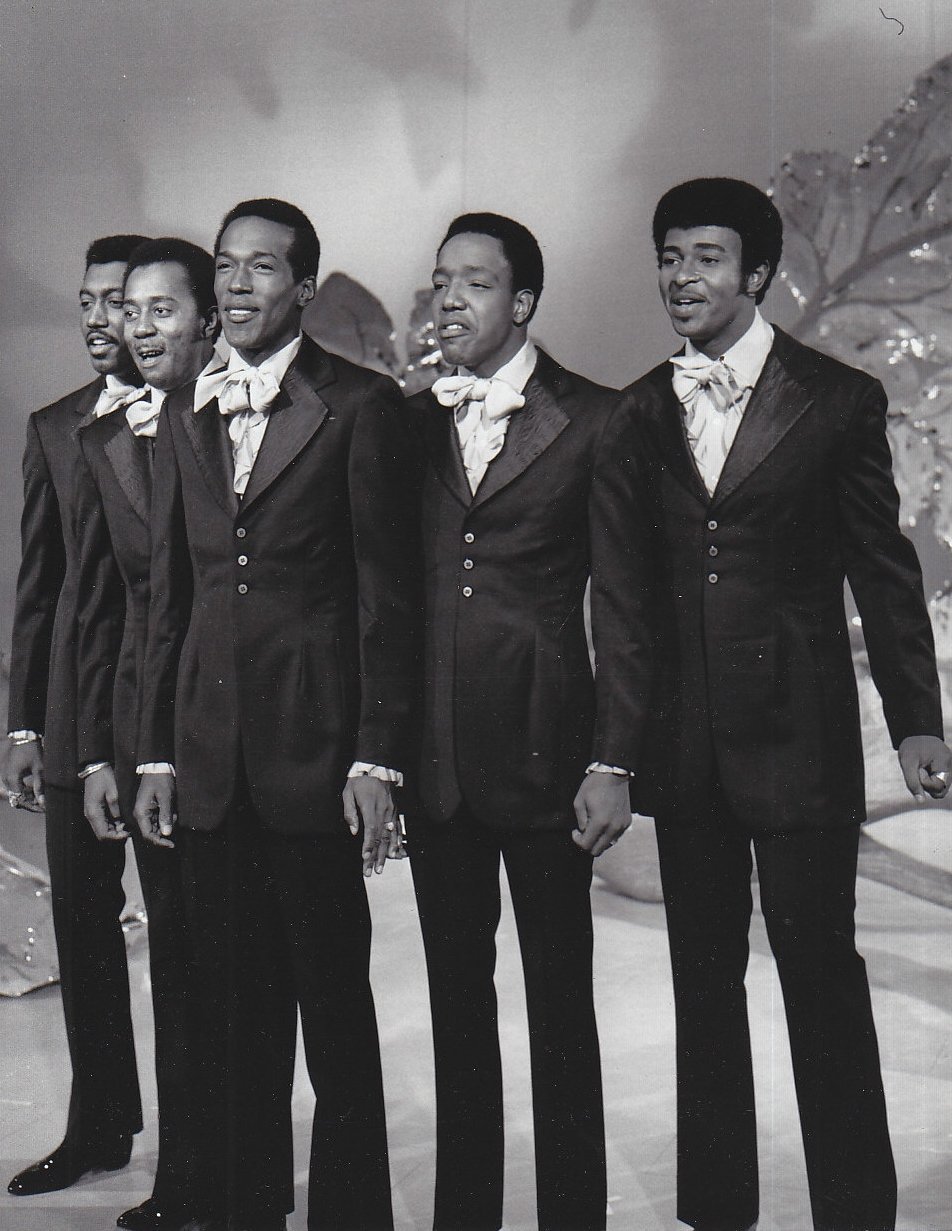
In the summer of 1965, the Temptations were the smoothest hit machine in America. My Girl had taken them to number one that spring, It’s Growing had kept them in the Top 20, and David Ruffin’s grainy, pleading tenor had become the group’s unmistakable signature. Then, in the middle of all that sunshine, they released a record about the sun refusing to shine. Since I Lost My Baby is three minutes of pure undoing: a man watches the birds stop singing, the sun go dark and the river run dry, simply because the woman he loves is gone. It was not the biggest hit Smokey Robinson ever wrote for the group. By his own admission, it was the one he loved the most — and he could never quite say why.
The Song Smokey Set Aside
Robinson wrote the song with his fellow Miracle, Warren “Pete” Moore, the bass singer whose partnership with Smokey quietly powered a whole shelf of Motown classics, from the Miracles’ Ooo Baby Baby and The Tracks of My Tears to the Temptations’ It’s Growing. For the Temptations in 1965, Robinson was far more than a songwriter: he was the group’s producer and architect, the man who had tailored My Girl to Ruffin’s voice and built their pop breakthrough. He had drawers full of material and a producer’s instinct for what would sell. Yet this particular song occupied a different place in his affections.
“There’s something about that tune that I just set it aside,” Robinson told Loraine Alterman of the Detroit Free Press after the record’s release. “It wasn’t the biggest commercially, and I can’t put my finger on what I love about it.” It is a remarkable confession from one of pop’s most calculating craftsmen. Robinson understood hooks the way engineers understand load-bearing walls, but Since I Lost My Baby worked on him at a level below calculation. Listening to the finished record, it is not hard to guess what he heard: a melody that grieves in long, descending lines, a lyric that turns the whole natural world into a metaphor for absence, and a lead singer capable of making devastation sound elegant.
Three Days in May at Hitsville
The Temptations recorded the song at Hitsville U.S.A., Motown’s cramped Detroit headquarters, across three sessions on May 5, 10 and 12, 1965, with Robinson producing and the Funk Brothers — Motown’s peerless house band — providing the track. The arrangement is one of the lushest the group had attempted: where My Girl dances on a bass line and a guitar figure, Since I Lost My Baby moves like a slow tide, strings swelling behind the five voices as Ruffin inventories a world gone wrong. The sun is a jealous guy. The birds are through singing. There is no sun up in the sky, stormy weather — the lyric deliberately echoes the old standard Stormy Weather, folding the great tradition of torch singing into Motown’s bright new pop-soul.
The vocal architecture is the record’s real marvel. Ruffin carries the lead with a vulnerability he rarely got to show on the group’s uptempo hits — this was only the third Temptations single built around his lead voice — but the secret weapon is Melvin Franklin, whose cavernous bass rolls through the record like distant thunder, answering Ruffin and grounding the group’s five-part blend. Eddie Kendricks, Paul Williams and Otis Williams wrap the two leads in harmonies so close they feel like a single breathing instrument. Berry Gordy’s Quality Control department famously demanded records that sounded like hits within seconds; Since I Lost My Baby opens like a sigh and still passes the test, because the blend itself is the hook.
It is worth pausing on how radical the record’s sadness was in context. Motown’s house style in 1965 was buoyancy — even its heartbreak songs, like the Miracles’ Ooo Baby Baby, tended to smile through the pain. Robinson and Moore instead wrote a lyric of total eclipse, in which every pleasant thing in the world has been repossessed by grief: the birds, the sun, the very water in the well. That last image was something of a Moore–Robinson signature; the pair also gave the Temptations an album cut called No More Water in the Well, along with Fading Away, building a small catalogue of songs in which love’s absence dries up nature itself. For a group whose public image was matching suits, precision choreography and smiles, Since I Lost My Baby let the mask slip — beautifully, and on purpose.
Consider, too, the sequence it completed. In the space of seven months, Ruffin had fronted three consecutive singles — My Girl, It’s Growing, Since I Lost My Baby — that between them mapped the whole emotional register the group would trade on for the rest of the decade: devotion, desire and desolation. The Temptations had had lead singers before, fine ones in Kendricks and Paul Williams, but the Ruffin trilogy of 1965 is where the group’s dramatic identity crystallised. Every later Temptations era, from Dennis Edwards’ funk sermons onward, is in dialogue with what those three records established.


A Top 20 Sad Song
Gordy released the single on June 1, 1965, and radio took to the gloom. The record entered the Billboard Hot 100 in late July at No. 68, broke into the Top 40 within a fortnight and climbed steadily through the summer, reaching No. 17 at the end of August and holding there for two weeks during a ten-week chart run that kept it in the listings into the autumn. On Billboard‘s R&B singles chart it peaked at No. 4. Even the B-side had a life of its own: You’ve Got to Earn It, written by Robinson with the group’s guitarist and bandleader Cornelius Grant, charted separately, reaching No. 22 on the R&B list — a small sign of how completely the Temptations had conquered their audience in 1965.
The song anchored The Temptin’ Temptations, the group’s third album, released that November. The LP gathered the year’s harvest — Girl (Why You Wanna Make Me Blue), My Baby, Don’t Look Back — and became the second instalment in an astonishing run of ten consecutive No. 1 albums on Billboard‘s R&B chart, topping the list for five consecutive weeks and returning to the summit more than once as the group and the Miracles traded the position back and forth. In the space of a single calendar year, the Temptations spent 32 weeks at No. 1 on the R&B album chart — a measure of how completely 1965 belonged to them. Context sharpens the achievement: this was the height of the British Invasion, when American acts were being swept from their own charts by the Beatles, the Rolling Stones and the Animals. Motown’s roster, and the Temptations foremost among its male groups, were virtually the only homegrown acts holding the line — and they were holding it, in part, with a ballad about watching the sun go out.
The Long Afterlife of a Sad Song
Most Motown hits of 1965 stayed in 1965. Since I Lost My Baby kept travelling. Its most devoted champion turned out to be Luther Vandross, who revived the song on his 1982 album Forever, For Always, For Love and released it as a single in 1983, taking it to No. 17 on the R&B chart — a new generation’s smoothest balladeer reaching back to certify the record as a standard. Vandross, who had studied the Motown catalogue the way seminarians study scripture, understood exactly what Robinson had heard: a composition sturdy enough to survive any era’s production style.
Within the Temptations’ own story, the song marks the moment the group’s range came into focus. My Girl proved they could embody romance; Since I Lost My Baby proved they could embody its collapse, with the same five voices, the same choreography-sharp precision, and a producer who trusted melancholy to sell. It also stands as the high-water mark of the Robinson–Moore writing partnership for the group, and as the bridge between the sweet soul of the Sing Smokey era and the harder, Norman Whitfield-produced records that would soon remake the Temptations entirely. Robinson could not put his finger on what he loved about it. Sixty years of singers covering it suggest he never needed to.
There is one more measure of the song’s quiet stature. Robinson wrote or co-wrote hundreds of songs, including certified standards — The Tracks of My Tears, Ooo Baby Baby, My Guy, My Girl itself — yet when he talked about his own catalogue, it was this modest No. 17 single he singled out as a personal favourite, the tune he had “set aside” from all the others. Songwriters are usually the worst judges of their own work, blinded by the hits. Robinson’s affection suggests the opposite: that he recognised in Since I Lost My Baby the purest distillation of what he and Moore did together — a melody of genuine sorrow, carried by five voices who could make even despair sound like harmony. The Temptations would go on to bigger, louder and more decorated records. They rarely made a more beautiful one.