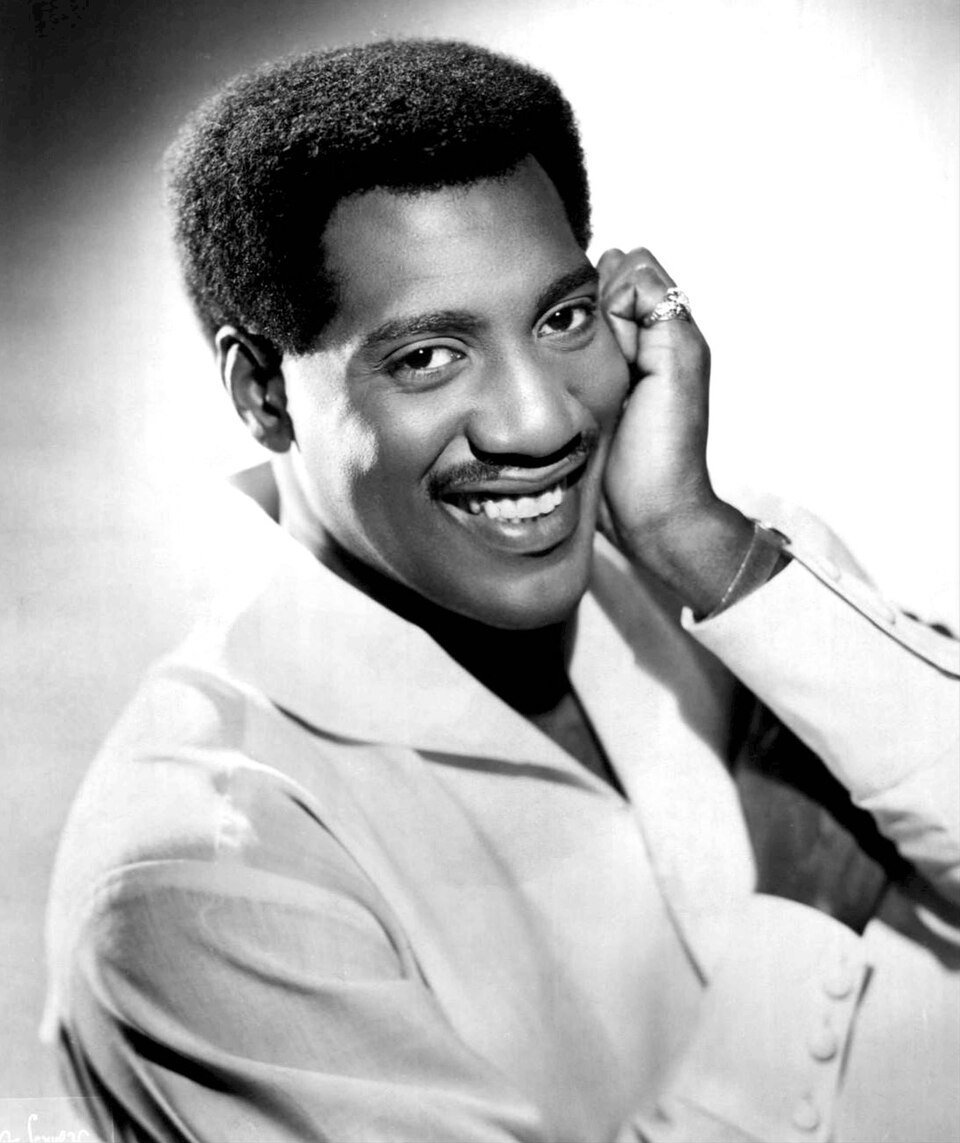
Artist collection / Soul · Stax · Memphis
Otis Redding: Biography, Essential Albums & Ten Listening Stories
The gravel-voiced Georgian who gave soul music its heartbeat — and vanished at its height.

The voice that put Memphis on the map
Otis Redding was born on September 9, 1941, in Dawson, Georgia, and raised in Macon — a town where the church choir, the talent contest and the juke joint were three doors into the same room. He sang in church as a boy, played drums and piano as a teenager, and learned his trade the hard way: gospel quartets, local talent shows, touring R&B bands, the endless apprenticeship of the Southern road.
That apprenticeship brought him to guitarist Johnny Jenkins and the Pinetoppers, where Redding served as singer, occasional chauffeur and full-time hustler. In October 1962 he drove Jenkins to Memphis for a session at Stax Records, the small, scrappy label fast becoming the headquarters of Southern soul. The Jenkins session fizzled. In the studio time left over at the end of it, with the house band hanging around, Redding cut two of his own songs. One was a loose R&B rave-up; the other was a self-written ballad called “These Arms of Mine.” Stax signed him to its Volt subsidiary on the strength of it. Released in October 1962, the single reached No. 20 on the R&B chart and sold in the hundreds of thousands — not a smash, but proof that a major new voice had arrived and that Stax had found its man.
What followed was one of the most concentrated runs in American music. Working with the Stax house band — Booker T. & the M.G.’s, and above all the guitarist and co-writer Steve Cropper — Redding cut a string of records that defined Southern soul. The albums came fast: Pain in My Heart (1964), The Great Otis Redding Sings Soul Ballads (1965), Otis Blue: Otis Redding Sings Soul (1965), The Soul Album (1966), Complete & Unbelievable: The Otis Redding Dictionary of Soul (1966) and the galvanizing Live in Europe (1967). The voice at the center of them was like nothing else on record — gravelly and pleading at once, capable of a whisper that hit like a shout and a shout that felt like a confession.

Redding was not only a singer but a songwriter of real craft. He wrote “Respect” as a working man’s plea for dignity at home; he wrote the ferocious “I Can’t Turn You Loose”; and with Cropper he wrote “Mr. Pitiful,” turning a disc jockey’s teasing nickname into a dance-floor groove. His ballads — “These Arms of Mine,” “I’ve Been Loving You Too Long,” “That’s How Strong My Love Is” — moved between the church and the bedroom with total conviction. And he was a performer of legendary intensity, the kind of singer who could walk onto any stage and take the room within a song.
In June 1967 he did exactly that on the biggest stage of his life. At the Monterey Pop Festival, playing to a rock audience that had largely never seen him, Redding delivered a short, seismic set — “Shake,” “Respect,” “I’ve Been Loving You Too Long,” “Satisfaction,” “Try a Little Tenderness” — and converted thousands in a single evening. He had crossed over without compromising an inch.
The final chapter came with terrible speed. In August 1967, resting on a houseboat in Sausalito, California, Redding began writing a new song with Cropper — a reflective, almost folk-tinged number called “(Sittin’ On) The Dock of the Bay.” They cut it at Stax on November 22 and again on December 7, 1967. Three days later, on December 10, Redding’s plane crashed into Lake Monona near Madison, Wisconsin. He was 26. Members of his backing band, the Bar-Kays, died with him; trumpeter Ben Cauley was the sole survivor.
“Dock of the Bay,” released on January 8, 1968, became the first posthumous No. 1 single in American history — a quiet, whistled farewell that somehow sounded like a greeting. Redding had been recording for barely five years. In that time he made himself, by near-universal acclaim, the greatest soul singer of his generation.
This collection is a listening route through those five years: ten stories, from the 1962 debut that started it all to the unfinished masterpiece that closed it. Listen for the voice’s two engines — the gravel and the pleading — and for a singer who never wasted a note.
Follow the years
Ten stories to start with
He wrote it as a man’s plea from the road — then Aretha made it hers. Hear what his version does that hers doesn’t.
02 / 1966 / Behind the SongsTry a Little Tenderness: The Slow Build That Became a DetonationA 1930s ballad reimagined as a masterclass in dynamic control — listen to the exact moment it ignites.
03 / 1965 / Behind the SongsI’ve Been Loving You Too Long: The Apology as ArchitectureA stop-start ballad built like a confession — and the Monterey performance that sealed it.
04 / 1968 / Behind the Songs(Sittin’ On) The Dock of the Bay: The Whistle He Meant to ReplaceThe unfinished farewell: a placeholder whistle, waves added after his death, and America’s first posthumous No. 1.
05 / 1962 / Behind the SongsThese Arms of Mine: The First Take That Was Almost the LastRecorded in borrowed studio time after another man’s session flopped — and it made him.
06 / 1964 / Behind the SongsMr. Pitiful: The Nickname He Turned Into a GrooveA Memphis DJ teased him for sounding pitiful. He and Steve Cropper answered with a hit.
07 / 1964 / Behind the SongsThat’s How Strong My Love Is: The Ballad the Stones Couldn’t ResistWhy the world’s biggest rock band — and generations of singers — keep returning to this two-minute prayer.
08 / 1965 / Behind the SongsI Can’t Turn You Loose: The Concert Opener That Ate the ShowThe riff that opened every Otis Redding show — and warned the room what was coming.
09 / 1965 / Behind the SongsShake: The Cover That Outshouted the OriginalSam Cooke’s song, recorded the year after Cooke’s death — a tribute delivered in sweat.
10 / 1968 / Behind the SongsHard to Handle: The Studio Leftover That Rocked a GenerationCut in 1967, released after his death — then the Dead and the Black Crowes gave it a second life.
(Sittin’ On) The Dock of the Bay / Stax Records ↗
(Sittin’ On) The Dock of the Bay / recording background ↗
Past Tunes’ listening notes are original editorial interpretation. Release years refer to the particular album or recording identified in each article.