Artist collection / Pop · 1960s · Comeback
Tom Jones: Biography, Essential Albums & Ten Listening Stories
The voice that refused to belong to any single decade.
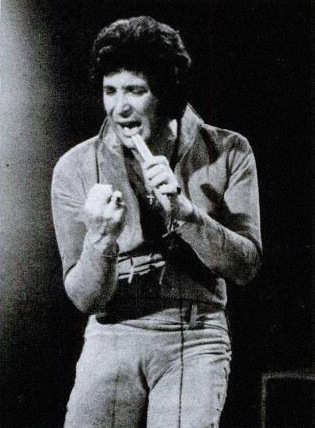
A voice worth returning to
Tom Jones was born on June 7, 1940, in Pontypridd, Wales. Few voices in popular music announce themselves as completely as his: a baritone of operatic weight and gospel fire, able to croon a ballad one minute and roar through a showstopper the next. It is a voice that has now been recording for more than six decades, and it has never really belonged to one era. Jones has simply kept singing, and each generation has found a reason to listen.
The breakthrough came in 1965, in a rush. “It’s Not Unusual,” a song originally intended for Sandie Shaw, became a UK number one, and Jones was named Grammy Best New Artist for 1965. Almost immediately, film studios came calling: in the same year he sang the theme to Woody Allen’s comedy What’s New Pussycat? and the title song of the James Bond film Thunderball. Three hits in twelve months would be a career for most singers. For Jones, it was the overture.
The late 1960s and early 1970s brought the songs that made him a household name on both sides of the Atlantic: “Green, Green Grass of Home,” which spent seven weeks at UK number one; “I’ll Never Fall in Love Again”; “Delilah,” the murder ballad that crowds still sing at Welsh rugby matches; and “She’s a Lady,” Paul Anka’s rewrite that carried Jones to number two in America in 1971. Listen across these records and you hear a singer who treats every song as a small piece of theatre — the vowels are huge, the climaxes are total, and the restraint, when he uses it, is always a choice.

Careers like that usually fade in the late 1970s. Jones’s simply changed shape. After a quieter decade he returned in 1987 with “A Boy From Nowhere,” and in 1988 his cover of Prince’s “Kiss,” recorded with the Art of Noise, reached number five in the UK and introduced him to an entirely new audience. Then came 1999’s Reload, an album of duets with a younger generation — the Cardigans, Robbie Williams, Portishead — and “Sex Bomb,” which became one of the biggest singles of his career. In later years he stripped the sound right back on albums like Praise & Blame (2010) and became a familiar mentor figure on television’s The Voice UK. The through line is always the same instrument: that voice, unmistakable at a hundred paces.
This collection follows the voice through its most telling records. It begins with the 1965 explosion, spends time with the great 1960s singles, and ends with the two reinventions that proved the voice could live anywhere — in synth-pop and in the dance charts. Listen for the moments when Jones pulls back instead of pushing forward: the quiet verses make the big notes feel enormous, and that contrast is the whole art of him.
Follow the years
Ten stories to start with
The song written for Sandie Shaw that its demo singer refused to give up.
02 / 1965 / Behind the SongsWhat’s New Pussycat?: The Film Theme That Became a SignatureBacharach and David wrote it for a movie; Jones made it his calling card.
03 / 1965 / Behind the SongsThunderball: Singing the Longest Note in Bond HistoryThe title song, the final note, and the legend that grew around it.
04 / 1966 / Behind the SongsGreen, Green Grass of Home: The Country Song That Crossed the AtlanticA condemned man’s dream, sung by a Welshman, loved by millions.
05 / 1967 / Behind the SongsI’ll Never Fall in Love Again: Heartbreak at Full VolumeWhen Jones whispers, the heartbreak lands harder than any shout.
06 / 1968 / Behind the SongsDelilah: The Murder Ballad You Can Dance ToThe darkest lyric of his career — and the one crowds sing loudest.
07 / 1970 / Behind the SongsDaughter of Darkness: The Sequel That Out-Shouts DelilahLes Reed and Barry Mason turn the drama up past eleven.
08 / 1971 / Behind the SongsShe’s a Lady: Paul Anka’s Rewrite, Tom Jones’s Comeback StatementA discarded song, rewritten for him, becomes his American peak.
09 / 1988 / Behind the SongsKiss: How Prince’s Minimalist Funk Gave Tom Jones a Second CareerThe Art of Noise, a television performance, and a reinvention.
10 / 2000 / Behind the SongsSex Bomb: The Reload Reinvention at 59A dance record that proved the voice could live anywhere.
Artist biography and career timeline ↗
Biography and discography reference ↗
Past Tunes’ listening notes are original editorial interpretation. Release years refer to the particular album or recording identified in each article.