It begins with a single guitar, patient and unadorned, and then a voice that sounds like it is confessing and forgiving at the same time. “I never meant to cause you any sorrow.” When Prince released “Purple Rain” in 1984, it did not sound like anything else on the radio, because it was not really one kind of song at all. It was a rock ballad with a gospel heart, an orchestral swell, and a guitar solo that seemed to go on until it ran out of grief. It became the song that defined Prince to the world, the closing statement of the album and film that made him a superstar, and one of the most beloved recordings of the decade. And it began, improbably enough, as a country song that another star was too intimidated to touch.
To understand why the song mattered so much, you have to understand where Prince stood in 1983. He was not an unknown, and he was not yet the icon the world would remember. He had been releasing albums since 1978, building a reputation as a one-man studio prodigy who played nearly every instrument himself and wrote songs that mixed funk, rock, R&B, and new wave with an audacity nobody else attempted. His 1982 album 1999 had been his breakthrough, producing the hits “Little Red Corvette” and “1999” and carrying him onto pop radio and MTV in a way his earlier records had not. He was a star, but a particular kind of star: brilliant, provocative, and still waiting for the one record that would make him undeniable to everyone at once. In 1983, he was already planning that record, and it would not be just an album. It would be a film, a soundtrack, and a coronation, all at once.
The song at the center of that plan started in an unlikely place. Prince first conceived “Purple Rain” as a country song, and he intended it as a collaboration with Stevie Nicks of Fleetwood Mac. According to Nicks, Prince sent her a ten-minute instrumental version of the song and asked her to write the lyrics. She listened to it and felt overwhelmed. She later said she called him back and told him she could not do it, that it was too much for her. The demo, she said, stayed with her, but the collaboration never happened. Prince, characteristically, did not abandon the song. He took it to his own band instead, and that decision changed everything about it.
At a rehearsal, Prince asked the Revolution to try the song, telling them he wanted to try something mellow before they went home. His backing band at the time included keyboardist Lisa Coleman and guitarist Wendy Melvoin, who had only recently joined the group. According to Coleman, the song transformed the moment Melvoin began playing guitar chords to accompany it. Prince was excited to hear the song voiced differently, Coleman recalled, because Melvoin’s chords took it out of its country feeling. The band then started playing the song harder and taking it more seriously, and they played it for six hours straight. By the end of that day, they had mostly written and arranged it. What had begun as a gentle country tune had become something bigger: a slow-building epic that moved from a whisper to a storm, with room in it for a gospel choir’s swell, a rock band’s power, and a guitar hero’s solo.
Prince was, by some accounts, a little worried about one thing. The melody, he feared, might sound too much like Journey’s “Faithfully,” the piano ballad that had been a hit for that band the year before. He went so far as to telephone Jonathan Cain, Journey’s keyboardist, and play him the song to ask whether he thought it was too similar. Cain, by all accounts, reassured him. The two songs share a certain ballad DNA, but “Purple Rain” was already becoming something else entirely, something that belonged to no one but Prince.
The recording that the world knows was not made in a studio at all, at least not at first. It was captured live, on August 3, 1983, at the First Avenue nightclub in Minneapolis, Prince’s home base, during a benefit concert for the Minnesota Dance Theatre. That night was a landmark for the band in its own right: it was Wendy Melvoin’s live debut with the Revolution, and she was just nineteen years old. The concert was recorded by David Rivkin, also known as David Z, using a mobile recording unit brought in from the Record Plant in New York. Three songs from that night, “Purple Rain” among them, along with “I Would Die 4 U” and “Baby I’m a Star,” would end up on the finished album. Prince later added overdubs at Sunset Sound in Los Angeles between August and September 1983, and he edited the recording down, cutting a guitar solo and a third verse to bring the song from over eleven minutes to about eight and a half. Lisa Coleman created the string arrangement that was overdubbed onto the track in Los Angeles, giving the song its orchestral lift. The result sounds live in the best sense: you can feel a room in it, an audience holding its breath, and then a band deciding, together, to let go.
That sense of a live performance was not an accident, because the song was written to be performed in a film. Purple Rain, the movie, released in July 1984, was a semi-autobiographical drama starring Prince as a young Minneapolis musician known only as the Kid, struggling with a violent home life, a rivalry with another band, and a romance with a singer named Apollonia. The film’s director, Albert Magnoli, had been searching for the right song for the story’s emotional climax, and when he heard the First Avenue performance, he knew he had found it. In the film, the song arrives at the moment the Kid stops imitating everyone else and finally plays from his own heart. It is the performance that wins over the club, the girl, and the audience, and it works on screen for exactly the reason it works on record: it feels like a man dropping every defense he has.
The album Purple Rain was released on June 25, 1984, about a month before the film, and it was an immediate phenomenon. It spent twenty-four consecutive weeks at number one on the Billboard 200 and remained on that chart for a total of 167 weeks, eventually selling an estimated twenty-five million copies worldwide. Its first two singles, “When Doves Cry” and “Let’s Go Crazy,” both reached number one on the Billboard Hot 100. “Purple Rain” followed as the third single on September 26, 1984, edited down from its album length of more than eight minutes to about four minutes for radio. It entered the Hot 100 at number twenty-eight and climbed to number two, where it stayed for two weeks in November 1984, kept from the top spot only by Wham!’s “Wake Me Up Before You Go-Go.” It reached number one on the Cash Box chart and topped the charts in Belgium and the Netherlands. For a time in 1984, Prince held the number one album, the number one single, and the number one film in America at the same time, a feat previously achieved only by Elvis Presley and the Beatles.
The awards followed the success. At the 1985 Grammy Awards, Prince and the Revolution won Best Rock Performance by a Duo or Group with Vocal and Best Score Soundtrack for Visual Media for Purple Rain, and the album was nominated for Album of the Year. The film won Prince his only Academy Award, for Best Original Song Score. The album was later inducted into the Grammy Hall of Fame and added to the Library of Congress’s National Recording Registry, and it regularly appears on lists of the greatest albums ever made, including Rolling Stone’s ranking of the 500 greatest albums of all time.
The film itself became part of the phenomenon. Released on July 27, 1984, Purple Rain grossed more than sixty-eight million dollars worldwide on a production budget of roughly seven million, and its soundtrack had already sold two and a half million copies in America before the movie even reached theaters, largely on the strength of “When Doves Cry.” The title song’s job in all of this was unique: it was not the song that sold the project, but the song that justified it, the moment when the story’s emotion finally caught up with its spectacle.
Musically, the song earns that climax by refusing to hurry. Written in the key of B-flat major, it opens with a lone electric guitar, soon joined by piano and drums in a way that feels almost spiritual, and then it grows in stages, each section a little larger than the last. The verses are restrained, almost conversational, as if the singer is working up the courage to say what he means. The chorus opens the song up, the strings lift it, and the long closing guitar solo releases everything the verses held back. It is a power ballad that borrows from rock, R&B, gospel, and orchestral music without ever sounding like a patchwork, because every element serves the same feeling: regret turning, slowly, into resolve.
But the song’s real legacy is not in its trophies. It is in how it has refused to belong to 1984 alone. Prince performed it for the rest of his life, and its most famous later performance came at the Super Bowl in 2007, when he played it in a downpour in Miami, in the rain, in a purple suit, turning the weather itself into part of the show. After his death in April 2016, the song surged back onto the charts around the world, returning to the top five of the Billboard Hot 100 as millions of people reached for the same recording to say goodbye. Decades later, it found yet another audience when it soundtracked the finale of the television series Stranger Things, sending it back onto the Hot 100 more than forty years after its release. Few songs have been asked to carry that much weight, across that many generations, and fewer still have managed it.
Part of the reason is that the song is built to hold contradictions. It is a love song and an apology, a prayer and a rock anthem. Its title image, purple rain, has been interpreted many ways over the years; Coleman herself has said it means a new beginning. The music does the same work as the lyric: it starts small, with a guitar and a voice, and then it grows, adding piano, drums, strings, and a choir of backing voices, until Prince’s guitar solo takes over and says everything the words cannot. That solo is the song’s final argument, and it is why the record still stops rooms. It is not showing off. It is letting go.
There is also something quietly radical in how the song was made. Prince, the most famous control freak in pop, a man who built his early career playing every instrument himself, let this song become a band’s song. Wendy Melvoin’s chords changed its character. Lisa Coleman’s strings lifted it. The Revolution’s live performance, in a Minneapolis club on a summer night, became the foundation of the record. The song that made Prince a solo legend was, in the end, a collaboration, and it is better for it. It sounds like a group of people discovering something together, in real time, and that is exactly what it was.
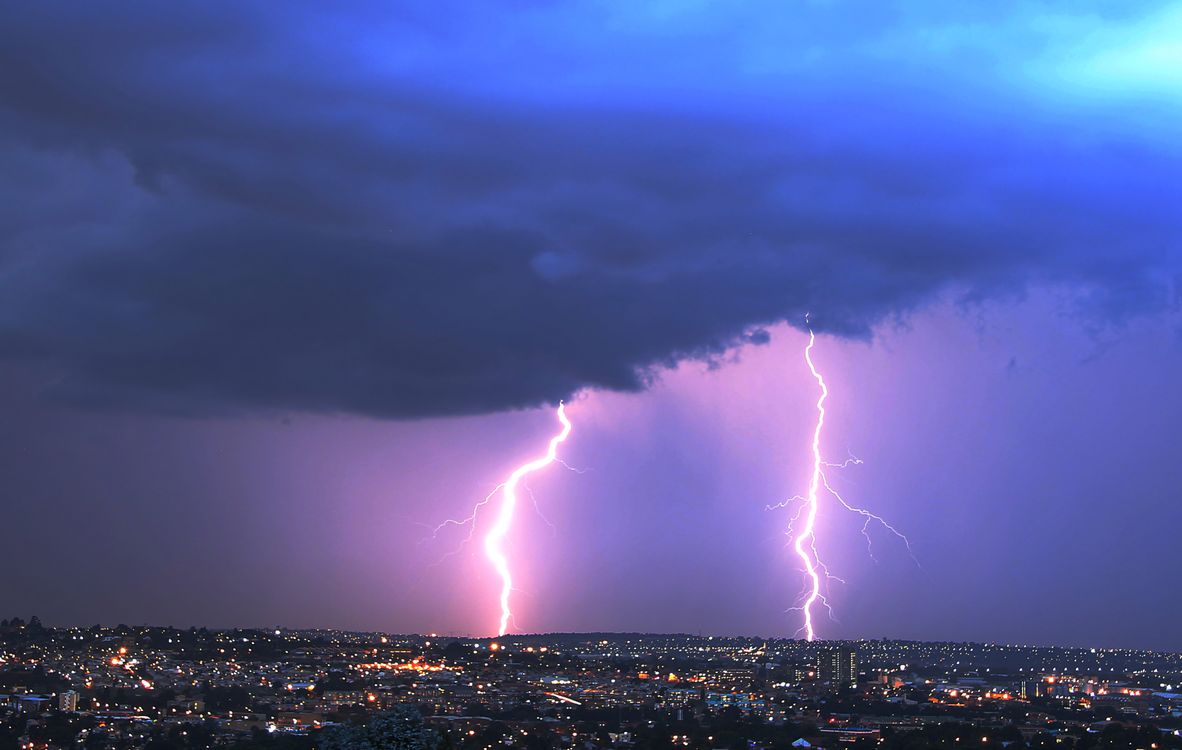
That is why “Purple Rain” endures while so many other hits of 1984 have faded into nostalgia. It is not a period piece. It is a piece of music about the moment when a person stops performing and starts telling the truth, and that moment never goes out of date. It began as a country song nobody wanted, became a six-hour rehearsal, became a live recording in a club, became the climax of a film, and became the song the whole world sings when it needs to grieve, to forgive, or simply to feel less alone. Forty years later, it still sounds like weather arriving: slow at first, then all at once, and impossible to ignore.
Watch the video below and listen for the moment the guitar takes over. It is the sound of a star becoming a legend, in real time.