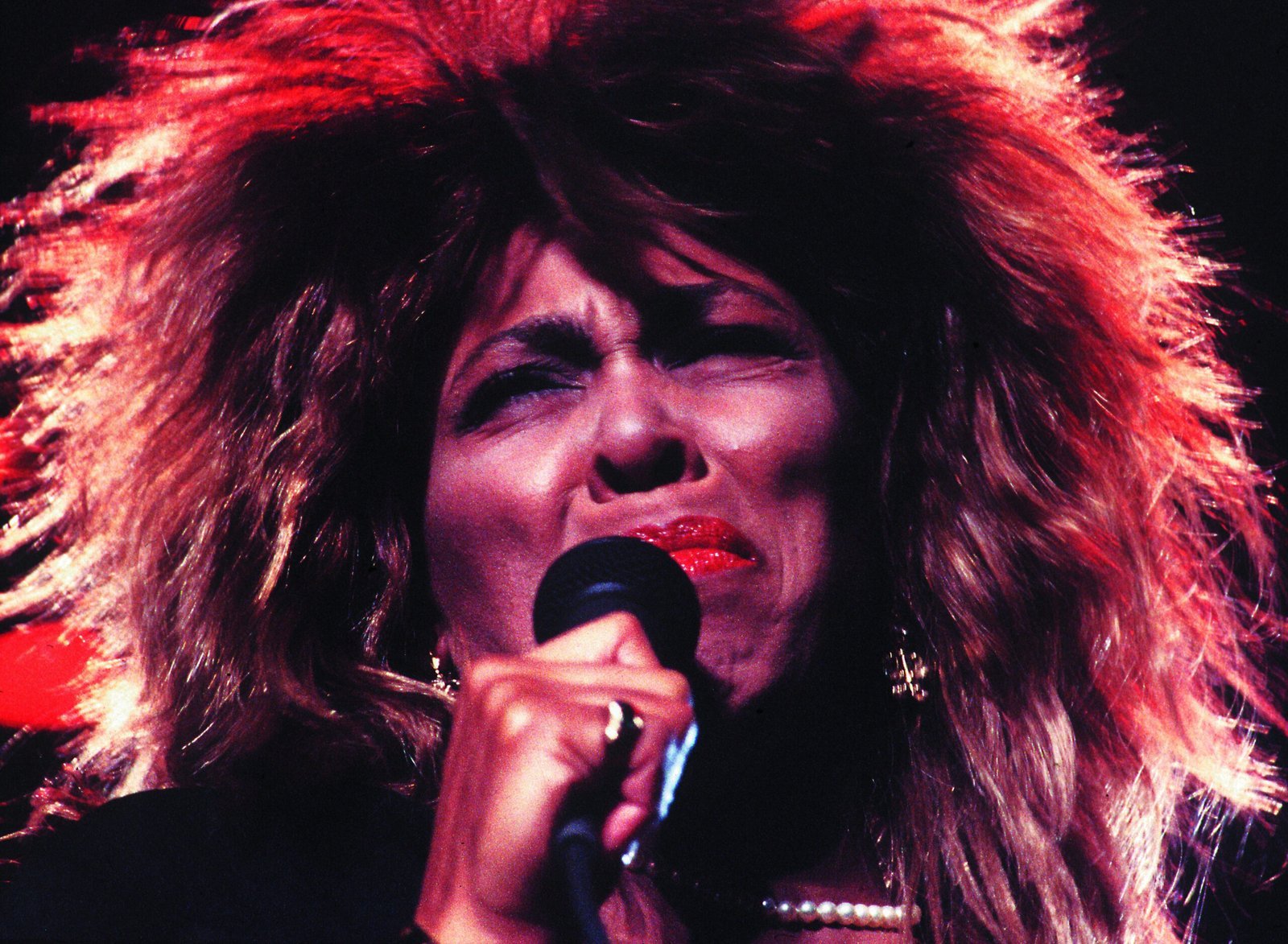

It begins with a guitar figure so light it barely touches the ground, a synthesizer sigh, and then a voice that sounds like it has seen everything and is not impressed by any of it. “You must understand, though the touch of your hand makes my pulse react.” When Tina Turner sang “What’s Love Got to Do with It” in 1984, she was 44 years old, a woman the music business had written off as a nostalgia act, singing a song she had not wanted to record, written by two men she had never met, that had already been turned down by half the pop world. It became the biggest hit of her life, her first and only solo number one in America, and the defining record of one of the greatest comebacks in music history. The song is cool where Turner had always been hot, skeptical where she had always been ecstatic, and that distance is exactly why it worked. It sounded like a woman who had survived love and was no longer going to be fooled by it, because the woman singing it had.
To understand why the record mattered, you have to understand how far Tina Turner had fallen. Born Anna Mae Bullock in Nutbush, Tennessee, in 1939, she had become famous as half of the Ike & Tina Turner Revue, one of the most electrifying live acts in American music, with hits through the 1960s and early 1970s including their volcanic version of “Proud Mary.” But the fame came at a terrible price. Behind the stage act, her marriage to Ike Turner was violent and controlling, and in July 1976, while the Revue was on tour in Dallas, she walked out after a fight in the car on the way to their hotel, with almost nothing but the clothes she was wearing. When the divorce was finalized in 1978, she kept just one thing of value: her stage name. She also inherited debts from cancelled shows, and she spent the years that followed paying them off the only way she knew how, singing in hotel ballrooms, cabarets, and small clubs, and appearing on television variety shows, a former star doing disco covers to stay afloat. Her solo albums of the period, Rough in 1978 and Love Explosion in 1979, failed to chart, and she lost her American recording contract. By the early 1980s, she was widely regarded as a nostalgia act, a great voice from another era with nowhere left to go.
The turnaround began with a manager who saw something else. Roger Davies, a young Australian working in the American music business, met Turner around 1980 and, after watching her play two shows a night in a San Francisco hotel room where the dinner crowd barely looked up, agreed to manage her anyway. Davies rebuilt her show from scratch, replacing her band, stripping away the Las Vegas gloss, and turning her back into the raw rock-and-roll singer she had always wanted to be. He booked her into cool rooms like the Ritz in New York, where a younger, hipper audience could discover her, and he worked to establish her in Britain, where audiences had always been more loyal to her than American radio had. The first crack in the wall came in 1982, when the British electronic group B.E.F., the side project of Heaven 17’s Martyn Ware and Ian Craig Marsh, invited her to sing on their album Music of Quality and Distinction. Her version of the Temptations’ “Ball of Confusion” reminded people what that voice could do, and when Ware and Marsh produced her cover of Al Green’s “Let’s Stay Together” in 1983, it became a genuine hit, reaching number six in Britain, topping the American dance chart, and reaching the American Top 30. Capitol Records, which had watched all of this happen from the sidelines, finally signed her and rushed her into studios in London to make a full album, with four different production teams working across its tracks. That album was Private Dancer, released in May 1984.
The song that would define it had already lived several lives before Turner ever heard it. It was written by two British songwriters, Terry Britten and Graham Lyle, and it was offered around the industry like a parcel nobody wanted to keep. Cliff Richard turned it down. Phyllis Hyman wanted to record it, but the head of her label, Arista’s Clive Davis, would not allow it. Donna Summer sat with it for a couple of years and never recorded it. The British pop group Bucks Fizz actually did record it in February 1984, but their producer decided it was unsuitable for a female lead vocal, so it was cut with a male singer, Bobby G, and then shelved when Turner’s version came out first; the Bucks Fizz recording did not surface until 2000. When Davies asked Britten for songs for Turner’s new album, Britten offered “What’s Love Got to Do with It” among others, and Turner, hearing the demo, hated it. She thought it was too pop for her, too smooth, too lightweight for a singer who thought of herself as a rock-and-roll woman. Davies, who was convinced it would be a hit, pressed her to at least meet Britten, and the two of them went to Mayfair Studios in London, where Britten sat down with a guitar and played the melody for her in person. She began to come around, though she still did not quite know how to sing it or what it was really about. Britten, who also produced the track, reworked the arrangement with her, slowing it down and giving it a spacious, reggae-inflected beat that let her vocal breathe instead of fighting the melody. The coolness of the track, which had put her off, became its secret weapon: instead of overpowering the song, she sang inside it, dry, wry, and controlled, and the restraint made every word land harder.
What she was singing, after all, was a lyric that suited her life with an almost eerie precision. “What’s Love Got to Do with It” treats love not as a grand romantic force but as a second-hand emotion, a sweet old-fashioned notion, something that gets in the way of a clear-eyed physical attraction. For a singer who had just escaped a marriage in which love had been used as a chain, the skepticism was not a pose. It was autobiography set to a pop melody, and audiences heard it. The record’s sleek, synth-led production was a deliberate break from the rhythm-and-blues sound of her years with Ike, and it placed her squarely in the middle of 1984 pop radio, where she had never been before. The video helped just as much. Directed by Mark Robinson and filmed on the streets of New York in the spring of 1984, it showed Turner strutting down a sidewalk in a leather miniskirt, high heels, and a denim jacket, all legs and attitude, trading glances with street dancers and staring straight down the camera. MTV put it into heavy rotation, and for a generation of viewers who had never seen the Ike & Tina Revue, this was their introduction: not a nostalgia act, but a 44-year-old sex symbol who looked like she owned the street she was walking down.
The charts did the rest, slowly and then all at once. Released as a single in May 1984, “What’s Love Got to Do with It” entered the Billboard Hot 100 on May 19 at number 92 and climbed steadily through the summer, week after week, until on September 1, 1984, it reached number one, where it stayed for three weeks. It was Turner’s first and only solo number one in the United States, and at 44 she became, at the time, the oldest solo female artist ever to top the Hot 100. It spent five weeks at number two on the Hot Black Singles chart, held off the top only by Prince’s “When Doves Cry,” the same record that beat it to the title of Billboard’s biggest single of 1984, where Turner’s song finished second. It was number one in Australia and Canada, number three in Britain and New Zealand, and a top-five hit across much of Europe, and it sold more than two million copies worldwide. Private Dancer rode it to number three on the American album chart, eventually selling more than twelve million copies worldwide, and it kept producing hits: “Better Be Good to Me” reached number five in America and the title track, written by Mark Knopfler of Dire Straits, reached number seven. The comeback was no longer a story about one song. It was a career, rebuilt in full.
The industry’s verdict arrived in February 1985 at the 27th Annual Grammy Awards, where “What’s Love Got to Do with It” won three of the night’s biggest prizes: Record of the Year, Song of the Year, and Best Female Pop Vocal Performance. The video won Best Female Video at the MTV Video Music Awards the same year, and in 2012 the song was inducted into the Grammy Hall of Fame. Turner herself went on to win twelve Grammy Awards in total, across pop, rock, and rhythm-and-blues categories, a breadth no other woman has matched, and she was inducted into the Rock and Roll Hall of Fame twice, once with Ike and once alone. But the song’s legacy is bigger than its trophies. In 1993, its title became the title of the film of her life, What’s Love Got to Do with It, with Angela Bassett earning an Oscar nomination for playing her, and the phrase entered the language as shorthand for clear-eyed independence. In 2020, the Private Dancer album was selected for the Library of Congress National Recording Registry as culturally, historically, or aesthetically significant. And the song itself never left the radio, the wedding dance floor, or the karaoke bar, because its question has never stopped being asked.
The song kept finding new audiences long after its chart run. Rolling Stone later placed it at number 134 on its updated list of the 500 Greatest Songs of All Time, praising the way Turner infused every word with heartache and pain drawn from her real life. In 2020, a remix by the Norwegian DJ Kygo carried the song to a new generation of listeners, nearly four decades after the original. And when Turner died in May 2023 at the age of 83, obituaries around the world led with it, the cool, skeptical question that had become her signature, the record that turned a written-off cabaret singer into the Queen of Rock ‘n’ Roll all over again.
There is a final irony worth savoring. The song that became Tina Turner’s signature was rejected by Cliff Richard, blocked for Phyllis Hyman, ignored by Donna Summer, and recorded and shelved by Bucks Fizz, and then it was nearly rejected by Turner herself, who thought it was too pop, too slight, too unlike her. Every person who passed on it had a reason that sounded sensible at the time, and every one of them was wrong, because none of them had the one thing the song needed: a singer whose life had taught her exactly what the lyric meant. Turner did not sing “What’s Love Got to Do with It” as a clever pop song. She sang it as a woman who had walked out of a marriage with nothing but her name and had rebuilt herself, gig by gig, club by club, until the whole world was listening again. That is why the record still sounds like the truth forty years later. It is not a song about love. It is a song about surviving it, and about what comes after, when a woman stops asking love’s permission and starts walking down her own street, in her own time, at her own speed.
Watch the video below and listen for the moment the cool surface cracks, just slightly, and you hear everything she lived through in a single line.