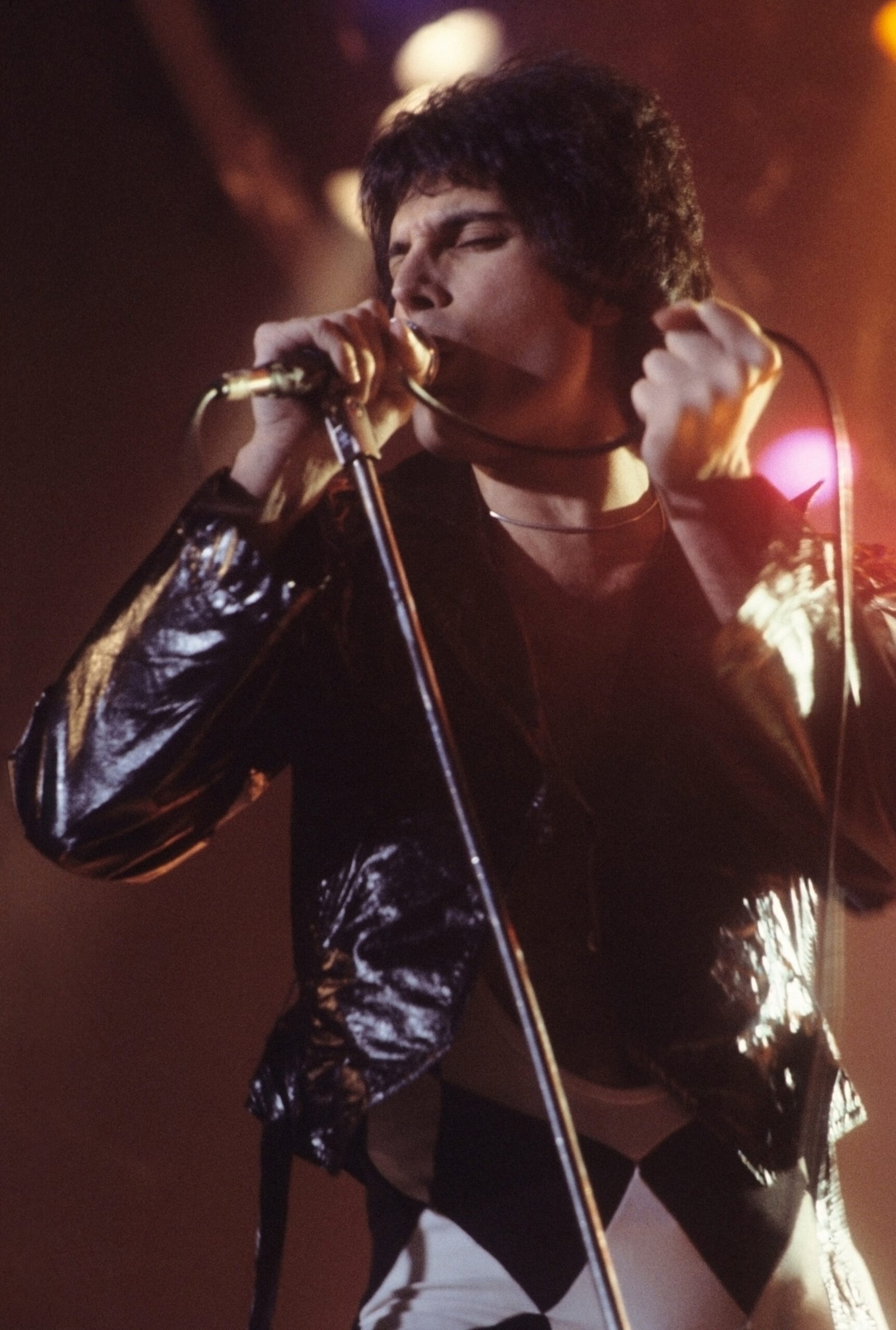
Mr. Fahrenheit: The Battles Behind Queen’s ‘Don’t Stop Me Now’
In March 2019, Billboard ran the numbers on a forty-year-old album track and found something close to a clerical error in pop history. “Don’t Stop Me Now” — a song that had peaked at number 86 in America, that Queen themselves had dropped from their concerts after a single year and never played again in Freddie Mercury’s lifetime — had just passed 500 million plays on Spotify, nearly double the total of any song by the Rolling Stones, U2 or Led Zeppelin on the same service. It was, at that moment, turning up in commercials for Toyota, Silk almond milk, Amazon and L’Oréal, and serving as the musical identity of an American Idol season launch. The magazine called it “one of the most popular songs of its entire era”. The song it was describing had spent most of its first three decades as a footnote: track twelve on Jazz, the second-to-last song on an album the critics of 1978 had savaged, a minor UK hit and an American flop.
No Queen song has travelled further from its starting point, and the distance is the story. “Don’t Stop Me Now” was written in tax exile, in the summer of 1978, by a singer hurtling into the most hedonistic period of his life — and it was disliked, quietly and on the record, by the band’s own guitarist, precisely because of what it celebrated. It survived a hostile critical climate, an indifferent America and a quarter-century of near-invisibility, and then it did something almost no catalogue song ever does: it came back bigger than it had ever been the first time, carried by a zombie comedy, a motoring show, a boy band’s charity cover and the streaming era’s appetite for pure, unembarrassed joy. This is the story of those battles — against the taxman, against the reviewers, against the charts, and against the doubts inside the band itself.
Tax Exile and a Hefty Bill
The song was born in flight from the British tax authorities. In June 1978, Queen received a hefty tax bill, and the band took the classic seventies rock-star decision: they would record their next album outside the United Kingdom. The timetable was brutal. Brian May, whose first child, Jimmy, had just been born, was forced out of the UK by 2 July because of the tax situation; he relocated to Canada while the rest of the band flew to Nice, on the French Riviera, to begin rehearsing in the first week of July. May soon joined them, and the album that became Jazz began life as an exercise in logistics as much as music.
The French sojourn quickly acquired its own mythology. The band attended the nearby Montreux Jazz Festival — the likely inspiration for the album’s title — and there ran into David Bowie, who was working on his album Lodger between tour dates at Mountain Studios in Montreux. Bowie convinced them to record at Mountain, and the production duly split its life between France and Switzerland. But before the move to Montreux, Queen finished preliminary recordings of four songs at Super Bear Studios in Berre-les-Alpes: “Fat Bottomed Girls”, “In Only Seven Days”, “More of That Jazz” — and “Don’t Stop Me Now”. One of the most joyful records ever made was, in its first form, a product of hurried exile, cut quickly in a studio in the Alpes-Maritimes by a band working against a tax calendar.
The sessions had their chaos, too. On 19 July, the band attended a stage of the Tour de France, which inspired Mercury to write the album’s lead single, “Bicycle Race”. On 26 July, celebrating Roger Taylor’s twenty-ninth birthday, they trashed a Montreux hotel; Mercury was reportedly seen swinging on a cut-glass chandelier. The album was completed on 14 October 1978, in a mastering session back at Super Bear, and released on 10 November. It reached number two in the UK and number six in the US. But Jazz arrived into a critical headwind, and “Don’t Stop Me Now”, tucked away as the twelfth of its thirteen tracks, inherited all of it.
A Chaotic Album to Be Born Into
Jazz was co-produced by Queen with Roy Thomas Baker, the producer behind their early classics, and it sounds like a band emptying every pocket at once. Across its thirteen tracks there is Mercury’s “Mustapha”, sung partly in Arabic and Persian phrases over a galloping Eastern arrangement; “Jealousy”, on which May coaxed a sitar-like buzz from an acoustic guitar fitted with a chiselled hardwood bridge; and May’s “Dead on Time”, which ends with an actual thunderbolt that May had captured on a portable recorder during a thunderstorm — the album’s liner notes solemnly credit the thunderbolt to God. “Don’t Stop Me Now” sits twelfth in that company, the penultimate track, followed only by Taylor’s loop-based closer “More of That Jazz”. It was, from the beginning, one colour in a deliberately garish palette.
The album’s launch was engineered for outrage. To promote the lead single, the double A-side of “Bicycle Race” and “Fat Bottomed Girls”, the band staged a bicycle race of nude women at Wimbledon Stadium on 17 September 1978, and a poster of the start line was folded into copies of the LP; the picture sleeve of the single had to have a pair of red panties painted onto its cover image to head off public outcry. Legend has it that the bicycles had been borrowed from the retailer Halfords, and that when the band returned them, they were informed they would have to purchase all the seats, those having been used in an improper manner. This was the atmosphere into which “Don’t Stop Me Now” was sent as a follow-up single: a campaign of gimmicks, complaints and press disapproval. It is no accident that Billboard, reviewing the song, praised it for being “less gimmick laden” than its predecessor. Mercury’s piano anthem was, among its other burdens, the record with which Queen were supposed to prove they could still make a straightforward hit. That it eventually became the biggest of them all is the joke the next forty years played on everyone involved.
Freddie’s Manifesto
“Don’t Stop Me Now” is the purest self-portrait Freddie Mercury ever recorded. Written by Mercury alone, it is built on his piano — the whole record is essentially his left hand and right hand setting a speed limit the rest of the band must obey — with John Deacon’s bass and Roger Taylor’s drums providing the backing track, and Queen’s trademark multitrack harmonies stacked across the choruses. The band’s own explanation of the lyric was innocent enough: they felt they were “getting better at having a good time”, and the song reflects it. But what Mercury actually wrote was a declaration of unstoppable appetite disguised as a party record. He is a shooting star leaping through the sky, a tiger defying the laws of gravity, a racing car passing by, a rocket ship on its way to Mars, an atom bomb about to explode. The temperature keeps rising — two hundred degrees, which is why, he explains, they call him Mr. Fahrenheit — and he is travelling at the speed of light, a supersonic man who does not want to stop at all.
Everything in the lyric is velocity and refusal. There is no verse of doubt, no bridge of reflection, no morning after. Even the song’s famous dynamics serve the manifesto: it opens with Mercury almost crooning at the piano, promising himself a real good time, and then detonates into full speed within seconds, as if the singer cannot hold the pose of calm for longer than an introduction. The title is not a hook so much as a warning issued to anyone standing nearby — bandmates included. This was Mercury in 1978, freshly immersed in the club scenes of Munich and New York, living exactly the life the song describes, and writing the soundtrack to it in real time.
Vocally, the record is a masterclass in the band’s signature construction. The choruses are built from Queen’s trademark multitrack harmonies, Mercury’s voice layered against May’s and Taylor’s until a trio sounds like a choir of Mercurys, and the arrangement keeps clearing space for those stacks to detonate. Listen to how the song handles its own speed: the verses rush, the pre-chorus tightens, and the chorus simply opens the throttle. It is a performance of confidence so complete that it doubles as the song’s subject. Mercury does not describe a man having a good time. He becomes, for three and a half minutes, the fastest object in the world, and dares the listener — and the band, and the critics, and whoever was keeping score of his private life — to keep up.
It is also, not coincidentally, a nearly guitar-free Queen record, and that was a design decision. On the studio version, Brian May’s entire contribution is backing vocals and a single, brief guitar solo — a dazzling flare of his signature sound that arrives, does its work and vanishes, leaving the piano in command. Queen’s records were usually negotiations between Mercury’s piano and May’s guitar, two orchestras competing for the same space. “Don’t Stop Me Now” is what happened when Mercury won the negotiation outright. The 2011 reissue of Jazz even included, on its bonus EP, an old take of the song containing more guitar parts — “long lost guitars” that had been mixed away in 1978 — and in 2018 the Bohemian Rhapsody soundtrack presented an alternative version, billed as “Don’t Stop Me Now… Revisited”, with a harder, guitar-driven arrangement. That the alternate universe of the song is defined entirely by how much guitar it contains tells you everything about the original’s radicalism: this was the sound of Freddie Mercury with the brakes cut.
Brian May’s Unease
The most important battle behind the song was fought inside the band, and it was fought over what the song meant. Brian May was not originally a fan of “Don’t Stop Me Now”, and his reasons were not musical. He felt the song was celebrating the hedonistic and risky lifestyle Mercury was then living — a lifestyle he considered threatening. May has said that he struggled with the lyrics at the time, because the song was about a difficult period in Freddie’s life, a period when the singer was, in May’s own words, “taking lots of drugs and having sex with lots of men”. Where Mercury heard liberation, his guitarist heard a man accelerating towards a wall, and singing about how much he enjoyed the speed.
This was not a trivial disagreement. Queen’s internal chemistry depended on four strong writers critiquing one another’s work, and May’s resistance to Mercury’s anthem of excess was of a piece with the wider tensions of the Jazz period: a band living at maximum velocity, professionally and personally, in exile, trashing hotels, swinging from chandeliers. The song is a document of that summer, and it preserves both points of view — the singer’s euphoria in the performance, the guitarist’s alarm in its margins. May played his solo, sang his harmonies, and kept his counsel. The record carries no trace of the argument. But the argument is why the song still feels slightly dangerous beneath the joy: it was written by a man insisting nothing could stop him, over the objections of the friend who feared nothing would.
May’s verdict, it should be said, changed — and the manner of its changing is one of the loveliest details in the song’s history. After hearing “Don’t Stop Me Now” played at weddings, parties and funerals — hearing it, that is, absorbed into the rituals by which ordinary people mark joy and grief — he came to appreciate it as representing, simply, “great joy”. The guitarist who worried the song was a celebration of self-destruction lived to watch it become a standard for celebration itself. Few retractions in rock are so graceful, or so complete.
Four Writers, Four Directions
Part of what made the song’s position inside the band precarious was that Jazz was an album of four authors pulling in four directions at once, and Mercury’s direction was simply the loudest. May contributed the lusty “Fat Bottomed Girls”, the thunderous “Dead on Time”, and “Dreamer’s Ball”, his tribute to Elvis Presley, who had died the year before — so the same album contains May mourning a dead king of excess while Mercury, one track later in the running order’s final stretch, sang as if excess could never touch him. Taylor offered the disco-funk of “Fun It”, on which he sang lead with Mercury behind him, and the closing “More of That Jazz”. Deacon, the quiet man, wrote the hard-rocking “If You Can’t Beat Them”, a late-seventies live favourite, and the gentle “In Only Seven Days”, which would end up as the B-side of “Don’t Stop Me Now” itself. Even the album’s artwork was a band member’s intervention: the sleeve design was suggested by Taylor, who had seen a similar pattern painted on the Berlin Wall.
In that company, “Don’t Stop Me Now” was neither the album’s strangest experiment nor its most obvious single. It was something more exposed: the frontman’s personal philosophy set to his own piano, offered to a band whose other members were writing about Elvis, about lust, about thunder, about almost anything except themselves. Queen’s great strength had always been this internal competition — four writers, four egos, one veto-prone democracy — and it produced their classics. But it also meant a song this nakedly autobiographical had to survive review by the three people who knew exactly what its author was doing with his life. May’s unease was the review that stuck. The song passed, it was recorded, it was released — and then, pointedly, it was the one the band stopped playing when the tour ended, while Deacon’s rocker and the double A-side’s novelties had their moments in the sun. Inside the Queen story, “Don’t Stop Me Now” was the single that its own creators filed under “Freddie’s indulgence”. It would take the rest of the world to overrule them.
Jazz and the Critical Mauling
The album the song arrived on was received by the American press, in particular, as an invitation to open fire. Reviewing Jazz for Rolling Stone in 1979, Dave Marsh dismissed it as “more of the same dull pastiche”, accused the band of displaying “elitist notions”, and closed by tagging Queen “the first truly fascist rock band” — a line that has followed the review ever since, to the point where Rolling Stone itself later included Jazz in a list of classic albums the magazine had initially panned. Mitchell Cohen in Creem called the album “absurdly dull”, full of “dumb ideas and imitative posturing”. Robert Christgau in the Village Voice thought Queen sounded like 10cc “with a spoke, or a pump, up their ass”. The Los Angeles Times was kinder, finding a maturity that suggested further advances, but the consensus of the moment was contempt.
The fascinating thing is that the single itself escaped much of the fire. The trade press of the day heard what the rock critics would not. Billboard praised May’s guitar solo and noted the song was “less gimmick laden” than the previous Jazz single, the “Bicycle Race”/“Fat Bottomed Girls” double A-side, “while still retaining the brazen braggadocio of Freddie Mercury’s lead vocals”. Cash Box heard “vocal dramatics and varied arrangements” and “beautifully layered vocals and regal guitar work”. Record World called it a “fast paced tune” with that “easily identifiable Freddie Mercury lead vocal”. The people whose job was judging singles as singles liked it. The people whose job was judging Queen as a cultural phenomenon did not — and in 1979, the second group set the narrative.
Posterity has reversed the judgement so thoroughly that Jazz is now routinely ranked among the band’s finest albums — fourth in Louder’s ranking of the Queen catalogue, third in Ultimate Classic Rock’s — with Stephen Thomas Erlewine of AllMusic calling it “one of their sleekest albums”, and Alexis Petridis arguing that the music press “comprehensively failed to get the joke”. But in the short term, the mauling mattered. “Don’t Stop Me Now” was released as a single on 26 January 1979, into an environment where Queen were critically unfashionable and commercially dependent on a fanbase the press had decided to be embarrassed by. The chart results showed it.
A Single That Sank in America
The bare figures of the original release are the most misleading in Queen’s catalogue. In Britain, “Don’t Stop Me Now” reached number nine — a respectable top-ten hit, and the third single from Jazz after the double A-side and ahead of “Jealousy”. In the United States, it reached number 86 on the Billboard Hot 100 and vanished. The B-sides framed it modestly: Deacon’s “In Only Seven Days” in most territories, Taylor’s “More of That Jazz” in the US and Canada. Nothing about the release suggested a future standard. It was a good single from a successful album, and it behaved like one, which is to say it was largely finished within the year.
And yet the American failure contains a nuance the chart position hides. The Jazz album was a top-ten hit in the US, and the song picked up airplay on album-oriented rock stations despite its ranking as a single — American listeners were hearing it, in other words, in the context Mercury had built for it, as part of the album’s late run of tracks, even as the singles market shrugged. The promo video, directed by J. Kliebenstein, was filmed at the Forest National in Brussels on 26 January 1979 — the very day of the single’s release — in front of a live audience, a document of the band at full concert power promoting a song that the charts had already half-decided about. The single would eventually be certified platinum in the United Kingdom. Almost everything about its long-term value was invisible in 1979.
One lifeline did exist, though nobody yet knew it was one. In 1981, Queen assembled their first Greatest Hits collection, and “Don’t Stop Me Now” was included on it. That album became a permanent fixture of British record collections — the kind of compilation that households replaced across formats, from vinyl to cassette to CD to download — and so the song, commercially dormant as a single, was quietly installed in millions of homes as part of the canonical Queen story, positioned between the hits of the seventies as if it had always been one of them. For twenty years, that is largely where it lived: familiar to anyone who owned the compilation, invisible to anyone measuring only charts and setlists, waiting for a culture that would know what to do with it.
One Year on Stage, Then Silence
Queen’s own behaviour towards the song in Mercury’s lifetime is the strongest evidence of how it was then regarded. Viewed at the time as one of the lesser songs in the Queen canon, “Don’t Stop Me Now” was performed live only during 1979 — on the Jazz tour and the year-ending Crazy Tour, with the last performance coming on that tour. In concert, significantly, the band toughened it: where the studio version restricted May to his solo, live he played rhythm guitar throughout, giving the song more of a rock feel, as if the band on stage were quietly correcting the record. A live version was included on the 1979 album Live Killers, the band’s double live document of that year’s touring — and that recording matters out of proportion to its fame, because it is the era’s official evidence of what the song could do in a room: tougher than the studio take, May’s rhythm guitar driving it throughout, the crowd-pleasing machine the band chose, for whatever reason, not to keep. Live Killers froze “Don’t Stop Me Now” at the exact age of one year. For the remaining twelve years of Mercury’s life, through the stadium years, through The Works and the Magic tour, through Live Aid itself, one of the most exuberant songs he ever wrote was never played.
Sit with that fact for a moment, because it is astonishing. This is the singer of “Don’t Stop Me Now” — a man who built his stage persona on momentum, on the refusal to be slowed — leaving his purest anthem of momentum in a drawer while lesser songs got the Wembley treatment. The reasons were presumably practical: the studio arrangement was piano-led and hard to reproduce with the band’s live firepower, the song had not been a big enough hit to demand inclusion, and May’s ambivalence cannot have helped. But whatever the cause, the effect was to make the song a genuinely forgotten corner of the catalogue — present on 1981’s Greatest Hits, which kept it in millions of homes, but absent from the band’s living repertoire, gathering no mythology, no definitive live moment, no legend. It was a standard waiting to be discovered by people who had not been born when it failed.
The Slow Resurrection
The resurrection, when it came, was not organised by the band or their label. It was organised by popular culture, one borrowing at a time. The groundwork, though, was laid by radio — the least glamorous and most patient of mediums. Long after the single’s chart run ended, the song was popularised by consistent airplay, never quite leaving the rotation of album-rock and then classic-rock stations, so that millions of listeners who could not have named its chart position or even its parent album absorbed it as part of the permanent furniture of rock radio. It became one of those records that everyone somehow knows. That slow saturation is the precondition for everything that followed: when film-makers, advertisers and television producers went looking for a three-minute injection of pure momentum, “Don’t Stop Me Now” was already sitting in the audience’s muscle memory, unclaimed by any single era or fashion, ready to be borrowed. Bobby Olivier, writing in Billboard in March 2019, attributed the song’s initial rebirth to a single scene: the 2004 cult zombie comedy Shaun of the Dead, in which “Don’t Stop Me Now” plays during the film’s bar fight set piece, the heroes battling the undead in time to Mercury’s piano as the jukebox dictates the choreography. The scene is beloved, and it reframed the song for a new generation — not as a period piece, but as the sound of defiant, ridiculous joy in the middle of catastrophe, which is very close to what Mercury wrote it to be.
Other coronations followed. The BBC television programme Top Gear put the question to its enormous audience and “Don’t Stop Me Now” was voted the Greatest Driving Song Ever — a verdict that makes complete sense, since the song is essentially three and a half minutes of acceleration, and that lodged it permanently in the British imagination as the sound of a motorway and an open road. On 5 September 2011, Google marked what would have been Mercury’s sixty-fifth birthday with a Google Doodle built around the song. In 2014, Rolling Stone’s readers voted it their third-favourite Queen song of all time — this for a record the magazine’s own critics’ generation had filed under pastiche — with the magazine noting that “time has also been very kind to it and it’s widely seen now as one of the group’s best works”. Mike Orme of Stylus Magazine, ranking the greatest penultimate album tracks, placed it seventh and called it Queen’s “most flamboyant and energetic single”, describing it as “essentially three and a half minutes of Freddie Mercury jacking the mike from the rest of the world”. And Alexis Petridis of The Guardian went furthest of all, writing that the “astonishing” song “may be Queen’s greatest song”, “an unrepentant, joyous, utterly irresistible paean” to pleasure — and wondering, pointedly, whether its title had been aimed at Mercury’s censorious bandmates all along.
The screen kept finding new uses for it. It powered the final fight of Hardcore Henry (2015), turned up in Shazam! (2019), entered the Sonic the Hedgehog franchise through the 2020 film, and surfaced again in Venom: The Last Dance (2024). The singer Foxes covered it for the BBC as part of the Doctor Who episode “Mummy on the Orient Express” in 2014; Darren Criss performed it in the fourth season of Glee; the punk band The Vandals had already recorded it for their 2004 album Hollywood Potato Chip, proof that even punk rockers heard the song as pure propulsion. Hank Green built it into his 2018 novel An Absolutely Remarkable Thing. Each placement made the same discovery Olivier described: the song does not date, because exhilaration does not date.
McFly Took It to Number One
Of all the song’s second lives, the most purely satisfying belongs to a boy band. In 2006, the British group McFly — unabashed Queen devotees — covered “Don’t Stop Me Now” and released it as a double A-side single with their own “Please, Please”, the first single from their third album, Motion in the Ocean. The release was tied to Sport Relief, the BBC’s charity campaign, with money from every version of the single going to the cause, and the song was played across the BBC’s sports programming, including highlights of the 2006 FIFA World Cup, as the theme of the Sport Relief Mile.
The band put their bodies behind the record, too: McFly themselves took part in the Sport Relief Mile, and drummer Harry Judd travelled to India with a party of celebrities to visit some of the country’s poorest areas and play in a charity cricket tournament for the campaign. The single, in other words, was not a cynical catalogue raid; it was four fans lending their moment of chart power to the song and the cause simultaneously. Queen had written charity into their own legend at Live Aid, and there is a neatness in their most joyful record reaching number one, at last, as an act of fundraising rather than commerce.
Premiered on BBC Radio 1 on 7 June 2006, the double A-side entered the UK Singles Chart at number one on 23 July 2006, knocking Lily Allen’s “Smile” off the top, and reached number 15 in Ireland. Twenty-seven years after Queen’s original stalled at number nine, “Don’t Stop Me Now” finally stood at the top of the British chart — sung by four young men who had grown up on it, in aid of charity, in the middle of a World Cup summer. The cover is faithful to the point of reverence, piano and all. But the chart position was not really McFly’s achievement or Queen’s vindication so much as a measurement: by 2006, the song had become so deeply embedded in British life that a straight copy of it, released for a good cause, was a guaranteed number one. The minor hit of 1979 had become load-bearing.
The Streaming Coronation
The final battle was fought on terrain that did not exist when the song was written, and it was not close. The streaming era rewards songs that deliver a feeling instantly and completely, and “Don’t Stop Me Now” is engineered for exactly that: it is impossible to hear its first thirty seconds and mistake it for anything else, and impossible to hear it and remain in the mood you were in before. When Billboard’s Bobby Olivier charted “the evolution” of the song in March 2019, he noted that you might have noticed a new American Idol commercial — a ninety-second film of bright-eyed contestants gleefully belting its lines — and that in the previous six months alone the song had also appeared in commercials for Toyota, Silk, Amazon and L’Oréal, the last with Camila Cabello lip-syncing to the forty-one-year-old record as she applied her lipstick. On 3 March 2019, it passed 500 million Spotify plays, “nearly double that of any Rolling Stones, U2 or Led Zeppelin song on the service”. The footnote of Jazz had out-streamed the cathedrals of classic rock.
Queen, to their credit, eventually caught up with their own song. The Billboard analysis arrived in the immediate wake of the Bohemian Rhapsody film, which had sent the whole catalogue surging and had included, on its soundtrack, the “Revisited” version of “Don’t Stop Me Now” — the harder, guitar-driven arrangement that imagined what the song might have been had Mercury not won his argument in 1978. Tellingly, it was the original, piano-led version that the world kept streaming. In the 2010s the band also reintroduced “Don’t Stop Me Now” to their live set with Adam Lambert, and it is now a popular live favourite — performed, at last, in the stadiums it was always written for, by a singer whose entire art is joyful momentum, with May playing the rhythm guitar parts he used to add in 1979. There is a photograph’s worth of meaning in that stage picture: the guitarist who once feared the song, now in his seventies, powering it from below while a new singer rides it, and an audience of several generations sings every word of a lyric that was once considered a problem to be managed. The song outlived its own exile from the repertoire by three decades and walked back in as a climax. There cannot be many records of which that is true: a hit that failed, vanished from its creators’ stage, and returned as the moment the whole arena had been waiting for.
Why It Endures
Every battle this song fought, it lost at the time. The taxman drove its recording into exile. The critics savaged its album. America ranked it eighty-sixth. Its own guitarist heard it as a symptom of a friend’s dangerous life, and the band — the most theatrical live act of their generation — played it for one year and then never again while its author lived. If you had audited “Don’t Stop Me Now” at any point in the 1980s or 1990s, you would have filed it as a minor pleasure on a divisive album, the sort of song that fills out a Greatest Hits and nothing more.
There is a final irony in the persona Mercury invented for the song. Mr. Fahrenheit — two hundred degrees, travelling at the speed of light — was meant as a boast inside a party record, one hot summer in exile. It became, instead, the truest single description of the man that popular culture settled on: not the tragedies, not the scandals the press once preferred, but the velocity and the joy. When the world pictures Freddie Mercury now, it pictures this song’s author mid-flight, and when it wants to honour him, it plays this song. The bandmate who worried that the lyric celebrated a life that would burn its singer up was not wrong about the life. He was only wrong about what the song would come to mean once the life was over. It stopped being a diary entry a long time ago. It is now simply the sound of being gloriously, defiantly alive — which is why it plays at the weddings and the funerals alike.
What saved it was the thing Brian May feared most about it: its total, unfashionable sincerity. “Don’t Stop Me Now” does not wink. It does not qualify its joy, ironise it or apologise for it, and so it could not be killed by changing fashion, because it was never attached to fashion in the first place. It simply waited, in the catalogue, at full throttle, while culture caught up — and then, one zombie film and one driving poll and one charity cover and one streaming algorithm at a time, culture did. The weddings and funerals May spoke of are the real explanation of its endurance: this is a song people reach for at the moments when joy needs to be summoned rather than described, and it has never once failed to arrive. Mercury titled it as a command to the world. It took forty years, but the world obeyed. Don’t stop me now, he sang, two hundred degrees and rising — and nothing ever did.