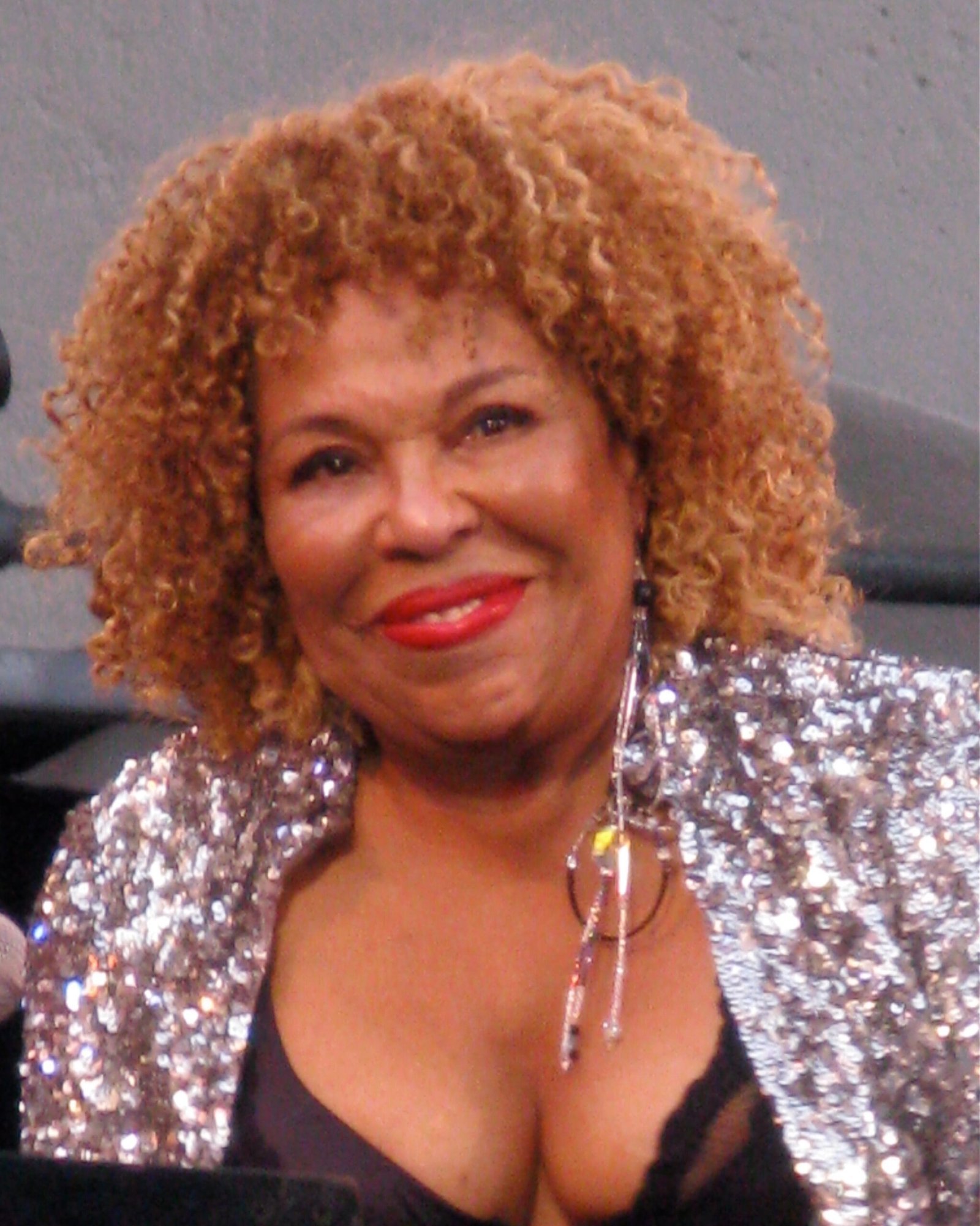
Too Slow to Be a Hit: The Battles Behind Roberta Flack’s ‘The First Time Ever I Saw Your Face’
Every step of the journey of “The First Time Ever I Saw Your Face” was an argument somebody lost. It was written in 1957 by a married English communist, down a telephone line, for the young American folksinger he was falling in love with — and she, at the time, did not even realise it was about her. It was taken up by the folk world and recorded again and again, and its author hated every single cover so much that he kept them in a special corner of his record shelf he called the Chamber of Horrors. It was then picked up by a Washington, D.C. schoolteacher who slowed it down to half its proper speed, refused point-blank to record it any faster, and watched it sit unsold on her debut album for three years. The song was, by every professional judgement of the era, too slow, too long, too quiet and too old-fashioned to be a hit. Its producer told its singer so to her face.
What rescued it was not the record business at all. It was a film star driving on a Los Angeles freeway, who heard those five unhurried minutes coming out of his car radio and decided, against all the logic of Hollywood, that the slowest love song ever recorded was exactly what his first film as a director needed. Within months the song that nobody could sell was the biggest record in America — number one for six weeks, the best-selling single of 1972, a Grammy winner twice over, and, before the year was out, the music that woke up the last men ever to orbit the Moon. Roberta Flack would later call it “a perfect song. Second only to ‘Amazing Grace’.” This is the story of the battles behind it: the composer who disowned its success, the producer who wanted it faster, the label that left it on the shelf, and the singer who would not bend — and was proved right about everything except how long the world would take to agree with her.
A Love Song Sent Down a Telephone Line
The song began as an act of long-distance longing. Ewan MacColl, born James Henry Miller in Salford in 1915, was by the mid-1950s one of the commanding figures of the British folk revival: a playwright and actor who had co-founded the radical Theatre Workshop, a collector and singer of traditional ballads, and a political songwriter of uncompromising communist convictions. He was also married — to his second wife, the dancer Jean Newlove — when, in 1956, he met Peggy Seeger, the twenty-one-year-old American singer who had come to London with her banjo and her extraordinary pedigree. Seeger was the daughter of the composer and musicologist Charles Seeger and the half-sister of Pete Seeger, and she had grown up inside the American folk tradition itself. The two began an affair. Seeger, uneasy about the marriage and the child on the other side of it, returned to the United States to put distance between them — but the telephone calls continued, and MacColl sent her tapes of songs across the Atlantic.
In 1957 Seeger was working on a radio show in Los Angeles when the producers asked her for something her repertoire conspicuously lacked: a hopeful love song. Most of the folk material she performed was sad. She mentioned the problem to MacColl on one of his calls from England, and his answer was characteristically immediate. He wrote the song quickly — by most accounts in a single burst — and sang it to her down the telephone line, teaching it to her the way folk songs had always travelled, by ear and by voice, except that the voice was travelling four thousand miles by wire. Seeger performed the song in Los Angeles and later in Chicago. The curious thing, which she has acknowledged since, is that she did not at the time interpret the song as being about the two of them: she was not, as she put it, “in love” with MacColl then, and she sang it from his perspective rather than her own. The most famous love song of its generation was thus written by a man for a woman who heard it as a work assignment, about a love she had not yet admitted she was in.
MacColl himself never recorded it. He had sung it once, down a phone line, and that was his entire recorded relationship with the composition that would make his name in America. Seeger, the first to perform it live, did not release a version until 1962. The song’s journey into the world would be carried out entirely by other people — a fact that would come to matter a great deal to its author. Life, meanwhile, caught up with the lyric: MacColl and Seeger eventually married, once his previous marriage had ended, and they remained partners in music and in life until his death in 1989. The love that the song’s first singer had not yet admitted to, singing it down the years as someone else’s statement, turned out to be the central love of both their lives. The song had known before she did.
The Chamber of Horrors
The first person to record “The First Time Ever I Saw Your Face” was the Canadian folksinger Bonnie Dobson, who had heard Seeger perform it at the Colorado Folk Festival on October 31, 1960, and learned the lyric from hearing other singers perform it afterwards. Dobson’s version appeared on her debut album, She’s Like a Swallow and Other Folk Songs, in June 1961. Through the 1960s the song moved steadily through the folk repertoire: the Kingston Trio recorded it, Peter, Paul and Mary recorded it, and dozens of club singers carried it from coffee house to coffee house. It was becoming a standard — the kind of song that belongs to everyone.
Almost everyone, it turned out, except the man who wrote it. MacColl made no secret of his contempt for the cover versions that multiplied through the decade. His daughter-in-law, Justine Picardie, later wrote: “He hated all of them. He had a special section in his record collection for them, entitled ‘The Chamber of Horrors’. He said that the Elvis version was like Romeo at the bottom of the Post Office Tower singing up to Juliet. The other versions, he thought, were travesties: bludgeoning, histrionic, and lacking in grace.” The Elvis in question was Elvis Presley, who had recorded the song in 1971. Nor was the song’s muse any more forgiving, at first: Seeger disliked Roberta Flack’s interpretation when it became a hit, though she has since, in her own words, “come to like it a lot.”
There is a real argument buried inside MacColl’s snobbery, and it is worth taking seriously, because the rest of this story is partly about it. MacColl came from a tradition in which a song was a piece of workmanship with a right way of being sung — plainly, at a natural pace, in service of the words. The pop process, as he saw it, took songs like his and inflated them, slowed them, draped them in feeling they had not earned. When Flack’s version arrived, stretched to more than twice the length of Seeger’s original performance, it must have seemed the ultimate proof of everything he believed about what the commercial music world did to folk song. The irony — an irony large enough to build a career on — is that Flack was not inflating the song at all. She was doing something closer to what MacColl himself valued: she was listening to the words, and letting them take exactly as long as they needed.
The Schoolteacher from Banneker
Roberta Flack came to the song by the folk route, and she came to music by the hardest route of all: she earned it twice, once in the concert hall and once in the classroom. She was born on February 10, 1937, in Black Mountain, North Carolina, to Laron Flack, a jazz pianist and Veterans Administration draftsman, and Irene Flack, a church organist, choir director and music teacher. The family settled in Arlington, Virginia, when she was five. Her first musical experiences were in church, accompanying the choir of the Lomax African Methodist Episcopal Zion Church; at thirteen she finished second in a statewide piano competition for Black students with a Scarlatti sonata, and the prize helped win her a full music scholarship to Howard University in Washington, D.C. She was so young that her parents made her wait until she was fifteen to take it up. At Howard she switched her major from piano to voice, became assistant conductor of the university choir, and directed a production of Verdi’s Aida that earned a standing ovation from the faculty.
Then life intervened, as it does. She graduated at nineteen and began graduate studies, but her father died suddenly and she had to work. She taught music and English at a small, segregated high school in Farmville, North Carolina, for $2,800 a year, then returned to Washington to teach at Banneker, Browne and Rabaut junior high schools, giving private piano lessons from her home on Euclid Street as well. Her performing life grew up in the margins of her teaching life: accompanying opera singers at the Tivoli Theatre and singing standards in a back room during the intermissions, then regular nights at the 1520 Club, accompanying herself. Her voice teacher, Frederick “Wilkie” Wilkerson, told her frankly that her future lay in pop music rather than the classics, and in 1968 she was hired as resident singer at Mr. Henry’s, a restaurant on Pennsylvania Avenue on Capitol Hill, playing several sets a night to diners who gradually realised they were hearing something far beyond background music. One of her pupils’ generation got there before the record business did: she had first heard “The First Time Ever I Saw Your Face” in the 1963 version by the folk duo Joe & Eddie, on their album Coast to Coast, brought to her attention by her friend, the singer Donal Leace. She taught the song to the girls in the glee club at Banneker Junior High School, and she sang it, night after night, at Mr. Henry’s.
Her break, when it came, came through the room. In the summer of 1968 she performed at a benefit concert to raise funds for a children’s library, and in the audience was the jazz singer Les McCann, an Atlantic Records artist. McCann was captivated and arranged an audition with Atlantic producer Joel Dorn. Flack performed forty-two songs from her nightclub repertoire in three hours. Dorn told the label to sign her on the spot. In November 1968 she recorded thirty-nine demo songs in less than ten hours; three months later, in February 1969, Atlantic recorded her debut album, First Take, in a similarly concentrated burst. McCann later wrote in the album’s liner notes: “Her voice touched, tapped, trapped, and kicked every emotion I’ve ever known.” The album was, as its reputation has settled, an elegant fusion of folk, jazz and soul — and its emotional centre of gravity was a two-and-a-half-minute folk song that Flack had stretched, slowed and deepened into something nobody in the building quite knew what to do with.
Too Slow, on Purpose
The battle lines were drawn in the studio, over a single question: how fast? Seeger’s original performances of the song ran about two and a half minutes, the natural length of a folk ballad sung straight. Flack’s rendition, recorded at Atlantic’s New York studio in February 1969, ran five minutes and twenty-two seconds — more than twice as long. She had taken MacColl’s lyric, three verses charting a lifetime of first meetings — the first face, the first kiss, the first time lying in bed, the joy filling the earth — and slowed it until each line hung in the air long enough to be examined. It was less a performance than an act of meditation, her piano-led arrangement leaving acres of space around a voice that never once raised itself.
By her own account, the session had a private grief folded into it: she later said that when she recorded the song she was grieving her pet cat, which had been run over by a car. Whatever the cause, the tempo she chose was not an accident or an indulgence; it was the interpretation. That is what makes what happened next so revealing. Producer Joel Dorn — the man who had signed her, who believed in her, whose judgement was not in question — suggested after the session that she re-record the track at a slightly faster tempo, with a lyric edit to shorten its running time. It was a reasonable commercial suggestion. Five-minute ballads did not get played on the radio in 1969, and Dorn could hear, as any professional could, that the record as it stood had no plausible route to becoming a single. Flack declined. The exchange, as she remembered it, has the finality of a line in a play. Dorn said: “Okay, you don’t care if it’s a hit or not?” She said: “No sir.”
Consider what she was actually refusing. She was a thirty-two-year-old former schoolteacher on her first album, in no position to dictate terms to anybody, and she was telling her producer that the integrity of a performance mattered more to her than its commercial prospects. She had nothing to back the refusal with except the performance itself. Dorn, to his credit, let it stand — and his prediction, as Flack herself freely admitted afterwards, proved entirely correct. For three years.
The Anatomy of Stillness
Listen to what is actually on the record, and the audacity of Flack’s refusal becomes clearer. There is no rhythm section pushing the song forward, no orchestral swell to tell the listener when to feel. The arrangement is built around her own piano and that voice, recorded close and dry, with the accompaniment thinned to the point of transparency. The three verses are laid out like a life in miniature — a face, a kiss, a bed, a joy that fills the earth and lasts until the end of love — and Flack treats them as movements in a single arc, each “first time” sung a degree more exposed than the last. It is the technique of a classically trained musician who had directed Aida as a teenager and accompanied opera singers in a theatre back room: breath control as drama, restraint as rhetoric. Where a lesser singer would have reached for the big note, Flack does the opposite, pulling back at exactly the moments where the lyric turns overwhelming, so that the listener leans in rather than sitting back.
This was why the tempo argument was never really about tempo. MacColl’s song, sung at Seeger’s folk pace, is a beautiful statement: plain, sincere, over in two and a half minutes. Sung at Flack’s pace, it becomes an experience the listener has to live inside for five minutes, and living inside it is what the lyric is about. The distance between those two readings is the distance between the folk club and the confessional — and it took a singer formed by church choirs, conservatory rigour and junior-high classrooms to find it. She had been teaching the song to schoolgirls and singing it to restaurant diners for a year before she recorded it. By the time she reached the studio, the interpretation was not an experiment. It was a conviction, and convictions are the one thing Roberta Flack never learned to compromise.
Three Years on the Shelf
First Take was released in 1969 to warm reviews and modest sales. The critics understood immediately what Atlantic had: here was a singer of conservatory training and church depth who moved between jazz, folk and soul as if the borders between them did not exist. The public, on the whole, did not follow. Flack’s early Atlantic recordings did not sell particularly well, and she settled into the peculiar position of the critics’ favourite — respected, booked, and commercially stuck. There were highlights that showed the size of her world: her second album, Chapter Two, followed in 1970, deepening her collaboration with another Howard musician, Donny Hathaway, as arranger and accompanist. In 1971 she travelled to Ghana for the Soul to Soul concert, sharing a bill with Wilson Pickett, Ike & Tina Turner, Santana and the Staple Singers. She was, by any measure, a serious artist with a growing reputation. What she did not have was a hit.
And all the while, sitting quietly in the middle of her debut album, was the five-minute folk song. Nothing about the record business of 1969, 1970 or 1971 suggested that it would ever be anything other than an album track — a beautiful one, beloved by the people who owned the LP, and heard live by the diners at Mr. Henry’s and the audiences on the road. Singles were getting shorter and louder. Ballads that topped the charts were orchestral and urgent. “The First Time Ever I Saw Your Face” was a solo voice over sparse accompaniment, sung at the speed of breathing, by a singer most of America had not yet heard of, written by a British communist for his lover sixteen years earlier. If you had listed the least likely number one records of 1972, it would have beaten them all for unlikelihood.
This is the part of the story that matters most, because it explains everything after. The song did not change. Flack did not re-record it, speed it up, shorten it or sweeten it. What changed was the doorway through which the public met it. The record business could not find a way to present five minutes of stillness. A film could.
The Man on the Freeway
Clint Eastwood was, by 1971, one of the biggest film stars in the world, and he was preparing to direct his first movie. Play Misty for Me was a thriller about a disc jockey — a man whose profession is choosing records — and Eastwood, who was deeply interested in music and would build the film around it, was assembling its soundtrack himself. According to Flack’s oft-told account, Eastwood heard her recording of “The First Time Ever I Saw Your Face” on his car radio while driving on a Los Angeles freeway. He did not call Atlantic Records. He telephoned Roberta Flack at her home in Alexandria, Virginia, and made his pitch in terms that showed he understood the track better than the executives who had shelved it: “I’d like to use your song in this movie… about a disc jockey, with a lot of music in it. I’d use it in the only part of the movie where there’s absolute love.”
Then came the negotiation, such as it was. Eastwood paid $2,000 for the use of the recording — a modest fee even by 1971 standards, for what would become one of the most famous pieces of film music of the decade. Flack, still carrying her producer’s warning in her ears, offered the objection she assumed a film director would share: the record was surely too slow, and she volunteered to re-record it at a faster tempo. Eastwood’s reply closed the argument that Joel Dorn had started two years earlier: “No, it’s not.” The actor who played the Man with No Name turned out to be the one man in the entertainment industry who heard the song’s slowness the way its singer did — not as a defect to be repaired but as the entire point.
The friendship outlasted the transaction. Eastwood remained an admirer and a friend for the rest of Flack’s life, and in 1983, at his request, she recorded the end music for his Dirty Harry film Sudden Impact. But the $2,000 phone call had already done its work. The slowest song on a three-year-old album was about to be placed, undisturbed and unedited, at the emotional centre of a hit film — and this time, the whole country would be sitting in the dark, listening.
Play Misty for Her
Play Misty for Me, released in November 1971, is a lean, unnerving film, and its structure is a gift to a song like Flack’s. Eastwood plays Dave Garver, a late-night DJ on a Carmel, California radio station, who takes requests from a caller with a soft, insistent voice: “Play ‘Misty’ for me.” The caller is Evelyn Draper, played by Jessica Walter, and the request becomes a stalking, and the stalking becomes a nightmare. The film is about obsession — about love curdled into possession — and at its centre Eastwood placed its opposite. For the love scene between Garver and Tobie, played by Donna Mills, he laid in Flack’s recording, and for the length of that sequence the film simply stops being a thriller and becomes the song: two people, absolute love, at the pace of a held breath.
Audiences understood exactly what they were hearing, and they wanted it. The scene turned a three-year-old album track into the most requested record in America; people who had never heard of Roberta Flack walked out of cinemas humming a melody written before many of them were born. Atlantic Records, which had never issued the song as a single because it was self-evidently too long and too slow, now moved quickly. In February 1972 the track was released as a single — trimmed by about a minute, to four minutes and twenty-nine seconds, in a concession to radio that the film had proved unnecessary, with MacColl’s own composition “Trade Winds” on the B-side. Even shortened, it remained by far the slowest record on American radio. It did not matter. The public had already heard the whole thing in the dark, and they had voted.
There is a lesson in the sequence of events that the record industry has had to relearn in every decade since. The experts were not wrong about the song’s properties: it was slow, it was long, it was quiet, it was old. They were wrong about the context. Radio programmers judged it as three minutes of airtime competing with everything else on the dial. A film audience experienced it as the still centre of a story about the difference between love and obsession — and in that setting, its slowness was not a weakness. It was the meaning.
Six Weeks at Number One
The single entered the charts in March 1972 and climbed the way its singer sang — steadily, without hurry, and past everything in its way. In mid-April it reached number one on the Billboard Hot 100, and there it stayed for six consecutive weeks, an eternity for any record and an almost absurd tenure for a five-year-old folk song performed at half tempo. It was simultaneously number one on Billboard’s Easy Listening chart, also for six weeks; it reached number four on the R&B chart, number one on the Cash Box Top 100, number one in Canada for three weeks, and number one in Australia. In Britain, where MacColl was a towering figure in a folk world largely sealed off from the pop charts, it reached number fourteen — modest by comparison, though the song’s British afterlife would eventually outgrow that peak entirely.
The album followed its child up the charts. First Take, three years old and long since written off as a commercial disappointment, climbed to number one in America and eventually sold 1.9 million copies in the United States alone. The single earned Flack a million-selling gold disc. When Billboard closed its books on 1972, “The First Time Ever I Saw Your Face” stood as the number one single of the entire year — ahead of every rock band, every soul star, every songwriter in the hit factories of Los Angeles and New York. A song written by telephone in 1957, recorded in a day in 1969 by a singer grieving her cat, rescued from obscurity by a film star’s car radio, had beaten the whole of the American music industry at its own game, without conceding a single beat of tempo to it.
And still the year had one more unlikely stage to offer. On December 15, 1972, the crew of Apollo 17 — the final Apollo mission, the last human beings to travel to the Moon — were woken on their ninth day of flight, their last in lunar orbit, to the sound of Roberta Flack singing “The First Time Ever I Saw Your Face”. NASA’s choice of wake-up music was probably inspired by the face of the Moon itself, hanging below the spacecraft: the first time ever they saw its face, from the far side of human experience. A love song written for a girl in Los Angeles had completed a journey from a telephone line in London to the Sea of Tranquillity.
Record of the Year
The industry’s formal verdict arrived at the 15th Annual Grammy Awards in March 1973, and it was a verdict with an edge of absurdity that MacColl himself must have savoured. “The First Time Ever I Saw Your Face” won the Grammy for Record of the Year, honouring Flack and her producer Joel Dorn — the same Joel Dorn who had gently tried to talk her into recording it faster. And it won Song of the Year, the songwriter’s award, which meant that the American recording industry’s highest honour for composition went to a British communist folk singer who had never recorded the song himself, disliked virtually every version of it he had ever heard, and had written it in a few minutes for a radio show that needed something cheerful. It remained the only Grammy of Ewan MacColl’s career. The song he had given away down a telephone line had carried his name further than forty years of ballads, plays and political campaigns ever did.
For Flack, the Grammy was the beginning of a run that no artist had ever had. The following year she won Record of the Year again, for “Killing Me Softly with His Song” — becoming the first artist in Grammy history to win the award in consecutive years. The schoolteacher who had been told her favourite album track would never be a hit had, within two years of its rescue, been proved right on a scale that silenced the argument permanently. Yet it is worth remembering how close the whole thing came to not existing. Had she taken her producer’s advice in 1969 — a faster tempo, a shorter lyric — the recording Clint Eastwood heard on the freeway would not have existed, because the thing he fell for was precisely the thing the industry wanted to fix. The battle over the tempo was the battle for the song’s soul, and it was won by a refusal: “No sir.”
The Covers Kept Coming
Success, of course, did what success does: it multiplied the very thing MacColl dreaded. “The First Time Ever I Saw Your Face” passed into the general repertoire, sung by everyone, everywhere, until its origins in a London telephone call were known to almost nobody who hummed it. Elvis Presley’s version — the one consigned to the Chamber of Horrors — was only one of hundreds. The song became a standard of the kind that no longer belongs to any genre: a wedding song, a funeral song, a song for film soundtracks and talent shows and late-night radio dedications.
Its second great chart life came through Céline Dion, who performed it throughout her 1998–99 Let’s Talk About Love world tour and recorded it for her 1999 album All the Way… A Decade of Song. Released as a single in Britain and Ireland in March 2000, Dion’s version reached number nineteen in the UK — higher than Flack’s own original had climbed there — and Flack, far from guarding her signature song, praised Dion’s interpretation publicly. A generation later the wheel turned again: Leona Lewis recorded it in 2007 and charted in Britain; the cast of Glee took it back onto the American chart in 2012; Matt Cardle and a procession of television talent-show singers carried it into the streaming age. In Britain, the song’s accumulated sales since 2006 alone have earned it a platinum certification — a remarkable afterlife for a record that peaked at number fourteen there in 1972.
The sweetest postscript belongs to the two people who started it. Peggy Seeger, who had disliked Flack’s version when it conquered the world, softened across the decades, and in a 2025 interview, at the age of ninety, said she had “come to like it a lot” — a peace treaty fifty years in the making. And in February 2025, three days before her own death, Roberta Flack shared a clip of Céline Dion performing the song on a 1999 television special and wrote that she was “touched and thrilled” to present “the wondrous Céline Dion adding her luminous shine” to the piece. She had fought her producer for the song’s tempo, fought obscurity for its audience, and at the end she was still, graciously, passing it on.
The Voice Falls Silent
Flack’s later career was that of an institution: the queen of the sound that came to be called quiet storm, a standard-bearer
The response to her death said something about where “The First Time Ever I Saw Your Face” now lives in the culture. In the days that followed, listeners went back to the record in such numbers that it re-entered Billboard’s R&B/Hip-Hop Digital Song Sales chart at number four — a song written in 1957, by a singer in her eighty-eighth year’s memory, outselling the new century one more time. Obituaries around the world reached for the same recording to explain her: not the loudest voice of her era, nor the most flamboyant, but the one that could fill a stadium with a whisper and hold a film audience, an astronaut crew and a grieving public in the same unhurried breath.
Why It Endures
Most standards survive because they are flexible — because they can be swung, rocked, discoed and remixed into whatever shape the age requires. “The First Time Ever I Saw Your Face” survives for the opposite reason. It survives because of the things that were fought over and refused: the tempo that would not be hurried, the length that would not be trimmed, the quiet that would not be raised. Every battle in its history was an attempt by somebody sensible to make it more like other records, and every time, the song won by staying exactly what it was — a man singing to a woman down a telephone line, at the speed of a human heart, about the moment everything changes.
MacColl wrote it in minutes and disowned its children. Seeger sang it without knowing it was hers. Flack heard it on a folk album, taught it to schoolgirls, sang it to diners, cut it in grief, and defended it with two words — “No sir” — that deserve a place in the history of artistic integrity. Eastwood heard it once, in traffic, and trusted it with the heart of his film. The astronauts heard it above the Moon. Strip away any one of those stubborn acts and the song is a footnote in a folk catalogue. Together, they made the slowest hit single of its era into the one that has never really left: the first time, ever renewed, for every listener who finds it — exactly as slowly as it needs to be found.