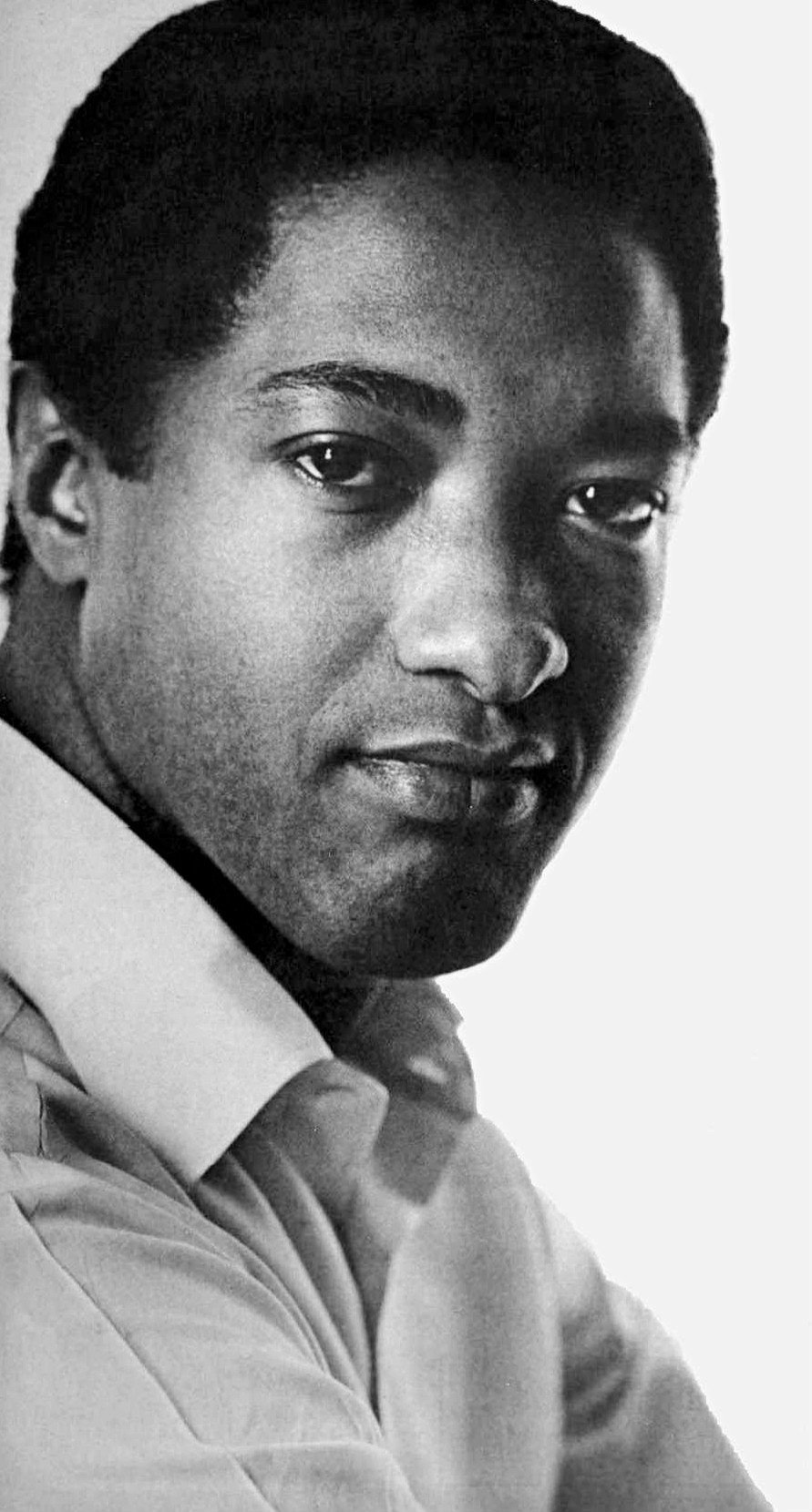
The Songwriter Who Didn’t Exist: The Battles Behind Sam Cooke’s ‘Only Sixteen’
In May 1959, Keen Records released a two-minute single about first love, and the label copy credited its composer as one Barbara Campbell. There was a problem with that credit, and also a kind of poetry in it: Barbara Campbell did not write the song. In fact, as a songwriter, Barbara Campbell did not exist. The name was a shelter — a pseudonym behind which Sam Cooke, the song’s actual author, hid his work from a publishing dispute that had followed him from label to label. The real Barbara Campbell was a woman from his Chicago childhood whom he would marry five months later. And the song hiding behind her name, “Only Sixteen”, would go on to be a hit for its composer in America, a number one in Britain for somebody else, a tribute record for the Supremes, and a gold single for Dr. Hook — a seventeen-year chart career for a song whose writer officially wasn’t there.
The battles behind “Only Sixteen” are therefore not the usual studio squabbles. They are about ownership in its most basic form: whose name goes on the work, and who gets paid when the work travels. Cooke had already lost that battle once, on the biggest hit of his life, and “Only Sixteen” is the sound of a man fighting it with the only weapons a small independent label in 1959 could offer him — disguise, patience, and a melody too good to keep down.
A Song Offered to an Actor
The first battle over “Only Sixteen” was about who would get to sing it, and Cooke nearly lost the song entirely. Among the hangers-on around the Keen Records studio in Los Angeles was a young actor named Steve Rowland, who spent enough time at the label to ask Cooke directly for a song of his own. Cooke obliged, building the new number partly out of spare parts: for its bridge he reached back to an earlier composition of his, “Little Things You Do”, and grafted the older song’s middle into the new one’s frame.
Then the machinery of other people’s judgement intervened. Rowland’s manager listened to the finished song and disliked it, and the actor’s version died on the spot. It is one of the great near-misses of the Keen catalogue — a song written to order, rejected by its intended singer’s camp, and rescued only because its composer decided to keep it for himself. Cooke re-recorded “Only Sixteen” under his own name, and the episode set the pattern for everything that followed: this was a song that other people kept trying to give away, mislabel, or underestimate, and it kept ending up back in the hands of the man who wrote it. When the dust settled, the rejection looked like the luckiest break of the record’s life. Rowland never became a pop star. Cooke’s version became a standard.
There is a coda to the Rowland story that rounds it out neatly. The donor song itself, “Little Things You Do”, was no throwaway: Keen thought enough of it to include it on Hit Kit, the 1959 collection that gathered the label’s Cooke singles — meaning that both halves of the “Only Sixteen” construction, the new song and the older song cannibalised for its bridge, ended up in the catalogue under Cooke’s name as a performer. Songwriters of Cooke’s generation worked the way tailors work, cutting new garments from old cloth, and the Keen catalogue is full of such economy. What distinguishes this case is simply that we know about it: the rejected commission, the borrowed bridge, and the manager who said no are all preserved in the record’s documentation, a tiny archive of the road not taken.
Sixteen Candles for Eunice
The inspiration, as the liner notes of the 2003 compilation Portrait of a Legend: 1951–1964 record, was a birthday. Eunice, the stepsister of Cooke’s friend and fellow singer Lou Rawls, was turning sixteen, and the occasion gave Cooke his subject: not a love affair in progress, but one remembered — a grown man looking back at a girl who was sweet sixteen, and at the boy he had been, and at how the whole bright thing dissolved simply because the two of them were young. The song’s narrator isn’t bitter. He is rueful, the way you can only be about a loss that nobody caused.
That retrospective tenderness is the song’s secret weapon, and it explains a great deal of its afterlife. Most teenage records of 1959 were sung from inside adolescence, all urgency and present tense. “Only Sixteen” is sung from the far side of it, by a voice that already knows how the story ends, and that double exposure — the adult remembering, the teenager feeling — is why the song has never sounded like a period piece. It also happens to be true to its author in a deeper way. Cooke was twenty-eight years old when he recorded it, with a gospel career, a failed first marriage, and a publishing war already behind him. He was not impersonating a teenager. He was doing something harder and more valuable: remembering being one, accurately.
The Rawls connection runs deeper than a birthday. Lou Rawls and Sam Cooke were Chicago boys together — schoolmates who sang in the same teenage gospel circles, in groups like the Teenage Kings of Harmony, long before either of them had a record. When Cooke drew on Eunice’s birthday for a song, he was writing out of the shared stock of that South Side world, where everybody’s family occasions were everybody’s news. It is one more way in which “Only Sixteen”, for all its pop polish, is a gospel singer’s record underneath: a community event, transmuted into a private memory, sung by a man testifying to something his whole neighbourhood would have recognised.
The Publisher’s Trap
To understand why the song needed a false name, you have to revisit the wound at the start of Cooke’s solo career. When he left Specialty Records for Keen in 1957, he carried with him “You Send Me”, the song that would make him famous — but the writer’s credit on that million-selling record went to his brother, L. C. Cooke. The reason was a dispute with his publisher: Cooke’s songwriting was entangled with his old label’s publishing interests, and putting his brother’s name on the song was the available way to keep its earnings from being swallowed by claims he was fighting. The biggest song of his life, and the label said somebody else wrote it.
The tangle did not resolve quickly. As the Keen years went on, the rights to songs written by Sam and his brother were caught in a running battle for royalties among Specialty, Keen, producer Bumps Blackwell, and the Cooke brothers themselves — four parties, one catalogue, no clean title. A writer in that position has two choices: stop writing, or write under a name the dispute cannot reach. Cooke, who was generating hits at a rate of several a year, chose the second. Beginning in late 1958, a new songwriter began appearing in the credits of Sam Cooke singles — first on “Love You Most of All”, then on “Everybody Loves to Cha Cha Cha” in early 1959, and then, that spring, on “Only Sixteen”. The name was Barbara Campbell.
It helps to be precise about what was actually at stake, because the sums explain the subterfuge. A hit song in 1959 earned money in two streams: the writer’s share, paid to the named composer, and the publisher’s share, paid to whichever publishing company held the copyright. An artist in Cooke’s position — bound by an old contract, quarrelling with his former label, and not yet possessed of his own publishing firm — could watch both streams be intercepted before a cent reached him. Crediting a song to a brother, and later to a trusted intimate, was not vanity or whimsy. It was revenue defence, conducted with the only asset that could be moved faster than the lawyers: the name on the label. The Campbell credit improved on the L. C. Cooke arrangement in one crucial respect — it routed the credit inside Cooke’s own household-to-be, to the woman he intended to marry, rather than to a sibling whose own dealings might drift. Even the disguise was being professionalised.
The Woman Behind the Name
The disguise had a face. Barbara Campbell was real — Cooke’s childhood sweetheart from Chicago, a girl he had first met when she was twelve and he not much older, from the same South Side world of churches and choirs that produced him. Their romance had run in parallel with his rise: through the Soul Stirrers years, through a first marriage to someone else that ended in divorce, and back to Barbara again by the end of the 1950s. In October 1959, five months after “Only Sixteen” was released with her name on it, Sam Cooke married her.
It is doubtful that Barbara Campbell had anything to do with composing the songs that carried her name — historians of the Keen catalogue treat the credit as an instrument, not a collaboration — but the choice of her name was hardly random camouflage. A pseudonym has to be a name the writer trusts, attached to a person inside the fence of the family. Cooke was, in effect, banking his royalties in his future wife’s name while the lawyers and labels fought over his own. There is a rich irony in the fact that the arrangement produced, on paper, one of the most successful female songwriters of 1959 — a woman who appears in the discographies with a run of hit singles to her name and who wrote, so far as anyone can tell, not one note of any of them. The music business of the era was full of hidden women. Barbara Campbell may be the only one hidden in plain sight, on the label, in two-inch type.
Nor did the arrangement end with the Keen years. Discographies of Cooke’s catalogue note that the Campbell credit continued to appear sporadically into the following years, a long tail on the original dispute — which tells you how slowly these publishing wars moved, and how long the shadow of a bad signature could be. Barbara, meanwhile, stepped into the public role the pseudonym had parodied: Mrs. Sam Cooke, wife of the biggest soul singer in America, present in the photographs at the Copa and in the fine houses in Los Angeles. The two Barbaras — the one in the writer’s box and the one in the society pages — were the same woman, and only one of them ever got a royalty statement with her name on it for the right reason.
The Keen Machine
The label that issued the song deserves a moment in the frame, because “Only Sixteen” was a product of a very particular ecosystem. Keen Records was a small Los Angeles independent that had essentially been built around one artist: when Bumps Blackwell left Specialty Records and took Cooke with him in 1957, Keen had its franchise. The company’s business was Sam Cooke singles, released at a brisk pace — after “You Send Me” launched the label, Cooke scored a string of further hits on Keen, pop and R&B, including “I’ll Come Running Back to You”, “Win Your Love for Me”, “Everybody Loves to Cha Cha Cha” and “Love You Most of All”. Around the singles, Keen assembled albums at speed: a debut, Songs by Sam Cooke; Encore; and in 1959 the Tribute to the Lady, a set of standards honouring Billie Holiday, who died that year.
It was a profitable arrangement and a precarious one. A one-artist label lives entirely on its artist’s health, goodwill, and contract — and Cooke, by 1959, was a twenty-eight-year-old with his own publishing ambitions, a manager’s eye for the main chance, and RCA Victor courting him with a six-figure advance. The Barbara Campbell credits belong to this context: on a small label, with a small staff and a single star, arrangements that would have been formal contracts elsewhere were handled with a handshake and a false name. “Only Sixteen” was Keen business at its most characteristic — brilliant product, improvised paperwork.
January at Rex Productions
The record itself was made quickly and cleanly. Portrait of a Legend‘s liner notes place the session on January 4, 1959, at Rex Productions in Los Angeles, with Bumps Blackwell — the architect of Little Richard’s Specialty hits and the man who had carried Cooke from gospel to pop — producing. The band was small and expert: Clifton White and René Hall on guitars, Adolphus Asbrook on bass, and Charles Blackwell on drums. Hall, who would become one of the central arrangers of Cooke’s career, is part of the record’s DNA; the guitar figures that dance around the vocal are the work of men who had been refining this sound with Cooke since 1957.
Keen issued the single in May 1959 as catalogue number 3-2022, with another Cooke composition, “Let’s Go Steady Again”, on the B-side — a pairing that amounted to a miniature essay on his songwriting range, the backward glance on one side and the forward pledge on the other. The master ran almost exactly two minutes. Nothing about the session was extravagant: no strings, no chorus of voices, just a rhythm section, two guitars, and the most imitated voice in American music doing the thing it did. That economy is part of why the record survived its era. There is nothing on “Only Sixteen” that can date, because there is almost nothing on it at all — only a song, a singer, and a groove, recorded by people who knew that that was enough.
The arrangement deserves its own footnote in the song’s history. Beneath Cooke’s lead, the record moves on a gentle, swaying groove — guitars interlocking, the rhythm section unhurried — that owes as much to doo-wop’s street-corner patience as to R&B’s drive, and the whole performance is engineered to sound like a memory: close, warm, and slightly soft at the edges. Keen even prepared the single in a stereo variant, still a novelty for a 45 in 1959, which survives in the catalogue alongside the mono master. Producers of the era often treated two-minute pop singles as disposable. Whoever was in the room at Rex Productions that January — Blackwell above all, a man who had made “Tutti Frutti” detonate — understood that Cooke’s ballads were not disposable at all. They were the catalogue.
Two Silent Partners
Here the story takes its strangest turn, because “Barbara Campbell” was not simply Barbara. In the accounting of the Keen catalogue, the name functioned as a shared pseudonym — a single corporate identity for a writing stable of three: Sam Cooke, Lou Adler, and Herb Alpert. The two younger men were fixtures of the Los Angeles independent scene around Keen, learning the business at its elbow; whether either contributed materially to “Only Sixteen” is another matter, since modern references, AllMusic among them, are blunt about the facts: the song was in fact solely written by Cooke. The pseudonym, in other words, disguised not just a man but an arrangement — a way of sorting credit and income among a circle of collaborators while the founder’s own name was legally radioactive.
History’s joke is what the silent partners became. Herb Alpert, within three years, would co-found A&M Records and become one of the defining artist-executives of the decade; Lou Adler would manage and produce acts including the Mamas & the Papas and build a career as one of Los Angeles music’s great fixers. And in 1960 the trio stepped out from behind the curtain together: “(What A) Wonderful World”, one of Cooke’s loveliest singles, was credited openly to Cooke, Alpert and Adler under their real names — the same combination that “Barbara Campbell” had been invented to conceal. By then Cooke was leaving Keen for RCA and the terms of his life were changing. The songwriter who didn’t exist had served her purpose.
Cooke, it should be said, was fluent in aliases by then. He had entered secular music disguised as “Dale Cook” for a Specialty test single in 1957, precisely so that his gospel audience would not catch him singing pop; disguise was the native technology of his crossover, applied now to his byline as it had once been applied to his name as a singer. The Barbara Campbell device belongs to that same technology, upgraded: not a mask for a performer, but a holding company for a catalogue. And like the Dale Cook episode, it worked because the work was good enough to be worth hiding. Nobody builds a shelter for songs nobody wants.
Number Twenty-Eight
The single’s American chart run was respectable rather than spectacular, and its shape is instructive. “Only Sixteen” entered the Billboard Hot 100 on the chart dated June 13, 1959, down at number 71, and climbed to a peak of number 28 — while on Billboard‘s Hot R&B Sides chart it reached number 13, confirmation that Cooke’s core audience, as always, rated him higher than the pop market did. In Britain, the original release reached number 23. Keen, gathering up the singles as its star prepared to walk out the door to RCA, placed the song at the head of the October 1959 album Hit Kit, a collection of the hits that had built the label.
Number 28 is the kind of peak that usually consigns a record to the oldies bin, fondly remembered and rarely examined. What kept “Only Sixteen” alive was not its first run but its portability. The song is short, diatonic, built on a melody a school choir could learn in an afternoon, and its subject — the universality of a first love outgrown — is the single most renewable resource in popular music. Songs like that do not belong to their first interpreter for long, especially when, as here, the publishing arrangements have scattered the credit and muddied the ownership. “Only Sixteen” was about to demonstrate the point on three continents and across seventeen years.
One more detail from that first run is worth recording, because it shows how the record business of 1959 actually consumed a song like this. Keen led off Hit Kit with “Only Sixteen” — track one, side one — even though bigger chart hits were available for the honour. A two-minute song that had peaked at number 28 was chosen to open the album that summarised Cooke’s Keen career, ahead of records that had sold more. Labels do that when a song tests stronger than its chart line: when it is the one the audience asks for, the one that opens the show in the memory. “Only Sixteen” was already behaving like a standard while the ink on its first chart run was barely dry.
Twenty-Eight Singing Sixteen
Consider the oddity of the record’s position in 1959. Cooke was a twenty-eight-year-old former gospel star, a man whose audience included adults who bought albums and attended nightclubs, singing a wistful song about being sixteen — and the teenage market, then asserting itself as the centre of the record business, took it to the top thirty without blinking. Keen understood the transaction precisely. The label’s strategy for Cooke had always been double: keep the R&B base that had made him, and court the pop mainstream that would enrich him, and “Only Sixteen” was the double strategy in its purest form, an adult emotion in a teenager’s frame.
There is a poignancy to it that only hindsight supplies. Cooke’s own sixteenth year had been spent singing gospel with the Highway Q.C.’s on the South Side of Chicago, as far from the world of sock hops and steady dating as it was possible to be. The song is an act of imagination, then, as well as memory — a man singing about a youth more ordinary than the one he actually had. Perhaps that is why the performance has its particular ache. He is not just remembering a girl. He is remembering the normal life that fame, faith, and his own ferocious talent had made impossible for him, two minutes at a time.
Britain Sings It Louder
The song’s first great second act belonged to somebody else. In 1959 the young British singer Craig Douglas covered “Only Sixteen” and took it to number one on the UK chart — the summit that Cooke’s original, peaking at 23 in Britain, had never approached. Douglas’s version was a product of the era’s transatlantic assembly line, in which American R&B and pop songs were re-cut by British singers for the home market, often beating the originals up the chart through sheer distribution muscle.
The Douglas episode distils the whole bittersweet economics of Cooke’s Keen years. His song was a number one record in a major market; his name, as its writer, was nowhere on it — the credit belonged, as ever, to Barbara Campbell, which is to say to the arrangement, which is to say to almost anyone but the public identity of the man who composed it. Cooke the performer lost the British battle to a cover version, while Cooke the hidden writer won it invisibly. If you want a single exhibit for why he spent the next five years of his life building SAR Records, buying publishing, and renegotiating his way to ownership of his masters, a British number one with a stranger’s name in the writer’s box will do.
The mechanics of the British market sharpened the irony further. In the Britain of 1959, American originals — particularly by Black American artists — routinely struggled for the radio exposure and distribution muscle that domestic covers commanded, and the local industry had refined the cover version into a first-strike weapon: hear the American record, re-cut it quickly with a British face, and harvest the demand the original had created. Douglas, a photogenic young singer marketed squarely at the teenage audience, was an ideal instrument for the strategy. So the song Cooke had written about an American girl’s sixteenth birthday became a British number one in a British voice, while its composer watched from Los Angeles with his name nowhere in sight — the writer’s box on the biggest-selling version of his own song belonging, once again, to Barbara Campbell. As a publishing arrangement it paid. As a public fact it was an erasure, and Cooke’s entire subsequent career can be read as a refusal to be erased again.
Motown Pays Tribute
Cooke was murdered in December 1964, and the tributes arrived quickly — none more telling than the one from Motown. In 1965 the Supremes, then in the middle of their imperial phase, recorded an entire album of his songs, We Remember Sam Cooke, and “Only Sixteen” was among them: the biggest girl group in the world, on the most disciplined hit label in America, saluting the singer who had shown their generation how the church became the chart. The song fit the album’s purpose exactly, since it was among the most purely melodic things Cooke had ever written, and Diana Ross’s reading leaned into its sweetness.
The Supremes’ version had its own chart afterlife. In 1968 Motown released it as an A-side single in Scandinavia, where it climbed to number three in Sweden — a respectable showing for a three-year-old album track by an American group in a market an ocean away. The episode added a final twist to the credit saga: on the Supremes’ record, the songwriter was listed, correctly and openly, as Sam Cooke. The pseudonym had done its work and been retired. What “Barbara Campbell” had protected in 1959, the whole industry now acknowledged in print.
The album’s production team carried its own tribute-within-the-tribute. Harvey Fuqua, one of the producers behind the Supremes’ sessions for the project, was no label functionary executing an assignment: he was a veteran of the Moonglows and a friend from Cooke’s own generation of R&B pioneers, a man who had watched the Soul Stirrers singer become a pop star at close range. We Remember Sam Cooke was, in that sense, the industry remembering one of its own in the only language it fully trusted — by putting his songs back on the market, sung by the biggest act of the day. Most tribute albums are archaeology. This one was a wreath laid by contemporaries, while the loss was still fresh.
Dr. Hook Takes It to Number Six
The song’s biggest American chapter came seventeen years after its release, from an unlikely quarter. Dr. Hook, the New Jersey bar band turned soft-rock hit machine, released their version of “Only Sixteen” in December 1975, on Capitol Records, produced by Ron Haffkine and drawn from their album Bankrupt. Where Cooke’s original had been a wistful two minutes, Dr. Hook stretched it toward three and played it as pure nostalgia — a record about remembering the fifties, made for an audience that had itself been sixteen when the original came out.
The market responded as it never quite had for Cooke. Dr. Hook’s version reached number six on the Billboard Hot 100 and number five on the Cash Box chart, spent twenty-two weeks on the charts, and earned a gold record — the most successful chart release the song has ever had. It was not the only revival, either: the Canadian singer Terry Black had taken the song to number fourteen in Canada a decade earlier, in 1965. By the mid-seventies the pattern was set in stone. “Only Sixteen” had become one of those compositions that the business calls a standard, which is the industry’s word for a song that has escaped its maker entirely. The battle over the credit, so bitter in 1959, had by then a clear historical verdict: the composer was Sam Cooke, full stop, and every reissue said so.
The full chart file on the Dr. Hook record underlines the scale of the revival. Beyond the American top ten finish, the single reached number three in both Australia and Canada, placed on the adult contemporary chart, and finished 1976 among the year’s top forty singles in the United States — this for a composition written in a Los Angeles studio office in the winter of 1959, credited to a woman who didn’t write it, for a singer whose manager turned it down. There is a temptation to treat the Dr. Hook version as a novelty aftershock. The numbers argue otherwise: by the only currency the business fully respects, the song’s most valuable year was its seventeenth.
There is a useful contrast with the song that started all this. “You Send Me” was a number one record whose credit Cooke lost outright; “Only Sixteen” was a modest hit whose credit he protected so successfully that, within a few years, the disguise could be dropped and the work reclaimed. Between those two records lies the whole education of Sam Cooke as a businessman — the distance from victim of the paperwork to author of it. The RCA renegotiation and the Tracey masters deal of his final years were not a new instinct. They were this instinct, learned at Keen in the winter of 1959, finally funded.
The Name Restored
The restoration took its time, but it is essentially complete. Modern references list “Only Sixteen” the way it should always have been listed: words and music by Sam Cooke. The 2003 Portrait of a Legend liner notes untangled the Barbara Campbell arrangement for the record; ABKCO’s 2020 box set The Complete Keen Years: 1957–1960 presented the Keen catalogue, pseudonyms and all, as the coherent body of work it always was, with the sessionography laid out in full. Scholars and compilers now treat the Campbell credit the way they treat the L. C. Cooke credit on “You Send Me” — as evidence in a case, not as a fact about authorship.
Barbara Campbell Cooke’s own story ended harder. Widowed at the top of the music business in December 1964, she inherited the tangled estate the pseudonym had been designed to protect, and the decades since have kept Cooke’s catalogue split between companies and claims. But the song she fronted has outlasted the tangle. Somewhere in the paperwork of 1959 there is a Keen label with her name where his should be, and there is something fitting in that too: the only Sam Cooke hit whose writer’s credit is a love letter, addressed to the girl from the old neighbourhood, five months before the wedding.
The Complete Keen Years box deserves the final word on the restoration, because of how it chose to tell the story. Rather than quietly correcting the credits and moving on, the set — remastered under ABKCO’s archival programme with extensive liner notes by Cooke specialist Michael Corcoran — laid out the whole Keen saga in sequence: the singles in mono and stereo, the albums as issued, and the machinery of pseudonyms and disputes documented as part of the music’s meaning rather than as an embarrassment to be tidied away. That is the mature way to handle a catalogue like this. The Barbara Campbell credit is not a clerical error from a sloppier age; it is primary evidence of what it cost a Black songwriter to work in 1959, and the modern editions are right to preserve it, explained, alongside the records it protected.
Why “Only Sixteen” Endures
The simplest explanation is the melody. “Only Sixteen” is one of those rare songs that feels less composed than discovered, as if it had always existed and Cooke merely wrote it down first — which is precisely why a British cover could top the chart within the year, why Motown’s finest could sing it as an act of homage, and why a bar band in 1976 could ride it to gold. A tune that portable does not need its author’s name on the label to survive. It survived anyway, in spite of the label, which is the most Sam Cooke outcome imaginable.
There is also the compilation test, which “Only Sixteen” passes every time. Every serious Sam Cooke collection — from Hit Kit in his own lifetime through Portrait of a Legend to the five-disc Complete Keen Years — finds room for it, not as filler but as a cornerstone of the Keen story, the record compilers reach for when they need the early Cooke in a single track: the warmth, the craft, the ache, the effortlessness. In the streaming era it performs the same office, serving as one of the doorways through which new listeners enter the catalogue — frequently the first Cooke song a young listener ever hears, which means the boy who was only sixteen in the lyric keeps being joined by listeners who actually are. A song about the permanence of a brief feeling has acquired a permanent audience. The disguise is gone, the dispute is history, and the two minutes remain, still doing their quiet work.
But the song endures for a second reason, and it is the reason it belongs in this series. “Only Sixteen” is the fossil record of a fight that shaped modern music: the fight of a Black writer-performer, in the 1950s, to keep hold of his own work inside a system designed to separate him from it. The false credit, the brother’s name on the first hit, the label founded in response, the masters renegotiated into his own company at RCA — all of it is in this song’s paperwork, and the paperwork is why the song’s story matters beyond its two perfect minutes. Every artist who has ever insisted on owning their publishing is, knowingly or not, re-fighting the battle that put Barbara Campbell’s name on a Sam Cooke record in the spring of 1959. The girl was sixteen. The writer was twenty-eight, and already playing the longest game in the business. He is still winning it, one cover version at a time.