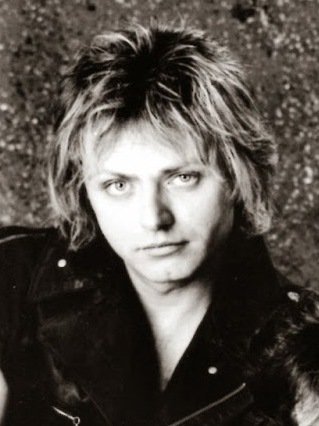
The Goodbye That Refused to Die: The Battles Behind The Cars’ ‘Bye Bye Love’
Some songs arrive with the band that made them famous. “Bye Bye Love” arrived years earlier, and it had to survive the death of one band, the indifference of a record label’s singles department, and a title it shared with one of the most famous records of the 1950s before it became what it is now: the song from the Cars’ debut album that radio simply refused to let go of. It was never released as a single. It had no video, no chart position, no promotional push of any kind. It earned its place the slow way, one FM playlist at a time, until a song about walking away had become the one track from The Cars that never walked away from anything.
The fight behind it is really three fights. The first was Ric Ocasek’s fight to build a band lean and hard enough to deserve his oldest songs. The second was the song’s own fight to get out of the demo pile — it had already been performed and recorded by a group that no longer existed by the time the Cars cut it in London in 1978. And the third was quieter and stranger: sung by Benjamin Orr in his smoothest register, “Bye Bye Love” had to compete inside a nine-track debut album so crowded with hits that Elektra released three singles from it and still left this one on the shelf. That it outlasted most of the singles anyway is the whole story of the Cars in miniature — cold machinery on the surface, and underneath, something that would not quit.
A Song Older Than the Band
“Bye Bye Love” is one of the oldest songs in the Cars’ catalogue, dating back to the mid-1970s, when Ric Ocasek and Benjamin Orr were still years away from the band that would make them famous. That matters, because the song does not sound like a relic. Nothing about its clipped verses, its seesawing keyboard figures or Orr’s poised vocal suggests a composition that predates punk, disco’s peak and the entire new wave moment it would come to define. Ocasek wrote it young and kept it, the way writers keep the songs they suspect are better than their current circumstances.
Ocasek and Orr had been circling each other since the late 1960s, when they met in Cleveland, and they had already burned through several musical lives before the song found its first band: a folk-rock outfit called Milkwood, an acoustic coffeehouse duo billed simply as Ocasek and Orr, and then, in 1975, a six-piece Boston bar band called Cap’n Swing. Each incarnation was a draft of the same idea — Ocasek’s songs, Orr’s voice, a sound that had not yet been invented. “Bye Bye Love” belonged to the Cap’n Swing era, and it carried that band’s DNA: a little jazz in the chords, a little theatre in the delivery, and a chorus built like a door slamming.
What is remarkable, in retrospect, is how much of the finished Cars arrangement is already implied by the song’s construction. The call-and-response backing vocals, the way the keyboard answers each line of the verse like a heckler, the sudden lift into the chorus — all of that is written into the bones of the thing. When the Cars finally recorded it, they were not rescuing a weak song. They were finally giving a strong one the band it had been waiting for.
The Long Way to the Microphone
To understand what Orr does with the song, it helps to know how long he had been preparing to sing it. He was born Benjamin Orzechowski in Lakewood, Ohio, in 1947, the son of a Czech-born mother and a Polish-Ukrainian émigré father — an unlikely pedigree for an American pop frontman, and a fitting one for a singer whose great gift was sounding like everyone’s idea of one. As a Cleveland teenager he fronted the Grasshoppers, a local band with a residency on Cleveland television, the kind of regional fame that evaporates at the city limits. Ocasek first encountered him there, in the mid-1960s, as a face on a TV dance show — and filed him away as the voice his songs would need.
The partnership that followed was a decade of near-misses. There was a spell in Columbus and Cleveland, a move east, the folk-rock band Milkwood, which managed one album for Paramount in 1973 and vanished; then the acoustic duo years, Ocasek and Orr playing the Idler coffeehouse in Cambridge, working out in public the songs and the two-voice arrangement that would become the Cars’ signature. Some of what they played in that room became early Cars songs. The rest became education. Orr learned to sing Ocasek’s cold, ironic writing from the inside, and Ocasek learned exactly how much warmth his songs could hold before they stopped being his.
It is not a short apprenticeship, and “Bye Bye Love” sits at the end of it: a song from the third of their bands, sung by a man who had been singing its author’s material for a decade. When people talk about the Cars’ famous emotional frost, they are usually describing Ocasek. But the frost had a custodian. Orr’s job, across the whole catalogue and supremely here, was to keep the songs human at exactly the temperature the machines around him threatened to freeze them at. The battle in “Bye Bye Love” — composure versus collapse — is one he had been rehearsing half his life.
Cap’n Swing and the Boston Bar Circuit
Cap’n Swing was, by most accounts, a good band playing the wrong music at the right address. Assembled in 1975, it put Orr out front as a pure lead singer — he did not yet play bass in the band — alongside guitarist Elliot Easton, a Berklee-trained player whose fluency ran from Chuck Berry to jazz. The setlist mixed Ocasek originals with the era’s expectations, and among those originals, night after night in Boston bars, was “Bye Bye Love”, alongside titles like “Jezebel”, “City Light”, “Dream Trader” and “Twilight Superman”.
The problem was fit. Cap’n Swing had a jazzy rhythm section and a sophisticated streak that kept pulling Ocasek’s songs toward the supper club, while Ocasek himself was pulling toward something harder, drier and more modern. He was the band’s songwriter and, increasingly, its dissatisfied manager of its direction. The tension between the singer’s elegance and the writer’s ambition is audible in the premise of “Bye Bye Love” itself: a kiss-off delivered without a raised voice, heartbreak arranged for dancing. The Cars’ entire aesthetic — feeling expressed through frost — was already there, trapped inside a band that played too loose to hold it.
Boston in 1975 and 1976 was a club town with a powerful radio station, WBCN, sitting on top of it, and Cap’n Swing did the rounds the way bar bands did: Newbury Street, Cambridge coffeehouses, anywhere with a stage and a till. It was respectable, and it was going nowhere in particular. Ocasek, past thirty and watching younger movements gather speed, knew the difference between a working band and a vehicle. “Bye Bye Love” was a song for a vehicle.
Eleven Songs on a July Day
On July 13, 1976, Cap’n Swing went into Northern Studios and demoed eleven songs. It was a bid for a record deal — the standard ritual of the era, a reel of tape meant to persuade an A&R man in New York or Los Angeles that this Boston bar band was an investment. “Bye Bye Love” was among the material the band carried into that session, and the performance that survives in the historical record tells a fascinating story: in the Cap’n Swing version, the recurring keyboard theme that threads between the verse lyrics — the riff every Cars fan can hum — was significantly different. The song’s skeleton was there. Its signature was not.
The demo did what demos of the period so often did: it attracted attention and conditions in equal measure. WBCN disc jockey Maxanne Sartori, who would become the Cars’ first great radio champion, took to the band and began playing songs from their tape on her afternoon show, an extraordinary break for an unsigned act. But the industry interest came with opinions attached. The band was too jazzy, too soft, too bar-band. The songs were the asset; the presentation was the problem.
That verdict landed on a songwriter who had already reached it himself. Ocasek’s response to the stalemate was not to renovate Cap’n Swing but to end it. He kept the two people the whole project had always depended on — himself and Orr — kept Easton’s guitar, and started over with a new name, a new rhythm section and a new doctrine: no fat, no jamming, no supper club. The songs, including “Bye Bye Love”, were carried out of the wreckage like furniture from a fire.
The Purge and the New Doctrine
The Cars played their first show on December 31, 1976, at Pease Air Force Base in New Hampshire — a new band ringing in a new year, fronted now by two singers who traded lead vocals like relay runners. Orr took up the bass. Drummer David Robinson, late of the Modern Lovers, brought both a minimalist attack and a designer’s eye. Keyboardist Greg Hawkes, who had played with Ocasek and Orr back in the Milkwood days, arrived in February 1977 once he was free to join, and it was Hawkes who completed the rebuilding of “Bye Bye Love”.
That recurring keyboard theme — different in the Cap’n Swing demo, immortal in the Cars version — is the sound of the new doctrine. Hawkes played synthesizer the way the band did everything: precisely, repetitively, with wit instead of warmth. Where the old band had decorated the spaces between Orr’s lines, the Cars weaponized them. The keyboard figure in “Bye Bye Love” is not accompaniment; it is an argument, a mechanical shrug that answers every emotional statement the singer makes. The song’s subject is a man insisting he is fine about a breakup. The arrangement keeps telling you he is not.
In early 1977 the new band cut a nine-song demo, and this time there were no conditions. Sartori played “Just What I Needed” on WBCN, WCOZ picked it up, and the labels that had hedged on Cap’n Swing now competed for the Cars. Arista and Elektra both tried to sign them. The band chose Elektra for a reason that tells you everything about their self-image: Elektra had no new wave acts, so the Cars would stand out there rather than queue up behind Arista’s roster of the fashionable. As Robinson later put it, Elektra “had the Eagles and Jackson Browne, and along comes this crazy Boston band who wanted a black-and-white photo collage on their cover.” The debut album would be made in London with Roy Thomas Baker, the producer of Queen — a man whose maximalist instincts, placed on a leash by Ocasek’s minimalism, produced the most disciplined maximalism in rock. “Bye Bye Love”, three years old and counting, was on the plane.
London, Baker, and the Resurrection
The Cars was recorded with Baker in February 1978 at AIR Studios in London and released on June 6, 1978. Baker was a particular kind of gamble. He was the producer behind Queen’s most layered records, a man synonymous with stacked harmonies and studio excess, and the Cars were a band whose first instinct was subtraction. The genius of the pairing was that each side restrained the other in public and indulged the other in private: Baker got his harmonies, but arranged with a Swiss watchmaker’s economy; Ocasek got his economy, but buffed to a showroom shine. The resurrection of “Bye Bye Love” on that record is a small masterclass in what production is for. Baker layered the band’s harmonies into a gleaming stack, gave Easton’s guitar fills the gloss of a much more expensive band, and let Hawkes’ rebuilt keyboard riff tick away at the center of the track like a clock in an empty apartment. Orr, singing a song he had been singing for years, sounds neither bored nor nostalgic — he sounds like a man who has finally been given the right room to say the words in.
There is a sequencing decision hiding inside that neighborhood, and it flatters the song. Orr sings exactly four of the album’s nine tracks — and three of them are the last three on the record. After “Bye Bye Love” comes “Moving in Stereo”, and after that “All Mixed Up”, Orr’s voice carrying the album all the way to the run-out groove. Whether by design or by the instinct of a producer who knew where his closer lived, side two of The Cars becomes, in its final stretch, a Benjamin Orr recital with the band as his orchestra. “Bye Bye Love” is the door into that stretch — the moment the album hands itself over to its most conventional singer and lets him prove there was nothing conventional about what he did with unconventional material.
Listen to where the song sits in the running order: side two, second track, 4 minutes and 14 seconds long, wedged between “You’re All I’ve Got Tonight” and “Moving in Stereo”. That neighborhood was wall-to-wall radio material, and “Bye Bye Love” holds its own in it through sheer construction. The verses are all tension, staccato and clipped; the chorus opens like a window. Jaime Welton, writing in 1001 Albums You Must Hear Before You Die, called the track a “fan favorite” and singled out Easton as an “unsung hero, littering songs like ‘Bye Bye Love’ with staggeringly good fills.” The fills matter. Easton plays the song’s emotional subtext — every solo break and curlicue says the thing Orr’s cool vocal declines to say.
Rolling Stone’s Kit Rachlis, reviewing the album, heard the band’s harder edge in exactly this material, writing that the songs “bristle and — in their harsher, more angular moments (‘Bye Bye Love,’ ‘Don’t Cha Stop’) — bray.” It was not unqualified praise, and the Cars were never a critics’ band in the way their artier peers were. But Rachlis had located the point: beneath the chrome, this record had teeth, and “Bye Bye Love” was one of the places it bit.
The Riff That Answers Back
It is worth slowing down for the sound itself, because the battle inside “Bye Bye Love” is fought in its arrangement. The song is built as an argument between a man and a machine. Orr delivers the verses in clipped, staccato phrases — statements, not confessions — and between them, Hawkes’ keyboard theme keeps interjecting, a bright, nagging figure that will not let any statement stand unchallenged. In the Cap’n Swing demo, that figure was different, and the difference is the difference between the two bands: the bar band decorated the gaps, the Cars turned the gaps into a second character.
Robert Christgau, reviewing the debut in The Village Voice, caught the tension precisely, praising Ocasek’s “catchy, hardheaded-to-coldhearted songs eased by wryly rhapsodic touches” and playing that was “tight and tough”, while hoping the records would get rawer. “Bye Bye Love” is the exhibit he might have been describing. Its surface is all control: David Robinson’s drums are metronomic without ever swinging, the guitars are compressed into chrome, the backing vocals arrive in polished unison. Underneath, the song is about disintegration — a head full of clouds, a love dissolving into “substitution, mass confusion”, as the lyric’s most famous tangle puts it. The machinery is not hiding the feeling. It is the feeling, rendered by people who believed emotion should be engineered, not spilled.
That is also why the song has never dated the way its contemporaries have. The synthesizer sounds of 1978 are period sounds now, but in “Bye Bye Love” they are not decoration, they are dramaturgy — the sound of the modern world answering a heartbroken man in its own flat voice. Every generation that has found the song since has heard its own version of that exchange.
Cleveland Hears It Live
Six weeks after the album appeared, on July 18, 1978, the Cars played the Agora Ballroom in Cleveland, and the show went out live on WMMS, the city’s flagship rock station. The surviving recording — strong enough that Rhino eventually issued the concert on vinyl as an official live document — catches “Bye Bye Love” fourth in the set, played by a band that had owned the song for years and the album for a month. Rhino executive John Hughes later described the performance as “kind of a fierce live set”, and the fierceness is the point: on stage, without Baker’s lacquer, the song’s argument got louder. Orr sang it in his hometown state, in the city where he and Ocasek had first met as teenagers, a full decade of dues compressed into one radio broadcast.
The live life of the song is part of its legend. WMMS was no ordinary outlet: the Cleveland station was famous for breaking national acts and treating local heroes as conquering ones, and the Agora broadcast became the earliest complete live document of the band — a snapshot of the exact weeks when a Boston bar band’s repertoire turned into a national catalogue. It stayed in the set through the Candy-O tours, a fixture rather than a showcase — the number the band could play in its sleep and never did. For a song that was never a single, the stage and the FM dial were its entire promotional apparatus, and both kept it in front of audiences for years. The Cars were famously a still, unsmiling presence on stage, a band that let the songs do the moving. “Bye Bye Love”, with its internal quarrel between voice and keyboard, moved plenty.
Even the Cover Was a Fight
The band’s battles over the debut were not only musical, and the most visible one hung in every record shop in America. Robinson, the Cars’ resident visual artist, had designed a cover for the album himself — finished, complete, and costing, as he has recalled with a bookkeeper’s precision, exactly $80 to produce. Elektra’s art department found it too bizarre, worried over copyright problems, and demoted it to the inner sleeve. The cover the world got instead — a huge grinning face, the Russian poet and singer Nataliya Medvedeva behind the wheel of a clear steering wheel — was designed by the record company.
The band never made peace with it. Robinson thought the released packaging “was way too slick” and disliked the pictures of the group. Easton was blunter about the face that launched a million dorm-room posters: “Man, I got tired of that cover.” There is an irony in the grievance that neither man could have missed. A band whose entire project was control — of arrangements, of image, of temperature — was introduced to the world inside packaging it had voted against, smiling a smile it had never worn. That the record triumphed anyway became a kind of founding myth for the Cars: the machine worked even when the machine wasn’t theirs. “Bye Bye Love”, deep on side two, never had to appear on that cover or any single sleeve. It just had to be on the record, which it was, waiting out the artwork arguments like it had waited out everything else.
The Single That Never Was
Here is the central absurdity of the song’s career. Elektra released three singles from The Cars — “Just What I Needed”, “My Best Friend’s Girl” and “Good Times Roll” — and all three became hits and permanent radio fixtures. “Bye Bye Love” was not among them. It was never a single at all. In the economy of 1978, that was supposed to be a death sentence for a song’s afterlife: no 45, no chart run, no jukebox presence, nothing but its position on an LP to sustain it.
Instead, album-rock radio adopted it wholesale. The timing was everything. Through the 1970s, American FM had been reorganized around the album-oriented rock format, a system built on the premise that listeners would stay with a station that treated LPs as libraries rather than single-delivery devices — and the consultants who built that format had taught a generation of programmers to mine exactly the kind of record The Cars was: nine tracks, no filler, a debut that played like a greatest-hits album. In that environment, “Bye Bye Love” did not need to be a single. It became, alongside “You’re All I’ve Got Tonight” and “Moving in Stereo”, one of the album tracks that received substantial, sustained airplay, the kind of exposure that builds a song into the permanent repertory. AllMusic’s Greg Prato, surveying the album, placed it among the “lesser-known compositions [that] are just as exhilarating” as the familiar hits — lesser-known being a relative term for a song millions of drivers could sing on demand.
The album itself did the long work: The Cars peaked at No. 18 on the Billboard 200 in March 1979 and then simply stayed, spending 139 weeks on the chart, finishing as the No. 4 album of 1979 on Billboard’s year-end tally, and eventually earning a 6× Platinum certification from the RIAA. Every copy sold put “Bye Bye Love” in another living room. Every FM spin put it in another car — the band’s natural habitat, as a thousand dashboard-radio memories attest. The single that never was became, by accumulation, unavoidable. Prato, looking back for AllMusic, called the debut “a genuine rock masterpiece” on which “all nine tracks are new wave/rock classics” — a verdict that makes the singles department’s dilemma look less like negligence and more like triage. Easton has said the band used to joke the first album should have been called The Cars’ Greatest Hits.
There is a counterfactual that Cars fans have chewed on ever since: released as a single in 1979, with the band’s momentum behind it, what would “Bye Bye Love” have done? The honest answer is unknowable, but the song’s radio life without any single push at all suggests the ceiling was high. Elektra’s singles department did not lose that argument because the song was weak. It lost because the album was too strong — with nine plausible singles and only so many release slots, somebody’s favorite had to be left behind. It happened to be the one that had already been left behind once, by a dead band, two years earlier. The song was used to waiting.
Two Voices, One Goodbye
Every Cars song is also a document of the band’s central relationship, and “Bye Bye Love” is one of the purest. Ocasek wrote it; Orr sings it. That division of labor — the gaunt, sardonic songwriter handing his most emotionally exposed material to the handsome bassist with the velvet delivery — was the band’s founding bargain, and it defined their sound as surely as any synthesizer. Ocasek’s own voice was a acquired-taste instrument, all angles and deadpan. Orr’s was a classic pop voice, warm and centered, the voice radio trusted.
On “Bye Bye Love”, the casting is the meaning. The lyric is a shrug with a heartbeat — goodbye as self-defense, the singer already halfway out the door and insisting the decision was mutual. Sung by Ocasek, it would have been a sneer. Sung by Orr, it becomes something sadder and more believable: a man performing composure so well that the performance itself gives him away. The backing vocals, stacked by Baker into a gleaming choir of Cars, keep answering him like the voice of the life he is leaving. Ultimate Classic Rock critic Dave Swanson later ranked it the fifth-best Benjamin Orr performance in the band’s catalogue, noting that it shares the “same great pop spirit” as its famous namesake — a judgment that also points at the song’s strangest obstacle, which deserves its own consideration.
Because the title was taken. Not legally — song titles cannot be copyrighted — but culturally, completely. “Bye Bye Love” was already the name of the Everly Brothers’ 1957 breakthrough, one of the foundational records of rock and roll, written by Felice and Boudleaux Bryant and covered by everyone from Elvis Presley to Simon & Garfunkel. To release a song with that title in 1978 was to volunteer for a comparison with a monument. That the Cars’ song is now, for a large share of its audience, simply the “Bye Bye Love” of FM rock — coexisting with the Everlys’ record rather than being erased by it — is a measure of how thoroughly radio naturalized it. Two goodbyes, twenty-one years apart, both permanent.
The Demo Comes Out of the Vault
For two decades, the early version of “Bye Bye Love” was a rumor — something the histories mentioned and nobody could play. That changed with Rhino’s 1999 remastered reissue of The Cars, which appended a second disc of the band’s demos and included a 4-minute, 7-second demo of “Bye Bye Love” with Orr singing. For listeners who knew the finished record by heart, it was a genuinely strange experience: the same singer, the same bones, and between the lines of the verses, a keyboard theme that is significantly different from the one Hawkes would build into the master take.
The comparison settles an argument about where the Cars’ magic lived. It was not only in Ocasek’s writing, formidable as that was; the writing had existed for years without producing a classic. It was in the rebuilding — in Hawkes’ instinct for the nagging, unforgettable figure, in Baker’s layers, in a band that had learned, by failing once, exactly which parts of its inheritance to keep and which to melt down. The demo is a good song. The master is a permanent one. The distance between them is the distance between Cap’n Swing and the Cars, and you can measure it in a single keyboard riff.
The vault version also restores a kind of justice. The histories of the band tend to be told as Ocasek’s story, with Orr as his instrument. But the earliest surviving evidence of one of their greatest songs is Orr’s voice, carrying it before the band existed, before the riff existed, before anyone at Elektra had heard the name. The goodbye began with him.
Echoes, Borrowings, and a Film About a Camera
A song’s afterlife is written by other people’s uses of it, and “Bye Bye Love” accumulated the telling kind. In 1989, the glam-metal band Warrant built its hit “Down Boys” on a structure heavily influenced by the Cars track — the debt is a matter of record, and an unlikely tribute: the lean Boston new wave song as blueprint for Sunset Strip swagger. In 2005, a Cars tribute album assembled by the Not Lame label took its very name from a line in the song: Substitution Mass Confusion, drawn from the lyric’s wonderful tangle of “substitution, mass confusion” — the phrase Orr delivers as the relationship dissolves into static. A tribute record named itself after this song’s words. Not after a single. After an album track.
Then Hollywood called. In 2011, J.J. Abrams’ Super 8 — a film steeped in 1979, in kids with cameras and a town full of secrets — placed “Bye Bye Love” in its period tapestry. It was an apt piece of casting: a song that had genuinely been on American radio in the summer the film recreates, carrying exactly the charge the scene needed, nostalgia with an edge of loss. The sync did for a new generation what FM had done for the old one. The song kept being discovered by people who were not looking for it.
And the band itself kept returning to it. The Cars’ November 1978 performance for German television’s Musikladen — filmed in Bremen, broadcast the following June, and eventually issued on DVD by Rhino in 2000, weeks after Orr’s death — features a taut, confident “Bye Bye Love” early in the set, Orr at the center of the frame, the song already a stage standard within months of the album’s release. The footage shows what the record implies: this was never a deep cut in the band’s own estimation. It was a cornerstone they happened never to sell as a single.
Orr’s death from pancreatic cancer in October 2000 froze the song’s meaning in a way no one would have chosen. A goodbye sung by the band member who would be gone first, in a band that would spend its later decades as a study in estrangement — Ocasek’s refusal to reunite, the partial Move Like This reunion in 2011 with Hawkes covering bass parts, and the band’s induction into the Rock & Roll Hall of Fame in 2018, where the survivors performed with Weezer’s Scott Shriner standing in on bass and Orr’s absence at the center of the evening. “Bye Bye Love” had always been a song about leaving with your dignity intact. History kept adding verses.
Why It Endures
Start with the simplest fact: the song survived every filter designed to kill songs. It survived its first band’s collapse and its writer’s ruthlessness in discarding that band. It survived being rebuilt — its signature riff rewritten by a keyboard player who had not been in the room when it was written. It survived an album so loaded that its label never got around to releasing it as a single, and a title already owned in the public mind by the Everly Brothers. It survived the band’s breakup, its singer’s death and its writer’s long silence. At every stage, the only thing keeping “Bye Bye Love” alive was that people who heard it wanted to hear it again.
That is the purest form of the Cars’ whole argument. Ocasek built a machine for removing everything inessential from pop music — the fat, the sweat, the pleading — and “Bye Bye Love” is where you can hear what the machine was for. Strip a breakup song of every sob and you do not get coldness. You get the exact sound of someone holding themselves together in public, which is how most breakups actually sound from the inside. Orr sings it like a man smiling at a party he is about to leave forever, and Hawkes’ keyboard keeps time like the clock over the door.
There is one more turn of the screw. Ocasek died in September 2019, at 75, of heart disease, in the New York home where he had lived the last act of the story. The two men who made “Bye Bye Love” — one who wrote it, one who sang it, neither replaceable — are both gone now, and the song is entirely an artifact, a sealed room from February 1978 in which a decade of friendship and friction is preserved at exactly the temperature they chose. Songs outlive people routinely. What is rarer is a song that had already outlived so much before its makers left: a band, a format, a singles chart it never entered. Longevity was always its subject, in disguise. The goodbye was a promise that the thing saying it intended to stay.
The goodbye refused to die because it was never really a goodbye. It was a demo that outlived its band, an album track that outshone singles, a borrowed title that became its own property. In April 2024, the Library of Congress inducted The Cars into the National Recording Registry, the United States’ official honor roll of recordings deemed “culturally, historically or aesthetically significant” — which means the federal government now keeps a copy of Benjamin Orr singing a song his first band demoed in 1976, preserved as part of the nation’s permanent memory. Forty-odd years on, it still comes out of car radios sounding like it was recorded next week. The Cars made colder songs, bigger songs, stranger songs. They never made one that fought harder to exist — or one that made the fighting sound so effortless.