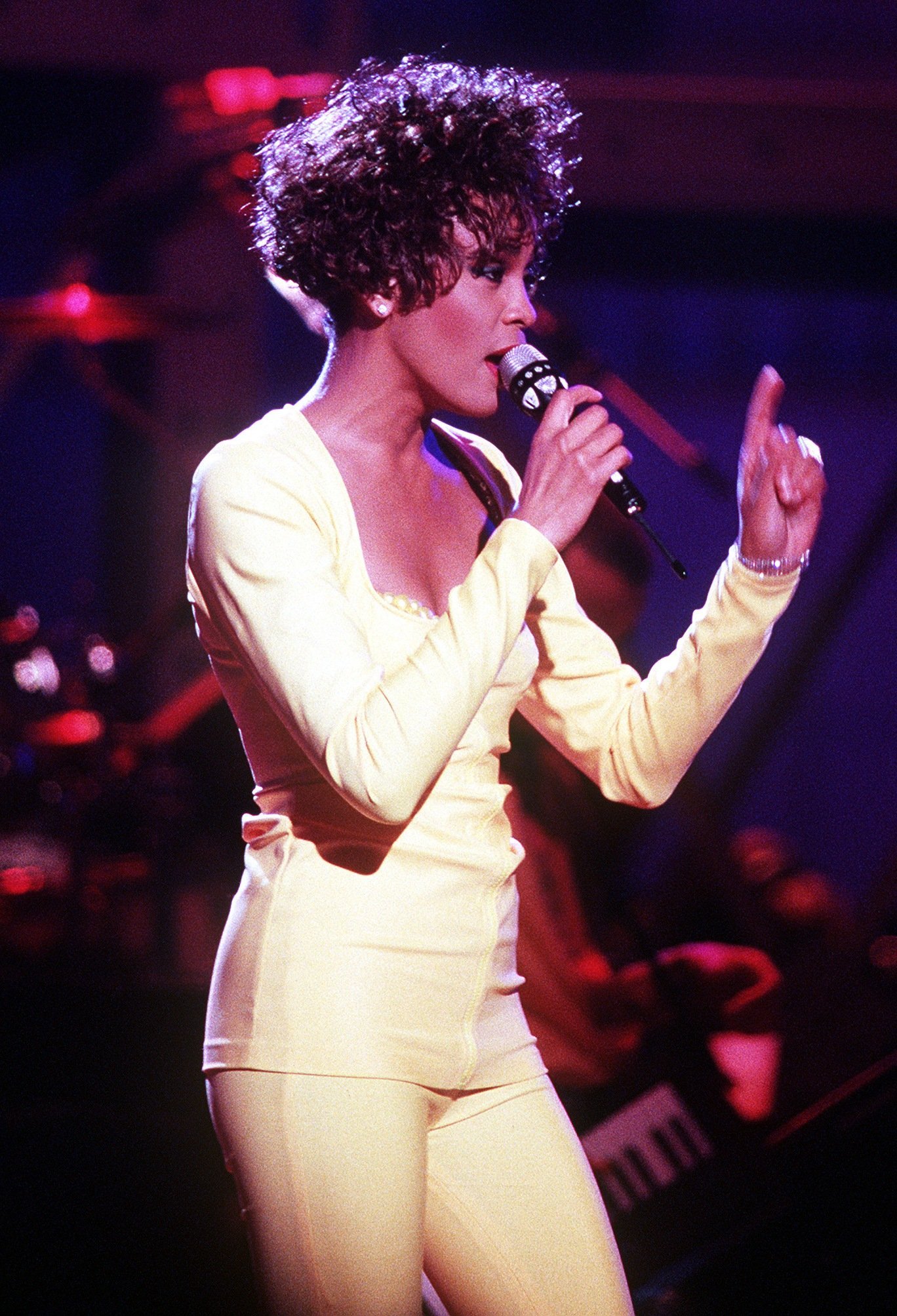
The Eleventh Song: The Battles Behind Whitney Houston’s ‘So Emotional’
Some number-one records are planned like coronations. “So Emotional” was an afterthought that out-argued the plan. In the spring of 1987, Whitney Houston’s second album was effectively finished: ten songs assembled under Clive Davis’s supervision, the most powerful A&R instincts in the business satisfied, the machine ready to roll. Then Davis decided the album was missing exactly one thing — a final uptempo single, something fast and hard enough to prove that the most successful young singer in the world could rock as well as she could swoon. The song commissioned to fill that gap was written by two rock songwriters trying to imitate Prince, delivered on a demo sung in falsetto, and then taken apart and rebuilt by a producer who recorded Houston’s vocal before she had even warmed up. It became the last song recorded for the album, the third single from it, and, on 9 January 1988, the first new number one of the year — her sixth consecutive chart-topper, a feat that broke a solo-artist record set by Elvis Presley and tied her with the Beatles and the Bee Gees. No record in her catalogue did more, with less ceremony, to change what people thought she was.
Its battles were the battles of her whole early career in miniature. “So Emotional” had to fight its way onto an album that was already complete. It had to survive being reimagined by three different sets of hands — writers, producer, singer — each of whom heard a different record in it. It had to fight the critics, some of whom heard the token rock song of a pop princess and said so in print. It had to fight, inside the charts themselves, for acceptance in the R&B and adult-contemporary formats where Houston’s reign was supposedly based, and where, pointedly, it underperformed even as it conquered pop. And then it had to carry the weight of a streak: five consecutive number ones behind it, history in front of it, and a 24-year-old singer expected to keep the sequence alive with a song about losing control of her feelings. That it succeeded — and that it is still succeeding, in drag bars and biopic posters and year-end lists nearly four decades later — is the story of the most underrated fight of Houston’s imperial phase.
Ten Songs and a Missing One
To understand the pressure on “So Emotional”, start with the position Houston occupied in early 1987. Her debut album had become the best-selling debut by a female artist in history; her singles had climbed in an unbroken line; and her second album, Whitney, was the most scrutinised follow-up of the decade. The album was made the way Clive Davis made albums: as an act of casting. Davis, the Arista president who had signed her, functioned as executive producer and chief talent scout, matching a small army of writers and producers — Michael Masser, Kashif, Narada Michael Walden, Jellybean Benitez — to a singer whose voice was the fixed point everything else orbited. By the time the record was nearly assembled, ten songs were ready and completed. The album, as biographer Richard Seal put it, was more or less complete.
But Davis’s instinct, the instinct that had built his legend, told him the balance was wrong. The ten songs leaned toward the ballads and mid-tempo grooves that had made Houston famous; what the album lacked was one more uptempo record with real velocity, a single that could move at the speed of the dancefloor and the rock charts at once. Davis did not commission a committee. He made a phone call to two men in Los Angeles who, in the middle of the decade, had become the most reliable hit-writing partnership in American pop: Billy Steinberg and Tom Kelly.
The call itself is a small landmark in pop history, because of what it interrupted. Steinberg and Kelly had, by then, written number-one hits for two of the era’s defining female stars — “Like a Virgin” for Madonna and “True Colors” for Cyndi Lauper — and they were not, temperamentally, writers-to-order. Their hits had been conceived as songs first and cast afterwards. Now the most powerful executive in the business was asking them to do the opposite: to sit down and deliberately manufacture an uptempo single for a named artist, to a stated specification, for an album that already had ten songs on it. The eleventh song is a peculiar assignment. It must justify displacing nothing — it is pure addition — and yet justify its own existence completely, because an album that survived without it has already voted against needing it. Steinberg and Kelly accepted. What they delivered was not quite what anyone expected, including, in the end, themselves.
The scale of what the eleventh song was joining only became clear later, and it is worth registering now, because it defines the size of the stage onto which this afterthought stepped. Whitney would go on to be certified nine times platinum in the United States and to sell some twenty million copies worldwide. Houston would become the first female artist in history to generate four number-one singles from a single album. The album the song was added to, in other words, turned out to be one of the defining blockbusters of its decade — and the song added last, as a balancing item, became one of the four pillars on which that record-breaking campaign stood. Afterthoughts are not supposed to bear structural weight. This one ended up holding up a quarter of the building.
The Hit Factory with a Dialogue
Steinberg later explained the relationship to Songfacts, and his account is unusually candid about the mechanics of the 1980s hit trade. “A lot of songwriters get together and the first question they ask each other is, ‘Who do you want to write for?’ Tom and I had never done that,” he said, “because I find it restricting — we both like to write a song for the song’s sake and not try to aim at a particular recording artist. In the case of ‘So Emotional’, Tom and I had a regular dialogue with Clive Davis, and he advised us that he was looking for an up-tempo song for Whitney Houston, so we really tried to write for that.” It is worth pausing on the phrase “a regular dialogue”. This was not a single commission but a standing conversation between the industry’s most powerful label head and its hottest writing team — the 1980s pop machine at its most personal, conducted over the telephone, with the specification refined like a brief between architects.
The team itself divided the labour the way the great partnerships usually do: Kelly, the musician, a singer and multi-instrumentalist who could build a track alone; Steinberg, the lyricist, the words man, whose gift was the conversational hook that sounded like something a person would actually say at the moment of maximum feeling. Their run of hits had a pattern — female singers, emotional extremity, titles that were phrases before they were songs. For Houston, the phrase arrived as pure confession: the admission of a woman overwhelmed by an old flame, someone she should be finished with and is not, who hears herself reduced to a single repeated helpless sentence — I get so emotional. The lyric they built around it is deliberately plain. This is not poetry; it is a diary entry at high speed, a woman narrating her own loss of composure in real time, which is exactly why it suited a singer whose greatest gift was making directness sound like virtuosity.
The partnership’s eventual honours underline how safe Davis’s money was. Steinberg and Kelly would finish their careers with five number-one compositions to their joint credit — “Like a Virgin”, “True Colors”, “Alone” for Heart, “So Emotional” and “Eternal Flame” for the Bangles — and in 2011 they were inducted together into the Songwriters Hall of Fame. But in early 1987 that was all in the future; what Davis was buying was a strike rate, two for two at number one with the era’s defining female stars, and a pair of writers disciplined enough to work to a brief without sanding the life off the result. The brief, in this case, could hardly have been narrower: uptempo, for Whitney, to finish an album. The song they wrote to it would outlive almost everything else on their catalogue’s front page.
But if the words were aimed at Houston, the music was aimed at somebody else entirely. Steinberg and Kelly were, both of them, enormous admirers of Prince, and when they sat down to build the track they built it as a Prince record: the brittle Minneapolis funk, the synth-stab rhythm, the coiled guitar, the whole arrangement modelled on the productions coming out of Paisley Park. Kelly sang the demo himself, in falsetto — doing his best Prince, in other words, for a song nominally being written for Whitney Houston. The demo that travelled from Los Angeles to Clive Davis’s office was therefore a double impersonation: two rock writers playing Prince, offering the result to the biggest pop balladeer alive. Davis heard through the impersonation to the song underneath, and passed it to the producer who had made Houston’s uptempo records before. What happened next is the reason songwriters learn to let go of their demos.
Narada Blows It All the Way Out
Narada Michael Walden was Houston’s uptempo specialist: the producer behind “How Will I Know” and the man who would also produce the album’s lead single. Where Steinberg and Kelly’s demo was a lean Minneapolis homage, Walden heard a stadium record. As Tom Breihan later summarised it in Stereogum‘s history of number-one singles, Walden didn’t so much rearrange the song as blow it all the way out — turning the demo into a full Whitney Houston production, synthesised funk-rock at 120 beats per minute, with his own drumming driving it, Walter Afanasieff on keyboards and synth bass, Corrado Rustici, the Italian prog-rock and fusion guitarist who had become one of Walden’s key session men, supplying the guitar-synth attack, and Bongo Bob Smith programming the percussion and drum samples. The Prince influence survived the rebuild — the song is still classified, in part, as synth-funk, and its rhythmic skeleton is Minneapolis to the bone — but it now wore Houston’s colours: bigger, brighter, louder, built for arenas.
The published sheet music tells the same story in numbers. The song sits in common time at a dance-rock tempo of 120 beats per minute, centred in E minor, and its vocal line spans from B3 up to F sharp 5 — better than two octaves of terrain, with the top of it reserved for the moments of greatest abandon. This is the quiet audacity of the whole enterprise: a track engineered for the dancefloor that simultaneously demands a soprano’s range and a rock singer’s attack. It was built, whether by design or by the happy collision of its makers, so that exactly one singer alive could perform it as written. The demo’s falsetto impersonation of Prince had accidentally specified the job; Houston was the only applicant qualified to fill it.
The transformation left a mark on the writers. Steinberg, who has discussed the experience with admirable honesty, admitted that the finished production differed from what he and Kelly had conceived, and that hearing it took adjustment: if you fall in love with your own version of a song, and you are used to hearing it the way you conceived it, it is always hard to get used to someone else’s. It is one of the quiet truths of the hit era that the writers’ demo is a private recording of a song that will never exist; the public only ever hears the compromise. In this case, though, Steinberg’s verdict was generous and precise: “So Emotional” was not, he conceded, as revolutionary a song as “Like a Virgin” or as meaningful as “True Colors” — but it was a strong pop song, and Houston’s recording of it made the team proud. He was right on both counts, and the charts were about to prove the second one emphatically.
What Walden’s rebuild really accomplished was a change of genre allegiance. Steinberg and Kelly’s demo belonged to the lineage of Prince — a man’s record, in attitude and falsetto alike. Walden’s version made the song Houston’s first genuine venture into rock: dance-pop in structure, but with pop-rock and rock classifications trailing it in every reference work since, powered by electric guitar and by a vocal performance that treats the lyric’s hysteria as an opportunity rather than a problem. The recording was scheduled for 1 March 1987 at Right Track Recording in Manhattan — and the session itself became one of the great anecdotes of Houston’s studio life, because of who walked in, and because of the order in which things were sung.
No Warm-Up, and a Rolling Stone in the Doorway
Houston arrived at Right Track that day with a different job in mind. The album was in its final phase, and her session was scheduled for minor changes — touch-ups to tracks that already existed. The new song, the eleventh song, was not the day’s headline as far as she was concerned. Walden, however, had other ideas. On her arrival he steered her to “So Emotional” first, before she had warmed up at all, reasoning that a song about being overwhelmed ought to be sung by a voice that had not yet settled into its professional polish. It was a producer’s gamble of a very particular kind: he was trading the safety of the warmed-up instrument for the grain of the cold one — the fresh, edgy sound of a singer slightly exposed, singing about exposure.
The gamble paid off audibly. The “So Emotional” vocal has a rasp and a forward lean that Houston’s ballad performances deliberately smooth away; she attacks the song rather than caressing it. And the session had one more unplanned contribution. Mick Jagger — in New York, and hearing the track through the studio grapevine or the studio wall — came into the room during the recording and danced along to it, to the delight of Walden and Houston alike. The image is irresistible and, by the standards of studio lore, well attested: the frontman of the Rolling Stones, the defining rock star of his generation, dancing in a Manhattan control room while the defining pop singer of hers cut her first rock record, cold, in a single session’s opening act. Rock legitimacy, which the album had been designed in part to claim, arrived in person and danced.
Two further details of the recording mark how completely Houston owned the result. It was one of the first of her songs on which she sang all the background vocals herself — the choir behind Whitney Houston is Whitney Houston — and she was credited with the vocal arrangement, as she was across the whole album. The eleventh song, commissioned from strangers and rebuilt by her producer, ended up bearing her fingerprints at every level: lead voice, backing voices, arrangement. Whatever “So Emotional” was on paper, on tape it was hers. That ownership would matter in the months ahead, when the album came out and the arguments about what kind of singer she was — pop or soul, authentic or manufactured — reached their loudest pitch of her career.
The Critics Reach for Their Knives
Whitney was released in June 1987 and made history before its third single existed: it was the first album by a female artist to debut at number one on the Billboard 200, and it held the top for eleven weeks. The singles campaign was a procession — the lead single in the spring, the big ballad in the summer, both number ones — and by the time “So Emotional” was released as the third single on 12 October 1987, the only question the industry was asking about Houston was whether the sequence could possibly continue. The critics, meanwhile, had begun to file their dissent, and “So Emotional” collected a representative share of it.
The trade papers were kind: Cash Box, in its Feature Picks on 31 October 1987, called it a playful dance-pop tune headed straight for the top. Vince Aletti, reviewing the album for Rolling Stone, praised Walden’s work on the track as out-hopping his production rivals. But the album reviewers at the St. Petersburg Times delivered the notice that has followed the song ever since, dismissing it as the record’s token rock offering — hollow and contrived, they wrote, as if the trumped-up power guitars were supposed to give it guts. The phrase “token rock offering” is the key to the era’s argument. Houston, in 1987, was the most successful Black singer in the world and simultaneously the target of a gathering critique — from rock critics, from parts of the R&B audience, eventually from within the industry itself — that her music was too pop, too polished, too white in its address; that the voice was a miracle in service of a formula. A rock song by Whitney Houston was never going to be heard as just a rock song. It was going to be heard as a move, and moves invite suspicion.
The retrospective verdict has been considerably warmer than the first notices. Slant, ranking her singles years later, acknowledged frankly that some critics had turned their noses up at the rock-inflected track on release, and argued that what animates it is not the scorched-cheese electric guitars but Houston’s elated performance — her ecstasy, they wrote, practically verging on the religious. Entertainment Weekly ranked it sixth among her best songs, crediting it with illuminating a naughtier, more rollicking side of the sweet-faced starlet; BET placed it tenth in their forty, comparing it to Michael Jackson’s rock-soul mashups; The A.V. Club counted it among her most essential recordings. The rehabilitation is nearly total — but it is important to the song’s story that it was a rehabilitation. In its own moment, “So Emotional” was a number one that a meaningful slice of the critical world received with a shrug or a sneer, which is one more battle it had to win the slow way.
And the charts, those supposedly neutral arbiters, quietly confirmed that the scepticism had a constituency. For while the single conquered the pop chart completely — as we will see — its performance in Houston’s supposed home formats was the weakest of her streak. It reached number five on the Hot Black Singles chart: her ninth consecutive top ten there, but the first single since 1985 to peak below the top three. On the Adult Contemporary chart it stopped at number eight — her first single in years to miss that chart’s top five, breaking her run of five consecutive number ones there. The pop audience took the record to number one; the R&B and easy-listening audiences, the twin pillars of her establishment, held it at arm’s length. It was the sound of a singer outgrowing her categories in real time, and of the categories registering a protest that the history books would later overrule. Set against the protest, one quieter statistic deserves recording: even while underperforming at home, “So Emotional” became only the third single of Houston’s career — after “How Will I Know” and “I Wanna Dance with Somebody (Who Loves Me)” — to reach the top ten on four separate major Billboard charts at once. The arm’s length, in other words, was still an embrace most artists would have traded their catalogues for.
January 9, 1988
The single’s chart run had the rhythm of a siege. Released on 12 October 1987, “So Emotional” debuted on the Hot 100 at number 47 — the Hot Shot Debut of the week dated 31 October — and climbed with the steady inevitability of a record that radio had already decided about. Six weeks later, on the chart dated 5 December, it entered the top ten at number eight, giving Houston three top-ten singles released within a single calendar year for the first time in her career. Five weeks after that, it completed the climb: on 9 January 1988, “So Emotional” replaced George Michael’s “Faith” at number one, becoming the first new number-one single of 1988. It stayed at the top for one week, spent eight weeks in the top ten, fourteen in the top forty and nineteen on the chart altogether, and finished sixth on Billboard‘s year-end Hot 100 for 1988 — a ranking that measures not the height of a peak but the breadth of a year spent in the public ear.
The peak, though, is what history recorded, because of what it counted. “So Emotional” was Houston’s sixth consecutive number-one single on the Hot 100, in an unbroken sequence running back through her debut album. That number broke a record with a famous name on it: Elvis Presley had set the solo-artist mark for consecutive number ones two decades earlier, with five straight chart-toppers between 1959 and 1961 — “A Big Hunk O’ Love”, “Stuck on You”, “It’s Now or Never”, “Are You Lonesome Tonight?” and “Surrender”. Houston’s sixth moved her past the King outright, and into a three-way tie with the Beatles and the Bee Gees for the most consecutive number ones by any act. Billboard‘s Paul Grein, in his Chart Beat column the week of the coronation, noted a second tie it created: with six number ones in the decade, Houston now matched Michael Jackson and Madonna for the most chart-toppers of the 1980s by any artist. She was twenty-four years old, and the company she was keeping in the record books had stopped including anyone alive and active except the two biggest stars on earth.
It also completed a personal grand slam for the song’s writers. “So Emotional” was Steinberg and Kelly’s fourth composition to top the Hot 100, following “Like a Virgin”, “True Colors” and “Alone”, the power ballad they had written for Heart the previous year. Consider what that means as a body of work assembled inside four years: number ones for Madonna, for Cyndi Lauper, for Heart and for Whitney Houston — four utterly different voices, four different corners of the pop map, all carried to the same summit by the same two men. The song Davis had commissioned as a gap-filler had become, for its writers, the fourth jewel in the most reliable hit-writing run of the decade.
The record also colonised the other charts it touched. The remixed version — the work of Junior Vasquez and Shep Pettibone — took the song to number one on the Hot Dance Club Play chart, her second consecutive dance chart-topper, and finished fourth on that chart’s year-end list for 1988; it topped the Crossover Top 30 as well. In Britain, where the single was issued in Pettibone’s remix, it peaked at number five in November 1987, her fifth UK top ten. It reached number three in Ireland, number nine in Canada, number one in Luxembourg, and the top twenty across much of Europe. It won two trophies at the 1988 Garden State Music Awards, in the rock/pop and R&B/dance categories — a small, tidy emblem of the double life the record had led all along. Gold certification in the United States, oddly, did not arrive until 1995, and platinum not until January 2023; the paperwork trailed the phenomenon by decades, as paperwork does. Worldwide, the song has sold more than 1.7 million copies.
And the streak, of course, did not stop at six. Three months later the album’s fourth single, the ballad “Where Do Broken Hearts Go”, reached number one on 23 April 1988, making it seven consecutive chart-toppers — past the Beatles, past the Bee Gees, a record that stands as one of the defining statistical achievements in chart history. “So Emotional” is the hinge of that record: the sixth of seven, the one that broke Elvis, and the one recorded under the strangest conditions of the whole sequence — last, fastest, coldest, and with a borrowed falsetto demo still echoing inside it.
A Leather Jacket at Stabler Arena
The video made the song’s argument in pictures. Houston was in the middle of the Moment of Truth World Tour, and the clip was shot during a brief break in the itinerary, at the Stabler Arena of Lehigh University in Bethlehem, Pennsylvania — by most accounts the first music video ever filmed at the arena. The director was Wayne Isham, whose résumé ran to Mötley Crüe, Bon Jovi and Judas Priest: a hard-rock and metal specialist, and Houston was one of the first female solo artists to work with him. Isham, as Stereogum later noted, stole his own best trick — the structure he had used for Bon Jovi’s “Livin’ on a Prayer”: the band alone in an empty arena, rehearsing; then, as if by magic, the crowd is there, and the performance is real. For the shoot, some 2,500 fans were admitted on free tickets distributed through local record stores in the days beforehand, and Houston reportedly rehearsed for seventeen days in preparation.
What the video sold, above all, was a wardrobe change in the star’s identity. Houston arrived with her own clothes: for the rehearsal footage, a black leather jacket, white tank top, blue jeans and boots; for the performance, a grey metallic blazer and black miniskirt. Set against the pastel gowns and jewel-toned glamour of her earlier videos, the rehearsal look was a manifesto — the pop princess photographed as a rock singer at work, spinning in a leather jacket while her band, with Narada Michael Walden himself behind the drums, built the song around her. The video premiered on MTV in November 1987 and moved into heavy rotation within weeks, with BET and Night Tracks carrying it in a form shaped by the dance remixes. It was, in the simplest sense, an advertisement for the idea that Houston belonged on a rock stage. The idea has since become so natural that it takes an effort to remember it was ever in dispute — which is, of course, the video’s victory.
The look proved to be one of the most durable images of her career. When Childish Gambino released the animated video for “Feels Like Summer” in 2018, Houston appears among its parade of cultural icons drawn in her “So Emotional” single-cover guise. And when the poster for the 2022 biopic Whitney Houston: I Wanna Dance with Somebody was revealed, it showed Naomi Ackie as Houston in the same outfit — leather jacket, tank top, jeans and boots. Of all the gowns, all the stage costumes of a thirty-year career, the image the film industry chose to stand for Whitney Houston was the eleventh song’s rehearsal clothes.
On Stage, the Argument Continued
Live, the song had to be reinvented repeatedly, and its stage history reads as a tour-by-tour negotiation with its own tempo. It was absent from the North American leg of the Moment of Truth tour in 1987 — it did not exist as a single when that itinerary was built — but when the tour went global through 1988, “So Emotional” entered the set, performed at a higher pitch and faster, harder rock tempo than the record, with Houston backed by dancers, fourth in the running order. She performed it on television around it — alongside “Didn’t We Almost Have It All” on the Power Hits 1987 broadcast — and, on 11 June 1988, in the eight-song set she sang at Wembley Stadium for the Nelson Mandela 70th Birthday Tribute, one of the defining broadcast concerts of the decade.
For the Feels So Right tour of Japan in 1990 and the I’m Your Baby Tonight World Tour of 1991, the arrangement changed skin entirely: back to the original pitch, slowed into a hip-hop groove, Houston in a catsuit and headpiece performing elaborate choreography with her male dancers. On the second North American and South African legs of The Bodyguard World Tour in 1994, it mutated again, into funk-rock with horns, the choreography dropped, a singer now in her thirties letting the band carry the sweat. She was still performing it at the Brunei royal wedding celebration in 1996. Television kept finding it work as well: the song featured in her Yokohama Arena concerts broadcast on Japanese television at the turn of the decade, and in Spain for her 1992 ABC special This Is My Life, by which time the uptempo rocker had settled into the dependable role of the energy number — the song a show deployed when it needed the room lifted. Few songs in her catalogue were re-dressed so often — ballads she tended to fix in amber — and the restlessness of its arrangements tells its own story: “So Emotional” was never a monument, it was a vehicle, and vehicles get driven differently every year.
Its strangest stage, though, was one Houston never stood on. In 2017, in the ninth season of RuPaul’s Drag Race, the drag artist Sasha Velour lip-synced “So Emotional” in the season’s climactic battle against Shea Couleé — and, at the song’s crest, removed her wig to release a cascade of rose petals, in a gesture that became instantly canonical in the show’s history and won her the crown. The A.V. Club named it the best television performance of 2017. Velour later explained the choice to CNN, in an article on Houston’s influence on gay culture, as an attempt to capture the feelings the song holds in suspension — loneliness, heartache, love, loss, grief — all building as Houston’s performance builds. After the broadcast, streams of “So Emotional” on Spotify rose by 650 per cent. A song written to order, for an album that didn’t need it, had become the vessel for one of the most discussed television moments of its decade — carried there, as Velour understood, by the fact that its simple lyric leaves room for every feeling a performer brings to it.
Why It Endures
The song’s afterlife has been generous in other media too. Beyoncé sampled it on “Daddy”, from her 2003 solo debut Dangerously in Love — Houston’s ecstasy folded into the next generation’s origin story. Glee covered it in its 2012 Houston tribute episode. Jon McLaughlin reimagined it as a ballad in 2019, which is perhaps the ultimate proof of a pop song’s construction: slow it down, strip the Minneapolis funk and the arena gloss away, and the melody still holds a room. Claire Richards took it back to the dancefloor in 2023. The list-makers, as we have seen, have adopted it wholesale — Slant, Entertainment Weekly, BET, MTV, American Songwriter and The A.V. Club all rank it among her finest records, a consensus that would have startled the St. Petersburg Times in 1987.
But the deepest reason “So Emotional” endures is the one embedded in its own irregular birth. The streak it extended to six — and that its successor extended to seven — is usually told as a story of a machine that could not miss: Davis’s instincts, Houston’s voice, the era’s appetite. “So Emotional” is the exception that reveals the machine’s actual secret. It was the record nobody planned, written by men imitating Prince for a singer who did not sound like Prince, rebuilt by a producer who threw out their conception, sung cold at the start of a session meant for other work, reviewed with suspicion, and held at arm’s length by the very formats that were supposed to be its home. It went to number one anyway, and broke Elvis Presley’s record on the way. The battles behind it were not obstacles to its success; they were its method. Houston’s imperial phase is often remembered as effortless. Her sixth consecutive number one is the one that proves it never was — it only sounded that way, at 120 beats per minute, sung before the warm-up, with everything still to fight for.