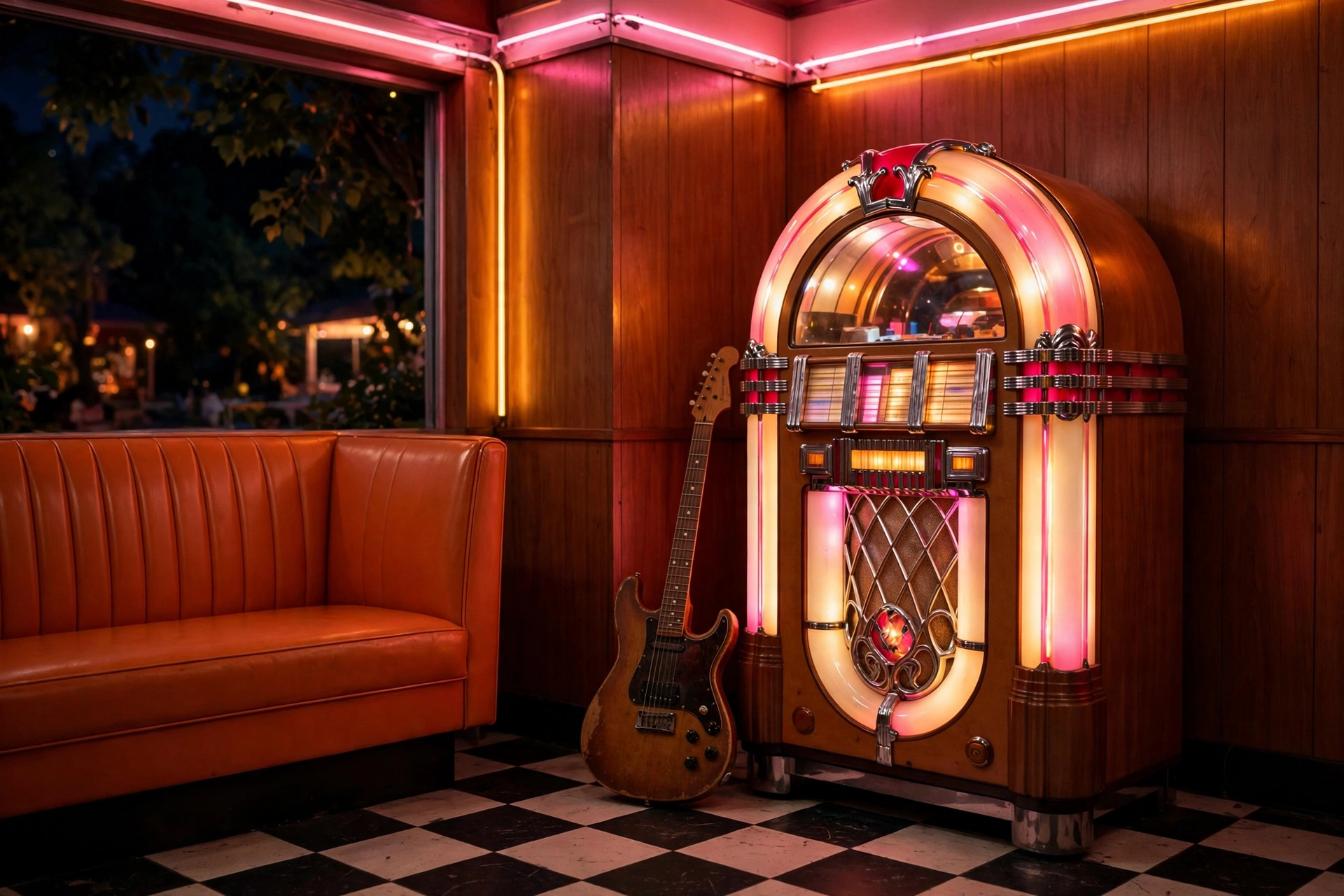
Do you remember the summer of 1979, when one guitar riff seemed to be coming out of every car radio at once? It started with a stuttering drumbeat, then a guitar line that jabbed and danced, and then a voice singing about a girl whose name became the most famous name of the season. The song was My Sharona, and for a few golden months it was simply everywhere: on the radio, in record stores, at parties, on the jukebox in every bar. If you were young in the summer of 1979, you did not just hear this song. You lived inside it.
The band behind it was The Knack, a group from Los Angeles who played a style that critics called power pop: short, sharp, guitar-driven songs with big choruses, owing something to the British invasion bands of the 1960s but dressed in the tight jeans and skinny ties of the new wave era. They were not a heavy band and they were not a punk band. They were a pop band that played loud, and their debut album arrived with enormous expectations. The record company promoted them heavily, and for a while it looked like the hype might actually be justified, because the first single was one of the most instantly catchy records of the decade.
The song’s secret was its energy. It barely pauses for breath. The drums push forward, the guitar riff repeats and twists, and the vocal rides on top with the urgency of someone who has just fallen in love and cannot wait to tell the world. The girl in the song was real: the band’s singer had met a young woman named Sharona, and the song poured that sudden infatuation into three and a half minutes of pure adrenaline. Listeners did not need to know the backstory to feel it. The record sounded exactly like a crush feels: exciting, obsessive, a little breathless, and impossible to ignore.
When it was released in 1979, My Sharona shot to the top of the American charts and stayed there through the summer, becoming one of the biggest singles of the year. It was the kind of hit that crossed every boundary: teenagers loved it, rock fans loved it, pop radio loved it, and even people who claimed not to like chart music found themselves humming the riff. Record stores could barely keep the single in stock, and the band’s debut album sold in huge numbers on the strength of that one song. For a few months, The Knack looked like the next great American band.
Then came the backlash, which is part of almost every one-hit wonder story, but rarely as fast or as fierce as this one. The heavy promotion that had launched the band now worked against them. Some critics and listeners decided the band had been overhyped, and the excitement curdled into scepticism. Follow-up singles did not repeat the magic, and the band’s moment passed with startling speed. By the early 1980s, The Knack were already spoken of as a cautionary tale: proof that a massive debut could be as much a curse as a blessing.
That reputation was unfair, and time has softened it. Stripped of the hype and the backlash, My Sharona is simply a brilliantly constructed pop record. The riff is one of the most recognisable in all of rock, the kind of guitar line that can fill a dance floor within two seconds. The rhythm section is tight and relentless, the production is clean and punchy, and the whole thing is over before it has a chance to wear out its welcome. Great pop singles are often simple, but simple is not easy, and this one gets every detail right: the tempo, the hooks, the pauses, the build.
The song also captured a very specific moment in American pop. The late 1970s were dominated by disco on one side and by softer rock on the other, and guitar-driven pop with a new wave edge felt fresh and urgent by comparison. My Sharona arrived like a jolt, a reminder that a loud guitar and a great chorus could still stop a room. It pointed forward to the power pop revival of the years that followed, and bands in later decades have cited it as a model of how to write a perfect single, even if they never matched its success.
For fans who were there, the song is pure summer. It is the sound of a car window rolled down, a beach party, a first dance at a school disco, a record store where the single seemed to be playing every time you walked in. It is also, for many listeners, a song about being young and wanting someone so much that it feels like a song is bursting out of you. That feeling does not age. New generations keep discovering the record through films, commercials, and oldies radio, and the riff still does its work instantly, even on listeners who were born decades after 1979.
The band’s later career only adds to the poignancy. The Knack kept playing and recording, and the song never left their setlists, because audiences would not have allowed it to. Every show ended, or nearly ended, with the riff that made them famous, and every audience sang along. There is something both triumphant and bittersweet about that: one perfect song, carried for a lifetime, loved by everyone except, perhaps, the people who made it and wished the world would listen to the rest of their work too.
So here is the question for you. Where were you in the summer of 1979 when My Sharona was everywhere — in a car, at a party, on a dance floor — and did you love it instantly, or did the hype put you off before the song won you over? And be honest: can you hear that opening riff in your head right now, without even playing the record? Tell us, because for millions of fans, this song is not just a one-hit wonder. It is the sound of one perfect summer, pressed into three and a half minutes of guitar-driven joy.
About the author: Tommy Hayes writes about the songs that defined America in the 1970s and 1980s. He grew up with a radio always on — in the kitchen, in the car, in a bedroom with posters on the wall — and he writes from that memory: what these songs meant then, and why they still matter now.
Keep reading:
2 thoughts on “My Sharona”