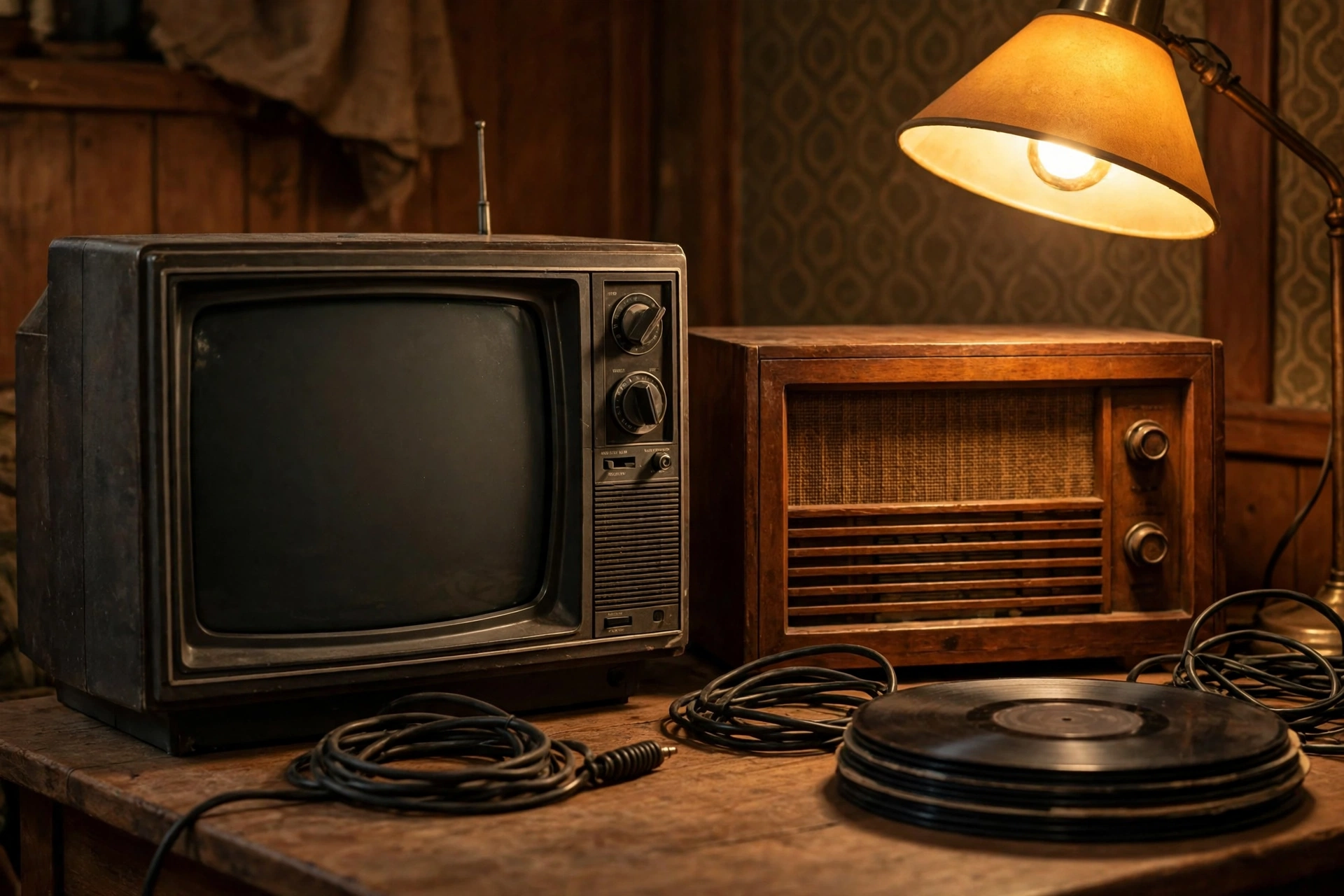
Do you remember the first time you watched music instead of just listening to it? For many Americans, that moment came on a summer day in 1981, when a brand-new cable channel called MTV flickered onto television screens and promised twenty-four hours of music videos. The first video it played was not by a superstar. It was by a British duo most viewers had never heard of, and the song was called Video Killed the Radio Star. It was a strange choice and a perfect one. A song about television pushing radio aside became the opening act for the television age of music.
The duo behind it called themselves The Buggles. They were Trevor Horn and Geoff Downes, two young musicians working in London in the late 1970s, at a moment when pop music was changing fast. Guitars still ruled the charts, but synthesizers were creeping in, and a new kind of pop was taking shape: bright, artificial, futuristic, built on keyboards and drum machines rather than a traditional band. The Buggles were part of that wave. They looked like the future and they sounded like it too, with gleaming electronic textures and a melody that stuck in your head after a single listen.
The song itself was released in 1979, and it was an immediate success in Britain, where it climbed to the top of the charts. In America its story was quieter at first. It was a hit, but a modest one, the kind of record that radio DJs liked and curious listeners remembered without it ever becoming a giant American single. That is part of what makes its story so unusual. Most one-hit wonders are remembered for one huge chart moment. This one is remembered for two moments, and the second was bigger than the first.
The song’s subject was nostalgia, which is ironic for a record that sounded so modern. It looked back fondly on the golden age of radio, when voices came out of a wooden box in the living room and listeners imagined the singers for themselves. The coming of television, the song suggested, changed that bargain: suddenly performers had to be seen as well as heard, and something intimate was lost. It was a gentle complaint, not an angry one, wrapped in a catchy chorus and a futuristic arrangement. Listeners in 1979 could enjoy it simply as a clever pop song. Only later did it start to feel like a prediction.
That prediction came true on the first day of August 1981, when MTV launched in the United States. The channel’s very first broadcast was the video for Video Killed the Radio Star, a decision that turned a two-year-old British single into a piece of television history. Millions of people who had barely noticed the song in 1979 now knew it as the answer to a trivia question, and then, because the song was genuinely good, as much more than that. Every retrospective about MTV begins with it. Every story about the video age starts with two musicians in silver suits singing about the end of the radio age.
There is a pleasing twist in what happened next to the men who made it. Trevor Horn went on to become one of the most successful record producers of the 1980s, shaping the sound of other major acts, while Geoff Downes joined successful rock bands of the new decade. Neither man ever had another hit quite like this one under the Buggles name, which is exactly why the song belongs in a collection of one-hit wonders. But unlike most one-hit wonders, its makers did not disappear. They simply moved behind the scenes, where their influence on the sound of the decade was enormous.
The song also endures because its theme never went away. Every new technology in music has brought the same anxiety: that something human and familiar will be replaced by something flashier and colder. Radio feared television. Television feared the internet. Each time, the old medium survived in a new form, and each time, the song felt current again. It is played today at retro nights and in documentaries about the 1980s, and younger listeners discovering it for the first time usually smile at the same joke that made it famous: a song warning that video would kill the radio star became the most famous video of all.
For fans who were there, the song is tied to two different memories. The first is 1979: a strange, shiny new sound on the radio, unlike anything else on the charts. The second is 1981: a television screen in a living room or a bar, and the slightly unreal feeling of watching music all day for the first time. Few songs get to be part of two eras at once. This one managed it, first as a hit and then as a symbol, and that is why it still opens every conversation about the decade when music learned to move.
The video itself became part of the legend. It showed the duo in a gleaming, retro-futuristic world of silver costumes and old-fashioned radio equipment, as if the past and the future were sharing the same room. That visual joke matched the song perfectly: it mourned the radio age while dressing up in the clothes of the video age. Viewers in 1981 had never seen anything quite like it, and the clip’s playful, slightly surreal style helped set the template for the music videos that followed. Within a few years, videos were mini-movies with budgets and directors, but this one remains charming precisely because it was made before all of that, when the form was still an experiment.
The record’s sound was just as new as its subject. Layered synthesizers carried the melody, a drum machine kept the beat steady, and bright backing vocals lifted the chorus into something almost anthemic. Nothing about it sounded like a rock band in a room, and that was the point. Pop was learning to be made by machines, and the Buggles made that future sound fun rather than frightening. Even listeners who loved traditional rock could hum this song, because underneath the electronics there was a classic pop melody, the kind that had always made hits, dressed in brand-new clothes.
So here is the question for you. Did you first hear Video Killed the Radio Star on the radio in 1979, or did you first meet it on MTV in 1981, when it introduced a whole new way of experiencing music? And looking back now, do you think the song was right to worry — or did video simply give the radio stars a bigger stage? Tell us, because for millions of fans, this song is not just a one-hit wonder. It is the moment pop music changed channels.
About the author: Tommy Hayes writes about the songs that defined America in the 1970s and 1980s. He grew up with a radio always on — in the kitchen, in the car, in a bedroom with posters on the wall — and he writes from that memory: what these songs meant then, and why they still matter now.
Keep reading:
3 thoughts on “Video Killed the Radio Star”