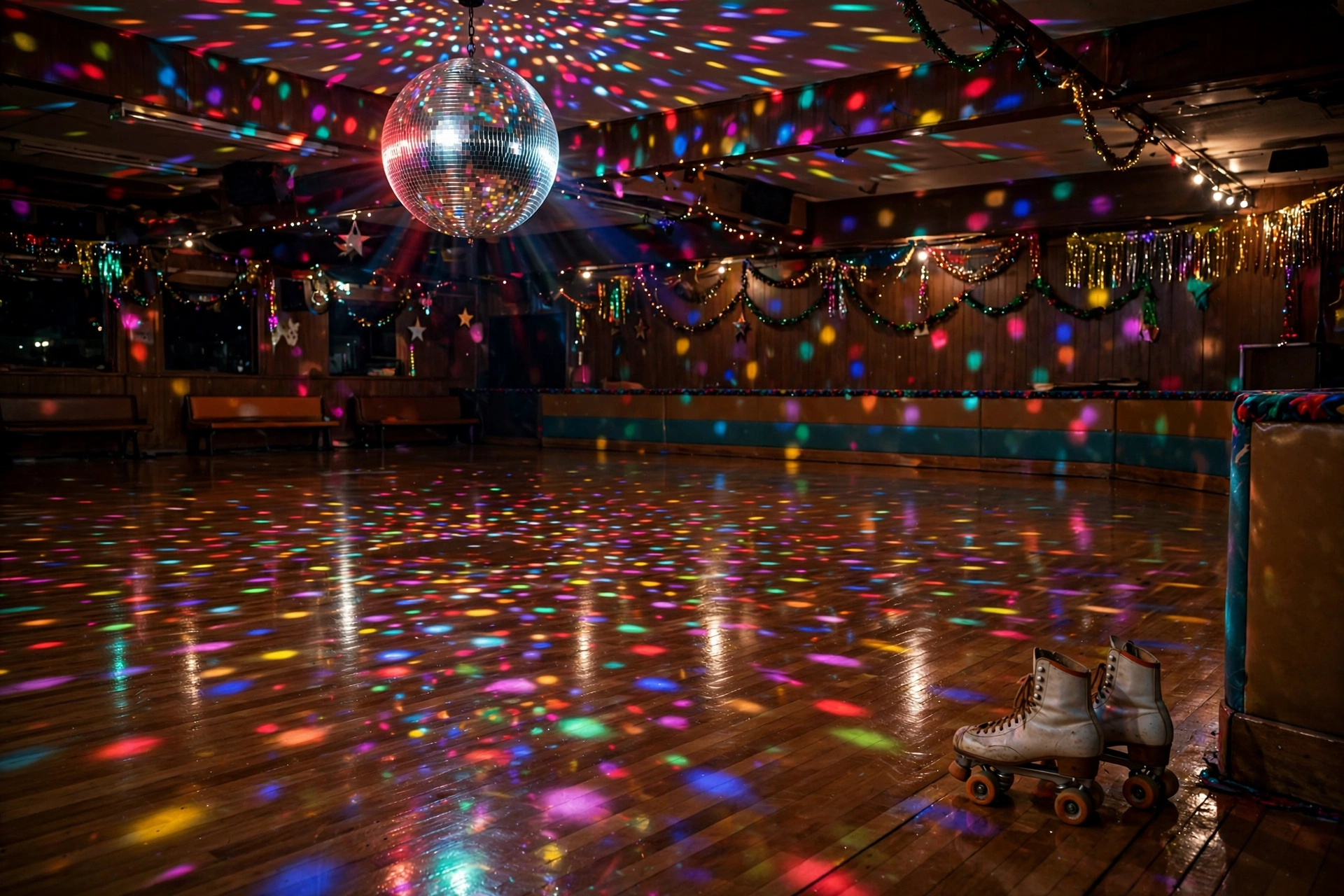
Do you remember the last great disco song, the one that kept the dance floor full even as the world was starting to say disco was over? It opened with a clean guitar line and a voice asking, again and again, to be taken to a place where the music never stopped. The song was Funkytown, and in 1980 it was everywhere: on the radio, in clubs, at roller rinks, at school dances, anywhere people still wanted to move. It was an invitation to an imaginary city, and for one long summer, millions of listeners accepted it.
The act behind it was called Lipps Inc, and it was less a traditional band than a studio project from Minneapolis, put together by the musician and producer Steven Greenberg. The lead vocal belonged to Cynthia Johnson, whose clear, bright voice gave the record its warmth and lift. Minneapolis was not yet famous as a music city — that would come later in the decade — but its studios were already producing records with a distinctive, polished funk sound, and Funkytown was the first of them to conquer the world.
The song’s idea was beautifully simple. Instead of singing about a real place, it sang about a dream place: a town where the groove never ends, where the lights are always on, where everybody dances. In 1980 that fantasy had a special pull. Disco, which had dominated the second half of the 1970s, was facing a backlash in America. Radio stations were dropping the format, rock fans were declaring the genre dead, and many disco acts were watching their careers fade. Into that moment came a record that did not apologise for disco at all. It celebrated it, purely and joyfully, and listeners responded.
Released at the turn of the decade, Funkytown became a huge international hit, reaching the top of the American charts in 1980 and topping charts in many other countries as well. It was one of the last disco records to achieve that kind of worldwide dominance, and its success felt, even at the time, like a final blaze of glory for the genre. The production was immaculate: a crisp rhythm section, shimmering keyboards, a guitar line that hooked you instantly, and a vocal that sounded both inviting and unstoppable. It was music engineered for movement, and it worked on every dance floor it touched.
What made the record endure, long after disco’s commercial peak had passed, was its purity. It had no gimmick and no irony. It was simply a perfect dance record, built on a groove that never lets up and a chorus that anyone can sing. Later generations discovered it through oldies radio, films, commercials, and retro dance nights, and the reaction was always the same: feet start moving before the brain has time to object. It is one of those rare songs that can make a room full of strangers feel like they are at the same party, even decades after it was made.
For fans who were there, Funkytown is the sound of a very specific summer: the end of the disco era, the beginning of a new decade, roller skates and mirror balls, the last nights when disco still ruled the radio without apology. It is also, for many listeners, a song about escape, and that theme never ages. Everybody has a version of Funkytown in their head: the place they go, in their imagination, when real life gets dull and the music needs to be louder. The song simply gave that feeling a name and a beat.
Lipps Inc never repeated the trick in America, which is why the song belongs among the great one-hit wonders. Later singles did not catch the same fire, and the project gradually faded from the charts. But the band’s one giant hit outlived almost all of its contemporaries, because it was not tied to a fashion or a moment. It was tied to something simpler and more durable: the human desire to dance, and to find a place where the music plays all night long.
The song’s legacy also includes its hometown. Minneapolis would go on to become one of the most important music cities of the 1980s, and Funkytown is now remembered as an early sign of what was coming out of its studios: funky, polished, danceable pop with a character all its own. Listening to it today, you can hear the seeds of a sound that would soon conquer the world through other Minneapolis artists, even if Lipps Inc themselves only got one turn at the very top.
The groove itself deserves a closer listen, because it is a small marvel of studio craft. Every element has room to breathe: the bass walks steadily underneath, the guitar answers it with short, bright phrases, and the keyboards shimmer on top without ever crowding the vocal. Nothing is wasted and nothing is rushed, which is why the record still sounds fresh on a good sound system. It was made for dancing, but it was also made for listening, and that double life is the reason DJs have never stopped reaching for it, from roller rinks in 1980 to retro nights today.
There is one more reason the song refuses to fade: it is genuinely fun to sing along to, even for people who cannot carry a tune. The repeated invitation in the chorus turns every listener into a participant, and a record that makes its audience part of the performance has a built-in afterlife. Every new crowd that discovers it becomes, for three minutes, a citizen of Funkytown.
So here is the question for you. When Funkytown comes on, do you remember the summer of 1980 — the mirror balls, the roller rinks, the last great days of disco — or did you discover it later, and wonder how a song this joyful could ever have been declared out of fashion? And be honest: where is your Funkytown, the place you go when you need the music to take over? Tell us, because for millions of fans, this song is not just a one-hit wonder. It is a one-way ticket to the happiest imaginary city in pop, and the ticket never expires.
About the author: Tommy Hayes writes about the songs that defined America in the 1970s and 1980s. He grew up with a radio always on — in the kitchen, in the car, in a bedroom with posters on the wall — and he writes from that memory: what these songs meant then, and why they still matter now.
Keep reading: