Andy Williams / Behind the Songs
(Where Do I Begin) Love Story: The Movie Theme That Brought Him Back to the Top 10
Nine years after his biggest hit, a weeper of a film handed the veteran crooner his last great chart moment.

The record in context
The film was a phenomenon of tears. Love Story (1970), starring Ali MacGraw and Ryan O’Neal, was the weepie that defined an era — the tragic romance of a Harvard boy and a Radcliffe girl, summed up in the line everyone quoted: “Love means never having to say you’re sorry.” Francis Lai wrote the score, and his aching piano theme ran through the picture like a pulse. When lyricist Carl Sigman added words, beginning with the immortal question “Where do I begin,” it became “(Where Do I Begin) Love Story” — and the question of who would sing it became a small event in itself.
Andy Williams was forty-three, a television institution, the man who would host the Grammy Awards every year from 1971 to 1977. His days as a chart-topper were supposedly behind him; the pop world belonged to singer-songwriters now, to Carole King and James Taylor, men and women barely half his age. And yet his single of the “Love Story” theme reached number nine on the Billboard Hot 100 in 1971 and spent four weeks at number one on the Easy Listening chart. It was his first Top 10 pop hit in eight years, and it would be his last. The veteran had one more run in him, and a movie theme — his favorite kind of material — provided it.
There is a symmetry worth savoring. Williams’s career had been built on film songs: “Moon River,” “Days of Wine and Roses,” “The Shadow of Your Smile.” Each time Hollywood wrote a great melody, he was there to give it a voice. “Love Story” was the last of the line, the final entry in his unofficial series of movie-theme triumphs. He didn’t chase the youth market; he let the best song of the year come to him, and then he sang it the way only he could.
Listen closely
Start with the opening, because the song asks its own question: “Where do I begin to tell the story of how great a love can be?” Listen to how Williams answers — not with grandeur, but with quietness. His voice enters over a simple piano figure, almost conversational, as if he is genuinely unsure where to start. It is a masterful piece of acting: the great crooner pretending to be an ordinary man overwhelmed by feeling. The restraint makes the emotion credible. A lesser singer would have opened with the big notes; Williams opens with a whisper, and the whisper is what you remember.
Then listen for the build, which is the record’s architecture. The arrangement grows verse by verse — strings entering, the piano figure deepening — and Williams grows with it, his voice opening up on the chorus without ever breaking its composure. On “how long does it last,” there is a lift that feels like the whole orchestra inhaling at once. This is the technique he had perfected over a decade of film themes: the slow swell, the held-back power, the refusal to peak too soon. By the final chorus, when he sings of a love that “can never be divided,” the voice is at full strength — but it is strength held in reserve, a tide rather than a wave.
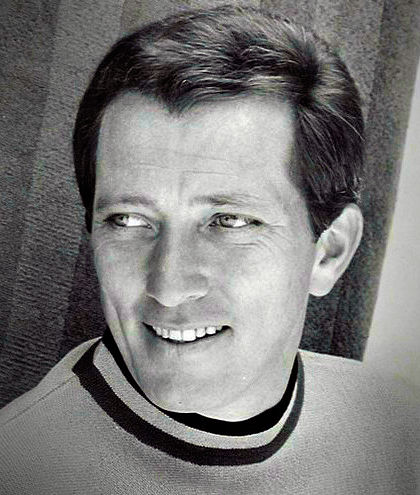
Finally, listen for what the record meant. In 1971, the charts were full of confessional singer-songwriters baring their souls in jeans and flannel. Here came Andy Williams in a tuxedo, singing a movie theme with a full orchestra — and the audience, millions strong, welcomed him back into the Top 10. It was proof of something he had always known: that there is no expiration date on a beautiful melody sung beautifully. The film’s tagline said love means never having to say you’re sorry. Williams’s version suggested something else: that class, too, is forever.
Notice how Carl Sigman’s lyric is built entirely of questions — “Where do I begin,” “how long does it last,” “can I tell you” — as if the singer is working the story out in real time. Williams, the most polished vocalist of his generation, plays the uncertainty beautifully: each question lands a little softer than the last, like a man thinking aloud. And underneath it all runs Francis Lai’s piano figure, the heartbeat of the film itself, which the arrangement wisely never buries. There is a bookend quality to this record that is worth sitting with. His first number one, “Butterfly” in 1957, was a teenager’s song sung by a young man; his last Top 10, fourteen years later, was a grown man’s song sung by a veteran. Between them lies one of the great runs in popular music — and it ends, fittingly, with a question.
Release and recording reference ↗
Release context is sourced above. Listening observations are Past Tunes’ original interpretation, not quotations from the artist.
More from Andy Williams
The Oscar song he never released as a single, and sang for the rest of his life.
1963 / Behind the SongsCan’t Get Used to Losing You: The Rock-and-Roll Songwriters’ Crooner HitElvis and the Drifters’ songwriters wrote it; a crooner made it swing.
1963 / Behind the SongsDays of Wine and Roses: Two Oscars, One VoiceTwo Oscars for Mancini and Mercer, one definitive voice on the title song.
1963 / Behind the SongsIt’s the Most Wonderful Time of the Year: The Christmas Song That Waited Fifty YearsA modest seasonal album cut that took half a century to become a classic.
1964 / Behind the SongsAlmost There: The Almost-Number-One Britain Loved and America OverlookedAmerica barely noticed it; Britain took it to number two — a transatlantic near-miss.
1966 / Behind the SongsThe Shadow of Your Smile: The Oscar Winner He Made His OwnThe Oscar-winning film theme he folded into his evening like a favorite jacket.
1967 / Behind the SongsMusic to Watch Girls By: The Commercial Comeback Nobody PlannedA soda jingle turned into a pop hit — then a commercial turned it into a hit again.
1968 / Behind the SongsCan’t Take My Eyes Off You: The Crooner’s Cool CoverFrankie Valli’s tower of brass, rebuilt in velvet.
1973 / Behind the SongsSolitaire: The Gambler’s ConfessionA gambler’s confession written by Neil Sedaka, delivered without a wink.