Artist collection / Pop · Easy Listening · Christmas
Andy Williams
The voice that made America feel like home — steady, warm, and always in control.
A voice worth returning to
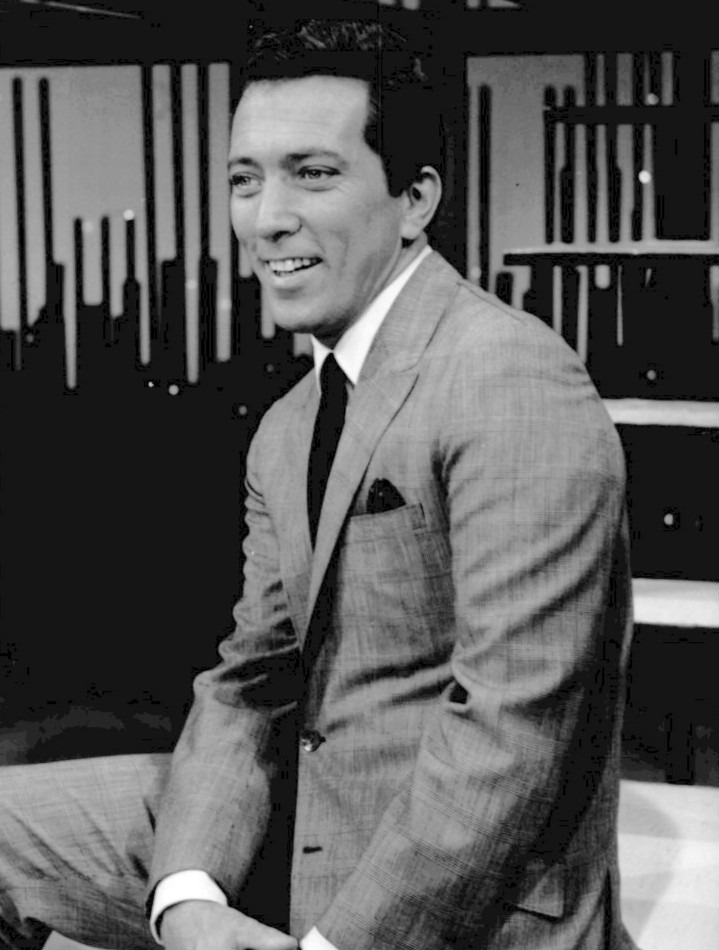
Howard Andrew Williams was born on December 3, 1927, in Wall Lake, Iowa, and he never quite left it behind — not in the voice, anyway. His earliest training came the old-fashioned way: he sang with his three brothers as the Williams Brothers, a family quartet that worked the radio-and-vaudeville circuit of the 1940s. At sixteen he was singing behind Bing Crosby on Crosby’s 1944 hit “Swinging on a Star.” It was an unusual apprenticeship for a future solo star, and it shaped everything: Williams learned blend before he learned spotlight, learned to sit inside a sound rather than stand in front of it. Listen to almost any of his records and you can hear that patience — a singer who trusts the song enough not to wrestle it.
The solo break came through television. Regular appearances on Steve Allen’s Tonight show made his face and his ease familiar, and Cadence Records signed him in the mid-1950s. “Canadian Sunset” went Top 10 in 1956, and then came the miracle of “Butterfly” in 1957: a soft-toned cover of a Charlie Gracie rockabilly single that reached number one on both the American and British charts. Rock and roll was supposedly killing the crooners; here was a crooner beating the rockers at their own game, simply by singing better than everyone else. He would pull that trick again and again for the next fifteen years.
1962 was the year everything aligned. Williams signed with Columbia Records and released Moon River and Other Great Movie Themes on March 26, 1962. The album went gold and spent 176 weeks on the Billboard chart — more than three years. A month later he performed “Moon River” at the 34th Academy Awards, the very night the song took home its Oscar. Here is the delicious detail of his career: he never released “Moon River” as a commercial single, yet it became his signature for the next fifty years. Its first eight bars opened The Andy Williams Show, his NBC variety series that ran from 1962 to 1971 and won three Emmy Awards. He named his production company after the song, named his Branson, Missouri theater after it, and titled his 2009 memoir Moon River and Me. In 2022 the recording entered the Library of Congress National Recording Registry.
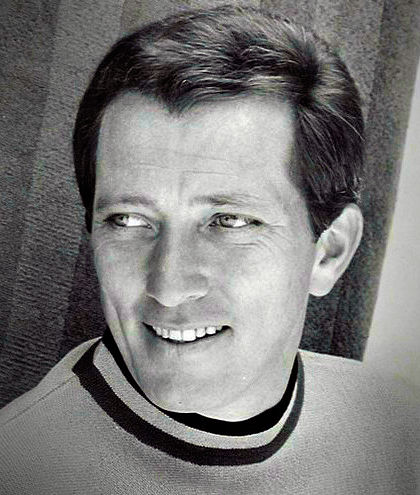
The Columbia decade was a masterclass in staying relevant without chasing. Days of Wine and Roses and Other TV Requests topped the album chart for 16 weeks in 1963 and earned a Grammy nomination for Album of the Year. Singles kept landing on both sides of the pop divide: “Can’t Get Used to Losing You” (1963), “Almost There” (1964), “Music to Watch Girls By” (1967), “Can’t Take My Eyes Off You” (1968), “(Where Do I Begin) Love Story” (1971). Meanwhile his Christmas albums turned him into the season’s unofficial host — “It’s the Most Wonderful Time of the Year” waited half a century to become the modern Christmas standard it now is. And from 1971 through 1977 he hosted the Grammy Awards telecast seven years running, the Academy’s most frequent master of ceremonies.
In 1992 he built the Moon River Theatre in Branson, Missouri, and made it his home stage, performing there into his eighties with the same easy grace he had shown on network television thirty years earlier. Andy Williams died on September 25, 2012, in Branson, at the age of 84. The numbers tell one part of the story — fifteen gold-certified albums, three platinum, six Grammy nominations — but the truer measure is the voice itself: warm, unforced, technically superb, and utterly without cynicism. In an era that kept changing the rules of pop, he simply kept singing, and the audience kept coming.
This collection follows ten records from 1962 to 1973, the Columbia years when he was at his peak. It begins with the song he never released as a single, passes through two Oscar-winning movie themes, a Christmas song that time-traveled to the top of the charts, and ends with a gambler’s confession. Listen for the control — the way he never oversings, the way a phrase lands exactly where it should. And listen for something subtler: a crooner navigating the rock era without ever surrendering to it, and somehow never sounding out of place.
Follow the years
Ten stories to start with
The Oscar song he never released as a single, and sang for the rest of his life.
02 / 1963 / Behind the SongsCan’t Get Used to Losing You: The Rock-and-Roll Songwriters’ Crooner HitElvis and the Drifters’ songwriters wrote it; a crooner made it swing.
03 / 1963 / Behind the SongsDays of Wine and Roses: Two Oscars, One VoiceTwo Oscars for Mancini and Mercer, one definitive voice on the title song.
04 / 1963 / Behind the SongsIt’s the Most Wonderful Time of the Year: The Christmas Song That Waited Fifty YearsA modest seasonal album cut that took half a century to become a classic.
05 / 1964 / Behind the SongsAlmost There: The Almost-Number-One Britain Loved and America OverlookedAmerica barely noticed it; Britain took it to number two — a transatlantic near-miss.
06 / 1966 / Behind the SongsThe Shadow of Your Smile: The Oscar Winner He Made His OwnThe Oscar-winning film theme he folded into his evening like a favorite jacket.
07 / 1967 / Behind the SongsMusic to Watch Girls By: The Commercial Comeback Nobody PlannedA soda jingle turned into a pop hit — then a commercial turned it into a hit again.
08 / 1968 / Behind the SongsCan’t Take My Eyes Off You: The Crooner’s Cool CoverFrankie Valli’s tower of brass, rebuilt in velvet.
09 / 1971 / Behind the Songs(Where Do I Begin) Love Story: The Movie Theme That Brought Him Back to the Top 10The movie theme that carried a veteran crooner back into the Top 10.
10 / 1973 / Behind the SongsSolitaire: The Gambler’s ConfessionA gambler’s confession written by Neil Sedaka, delivered without a wink.
Andy Williams — biography, discography and chart history ↗
Past Tunes’ listening notes are original editorial interpretation. Release years refer to the particular album or recording identified in each article.