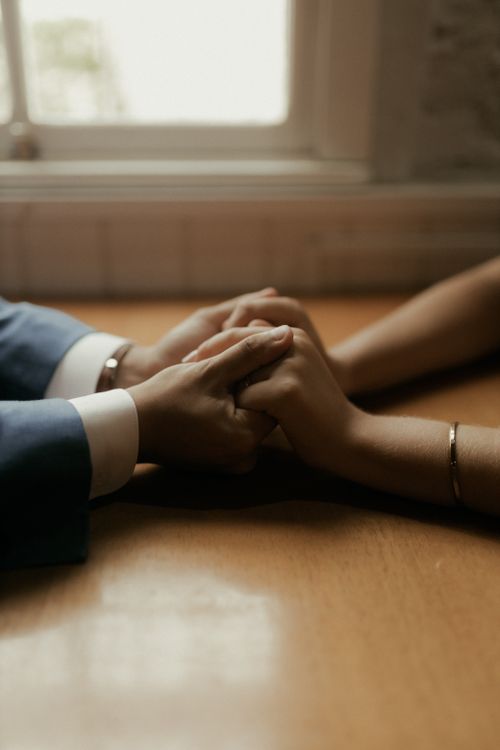
It begins with a voice so quiet it almost apologizes for speaking, and a guitar that seems to be holding its breath. “If We Try” is not a song that announces itself. It does not swagger in, the way “American Pie” did, with eight and a half minutes of riddles and history. It slips in sideways, like a man standing in a doorway, afraid of being turned away, asking for one thing only: a chance. When Don McLean released it in 1973, it was not the biggest hit of his career. It did not reach number one, it did not launch a thousand interpretations, and it did not come with a famous story of a last-minute rescue in the studio. And yet, more than half a century later, it may be the most quietly beloved ballad he ever recorded after his two giants: the song his audiences still greet like an old friend, the one that proved that the man who wrote “American Pie” could also write a love song of almost unbearable tenderness. It is a song about trying, written by a man who had just discovered how hard success itself could be.
To understand why the song mattered, you have to understand where Don McLean stood in 1972. He was not a newcomer, and he was not yet the institution he would become. He was, quite suddenly, the most famous folk singer in America, and he was not at all sure he wanted the job. Born in New Rochelle, New York, in 1945, McLean had spent the 1960s as a folk singer in the Greenwich Village tradition, singing in clubs and coffeehouses, writing songs about the world as he saw it. His debut album, Tapestry, recorded in Berkeley, California, in 1969 during the student protests, had been rejected by dozens of labels before it finally found a home. Then came American Pie, released in October 1971 on United Artists after the label took over his original company, Mediarts. The title song, recorded on May 26, 1971, reached number one on the Billboard Hot 100 in January 1972 and stayed there for four weeks. Its follow-up, “Vincent,” a delicate portrait of Vincent van Gogh, reached number 12 on the Hot 100 and number one in Britain and Ireland. Almost overnight, McLean went from a folk singer with a small following to an international star whose every lyric was being decoded by radio disc jockeys and magazine writers. His first concerts at Carnegie Hall in New York and the Albert Hall in London in 1972 were critically acclaimed. But fame, for McLean, was a complicated gift. He had written “American Pie” as a personal, impressionistic song, partly inspired by the 1959 plane crash that killed Buddy Holly, Ritchie Valens, and J.P. Richardson, and partly by the decade of youth culture that followed. He watched it become something else entirely: a puzzle for other people to solve.
The album that would carry “If We Try” was made in the shadow of that success, and it shows. Don McLean, his third studio album, was recorded in the fall of 1972 at the Record Plant in New York City and released in November 1972. McLean kept the team that had made American Pie: producer Ed Freeman, bassist Rob Rothstein, and pianist Warren Bernhardt among them. The album peaked at number 23 on the Billboard 200 and reached number 15 in both Australia and Canada: a solid showing for any singer-songwriter, but a comedown after an album that had topped the charts. Its first single, “Dreidel,” reached number 21 on the Hot 100 and number 7 on the Easy Listening chart. And then came the second single, the quiet one, the ballad tucked away as track four on the album, between “Oh My, What a Shame” and “The More You Pay (The More It’s Worth).” It was called “If We Try,” and it was, in its own way, the bravest thing on the record.
The song is, at its heart, a plea, and its power lies in how little it demands. Where so many love songs of the era were about grand gestures or dramatic breakups, “If We Try” is about the small, uncertain space between two people who have already been hurt and are wondering whether to risk it again. The singer does not promise forever. He does not claim to have all the answers. He asks, gently, whether the two of them might simply try: whether love, given a little room and a little patience, might grow past the stage of infatuation into something deeper and more durable. It is a song about the difference between falling in love and staying in love, and about the quiet courage it takes to choose the second. McLean sings it the way he wrote it, without showmanship, his voice plain and unadorned, the arrangement built around his acoustic guitar and Bernhardt’s piano, with strings that swell underneath like a held breath rather than pushing the song around. It sounds, in the best sense, like a man talking to one person in a quiet room, not like a star addressing an arena.
That restraint was the point, and the trade press heard it. Record World, reviewing the single, called “If We Try” a “ballad beauty,” a phrase that captures exactly what the record is: not a showpiece, but a thing of quiet loveliness. AllMusic, looking back at the album, singled out the song as well, calling it a lovely ballad and noting that it was released as the album’s second single and became a minor chart entry, adding, with a touch of regret, that it might have deserved better. The charts told the same modest story. “If We Try” reached number 58 on the Billboard Hot 100 in 1973, but it did considerably better where its real audience lived: number 12 on the Billboard Easy Listening (now Adult Contemporary) chart, number 9 in Australia, and number 22 on Canada’s Adult Contemporary chart. It was not a song for teenagers. It was a song for grown-ups, for people who had lived long enough to know that love is less about fireworks than about the decision to stay in the room. That audience has kept it alive ever since.
There is a telling detail in the song’s afterlife, and it involves a singer who was, at that moment, on her way to becoming one of the biggest stars in the world. Olivia Newton-John recorded “If We Try” for her third album, Let Me Be There, released in November 1973 in Britain as Music Makes My Day, with sessions at MCA Recording Studios in Universal City between May and June 1973. Her version, sung in her clear, unshowy soprano, is a faithful reading of McLean’s song, and it is a reminder of something that is easy to forget about McLean: that other singers heard, in his writing, songs that could travel. Newton-John had already recorded another McLean song, “Winterwood,” for her 1972 album Olivia, and she would go on to build a career partly out of finding the emotional center of other people’s songs. That she chose “If We Try,” a minor American hit, for her breakthrough American album says something about the song’s quality. It did not need a big chart number to be recognized as a good song. It needed only a singer willing to listen to it closely.
The song’s legacy is quieter than that of “American Pie” or “Vincent,” and that is fitting, because it is a quieter song. It has never needed a stadium chant or a movie scene to survive. It appears on McLean’s compilations, including the career-spanning Legendary Songs of Don McLean, and it has remained a staple of his live shows, where audiences greet its opening guitar figure with the particular hush that belongs to a song people have lived with for decades. Live recordings, including a version from his later Starry Starry Night concerts, show how little the song has needed to change: the same plain vocal, the same patient guitar, the same plea. What keeps it alive is not nostalgia for 1972. It is the situation at its center, which never goes out of date: two people, older and warier than they once were, standing at the edge of something, and asking whether it is worth trying one more time.
There is another reason the song’s modesty matters, and it has to do with what McLean was refusing to do. After “American Pie,” the easiest move in the world would have been to write another puzzle: another long, symbol-laden epic for listeners to decode. McLean did not do that. On Don McLean, he wrote songs that were smaller, more personal, and more direct, and “If We Try” is the smallest and most direct of them all. “Dreidel” gave the album its playful, spinning energy, and “The Pride Parade” closed it with a burst of color, but “If We Try” gave it its heart. It is the sound of a songwriter stepping out from behind his most famous creation and speaking plainly, without a mask, about something he actually felt. That plainness may be why the song never became a chart monster. It was never built for that. It was built for the listener who had already heard the big statement and was ready, now, for the quiet one.
It is also worth noting how well the song fits the album around it, even though it sounds so different from its famous predecessor. Don McLean is, by most accounts, a more uneven record than American Pie, a collection that ranges from the whimsical to the wry, and its chart peak of number 23 reflected that. But its best moments share a quality: they are songs written by a man who trusted his audience to meet him halfway. “If We Try” trusts its audience most of all. It never explains itself. It never tells the listener how to feel. It simply lays out a situation, two people and a question, and lets the feeling arrive on its own. That restraint is a form of respect, and it is one reason the song has aged better than many bigger hits of 1973. A record that shouts its emotions dates quickly. A record that whispers them can stay current for decades, because every generation produces people standing in that same doorway, wondering whether to try.
The song’s afterlife has also been helped by the company it keeps. On compilations, “If We Try” sits naturally beside “Vincent” and “And I Love You So” as evidence of McLean’s range: the storyteller, the portraitist, and the romantic, all in one catalogue. In concert, it serves a different purpose from the anthems. Where “American Pie” turns an audience into a choir, “If We Try” turns it into a roomful of listeners, each hearing something private in the same few minutes. That is a rarer gift, and a harder one to pull off night after night, and it is part of why McLean has kept the song in his repertoire across the decades rather than letting it fade into a footnote of the Don McLean album. A song that only works when thousands of people sing along is a different kind of achievement from a song that works when one person, alone with a record, feels understood.
There is a final irony worth savoring. McLean wrote “American Pie” about a generation that had lost its innocence, and he spent years watching listeners argue about what every line meant. “If We Try” asks for the opposite of interpretation. It asks for trust. It does not hide behind symbols or riddles. It says, in the plainest language McLean ever used, that love is a thing you choose, day by day, and that choosing it is itself a kind of faith. The song did not top the charts, and it did not need to. It found the audience it was written for, the listeners who recognized themselves in its hesitation and its hope, and it has stayed with them ever since. That is the quiet miracle of “If We Try”: a song about the smallest possible act of courage, written in the shadow of the biggest hit of its author’s life, that turned out to be one of the most enduring things he ever made.
Watch the video below and listen for the moment the voice drops to almost a whisper. It is the sound of a songwriter who had said everything, deciding to say the simplest thing of all: let us try.