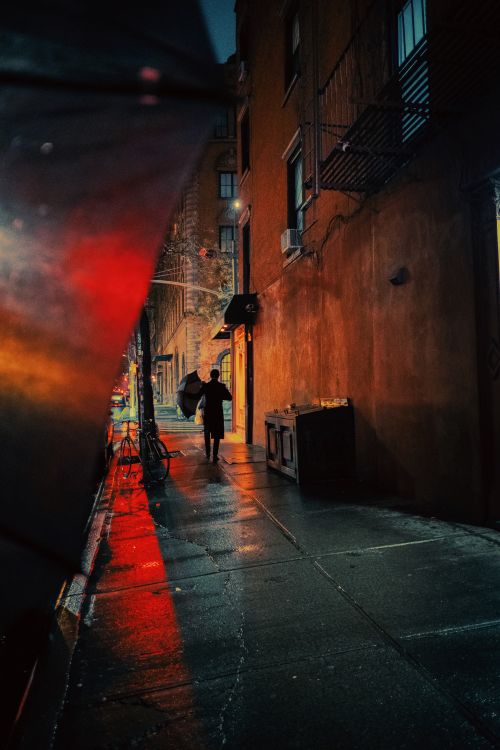
It begins in the dark, after everyone else has gone inside. A girl stands alone under the night sky, rain in the air, and sings to a boy who is not there — or rather, to the image of him that she cannot get out of her head. She knows he has just brushed her off in front of his friends. She knows she should be angry, or at least dignified. Instead she sings, with heartbreaking honesty, that she is hopelessly devoted to him anyway. When Olivia Newton-John sang “Hopelessly Devoted to You” in Grease in 1978, it became one of the most beloved ballads in movie history: a torch song about loving someone who does not deserve it, delivered with such pure, unguarded feeling that audiences forgave the foolishness instantly. And the most remarkable thing about it is that it almost never existed at all. The song was not in the stage musical. It was not written when filming began. It was a last-minute rescue, written because a contract said the leading lady was owed a solo — and it ended up earning the film its only Academy Award nomination.
To understand why the song mattered, you have to understand where Olivia Newton-John stood in 1978. She was not a newcomer, and she was not a movie star. She was, at 29, one of the biggest pop and country singers in the world, a British-born, Australian-raised vocalist with a voice of spun sugar and a string of 1970s hits behind her, including the chart-topping “I Honestly Love You” and “Have You Never Been Mellow.” She had never carried a film. When she was offered the role of Sandy in the movie version of Grease, the Broadway hit about 1950s high-school romance, she hesitated. She was nearly thirty playing a teenager, and she worried she would look ridiculous. She asked for a screen test with her co-star, John Travolta, to make sure the chemistry was real before she said yes. It was — and the producers made a concession to her that would shape the film: instead of forcing her to hide her Australian accent, they rewrote Sandy as an Australian newcomer to an American high school, Sandy Olsson, a girl far from home who falls for the leader of the local greaser gang, Danny Zuko. That change made Sandy an outsider twice over: new to the school, and new to the country. It also made her loneliness in the film feel real, and it gave the ballad she would eventually sing its emotional grounding. She was not just a girl pining for a boy. She was a girl with nobody else in the world to turn to.
Grease itself was a strange gamble in 1978. The Hollywood musical was supposed to be dead, and a stage show full of 1950s nostalgia seemed like an odd bet for the summer of Saturday Night Fever. The film kept most of the stage score, but the producers knew a movie needed something more commercial, and they asked several songwriters to submit new material. Among them was John Farrar, Newton-John’s personal producer, the Australian musician who had worked with her since the late 1960s and had produced her string of 1970s hits. Farrar understood her voice better than anyone: its clarity, its warmth, its ability to make a sentimental lyric sound sincere rather than sugary. He submitted two songs. One was a bouncy duet for Sandy and Danny, “You’re the One That I Want.” The other was a ballad for Sandy alone. Both were accepted, though not without a fight — director Randal Kleiser reportedly had strong reservations, feeling the new songs did not fit the 1950s style of the rest of the score. The producers overruled him, and the gamble paid off beyond anyone’s dreams. But the ballad had a problem: halfway through shooting, it still had not been written.
The reason was contractual, and it tells you everything about how movies used to get made. Newton-John’s contract entitled her to a vocal solo in the film, a showcase number of her own. As filming went on, that solo still did not exist on paper. Farrar was handed the job of writing it, and he took it more seriously than almost anything he had ever written. Years later, in June 2004, he recalled the process with a mixture of pride and exhaustion: he had spent longer on the lyrics of this song than on any song he had ever written, working through every thesaurus and rhyming dictionary he owned, trying to make every line land exactly right. The contrast with its companion piece was almost comical. “You’re the One That I Want,” he said, was the fastest song he ever wrote; the melody and the feel arrived almost fully formed. “Hopelessly Devoted to You” was the opposite: a slow, painstaking labor, line by line, until the lyric said precisely what a girl in Sandy’s position would feel — not anger, not self-pity, but a helpless, clear-eyed admission that she cannot switch her feelings off just because she has been hurt.
When Farrar finally submitted the song, the production team was reluctant, but they approved it — and then came the logistical problem. The rest of the film had already been shot. So the scene was filmed and the song recorded after principal photography had finished, a postscript bolted onto a finished movie. In the film, it lands at exactly the right moment: right after Danny has downplayed his feelings for Sandy in front of his friends, Sandy slips away alone at night and sings her heart out to his image, a confession with no audience but the camera. It is the emotional hinge of her story. Before it, Sandy is the good girl trying to fit in. After it, the audience understands that her transformation at the end of the film — the leather, the curls, the cigarette — is not just a costume change. It is a girl who has already decided, in this song, that she will not pretend anymore about what she wants.
The recording itself, produced by Farrar at United/Western Studio in 1977, is a masterclass in restraint. It runs just over three minutes, and it never raises its voice. Strings swell underneath, pedal steel and rhythm guitars give it a gentle country-pop lilt, and Newton-John’s vocal does the rest: bright, emotional, and utterly without irony. The trade press heard it immediately. Record World called it a 1950s-inspired love ballad with a 1970s production sound. Billboard praised a vocal that shone on a pretty, string-laden, romantic ballad. Cash Box noted its wide-ranging appeal, saying the combination of pedal steel, easy beat, strings, and Newton-John’s bright and emotional singing made it well-suited to Top 40, middle-of-the-road, and country formats alike. They were all right, and that breadth was the point. This was not a song for one audience. It was a song for anyone who had ever loved someone they knew they should leave alone.
Released as a single in June 1978 in the United States (and in Australia that August), “Hopelessly Devoted to You” became a hit on a scale that matched the film’s own astonishing run. Grease was the biggest box-office hit of 1978, and its soundtrack spent twelve non-consecutive weeks at number one on the Billboard 200. The single reached number three on the Billboard Hot 100 and number seven on the Adult Contemporary chart, and it crossed over to country radio as well, peaking at number twenty — her first Top 20 country hit in two years. Abroad it did even better in places: number one in Belgium, Canada, Ireland, and the Netherlands, number two in Britain and Australia, number six in New Zealand. It was certified platinum in the United States, and it gave Newton-John something rare: two singles in the Billboard Top 5 at the same time, when “Summer Nights,” her duet with Travolta and the cast, joined it there — making her only the second woman, after Linda Ronstadt the year before, to achieve that feat. The soundtrack’s other Farrar song, “You’re the One That I Want,” had already topped the charts on both sides of the Atlantic. Between them, Farrar’s two last-minute additions became two of the biggest songs of the year.
The honors that followed confirmed what audiences already knew. “Hopelessly Devoted to You” was the only song from the Grease soundtrack to receive an Academy Award nomination, for Best Original Song at the 51st Academy Awards in 1979, where it lost to Donna Summer’s “Last Dance” from Thank God It’s Friday. Newton-John performed it at the Oscars ceremony, and she had already performed it at the 21st Grammy Awards earlier that year, where it was nominated for Best Female Pop Vocal Performance. The song’s reputation as a showcase piece was sealed in those two performances: a singer alone on a stage, with no leather, no choreography, no Travolta beside her, carrying a ballad on nothing but voice and feeling. It was, in a sense, the solo her contract had promised, finally delivered in its purest form.
The song’s afterlife has been longer and stranger than anyone in 1978 could have predicted. Because it was written for the film, it was not part of the original stage musical’s score, and for years stage Sandys sang a 1950s standard in its place; it was only added to the stage score for the 2007 revival, and it was kept, sung by Julianne Hough, in the 2016 television event Grease: Live. In 1994, when the English singer Sonia took over the role of Sandy in the West End production, she released her own version as a single. Cover versions and tributes have never stopped: after Newton-John’s death in August 2022, the song surged back onto the charts, reaching number five on Billboard’s Digital Song Sales chart, and it was honored in high-profile tributes, including P!nk’s performance at the 2022 American Music Awards and The Chicks’ live cover that same month. Each new generation seems to discover it the same way: a girl, alone, singing about a love she cannot talk herself out of, and an audience recognizing itself in her.
There is a final pleasure in the story, and it belongs to John Farrar. Songwriters who serve one singer faithfully, for decades, rarely get their own spotlight, and Farrar spent his career in that loyal shadow, writing and producing hit after hit for Newton-John from 1971 to 1989. “Hopelessly Devoted to You” is his masterpiece precisely because it is so hard to write a simple song well. He labored over every rhyme, consulted every thesaurus, and produced a lyric that sounds effortless — the hardest trick in popular songwriting. The song’s triumph is that it hides its own difficulty. It sounds like something a girl would say, off the top of her head, in the middle of the night, to a boy who is not listening. That is why it has outlasted the film’s fashion, its cars, and its slang. The greasers and the Pink Ladies belong to the 1950s. The feeling in this song belongs to anyone who has ever stood alone in the dark, knowing better, and loving anyway.
Watch the video below and listen for the moment her voice lifts on the chorus, all alone in the night. That is the whole song, and the whole of Sandy, in a single line.