Folk Rock · Songwriting · Americana
The restless voice whose words reshaped popular music, decade after decade.
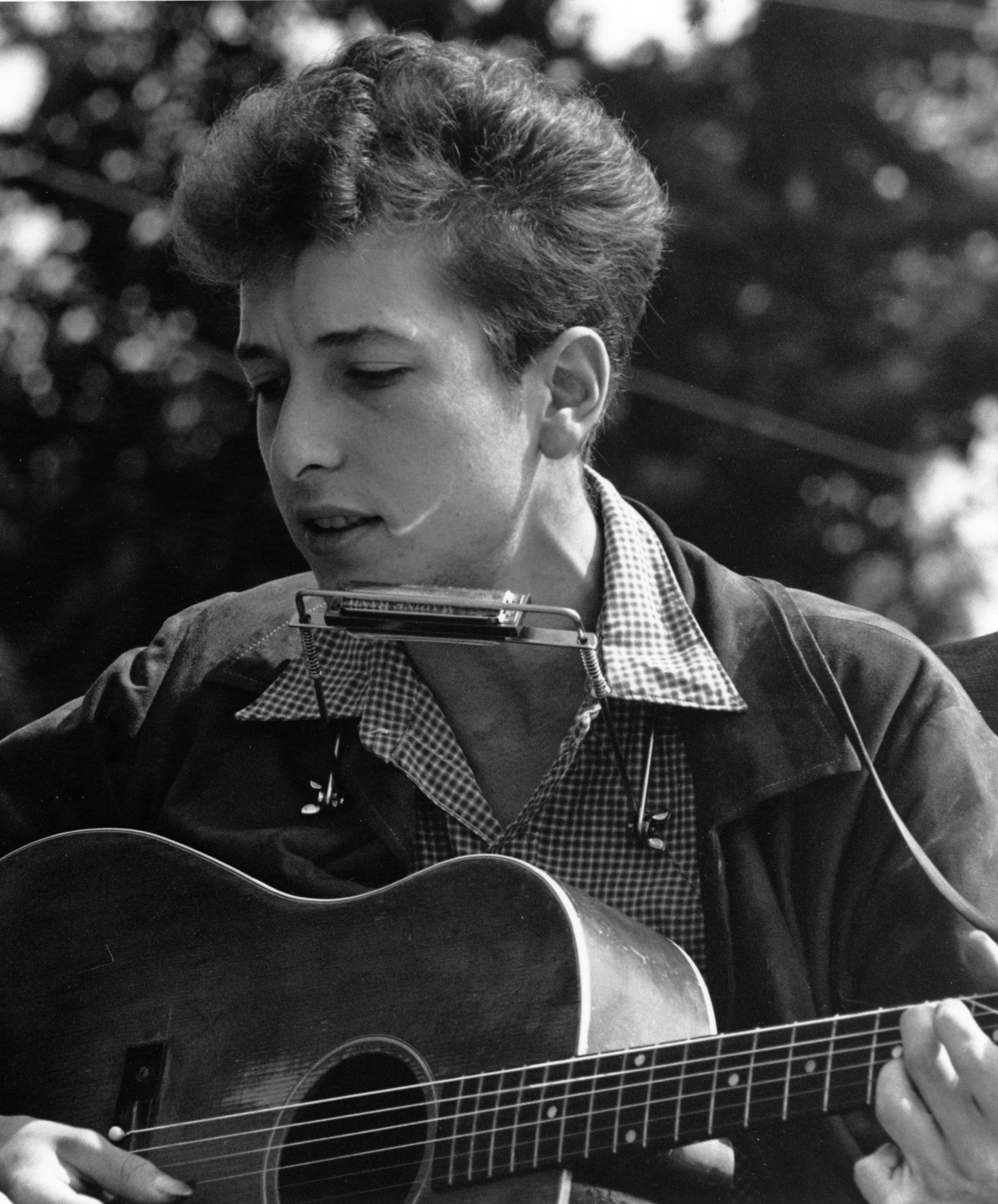
Bob Dylan, born Robert Allen Zimmerman in Duluth, Minnesota, on May 24, 1941, and raised in the iron-mining town of Hibbing, arrived in New York in 1961 with a guitar, a harmonica rack and a head full of Woody Guthrie. The 1960s made him the voice of a generation — a title he spent the next two decades trying to outrun. The 1970s and 1980s are the sound of that escape: restless, uneven, occasionally miraculous.
The decade opened with retreat. Self Portrait (1970) and New Morning (1970) baffled fans who wanted another prophet. Then came the movies: Sam Peckinpah cast Dylan as Alias in Pat Garrett & Billy the Kid (1973), and Dylan contributed the soundtrack, including “Knockin’ on Heaven’s Door,” a two-verse farewell that became one of his most-covered songs and reached number 12 in America.
Planet Waves (1974), cut with the Band, gave Dylan his first American number-one album and “Forever Young,” recorded in two versions — a lullaby and a rocker — written as a blessing for his children. The reunion tour with the Band that winter played to the biggest crowds of his career.

Blood on the Tracks (1975) is the decade’s crown. First recorded in New York in September 1974, then largely re-recorded in Minneapolis that December with local musicians, it reached number one in America on the strength of songs like “Tangled Up in Blue” — narratives that shift perspective mid-verse, heartbreak examined from every angle. Many listeners call it his finest album; almost nobody disputes it belongs near the top.
Desire (1976) also hit number one, driven by “Hurricane,” the eight-and-a-half-minute ballad about boxer Rubin “Hurricane” Carter, imprisoned for murders he insisted he did not commit. Dylan took the song on the road with the Rolling Thunder Revue (1975–76), a traveling caravan — Joan Baez, Roger McGuinn, Allen Ginsberg, whiteface paint — that remains the strangest and most romantic tour of his life.
Street-Legal (1978) was transitional; Slow Train Coming (1979) was a thunderclap. Dylan had become a born-again Christian, and with producer Jerry Wexler and Dire Straits’ Mark Knopfler on guitar, he made a gospel record that reached number three in America. “Gotta Serve Somebody” reached number 24 and won Dylan a Grammy for Best Rock Vocal Performance, Male.
The 1980s were bumpier — Saved (1980), Infidels (1983) — but the decade ended with renewal. The Traveling Wilburys, the supergroup with George Harrison, Roy Orbison, Tom Petty and Jeff Lynne, gave Dylan his most joyful record in years in 1988, and Oh Mercy (1989), produced by Daniel Lanois, closed the decade with some of his darkest, finest writing.
For 1970–1989, Dylan matters because he refused every role the culture offered him — prophet, recluse, hitmaker, preacher — and kept writing through all of them. (The Nobel Prize in Literature would come in 2016, long after this site’s story ends.) What to listen for: the voice, nasal and unlovely and unmistakable; the words, which reward reading as much as hearing; and the bands, from the Band to Knopfler, always pushing him somewhere new.