Before the talkies learned to speak, Clara Bow taught the screen how to sparkle — a Brooklyn girl whose laughter, energy and sheer daring made her the defining flapper of the Jazz Age.
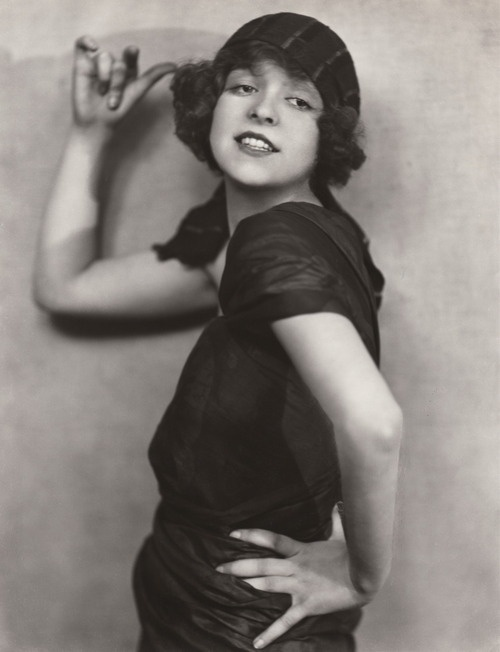
Clara Bow was born in Brooklyn, New York, into a poor family, and her childhood was marked by hardship. Her birth year is most often given as 1905, although some sources give 1904 and her gravestone gives 1907; this post does not present 1904 or 1907 as settled. As a teenager she won a 1921 fan-magazine beauty contest, a break that brought her first small film work. In 1922 she appeared in Beyond the Rainbow, and she worked steadily through the early 1920s, learning her craft in a string of silent pictures while studios began to notice her unusual naturalness before the camera.
Her rise was swift. In The Plastic Age (1925) she played a lively college flapper, and in Mantrap (1926) she brought warmth and mischief to a story of the Canadian woods. Then came the film that fixed her name in history: It (1927), adapted from Elinor Glyn’s story, in which Bow played shopgirl Betty Lou Spence. The word “It” came to mean that magnetic, unteachable quality of charm and confidence, and Bow had it in abundance. In the same year she appeared in Wings (1927), the ambitious First World War aviation drama that later won the first Academy Award for Best Picture, playing Mary Preston with a tenderness that balanced the film’s spectacle.
By the late 1920s Bow was one of the most popular stars in the world, famous for her bobbed hair, her expressive eyes and a screen presence that felt modern and unguarded. The coming of sound, however, changed the industry around her. She made the transition in The Wild Party (1929), but the pressures of fame, ill health and a punishing studio schedule took their toll. Her later films included Call Her Savage (1932) and Hoop-La (1933), her final film, after which she retired from the screen.
Bow spent her later years away from Hollywood, and she died in 1965. For later generations, her films remain a vivid window on the 1920s: not just a fashion or a hairstyle, but a spirit — joyful, frank and full of life. That is why she is still remembered, a century on, as the original It Girl.