Photo: Mahmoud Nawawy / Pexels (free to use).
The cop who does not play by the book
In Cobra, released in 1986 and directed by George P. Cosmatos, Sylvester Stallone plays Lieutenant Marion Cobretti, a Los Angeles police officer known as Cobra, who is called in when ordinary policing fails. The film opens with a hostage crisis in a supermarket, where Cobra walks in alone, talks calmly to a gunman, and ends the standoff with a single, brutal efficiency. It is a declaration of intent: this is not a detective who solves crimes with deduction, but a specialist in violence who is brought out, like a weapon, when the situation is already out of control. Stallone, who wrote the screenplay, gives Cobra a terse, almost monosyllabic style, a pair of sunglasses, a leather jacket, and a matchstick chewed between his teeth, and the result is one of the most stylised action heroes of the decade.
The plot centres on a cult of killers, the New World Order, who murder seemingly random victims across Los Angeles, believing that the weak should be cleansed from society. A young model, Ingrid Knudsen, played by Brigitte Nielsen, witnesses one of their attacks and becomes their next target. Cobra is assigned to protect her, and the film becomes a chase across the city and into the California countryside, as the cult, aided by a leak inside the police, hunts them both. The story is thin, and the film knows it. Its pleasures are not in plot twists but in atmosphere: neon-lit streets at night, a customised car, a warehouse showdown, and Stallone’s cool, unhurried presence at the centre of it all. Cobra does not rush. He waits, he watches, and then he acts.
Style, violence, and the 1980s action film
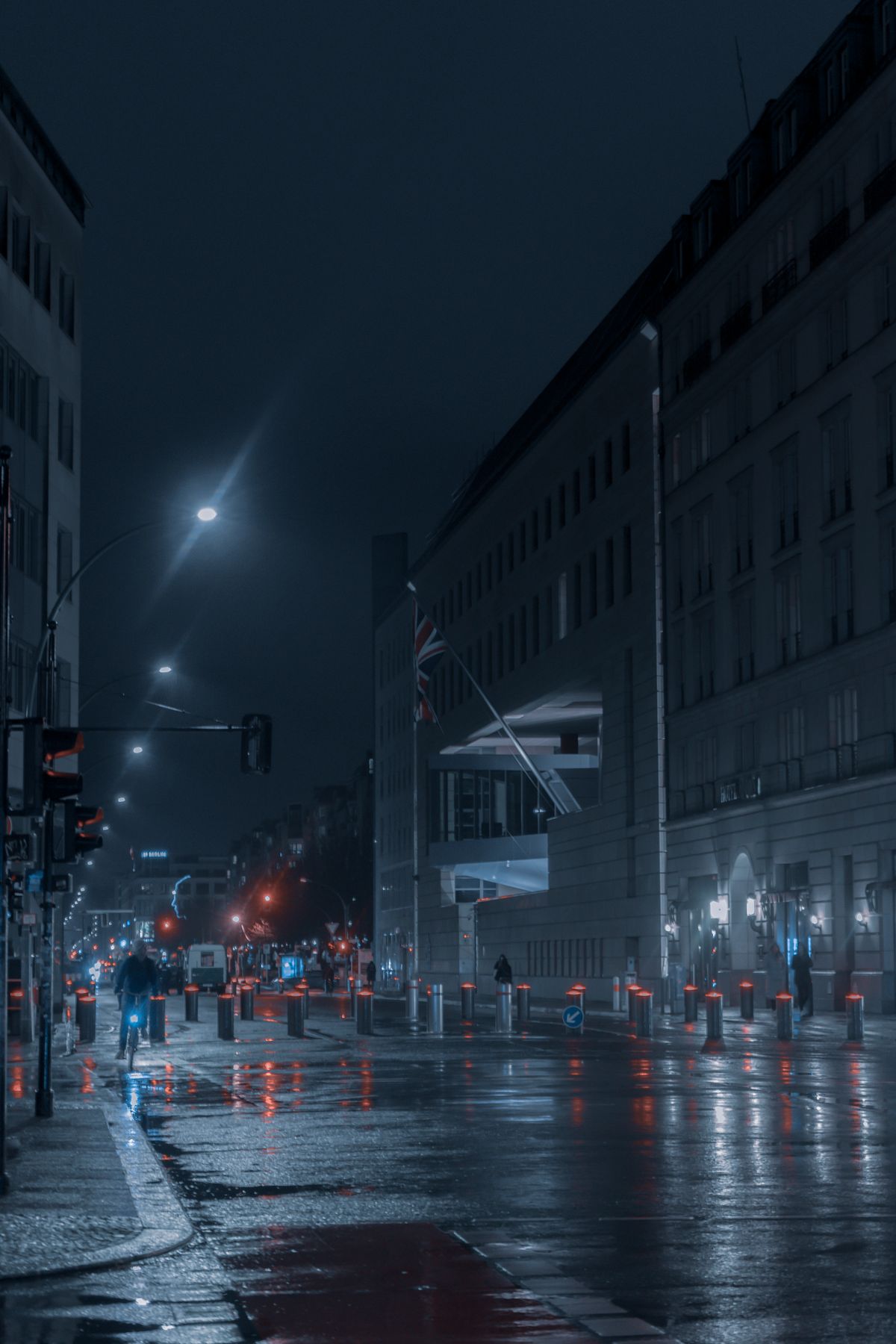
Cobra is a quintessential mid-1980s action film, and it is best understood as a piece of style as much as story. Director George P. Cosmatos, who had worked with Stallone on Rambo: First Blood Part II, shoots Los Angeles as a city of chrome, rain, and neon, where danger feels glamorous rather than squalid. The film’s violence is graphic and frequent, and it drew criticism at the time for its body count and its apparent celebration of vigilante justice. Cobra’s famous attitude, that criminals are a disease and he is the cure, is presented without irony, and modern viewers may find it uncomfortable. Yet the film is also, in its way, honest about its fantasy: it does not pretend Cobra is a realistic policeman, but offers him as a mythic figure, a lone enforcer for a city that feels out of control.
Stallone’s performance is deliberately minimal. Cobra speaks in short sentences, rarely smiles, and shows tenderness only in his scenes with Ingrid, whom he protects with a gruff, almost paternal care. Their relationship, which develops into a romance, is the film’s soft centre, and Nielsen, then Stallone’s wife, plays Ingrid as a woman who is frightened but not helpless. The film’s most memorable sequence, a factory chase in which Cobra and Ingrid flee through a steel mill on a motorcycle, pursued by the cult in trucks, is a masterclass in 1980s action choreography, all sparks, steam, and screeching metal. It ends, as these films must, with Cobra facing the cult’s leader, known as the Night Slasher, played by Brian Thompson, in a furnace-lit confrontation that is more ritual than fight.
A hit, a cult object, and a time capsule
Cobra was a commercial success in 1986, though it divided critics, some of whom dismissed it as fascistic and empty, while others praised its visual flair and Stallone’s star power. Over time, it has become a cult favourite, quoted and parodied for its one-liners, its sunglasses, and its unapologetic machismo, and it remains a touchstone for fans of 1980s action cinema. The film’s title character, with his customised gun and his habit of cutting a pizza with scissors, became a pop-cultural shorthand for the tough cop who does things his own way, influencing countless imitators in film and television. It is also a useful companion to Stallone’s other 1980s work: where Rocky is about heart and Rambo about betrayal, Cobra is about pure style, a film that trusts its star’s image to carry a story that is, at heart, very simple.
For Past Tunes readers, Cobra is worth revisiting not as a great drama but as a perfect artefact of its year. The music, the fashion, the car, the neon, and the attitude all belong to 1986, a moment when the action hero was at his most confident and least self-questioning. Stallone understood that confidence, and he embodied it with a cool that few of his contemporaries could match. Cobra does not ask the audience to think deeply. It asks them to enjoy watching a man who never doubts, never hesitates, and never loses, and for ninety minutes in a darkened cinema, that was enough.
Why Cobra endures
Cobra endures because it is Stallone at his most iconic and most unfiltered. The character has no backstory to complicate him, no trauma to explain him, only a job and a code. That simplicity is both the film’s limitation and its appeal: Cobra is a fantasy of certainty in an uncertain city, a man who arrives when the system fails and leaves when the job is done. The film’s cult following keeps it alive, not because it is subtle, but because it is unmistakable. Sunglasses, matchstick, leather jacket, and a single line about crime being a disease: that is Cobra, and for a generation of action fans, that was Stallone in 1986, distilled to his purest, coolest form.