Johnny Cash / Behind the Songs
The Long Black Veil: The Murder Ballad He Sang From Beyond the Grave
An innocent man chooses the gallows over the truth — and Cash made the darkest story song of his career out of it.

The record in context
It sounds three hundred years old. The melody moves like a funeral march, the story unfolds like a border ballad, and the narrator is already dead when he starts singing. But “The Long Black Veil” was not unearthed from some Appalachian hollow — it was manufactured in Nashville in 1959, quite deliberately, by two professional songwriters who set out to write what Danny Dill called an “instant folk song.” Dill, a Nashville songwriter tired of the polished pop-country of the late fifties, pieced the song together from three strange sources: Red Foley’s recording of “God Walks These Hills With Me,” a newspaper report of an unsolved murder of a priest under a New Jersey streetlight, and the legend of the mysterious veiled woman who visited Rudolph Valentino’s grave. He took the unfinished song to Marijohn Wilkin — herself a formidable writer, later of “P.T. 109” fame — and together they hammered out the plot: a man accused of a killing beneath the town hall light, who will not reveal his alibi because on that night he was in the arms of his best friend’s wife. He takes the secret to the gallows. She visits his grave in a long black veil, when the night winds wail, and nobody knows but the dead man.
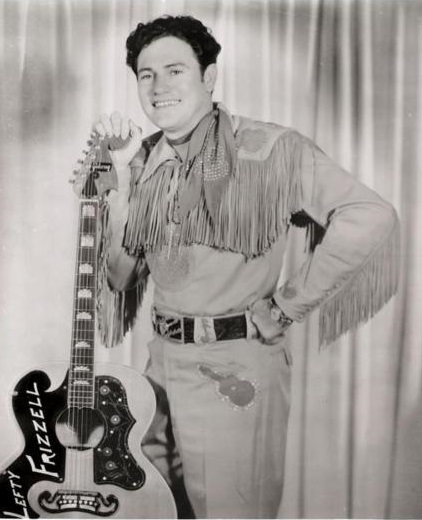
Lefty Frizzell recorded it first, in Nashville on March 3, 1959 — just days after first hearing it, with Wilkin herself at the piano on the session — and took it to number six on the country chart. It was a hit, but the song was bigger than any one version, and it waited six years for the singer it seemed to have been written for. Johnny Cash cut “The Long Black Veil” for his 1965 Columbia album Orange Blossom Special — a record otherwise notable for its clutch of Bob Dylan covers, which reached the pop Top 50 — and something in the fit was immediately obvious: Cash’s voice — that low, dry, biblical baritone — sounded less like a man singing about the gallows than a man reporting from the other side of it. He kept the song in his repertoire for the rest of his life. Its most famous performance came before the inmates of Folsom Prison in January 1968, on the landmark live album At Folsom Prison, where a crowd of men who knew something about paying for other people’s assumptions heard a ghost tell them his story. He sang it again on the first episode of The Johnny Cash Show in 1969, in a duet with Joni Mitchell — the murder ballad as network television, which only Cash could have made seem natural.
What happened next is the measure of the song. “The Long Black Veil” became one of the most covered songs in country music: The Band cut it for Music from Big Pink in 1968, with Rick Danko and Levon Helm; Joan Baez, Burl Ives, and Jerry Garcia recorded it; Mick Jagger sang it with the Chieftains; the Dave Matthews Band performed it with Emmylou Harris at a Cash tribute. Rolling Stone would later place it among the forty saddest country songs of all time, and in 2019 Frizzell’s original recording entered the National Recording Registry. Wilkin even recorded her own answer to the song, telling the story from the veiled woman’s side — proof that the characters had taken on a life beyond any single version. Yet for all those versions, the song belongs to Cash in the public imagination — so completely that many listeners assume he wrote it, or that it truly is a centuries-old folk song. It is neither. It is a 1959 Nashville construction that found, in a 1965 Johnny Cash recording, the one voice dark enough to make the artifice disappear. Of all his story songs — and he recorded dozens — this is the one where the story swallows the singer whole, and he lets it.
Listen closely
Start with the narrator, because he is the strangest thing about the record: a dead man, singing. The lyric never announces this outright — it simply proceeds as if the grave were a reasonable place to tell a story from. “She walks these hills in a long black veil / She visits my grave when the night winds wail” — the singer is underground, watching the woman he died to protect come to mourn him, and the horror of the song is how calm he is about it. Cash understood this immediately. Where a lesser singer would have played the tragedy — swelling on the injustice, pleading with the listener — Cash sings it flat, dry, almost matter-of-fact, as if reporting the weather in the afterlife. Listen to how little emotion he spends. The restraint is what chills you: this man made his peace with the gallows long ago, and he is not asking for yours.
Then listen to the moral knot at the center, because the song is built around a choice most murder ballads never offer. The narrator is innocent — the witnesses were wrong, the alibi is real — and he could save himself with a single sentence. He chooses not to, because the sentence would destroy his best friend and the woman he loves. It is a story about honor as a form of suicide: he dies to keep a secret that is not even his to keep. Cash, who spent his career singing about men trapped by codes — the prisoner, the soldier, the outlaw — treats this code with complete seriousness. There is no wink, no moralizing, no suggestion that the narrator was a fool. Listen to the way he delivers the alibi verse, steady and unhurried: this is a man describing the best decision he ever made, and it killed him. That is the song’s terrible engine, and Cash never once flinches from it.
Now listen to the sound around the voice — the arrangement that makes 1965 feel like 1865. The Orange Blossom Special recording is spare to the point of starkness: acoustic guitar, a bass line that tolls like a bell, and backing vocals that hover like wind over a graveyard. The famous “instant folk song” design is all over it — Dill and Wilkin wrote a chord progression that feels like a funeral march, and Cash’s production lets it march. Notice the tempo: it never hurries, never builds to a climax, because a ghost story told too fast stops being scary. The most frightening moment is the quietest one, the chorus’s final line — nobody knows, nobody sees, nobody knows but the narrator — delivered at almost a whisper. Listen to the space around that line. The musicians leave it alone. They understood, as Cash did, that silence is the song’s second instrument.
Finally, listen to what the Folsom Prison performance added, because that 1968 version is the one that sealed the song’s legend. At Folsom, Cash sang the gallows ballad to men living behind bars, and the line between the narrator and the audience thinned to nothing: here was a room full of people who understood what it meant to pay for something with your life, even if the crime was different. Cash had been singing to prisoners for years by then — it was the audience he trusted most, the one he never had to explain himself to — and you can hear that trust in the room tone: the particular hush of a prison crowd hearing its own story told back to it. The Orange Blossom Special studio version is the definitive text, cool and controlled; the Folsom version is the definitive performance, warm with recognition. Play them back to back and you hear the full arc of what Cash did with this song across three years: he took a Nashville songwriter’s clever construction and, by sheer gravity of voice, turned it into something the condemned could claim as their own. That is why, of all the artists who have covered “The Long Black Veil,” his is the version the song itself seems to remember.
Release and recording reference ↗
Release context is sourced above. Listening observations are Past Tunes’ original interpretation, not quotations from the artist.
More from Johnny Cash
June Carter wrote it about the terror of falling in love — and the mariachi horns came to him in a dream.
02 / 2002 / Behind the SongsHurt: The Farewell He Sang in a Ruined MansionA 70-year-old legend took a Nine Inch Nails song and turned it into his own farewell.
03 / 1956 / Behind the SongsI Walk the Line: The Vow He Hummed Into HistoryWritten backstage in under an hour as a pledge to his young wife.
04 / 1955 / Behind the SongsFolsom Prison Blues: The Prison Movie That Wrote a Song, Then a LegendA 1951 prison film gave him the idea; Sun Studio gave it a train rhythm.
05 / 1969 / Behind the SongsA Boy Named Sue: The Lyric Sheet He’d Never Seen BeforeShel Silverstein’s barroom joke, read cold in front of a thousand inmates.
06 / 1970 / Behind the SongsSunday Morning Coming Down: The Song Kristofferson Flew In to DeliverThe song Kristofferson supposedly flew in by helicopter to deliver.
07 / 1979 / Behind the Songs(Ghost) Riders in the Sky: The Yodel That Rode Out of 1948Stan Jones wrote it in 1948; thirty years later Cash gave it thunder.
08 / 1971 / Behind the SongsMan in Black: The Song That Gave the Legend His NameHe wrote it over a weekend and turned a wardrobe into a manifesto.
09 / 1967 / Behind the SongsJackson: The Duet That Turned a Marriage Into a LegendA song about a cold marriage, sung by two people burning up.