Folk Rock · Country Rock · Singer-Songwriter
From a hearse ride to Los Angeles to the top of the charts and back into the ditch — the Canadian songwriter who spent the seventies and eighties refusing to stand still.
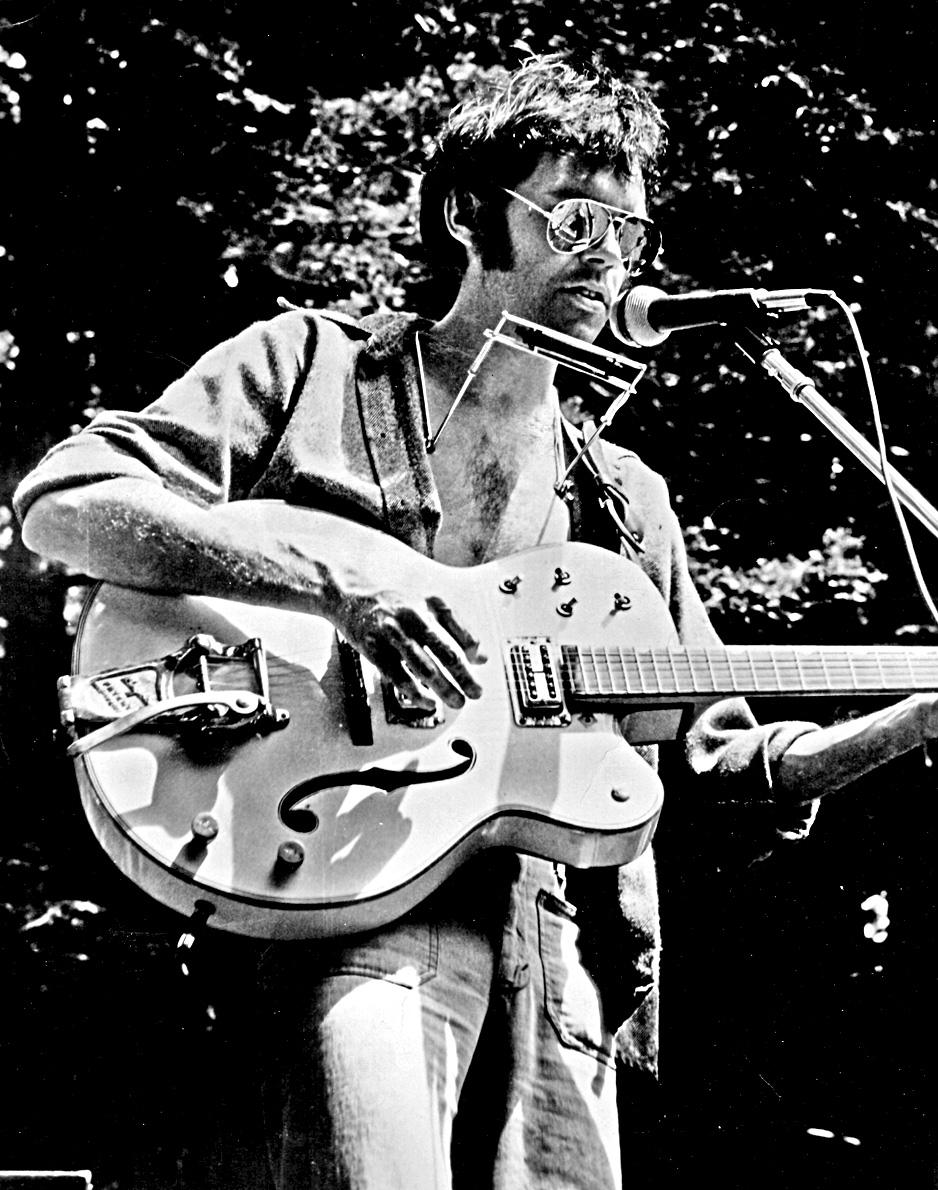
Neil Percival Young was born in Toronto on November 12, 1945, and spent his formative years in Winnipeg, Manitoba, playing in local groups before leaving school to chase music full time. In 1966 he rode to Los Angeles in a Pontiac hearse with bassist Bruce Palmer and found Stephen Stills; together they formed Buffalo Springfield, the short-lived folk-rock band whose harmonies and internal tensions helped define the California sound. Songs like “Mr. Soul” and “Expecting to Fly” hinted at the stubborn originality that would mark everything Young did afterward.
After Buffalo Springfield split in 1968, Young released a self-titled solo debut and then, with a new backing band called Crazy Horse, Everybody Knows This Is Nowhere (1969) — the raw electric counterweight to his acoustic side. He joined Crosby, Stills & Nash for Déjà Vu (1970), lending his name and his edge to the biggest folk-rock act in America, but he kept one foot out the door: After the Gold Rush, released the same year, was a quiet, piano-led record that made him a solo star in his own right.
Then came Harvest (1972), recorded partly in Nashville with local session players he dubbed the Stray Gators. It became the best-selling album in the United States that year. “Heart of Gold,” cut at Quadrafonic Sound Studios with James Taylor and Linda Ronstadt on backing vocals, reached No. 1 on the Billboard Hot 100 — still his only American chart-topper — and “Old Man” became one of his most beloved songs. Success sat uneasily on him. He later described the middle-of-the-road fame of Harvest as a trap and headed straight for what he called the ditch.
The mid-seventies “ditch trilogy” — Time Fades Away (1973), On the Beach (1974) and Tonight’s the Night (1975) — remains some of the darkest, most uncompromising music of the decade: ragged, mostly live recordings about excess, loss and the deaths of friends. Radio largely ignored it; history did not. Out of that same period came “Like a Hurricane,” a ten-minute electric storm written in 1975 and released on American Stars ’n Bars (1977), built around the wailing sustain of his black 1953 Gibson Les Paul, a guitar he nicknamed Old Black.
The end of the seventies brought a second commercial peak. Comes a Time (1978) returned to the Harvest sound, and Rust Never Sleeps (1979) — recorded live on tour with Crazy Horse and finished in the studio — gave him an unlikely punk-era manifesto. “My My, Hey Hey (Out of the Blue)” opened the record acoustically; “Hey Hey, My My (Into the Black)” answered it electrically, name-checking Johnny Rotten and declaring that rock and roll can never die. Its “burn out rather than fade away” line would echo for decades.

The eighties were Young’s most perverse and fascinating decade. Signing with Geffen Records, he released the vocoder-driven Trans (1982) and the rockabilly Everybody’s Rockin’ (1983) — whereupon Geffen sued him for delivering music “uncharacteristic” of Neil Young. The suit was settled, but the point stood: he would not become a nostalgia act. He closed the decade with Freedom (1989), whose “Rockin’ in the Free World” — a furious answer to the Bush era and its “thousand points of light” — became his biggest song in years and a permanent protest anthem.
Why Neil Young matters
Few artists bridge the seventies and eighties the way Young does: the gentle folkie and the feedback terrorist, often within the same concert. He co-founded Farm Aid in 1985 with Willie Nelson and John Mellencamp, aiming his stubbornness at a cause. A generation of nineties guitar bands — Pearl Jam, who cut the Mirror Ball album with him in 1995, above all — hailed him as the godfather of grunge, but that title sells him short. He is something rarer: a hitmaker who treated hits as accidents and integrity as the whole job.