Power, panic, and a cover-up
In No Way Out, Gene Hackman plays David Brice, the United States Secretary of Defense, a powerful, polished, and deeply insecure man whose private life becomes a national crisis. Brice is having an affair with Susan Atwell, played by Sean Young, who is also involved with a young naval officer, Tom Farrell, played by Kevin Costner. When Susan is murdered in Brice’s home, Brice and his aide, Scott Pritchard, played by Will Patton, launch a frantic cover-up, using the machinery of government, including a hunt for a supposed Soviet mole, to hide Brice’s involvement. Directed by Roger Donaldson, the film is a thriller about power and paranoia, and Hackman’s performance gives it a chilling plausibility.
Brice is not a cartoon villain. He is a successful politician who believes in his own importance, who is used to having problems solved by aides, and who panics when a problem cannot be solved that way. Hackman plays him with a surface of charm and authority that cracks, in stages, into desperation. In early scenes, Brice is confident, even jovial, hosting parties and discussing strategy with ease. After Susan’s death, his confidence becomes a performance, and Hackman lets the audience see the effort behind it: the forced smiles, the too-quick laughter, the way he looks to Pritchard for reassurance.
A man who outsources his conscience
What makes Brice so disturbing is that he does not commit the murder himself, and he does not directly order a murder. He creates a situation in which other people do terrible things on his behalf, and then he tells himself that he is not responsible. Pritchard, his loyal aide, becomes the film’s true enforcer, manipulating evidence, intimidating witnesses, and turning a murder investigation into a national-security hunt. Hackman plays Brice’s relationship with Pritchard as a kind of dependency: Brice needs Pritchard to be ruthless so that he can remain respectable, and Pritchard needs Brice’s power to justify his own cruelty.
That dynamic is the film’s moral core. Brice is a man who has spent his career making decisions that affect millions of lives, but who cannot face the consequences of a single, personal decision. Hackman shows that failure not as a lack of intelligence, but as a lack of character. Brice is intelligent enough to understand what he has done, and intelligent enough to construct a cover story, but he is not brave enough to confess. His tragedy, if it can be called that, is that he chooses power over truth, again and again, until there is no way out, as the title promises.
A thriller that trusts its audience
No Way Out is a remake of the 1948 film The Big Clock, but Donaldson and his cast update it for the Cold War 1980s, a world of Pentagon briefings, computer databases, and media spin. Hackman, who had played authority figures before, brings a specific kind of Washington credibility to Brice: he looks like a man who has given press conferences, who knows how to speak in sound bites, and who understands that in politics, appearance is often more important than fact. That credibility makes the film’s twists more effective, because the audience believes that a man like Brice could really use the government to hide a crime.
The film’s famous final twist, in which Farrell’s true identity is revealed, reframes everything that has come before, including Brice’s actions. Hackman’s performance holds up on a second viewing, because Brice’s panic and Pritchard’s manipulation look different once the audience knows who Farrell really is. That is a testament to Hackman’s control: he does not play Brice as a man who knows the twist, but as a man who is genuinely afraid, and that fear is what drives the plot.
Washington, played as a workplace
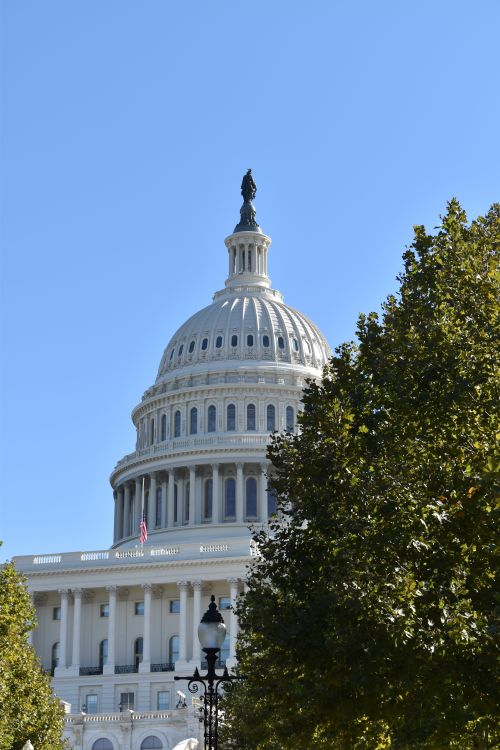
Donaldson shoots Washington not as a postcard of monuments, but as a workplace: offices, corridors, briefing rooms, and homes where political decisions are made over drinks. Hackman’s Brice belongs in that world. He is comfortable in it, he knows its language, and he knows how to use its institutions to protect himself. That familiarity makes the cover-up believable. The audience does not need to be told that a Secretary of Defense could misuse a mole hunt; Hackman shows a man who is used to having the system work for him, and who assumes, fatally, that it always will.
Will Patton’s Pritchard is the perfect counterpart. Where Brice is polished and panicked, Pritchard is quiet, loyal, and ruthless. Hackman plays Brice’s dependence on Pritchard as a kind of moral outsourcing: as long as Pritchard does the dirty work, Brice can tell himself that his own hands are clean. That self-deception is the film’s most chilling idea, and Hackman plays it without ever making Brice sympathetic enough to excuse it.
Why David Brice endures
David Brice endures because he is a portrait of power without conscience, played by an actor who understood that the most dangerous villains are not monsters, but respectable men who believe their position exempts them from ordinary morality. Hackman, in a film that could easily have become a simple cat-and-mouse thriller, gives Brice a psychological depth that makes the story feel contemporary. In an era of political scandals and cover-ups, Brice’s willingness to sacrifice others to save himself feels uncomfortably familiar.
For Hackman’s career, the role is also a reminder of his range in the late 1980s. In the same period, he played a warm basketball coach in Hoosiers and a principled FBI agent in Mississippi Burning. As Brice, he played the opposite: a man of power who has lost his principles, and who cannot find his way back. That contrast is what makes Hackman such a great actor. He did not play types; he played people, and David Brice is one of his most unsettling creations.