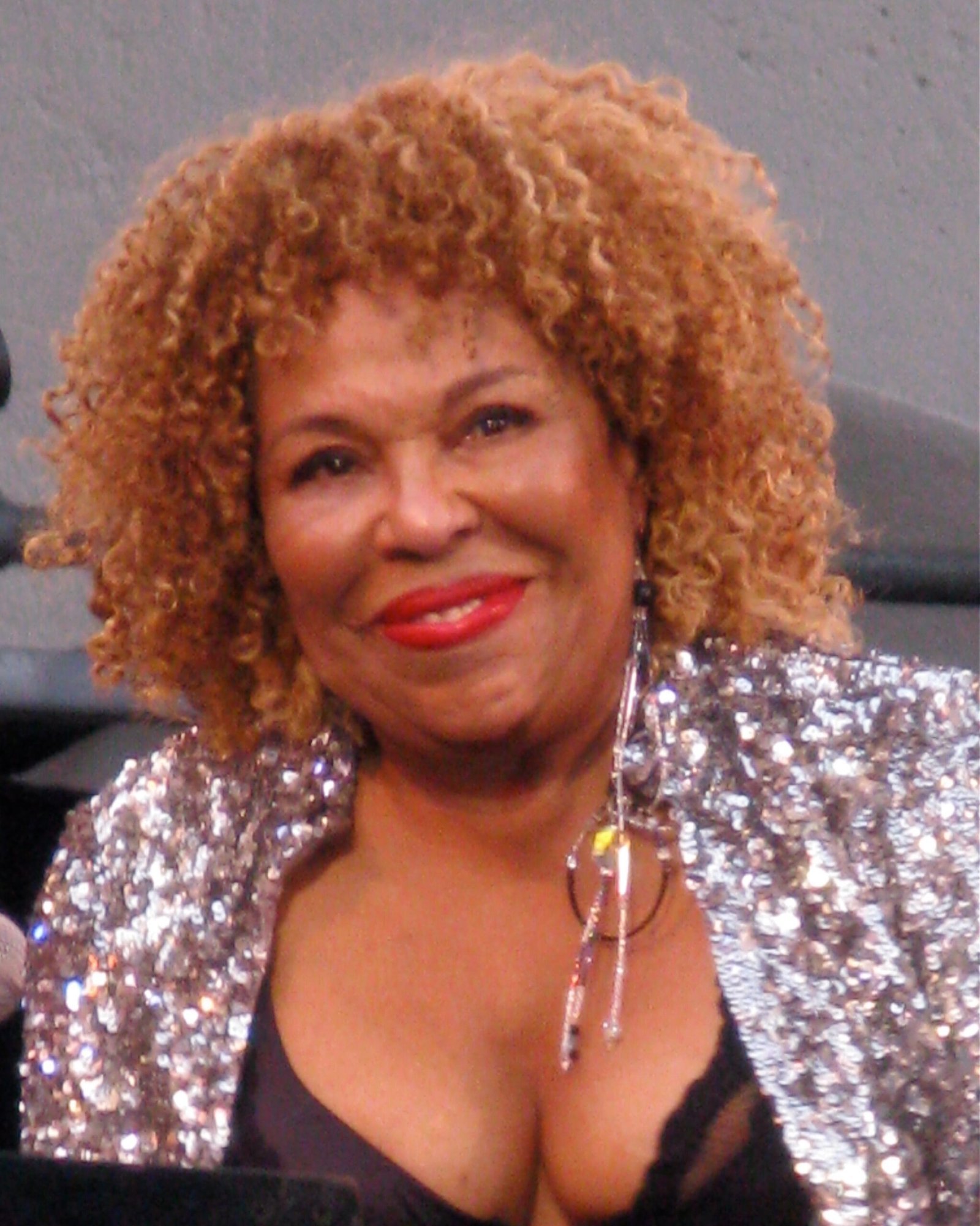
One Song Short: The Battles Behind Roberta Flack’s ‘Where Is the Love’
“Where Is the Love” exists because an album was one song short. In 1971 Roberta Flack and Donny Hathaway — two former Howard University music students, two of the most gifted musicians Atlantic Records had under contract, and two singers who had somehow not yet had the careers their talent promised — were finishing a duet album when they ran out of material. Their percussion player, a young session man named Ralph MacDonald, mentioned a song he had written with his partner William Salter and had failed to sell to anyone. It was not written for Flack and Hathaway. It was not, in the usual sense, even a duet. It was a two-minute-and-forty-three-second question about loving somebody who loves somebody else. They sang it down, by Flack’s account, two or three times in fifteen or twenty minutes, and went home.
What happened to that filler track is one of the quietly astonishing stories of 1970s soul. It climbed to number five on the Billboard Hot 100, spent a week at number one on both the R&B and Easy Listening charts, sold a million copies and won a Grammy. It also became the centrepiece of the most storied and most sorrowful partnership in soul music: two voices so perfectly matched that critics reached for Marvin Gaye and Tammi Terrell to describe them, bound together by a friendship that mental illness would tear apart, briefly mend, and then end for good on a January night in 1979 — hours after the two singers had recorded together for the last time. The battles behind “Where Is the Love” are not really about a song at all. They are about what it costs to keep singing with someone who is disappearing.
Two Voices from Howard
They were never contemporaries in the classroom, quite — Flack’s years at Howard University in Washington, D.C. came first — but the university is where the partnership was seeded, and Howard runs through both their stories like a watermark. Flack arrived at fifteen on a full music scholarship, a church pianist from Arlington, Virginia, who switched from piano to voice, conducted the university choir and directed Aida before graduating at nineteen and going off to teach school. Hathaway arrived a decade later on a fine arts scholarship, and his beginnings could hardly have been more different or more alike. Born in Chicago on October 1, 1945, Donny Edward Hathaway was raised by his grandmother, Martha Crumwell, a professional gospel singer, in the Carr Square housing project in St. Louis. He was singing in her church choir and studying piano at the age of three. He graduated from Vashon High School in 1963, went to Howard, joined the Alpha Phi Alpha fraternity, played in the Ric Powell Trio with his roommate, the drummer Ric Powell — and left in 1967, degree unfinished, when the music business came calling in the form of Curtis Mayfield’s Curtom Records in Chicago.
The two careers then developed in parallel, each impressive, neither complete. Hathaway became one of the most in-demand arrangers and session musicians in Chicago soul, writing arrangements for the Unifics’ hits “Court of Love” and “The Beginning of My End” and working on projects for the Staple Singers, Jerry Butler, Aretha Franklin, the Impressions and Mayfield himself. Spotted by King Curtis at a trade convention, he signed to Atlantic’s Atco label in 1969 and released “The Ghetto”, the single from his critically acclaimed 1970 debut, Everything Is Everything. Flack, meanwhile, had been discovered by Les McCann singing in a Capitol Hill restaurant, signed by Atlantic, and had made two albums of uncommon beauty — First Take in 1969 and Chapter Two in 1970 — that critics praised and the public largely ignored. Crucially, the records already intertwined them: Flack included Hathaway’s compositions on both her first albums, and on Chapter Two Hathaway himself served as pianist, arranger and backing vocalist. Before they ever stood at a microphone as a billed duo, they had been finishing each other’s sentences on record for years.
It was Jerry Wexler, Atlantic’s legendary producer and executive, who saw what the two parallel careers might become if they were merged. As the standard account has it, Wexler suggested that a joint album might consolidate what each of them, separately, had been unable to convert into momentum: acclaim into sales. The music business calls this synergy. What it actually produced was the finest male-female duet partnership since Gaye and Terrell — and, like that partnership, it would be shadowed from the start by the question of how much time they had.
The Sessions of 1971
The album Roberta Flack & Donny Hathaway was recorded between March and October 1971 at Regent Sound and Atlantic’s own studios in New York, produced by Joel Dorn and Arif Mardin — the same two men, between them, behind most of Flack’s early work. The material was mostly other people’s songs, chosen the way great interpreters choose: Carole King’s “You’ve Got a Friend”, Aretha Franklin’s “Baby I Love You”, the Righteous Brothers’ “You’ve Lost That Lovin’ Feelin’”, the Leiber and Stoller standard “I (Who Have Nothing)”, the hymn “Come Ye Disconsolate”. And the sound was built on a fact so obvious it is easy to miss: both singers were pianists, conservatory-grade musicians who arranged as they sang. The personnel lists read like a mutual admiration society — Flack on acoustic and electric piano, Hathaway on acoustic and electric piano, his horn and string arrangements threaded through the record alongside Mardin’s, with Chuck Rainey on bass, Bernard Purdie on drums, Eric Gale on guitar, and, on percussion, Ralph MacDonald, quietly carrying the album’s missing song in his pocket.
The album they were building repays a look in its own right, because “Where Is the Love” was its runt — track two of side two, the shortest thing on the record, wedged between Hathaway’s definitive reading of the standard “For All We Know” and the closing seven-minute “Mood”, an instrumental composition by Flack herself. Around it sat performances of real ambition: a five-minute “I (Who Have Nothing)” to open, a six-and-a-half-minute “You’ve Lost That Lovin’ Feelin’” with Joe Farrell’s soprano saxophone curling through it, Hubert Laws’s flute on the Hathaway–Gene McDaniels song “When Love Has Grown”, and “Be Real Black for Me”, a song of Black pride co-written by Flack and Hathaway themselves. This was not a cash-in duets package. It was two serious musicians using the duet form the way they used everything — as a conservatory of feeling — and the hit, when it came, came from the album’s most unassuming corner.
Hovering over the whole enterprise was the ghost of the obvious precedent. Marvin Gaye and Tammi Terrell had defined the soul duet only a few years before — “Ain’t No Mountain High Enough”, “You’re All I Need to Get By” — before Terrell’s collapse on stage in Gaye’s arms in 1967 and her death in 1970 ended the partnership in tragedy. AllMusic’s review of the Flack–Hathaway song notes that from the start the two drew favourable comparisons to Gaye and Terrell. The comparison was a compliment and a burden at once: it set a standard of blend and joy that few pairs could meet, and it carried, for anyone who knew the earlier story, a chill that nobody in 1971 had any reason to apply to the new duo. Flack and Hathaway were both healthy, both working, both years from their peaks. The parallel seemed to be purely musical. It would not remain so.
The first single announced both the promise and the problem. Flack and Hathaway’s “You’ve Got a Friend” had actually been recorded before James Taylor’s version was released as a single, and the two records debuted on the Hot 100 a week apart in June 1971 — Taylor’s on June 5, theirs on June 12. Taylor’s version went to number one. Theirs climbed to number twenty-nine on the pop chart and number eight on the R&B chart, and it marked Flack’s first appearance on the Hot 100. A second single, “You’ve Lost That Lovin’ Feelin’”, reached number seventy-one pop and number thirty on the R&B chart. These were respectable numbers, not breakthrough numbers. The duo album was admired in advance by everyone who heard it and anticipated by almost no one who bought singles. What it needed was a song that belonged to the two of them alone — not a cover, not a standard, something nobody else had sung first. What it needed, it turned out, was one more song than it had.
One Song Short
Ralph MacDonald was a percussionist’s percussionist: a New York session regular who had played on both singers’ records and travelled in Flack’s band, and who, with William Salter and Bill Eaton, had founded a publishing company called Antisia Music. Songwriting was the company’s business, and years earlier MacDonald and Salter had written “Where Is the Love” with a specific target in mind. As AllMusic’s account tells it, the two men — both, like the singers, Howard alumni — composed the song for the Los Angeles vocal group the 5th Dimension, inspired by Jimmy Webb’s “Up, Up and Away”, the group’s signature hit. They tried to get the song to the 5th Dimension. They failed. The song went into the drawer where unsold songs go, and the publishing company went on not quite making money — MacDonald had given himself two years to make Antisia work, and the clock was nearly run out.
Then the duet album came up one track short, and MacDonald spoke up. Flack remembered the moment precisely, decades later, in a 2013 interview. “‘Where Is the Love’ was written by Ralph MacDonald, who was in my band, traveling with me around the world, and he came to me and said, ‘Ro, I’ve got a song,’ and he had recorded it with Valerie Simpson, who has an incredible voice. He had her singing ‘Where Is the Love?’ and I thought it was just the nicest, hippest, most wonderful R&B thing that I had heard at that point in my life. And I wanted to do it. And I said, ‘I’ll do it.’ And he said, ‘Who are you going to do it with? It should be a duet.’ I said, ‘Donny.’ He said, ‘Donny?’ I think Ralph really had some other ideas, but you know he acquiesced and Donny, and I went into the studio and did that.”
That small exchange — the songwriter’s hesitation, the singer’s instant certainty — deserves its place in the story, because Flack’s choice was not obvious. The song had been pitched as a 5th Dimension record, all sunlit harmonies and California polish. She heard it instead as a vehicle for the most intimate singing partnership in soul. MacDonald, to his lasting credit, listened to the evidence over his own intentions: “When Donny and Roberta started to sing, it really began to take shape. From the time that we heard them, we knew it was something special. The two of them together is one of the most fantastic experiences I have had in the music business.” And the session itself was over almost before it began. “That was another one that happened in like a fifteen- or twenty-minute window,” Flack said, “because we’re both musicians… On ‘Where Is the Love’ we just sang it down, two or three times and got it.” Two Howard-trained musicians, sight-reading a rejected song at the end of an album session, in less time than it takes to drink a coffee. It is worth holding that fact in mind when the awards start arriving.
Two Minutes, Forty-Three Seconds
The finished recording runs two minutes and forty-three seconds, and its construction is a small masterclass in how much feeling can be fitted into how little space. Purdie’s drums and Rainey’s bass lay down a groove that never hurries; Eric Gale’s guitar traces the edges; Jack Jennings’s vibraphone glints through the arrangement like light on water; Arif Mardin’s strings and woodwinds cushion without smothering. And at the centre are the two pianos — Flack on acoustic piano, Hathaway on electric — the instruments they had both been playing since childhood, accompanying their own voices in a weave no session band could have faked. MacDonald himself is there too, on percussion: the writer inside his own song, listening to it become something else.
Then there is the song’s sly central trick, which generations of listeners have happily misunderstood. “Where Is the Love” sounds, on a casual hearing, like a duet between lovers — two voices entwined, asking where the love has gone. Read the lyric, and it is nothing of the kind. The singer has been promised that the beloved’s heart does not belong to another, and has discovered otherwise: “I guess it must have been my fate to fall in love with someone else’s love. All I can do is wait.” Flack and Hathaway are not singing to each other as a couple. They are two people in the same predicament, comparing wounds — or two halves of one voice, asking a question both already know the answer to. The love is not missing. It is somewhere else, addressed to someone else, and the waiting is the sentence. That the most blissful-sounding duet of its year is actually a song about absence is not a flaw in it; it is the source of its ache, and it is why the record has never dated the way happier hits have.
Notice, too, what the record refuses to do. It never builds to a climax, never raises its voice, never lets either singer grandstand over the other. The arrangement holds its temperature from first bar to last, and the two voices stay inside the same conversational register, as if the question were too sad to shout about. Two minutes and forty-three seconds is pop-single length, but the record behaves like a much longer one; it has the patience of a ballad and the economy of a jingle, and it leaves the listener with the distinct sensation of having been told something private. Records like this are usually the product of long labour. This one is the product of two musicians who had been preparing, separately and together, since they were children in church choirs.
The performance style completes the effect. Flack and Hathaway do not trade verses like contestants; they interlock, phrase by phrase, with the vowel-matched blend that comes from shared training and total familiarity. Gospel was in both their beginnings — her church choir in Arlington, his grandmother’s choir in St. Louis — and the call-and-response of the church runs underneath the record’s pop surface. It is, in the end, a secular hymn about waiting for something that is not coming. They recorded it in three takes. It is difficult to think of another record of its stature about which that can be said.
The Summer of 1972
Timing, which had defeated Flack for three years, now performed a somersault in her favour. By the time “Where Is the Love” was released as the duet album’s third single in the spring of 1972, her solo career had detonated: “The First Time Ever I Saw Your Face” was on its way to six weeks at number one and the title of the biggest single of the year. The duet rode the slipstream of a phenomenon. The album had been released in April 1972, and the single climbed through the summer to number five on the Billboard Hot 100. In July it spent a week at number one on the Easy Listening chart; in August it spent a week at number one on the R&B chart; it reached number seven on the Cash Box chart and number twenty-nine in Britain, and Billboard ranked it the fifty-eighth biggest song of 1972. It sold over a million copies and earned a gold disc. The album it completed rose to number three on the Billboard album chart and number two on the R&B album chart, and was certified gold by the RIAA on September 5, 1972.
Pause on the arithmetic of that summer, because it is the hinge of both these singers’ lives. A song written for the 5th Dimension, rejected, shelved, offered in desperation to fill a gap in an album, and cut in twenty minutes had outsold nearly everything on American radio. MacDonald’s publishing company, which had been weeks from the end of its founder’s two-year ultimatum, was saved by it; he and Salter would go on to write “Just the Two of Us” and become fixtures of the industry. Atlantic, which had spent three years failing to sell Roberta Flack, now had her at numbers one and five simultaneously, in two different configurations. And Flack and Hathaway, the two Howard students whose solo careers had sputtered for half a decade, were suddenly the defining duet act in American soul. AllMusic’s review of the song reached, as everyone did, for the comparison: favourable mentions alongside Marvin Gaye and Tammi Terrell. What nobody said aloud, in the summer of 1972, was that the Gaye–Terrell story had ended in collapse and death four years earlier — and that this partnership, too, had less time than anyone knew.
A Grammy, and the Cracks Beneath
The crown arrived at the 15th Annual Grammy Awards in March 1973. “Where Is the Love” won the Grammy for Best Pop Performance by a Duo or Group with Vocals — on the same night, in the same ceremony, that Flack won Record of the Year for “The First Time Ever I Saw Your Face”. Consider the distance travelled: eighteen months earlier she had been a critics’ favourite whose albums did not sell, and Hathaway a cult figure admired by musicians. In one evening they stood at the centre of the industry together and apart. It should have been the beginning of a decade.
It was, instead, close to the high-water mark. During the peak of his career — these are the flat words the biographies use, and they should be sat with — Hathaway began experiencing severe bouts of depression and exhibiting behaviour that frightened the people around him. Between 1973 and 1974 he was hospitalised several times and was eventually diagnosed with paranoid schizophrenia, for which he was prescribed a shifting armoury of medication; at one point, by his family’s account, he was prescribed fourteen different medications to be taken twice a day. When the medication worked, he improved. When he felt better, his wife Eulaulah later said, he became less diligent about taking it, and often stopped altogether. Between 1973 and 1977 the illness consumed his professional life: hospitalisations multiplied, his solo career stalled after 1973’s Extension of a Man, and Atlantic’s patience thinned. And the damage spread outward into the one relationship that had seemed indestructible. The effects of his illness, as the record of those years puts it, drove a wedge between Hathaway and Flack; they did not reconcile for several years, and they released no music together between the duo era and 1978.
It is impossible to hear “Where Is the Love” the same way once this is known — and that is not a morbid embellishment, it is simply what happened to the song in the ears of everyone who loved them. The two voices asking where the love had gone were, within two years of the Grammy, no longer singing together at all. The lyric’s promise — “all I can do is wait” — became the literal shape of Flack’s position: the partnership that had made them both famous was on hold while her friend disappeared into hospitals and silence, and all she could do was wait.
The Genius in the Next Room
Any account that treats Hathaway as merely the tragic half of a duet gets the story wrong, and the scale of his gift is part of the background of this one. His 1972 album Live, recorded at the Troubadour in Hollywood and the Bitter End in New York, has been called “one of the best live albums ever recorded” by the BBC’s Daryl Easlea, and it captures what fellow musicians already knew: that Hathaway at a keyboard, singing Leon Russell’s “A Song for You” or his own “The Ghetto”, was operating at a level his peers recognised as genius. His “This Christmas”, released in 1970, became an American standard, covered by everyone from Diana Ross to Stevie Wonder to Chris Brown. His ballad “Someday We’ll All Be Free” carries its own woven-in sorrow: its lyricist, Edward Howard, explained that he wrote it for Hathaway himself — “because Donny was a very troubled person. I hoped that at some point he would be released from all that he was going through.” Rolling Stone would later name him the forty-ninth greatest singer of all time; Justin Timberlake called him “the best singer of all time”; Amy Winehouse named him her favourite artist. He was thirty-three years old at the height of the acclaim and already, intermittently, unable to work.
That is the real battle behind “Where Is the Love”, and it had no villain anyone could fight. Not the label, which wanted more records. Not Flack, who wanted her partner back. Not Hathaway himself, who wanted, as Howard’s lyric says, to be free of what he was going through. The enemy was an illness that psychiatry of the 1970s could blunt but not hold, in a business that had no language for it and no patience with it, orbiting a talent that everyone in the room could see was one of the century’s.
The Solo Years
While the partnership lay dormant, the solo record tells its own double story. Hathaway’s early 1970s were a blaze of work that his later silence makes easy to forget: a second solo album, Donny Hathaway, in 1971; the Live album in 1972, half recorded at the Troubadour in Hollywood and half at the Bitter End in Greenwich Village; the theme to the television series Maude; the composed and conducted score for the 1972 film Come Back, Charleston Blue; production work for other artists, including the band Cold Blood. His final studio album, Extension of a Man, arrived in 1973, moving between chart singles — “Love, Love, Love” and “I Love You More Than You’ll Ever Know” both reached the pop and R&B charts — and a six-minute orchestral piece, “I Love the Lord, He Heard My Cry”, the work of a man who told an interviewer that year, with perfect simplicity, “I always liked pretty music and I’ve always wanted to write it.” After that, the trail thins to a single here, a session there: Atlantic issued one more solo single, “You Were Meant for Me”, shortly before his death, by which time he had been without a hit album for six years.
Flack’s solo seventies, by contrast, were a coronation procession — two further number ones and a reinvention as the defining balladeer of the decade. But the asymmetry between the two careers is the point, and it is visible in the catalogue itself: in the years when they were not speaking, her records got bigger and his got sparser, and the duet album sat in the catalogue between them like a photograph of a marriage in happier times. When musicians talked about Donny Hathaway in the middle 1970s, they talked about him the way you talk about weather that has not arrived yet — a genius whose next record was always assumed to be coming. The reunion of 1978 was therefore not a nostalgia exercise. It was the industry holding its breath.
The Closer I Get
The reconciliation, when it came, was worth the wait. In 1978 Flack recorded “The Closer I Get to You”, written by James Mtume and Reggie Lucas, two members of her own band, for her album Blue Lights in the Basement — and Hathaway sang it with her. The record topped the R&B chart, reached number two on the Hot 100, and became another million-selling gold single. Seven years after “Where Is the Love”, the blend was intact: the same two voices, the same ease, the same sense of a conversation resumed mid-sentence. Atlantic responded the way record companies do, and the two singers went back into the studio to make a second full album of duets.
The sessions produced, among other things, two finished recordings that now carry an unbearable weight in the catalogue. One was “You Are My Heaven”, co-written by Stevie Wonder and producer Eric Mercury. The other was Mtume and Lucas’s “Back Together Again”. Both were recorded with Hathaway on January 13, 1979. The title of the second song was not intended as anything but a celebration. Neither singer can have imagined what it would come to mean within the day.
January 13, 1979
The last day of Donny Hathaway’s life began in a recording studio, which is where anyone who knew him would have expected to find him. He had recorded the two duets with Flack. Later, a separate session began with producers and musicians Eric Mercury and James Mtume — and it fell apart in front of them. Both men reported that although Hathaway had been singing fine, he became irrational, paranoid and delusional. According to Mtume, Hathaway said that white people were trying to kill him and had connected his brain to a machine in order to steal his music and his voice. Mercury concluded that the session could not continue; he called it off, and the musicians went home.
Hours later, Hathaway was found dead on the pavement below the window of his fifteenth-floor room at the Essex House hotel, at 160 Central Park South in New York. The room’s door was locked from the inside. The window glass had been carefully removed. There were no signs of a struggle, and investigators ruled the death a suicide. He was thirty-three years old. His funeral was conducted by the Reverend Jesse Jackson. The Whispers, then at the start of their own run of hits, recorded a tribute, “Song for Donny”, which reached number twenty-one on the R&B chart later that year — the industry beginning, in its own vernacular, to say what it had lost.
Flack was devastated — the word every account uses, and for once the word is proportionate. This was not a colleague. This was the boy from Howard whose compositions she had sung on her first records, the pianist who had arranged beside her, the other half of the most celebrated blend in soul, the man she had chosen for “Where Is the Love” over the songwriter’s hesitation in a single word: “Donny.” They had quarrelled, lost years to his illness, found each other again, and gone back to work — and the work was sitting on tape, half a duet album, two finished songs and a future interrupted in the middle of a working day. What she did next was the act of a partner as much as an artist: she completed the album around the recordings they had finished, and released it under a billing that told the whole story in five words — Roberta Flack Featuring Donny Hathaway.
Back Together Again
The album appeared in March 1980, reached number twenty-five on the Billboard album chart and number four on the R&B chart, and was certified gold — a substantial commercial comeback for Flack, and a strangely joyful record for a memorial. The two duets became its signature. “You Are My Heaven”, released as a single in November 1979, reached number forty-seven on the Hot 100 and number eight on the R&B chart. “Back Together Again” followed in 1980: number fifty-six on the Hot 100, number eight R&B, a top-ten disco hit in its extended twelve-inch form, and — in Britain, where soul fans had adopted the partnership — number three on the UK chart, the highest British placing of any record either singer ever made together. The two duets also brought Flack and Hathaway further Grammy nominations, posthumous for him, an honour that had become unbearably routine. “Back Together Again” was Hathaway’s last chart record. They had sung it, by the bleakest coincidence in either catalogue, on the final day of his life — a song about reunion, recorded hours before the separation became permanent.
It is worth pausing on the record itself rather than the irony, because the irony has a way of swallowing it. “Back Together Again” is an uptempo dance record, nearly ten minutes long in its album version, crowded with backing singers who included Luther Vandross and Gwen Guthrie in its all-star choir. It sounds like a celebration because it was one: two old friends, seven years on from their first album, back in a New York studio making the music they had been raised, separately and together, to make. The tape does not know what the day held. That is the mercy of recordings, and the cruelty of them.
The Question That Never Closed
“Where Is the Love”, the two-minute filler track, simply declined to leave. The covers began immediately and have never really stopped: the Ray Conniff Singers, Helen Reddy, Jerry Vale and Andy Williams all recorded it in 1972 alone; Sérgio Mendes & Brasil ’77 took it into the Easy Listening top twenty in 1973; Liza Minnelli sang it the same year. A generation later it was still being handed from duo to duo — Mica Paris and Will Downing took it to number nineteen in Britain in 1989, Stephanie Mills and Robert Brookins reached number eighteen on the R&B chart in 1988, Jesse & Trina carried it onto the Dead Presidents soundtrack in 1995, and Amel Larrieux and Glenn Lewis’s version, on a Stanley Clarke album, was nominated for the same Grammy the original had won, at the 2004 awards. The song had become the standard against which soul duets are measured — the thing you record to prove you belong in the conversation it started.
The honours accumulated around the partnership even as it receded into history. Hathaway was posthumously given a Grammy Lifetime Achievement Award in 2019, forty years after his death, his catalogue by then a foundation text for singers from Alicia Keys to George Benson. And in 2010, at the 52nd Annual Grammy Awards, Roberta Flack — seventy-two years old, a lifetime achievement honoree of that same institution — stood on the Grammy stage and sang “Where Is the Love” with Maxwell, a singer of a generation formed by the record, taking Hathaway’s lines. It was a beautiful performance and an impossible one; everyone in the room could hear the missing voice inside the present one. After Flack’s death in February 2025, listeners went looking for the original one more time, and “Where Is the Love” re-entered Billboard’s R&B/Hip-Hop Digital Song Sales chart at number eight — the filler track, still charting, fifty-three years after it was cut in twenty minutes to finish an album.
Why It Endures
Some songs endure because they capture a moment. “Where Is the Love” endures because it captures a balance — the precise, unrepeatable equilibrium of two particular voices, two particular pianos, and a friendship that stretched from a university campus to the top of the charts to the edge of the bearable. It was written for the wrong group, rejected, rescued by a percussion player with a failing publishing company, assigned by a singer’s instant instinct, and recorded before lunch. Every professional judgement said it was a gap-filler. Every battle around it — the 5th Dimension’s indifference, the album’s shortfall of material, the partnership’s long war with illness and silence — was lost by somebody. And the song won all of them by doing the simplest thing in music supremely well: two people, asking a question neither can answer, in perfect harmony.
Roberta Flack was asked about Donny Hathaway for the rest of her life, and she never diminished what they had been to each other. The records say it better than any interview. Put on “Where Is the Love” now — two minutes and forty-three seconds, three takes, no retakes possible — and the question in the title sounds different than it did in 1972. It is no longer only about the lover in the lyric, off loving someone else. It is about the voice that stops halfway through the story, and the voice that kept singing for another forty-six years, and the twenty minutes in a New York studio when both of them were in the room and the tape was rolling and, for exactly as long as the song lasts, nothing was missing at all.