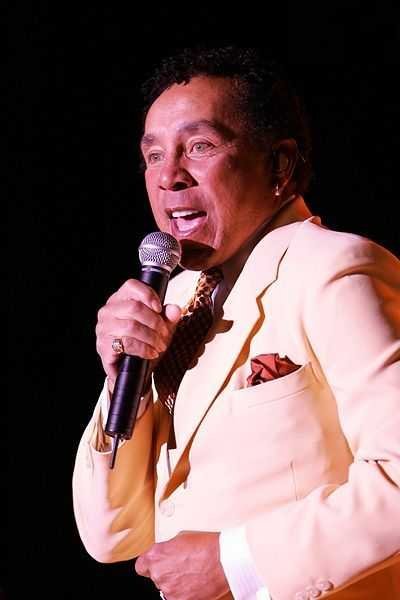
A Hit the Miracles Didn’t Write
For most of the early 1960s, the Miracles were Motown’s house exception: a group that mostly wrote its own hits. Smokey Robinson penned the group’s breakthrough records himself, so the story of “Mickey’s Monkey” begins with a small act of surrender. The song that Smokey would later call “one of our biggest records ever in life” was handed to the Miracles by somebody else — Motown’s rising staff songwriters Holland–Dozier–Holland — and it became one of the defining party records of the decade.
The moment of discovery has become a Motown legend. As Robinson told it on the DVD collection Smokey Robinson & The Miracles: The Definitive Performances, he walked into the studio one day and found Lamont Dozier at the piano, working out a stomping set of chords and chanting a nonsense refrain — “lum de lum de lai-ai” — over the top. Intrigued, Robinson asked Dozier to let the Miracles record it. At that moment the Miracles were Motown’s flagship act, the group that had given Berry Gordy’s young company its first million-seller, and Dozier agreed.
Motown’s Flagship Act
To understand why the Miracles got first refusal on the song, it helps to remember where Motown stood in mid-1963. The company was barely four years old. The Miracles had been there from the beginning — a group of Detroit teenagers from Northern High School whose 1961 single “Shop Around” became Motown’s first million-seller and proved that Gordy’s little label on West Grand Boulevard could compete with the majors. A year later, “You’ve Really Got a Hold on Me” repeated the feat and crossed the group over to white pop audiences in a major way.
The Miracles were more than the label’s hitmakers. Robinson was Gordy’s closest creative lieutenant — a songwriter and producer for the whole roster, and the man whose taste Gordy trusted most. When the Miracles recorded, Motown was effectively showing the world its flagship. That a song as raucous and unpolished as “Mickey’s Monkey” was given to the company’s most refined act says something about the young label’s instincts: nobody at Hitsville was interested in playing safe.
The Man Behind the Monkey
The “Mickey” of the title was no fiction. He was William “Mickey” Stevenson, Motown’s head of A&R — the man who auditioned talent, matched songs to singers, and functioned as the label’s musical traffic cop. Stevenson was no mere executive, either: he was a songwriter himself who would co-write “Dancing in the Street” the following year, and he had a showman’s instinct for what would move a room. In the song’s comic lyric, a cat named Mickey comes in from out of town and spreads his new dance “all around.” The dance was the Monkey, one of the novelty dance crazes that swept American ballrooms and sock hops in the early 1960s, and the record helped push it into a national phenomenon. There is something delightfully inside-out about it: the Miracles’ wildest record is a tribute to the company’s own office manager of talent, turned into folklore while he was still walking the halls at Hitsville.
Rock historians have long noted the song’s debt to Bo Diddley: the track rides a bouncing, syncopated beat in the Diddley tradition, all handclaps, drive and chant. Holland, Dozier and Holland tailored it perfectly for the group. Where Robinson’s own Miracles songs were often silky and romantic, this one was a shout — built for a room full of people moving.


A Party Committed to Tape
The Miracles recorded “Mickey’s Monkey” on July 9–10, 1963, at Hitsville U.S.A., the converted garage studio at 2648 West Grand Boulevard in Detroit, with Brian Holland and Lamont Dozier producing. The producers’ masterstroke was atmosphere: the record is staged as a live party. It opens with Robinson calling out to ask if everybody is ready, a crowd roaring back its answer, and the famous count-in — “a one, a two, a one, two, three, four” — before the band crashes in.
That crowd was no hired mob. The background vocals on the record are a roll call of early Motown: Mary Wilson of the Supremes, Martha Reeves and her Vandellas, members of the Temptations and the Marvelettes, and Detroit disc jockey “Jockey Jack” Gibson all joined the Miracles — Robinson, Claudette Robinson, Bobby Rogers, Pete Moore and Ronnie White — behind the microphones, with Marv Tarplin on guitar and the Funk Brothers supplying the instrumentation. It was the sound of a whole company partying on one record, and it captured exactly what Motown felt like in the summer of 1963: young, hungry and impossibly close-knit.
The record is over in two minutes and forty-eight seconds, and it wastes none of them. After the count-in, Robinson shouts the verses like a master of ceremonies while the Miracles and their guests chant the refrain back at him — call and response borrowed from the church and the street corner alike. The “live” atmosphere was an illusion manufactured in a converted garage, but it was a brilliant one: radio listeners in 1963 were not just hearing a song about a dance party, they were hearing the party itself, and the record made the Monkey impossible to resist.
The Charts and the Road
Tamla released the single on July 26, 1963, backed with “Whatever Makes You Happy.” It climbed to No. 8 on the Billboard Hot 100 and No. 3 on the R&B chart, and reached the Top 10 in Canada as well. It became the Miracles’ third million-selling record in as many years, following “Shop Around” in 1961 and “You’ve Really Got a Hold on Me” in 1962 — a run that cemented the group as the foundation on which the Motown empire was being built.
On stage, the song became a weapon. The Miracles used it as their closing number on the legendary Motortown Revue package tours, where, by all accounts, it “brought the house down” night after night. Their performance of it at the Santa Monica Civic Auditorium in 1964 was captured in The T.A.M.I. Show, one of the great concert films of the era, where the Miracles shared the bill with James Brown and the Rolling Stones. The song was successful enough to anchor an entire album, The Miracles Doin’ Mickey’s Monkey, and it found its way onto film soundtracks too, appearing in Ivan Dixon’s acclaimed 1964 drama Nothing But a Man and, decades later, in the 1998 film Simon Birch.
It is worth pausing on how strange the record’s success was. Motown’s brand was polish — matching suits, choreography, finishing-school charm. “Mickey’s Monkey” succeeded by sounding like the polish had been deliberately left off: shouted, sweaty and spontaneous, with half the company yelling along. Berry Gordy’s quality-control system was built on the question of whether a teenager would buy a record instead of a hot dog; this record answered by sounding like the party the teenager was trying to get into. In hindsight it widened the Motown palette, proving the label could sell abandon as convincingly as elegance — a lesson its artists would draw on for the rest of the decade.
The Afterlife of a Dance Record
For Holland–Dozier–Holland, the record was a beginning as much as a hit. The team went on to write two more Miracles singles — the Top 40 “I Gotta Dance to Keep from Crying” and the Top 20 “(Come ‘Round Here) I’m the One You Need” — before becoming the architects of the Supremes’ mid-sixties dominance. For the Miracles, “Mickey’s Monkey” proved the group’s range: the same act that could break hearts with Robinson’s falsetto ballads could also lead a dance floor by the nose.
Other artists kept returning to it. The song has been covered by Mother’s Finest, Martha & the Vandellas, the Hollies, Lou Christie, Cannibal & the Headhunters, the Young Rascals, the Supremes and John Cougar Mellencamp, among others — a tribute to a groove that refuses to date. It has appeared on virtually every Miracles greatest-hits collection ever assembled. Even its B-side had an afterlife: “Whatever Makes You Happy” became a regional hit in its own right, inspired a cover by singer Jacki Gore, and eventually lent its name to the 1993 Rhino compilation Smokey Robinson & The Miracles: Whatever Makes You Happy (More of the Best).
The group’s live performances of the song kept resurfacing, too — the Miracles can be seen performing it on the 1985 Ready Steady Go special The Sounds of Motown, and on the Definitive Performances DVD, where Robinson tells the piano story himself, still visibly delighted by it four decades on.
What endures most is the joy of the thing. In under three minutes, “Mickey’s Monkey” preserves the moment when Motown was still a family business small enough to fit its whole roster around one microphone, when its A&R chief could be immortalised as a dancing cat from out of town, and when its biggest star heard a few piano chords in a hallway and knew, instantly, that he was listening to a hit.