A Beauty Parlour and a Circle of Friends
Steel Magnolias, released in 1989 and directed by Herbert Ross, is a beloved American drama-comedy about friendship, family, and grief in a small town in Louisiana. Based on Robert Harling’s play of the same name, the film centres on a group of women who gather regularly at a local beauty parlour, sharing gossip, laughter, advice, and support through the ups and downs of their lives. Sally Field plays M’Lynn Eatenton, a steady, loving mother whose relationship with her daughter Shelby is at the emotional heart of the story.
The film is set in the fictional town of Chinquapin, Louisiana, and it moves through weddings, birthdays, holidays, and everyday rituals that give small-town life its rhythm. The beauty parlour, run by Truvy Jones, played by Dolly Parton, is more than a business. It is a meeting place, a confessional, and a refuge, where women can speak honestly in a way they might not elsewhere. Around Truvy gather Ouiser Boudreaux, played by Shirley MacLaine, a sharp-tongued widow with a soft centre; Clairee Belcher, played by Olympia Dukakis, a wealthy widow with a dry wit; and Annelle Dupuy, played by Daryl Hannah, a shy newcomer finding her place. At the centre of it all are M’Lynn and her daughter Shelby, played by Julia Roberts, whose warmth and determination light up every scene she is in.
The story follows Shelby from her wedding day through marriage, motherhood, and serious illness. Shelby lives with diabetes, and her decision to have a child despite medical warnings sets in motion the film’s most moving passages. M’Lynn, as her mother, must balance respect for her daughter’s independence with fear for her health. She supports Shelby’s choices even when she disagrees with them, and she stands by her through joy and crisis alike. That mother-daughter bond, played with great tenderness by Field and Roberts, is what gives Steel Magnolias its lasting power.
Sally Field as M’Lynn Eatenton
Sally Field’s performance as M’Lynn Eatenton is the emotional anchor of Steel Magnolias. M’Lynn is the kind of woman who holds a family and a community together: practical, organised, devoted, and not afraid to speak her mind. She is also funny, often in a dry, understated way, and she shares the other women’s enjoyment of gossip and teasing. Field plays her as a real Southern mother, not a stereotype. She is strong without being stern, loving without being sentimental, and she knows when to step back and let her daughter live her own life.
The role asks Field to carry some of the film’s most difficult scenes, and she does so with remarkable restraint. When Shelby’s health worsens, M’Lynn must face the possibility of losing her child, a prospect no parent can bear. Field plays those scenes without melodrama, allowing grief to emerge in quiet moments: a look across a hospital room, a hand held a little too tightly, a voice that stays steady when it would be easier to break down. One of the film’s most famous scenes takes place after Shelby’s funeral, when M’Lynn, overwhelmed by anger and sorrow in a cemetery, finally lets her feelings out in a raw, funny, and heartbreaking outburst, comforted and gently teased back toward laughter by her friends. It is a scene that works because Field has earned the audience’s trust over the course of the film. We have seen M’Lynn hold herself together for so long that her moment of breaking feels both shocking and deeply human.
Director Herbert Ross, working from Harling’s screenplay, balances the film’s comedy and drama with a light but sure touch. He allows the ensemble cast to shine, giving each woman her own voice and her own moments, while keeping the focus on the friendship that binds them. The Louisiana setting is vivid without being picturesque for its own sake: the gardens, the church, the Easter egg hunt, the Christmas lights, and the beauty parlour itself all feel like real places where real people live. Ross trusts his cast, and the cast repays that trust with performances that feel like a genuine community, full of affection, rivalry, and shared history.
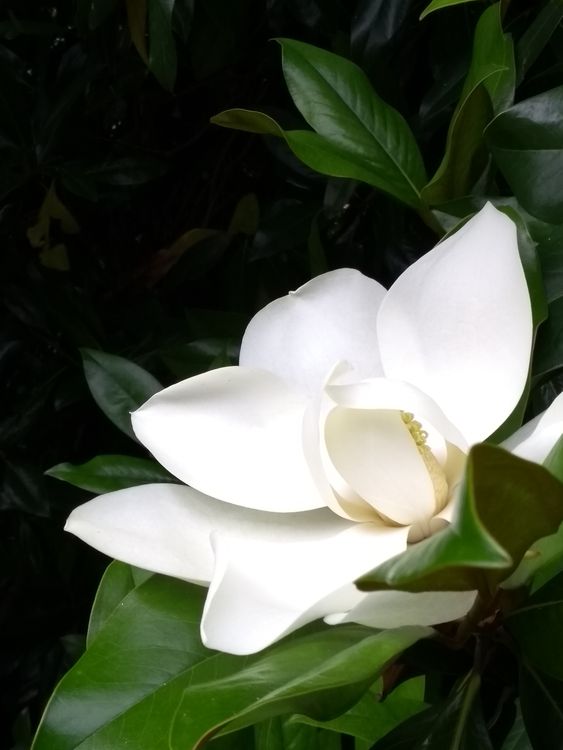
The title itself captures the film’s central idea. “Steel magnolias” suggests women who are both delicate and tough, like the magnolia flower that is beautiful but hardy. That description fits M’Lynn perfectly. She is graceful and warm, but she is also resilient, capable of enduring loss and continuing to care for the people around her. Field embodies that combination naturally. She does not need to announce M’Lynn’s strength. It is visible in the way she listens, the way she organises, and the way she keeps showing up for her family and friends.
Humour, Heartbreak, and Southern Life
Steel Magnolias is often described as a “weepie”, but that label does not do justice to its humour. Much of the film is genuinely funny, thanks to Harling’s sharp dialogue and the cast’s comic timing. Ouiser’s insults, Clairee’s one-liners, Truvy’s malapropisms, and Annelle’s earnestness all provide laughter, and that laughter makes the sadder moments hit harder. The film understands that in real life, humour and grief often sit side by side. People joke at funerals, they tease each other in hospital waiting rooms, and they find comfort in laughter even when they are hurting. Steel Magnolias captures that truth with unusual honesty.
The film also offers a portrait of Southern women’s friendship that has resonated with audiences far beyond Louisiana. The beauty parlour is a space where women support one another across differences of age, wealth, and temperament. They disagree, they gossip, they forgive, and they return. That sense of chosen family, of friends who become as close as sisters, is one reason the film has remained popular through stage revivals, television remakes, and countless viewings at home. It speaks to anyone who has relied on friends to get through a hard time.
When Steel Magnolias was released, it was a box-office success and a critical favourite, and it earned Julia Roberts an Academy Award nomination for Best Supporting Actress. Sally Field, already a two-time Oscar winner, was widely praised for her central performance, even though she was not nominated for this role. Critics noted that she gave the film its gravity, grounding its comedy in real maternal love and loss. For audiences, M’Lynn became one of Field’s most recognisable characters, alongside Norma Rae and Edna Spalding, but different from both: less a woman fighting the world alone, and more a woman held up by, and holding up, a circle of friends.
Why M’Lynn Endures
Steel Magnolias endures because it treats its characters with respect and affection, and because it understands that strength often looks like showing up, day after day, for the people you love. M’Lynn Eatenton embodies that kind of strength. She is not a hero in the traditional sense. She is a mother, a wife, a friend, and a neighbour, doing her best in a small town where everyone knows everyone else’s business and where love is expressed through food, flowers, hair appointments, and practical help.
For Sally Field, the role came at a point in her career when she had already proved herself as a dramatic actress of the first rank. Steel Magnolias allowed her to show another side of her talent: her warmth, her humour, and her ability to work as part of a brilliant ensemble. It also connected her to a new generation of audiences, who discovered her through a film that balanced laughter and tears in a way few others have managed so successfully. M’Lynn remains a signature role because it is so human. She laughs, she worries, she grieves, and she goes on, supported by friends who understand that being strong does not mean never breaking down, but finding a way to keep going together.