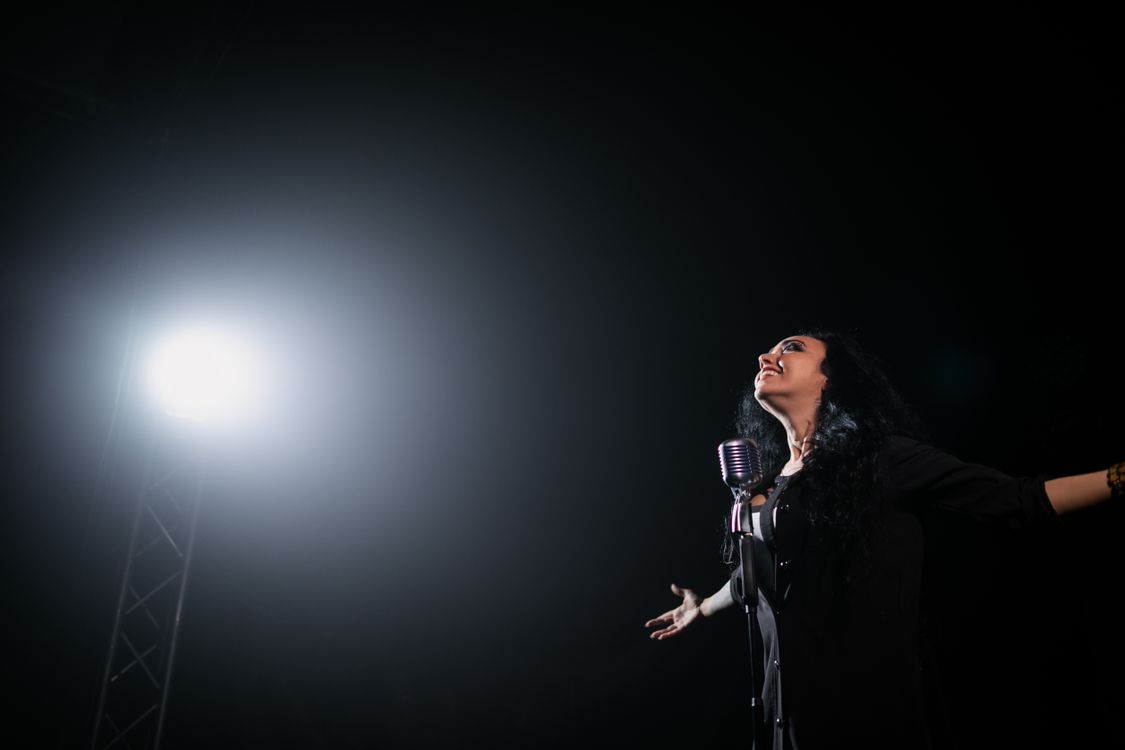
It begins with an oboe, lonely and exposed, playing a melody that sounds like someone standing in a doorway watching a bus pull away. Then a voice enters, low and impossibly calm, and sings about a woman who gave one night to a passing star and has been waiting ever since. When the Carpenters released “Superstar” in the summer of 1971, it was the saddest song on American radio, and one of the most beautiful. It was also, improbably, a song about a groupie, written by a wild-haired Oklahoma piano man and his singing partner, first recorded as a throwaway B-side, and then handed to the cleanest-cut duo in pop music, who turned it into a hymn of loneliness that stopped the whole country in its tracks. The story of “Superstar” is the story of a song that kept changing hands until it found the one voice that could make its ache sound universal.
To understand why the record mattered, you have to understand where the Carpenters stood in 1971. They were not newcomers, and they were not yet legends. They were, quite simply, the biggest new act in American pop. Karen and Richard Carpenter, a brother and sister from Downey, California, had broken through in 1970 with “(They Long to Be) Close to You,” a Burt Bacharach and Hal David song that spent four weeks at number one and announced a new kind of pop stardom: soft, precise, immaculate, built around Karen’s deep, warm contralto and Richard’s meticulous arrangements. They followed it with “We’ve Only Just Begun,” another number one in spirit if not in chart position, and by early 1971 they were the act every radio programmer in America trusted. Their third album, the self-titled Carpenters, released in May 1971, already contained a hit in “Rainy Days and Mondays,” which had climbed to number two. The duo seemed untouchable, and also, to some critics, untouchably wholesome. Nobody expected their next single to be a song about a one-night stand.
The song had begun two years earlier, in a very different world. In late 1969, Delaney and Bonnie Bramlett, a husband-and-wife duo at the center of a loose, rowdy circle of musicians that included Eric Clapton and Leon Russell, recorded a song called “Groupie (Superstar).” It was written by Bonnie Bramlett and Leon Russell, and it told, plainly and without apology, the story of a woman who spends a night with a touring rock star and then waits, hopefully and hopelessly, for him to come back to her. The idea, according to the song’s history, came from Rita Coolidge, who had watched how young women attached themselves to touring musicians and suggested the subject. Russell himself later recalled that Coolidge was the first person he ever heard use the word “superstar,” talking about Dionne Warwick, and that the word stuck in his head until he and Bonnie finished the song together. The Delaney and Bonnie version, sung by Bonnie with Clapton on guitar, was released in December 1969 only as the B-side of their single “Comin’ Home,” which reached number 84 in America. The song, in that first incarnation, went almost nowhere.
It might have stayed there if the song had not kept finding new singers. In 1970, Joe Cocker took it on the road with his Mad Dogs and Englishmen tour, with Russell himself as bandleader and Rita Coolidge singing the lead vocal. The live album from that tour, released in August 1970, reached number two on the Billboard pop albums chart, and “Superstar,” now shorn of its “Groupie” prefix, was suddenly in front of large audiences. Cher recorded it in October 1970, though her version was issued only as a one-sided promotional single and vanished. And then, in early 1971, a singer who had not yet had a hit record sang it on national television, and everything changed.
That singer was Bette Midler. On February 15, 1971, before she had ever made the charts, Midler performed “Superstar” on The Tonight Show Starring Johnny Carson. Richard Carpenter was watching. He was not familiar with the Delaney and Bonnie version or the Mad Dogs version. He simply heard a great song, sung by a great singer, and he wanted it. Richard later said he could barely wait to arrange and record it, and it remains one of his favorite recordings. The Carpenters cut the song in February 1971, with Richard producing alongside Jack Daugherty, and using members of the Wrecking Crew, the famed collective of Los Angeles session musicians. Joe Osborn played bass, Hal Blaine played drums, and Earle Dumler played the oboe line that opens the record and gives it its air of quiet desolation. Richard himself played piano and electric piano and wrote the orchestration, building the arrangement from a whisper to a swell, so that Karen’s voice sits at first almost alone and then is carried upward by horns and strings.
There was one problem, and it was the song’s subject. The Carpenters were, by image and by temperament, the least likely act in America to sing about a groupie. The original lyric, in the second verse, had the singer admitting she could hardly wait to sleep with her superstar again. Richard changed it. In the Carpenters’ version, she can hardly wait to be with him again. The change was small and it was everything: it took a song about a sexual encounter and turned it into a song about longing itself, about waiting for someone who may never return, which is a feeling that belongs to everyone. Bonnie Bramlett, by some accounts, disliked the change, feeling it softened what she had written. But the softening is precisely what made the song universal. Stripped of its specific situation, “Superstar” became a song about any love that leaves town and does not come back, and Karen Carpenter sang it as if she knew exactly what that felt like.
Her vocal is the reason the record endures, and the story of how it was captured has become part of its legend. Karen recorded her vocal in a single take, working from lyrics Richard had scribbled on a paper napkin. Music writer David Hepworth later wrote that even with only half her mind on the job, she delivered a perfect performance, and that the guide vocal never needed to be replaced. Listen to the record and you hear why. Karen does not oversell a single line. She sings the verses almost conversationally, low in her range, as if she is telling you something she has only just admitted to herself, and then she lets the choruses open up, her voice rising with a warmth that makes the sadness bearable. It is a performance of extraordinary restraint, and it is the opposite of what the song’s earlier versions had done. Where Bonnie Bramlett had sung it with gospel fire and Rita Coolidge with roadhouse grit, Karen sang it like a letter written late at night, and the letter reached millions of people who had never been groupies and never would be.
The single was released on August 12, 1971, with “Bless the Beasts and Children” on the B-side, and it behaved like a classic from the first week. It entered the Billboard Hot 100 at number 49, the highest new entry of its week, and climbed to number two in only six weeks, where it stayed for two weeks, held out of the top spot by Rod Stewart’s “Maggie May” and “Reason to Believe.” It was the Carpenters’ fifth consecutive top-five single, it spent two weeks at number one on the Easy Listening chart that autumn, and it earned gold record status. It reached number three in Canada, number seven in Japan, number nine in New Zealand, and number 18 in Britain, where it became their third hit. Richard was nominated for a Grammy for Best Arrangement Accompanying Vocalist. The song also confirmed something important about the Carpenters: that their softness was not a limitation. They could take the rawest material in rock and make it sound like a standard, without losing the ache that made it worth singing in the first place.
The record also did something subtler for the Carpenters, and it mattered for the rest of their career. Until “Superstar,” the duo’s image had been so polished that some listeners assumed there was nothing underneath it, that the softness was the whole story. “Superstar” proved otherwise. It showed that Karen could carry a song about adult disappointment without breaking character, and that Richard’s arrangements could hold real darkness as well as sunshine. The duo did not change their sound after it; they did not need to. But from then on, their ballads carried a weight that audiences could feel even in their lightest hits, a sense that the beautiful surface had something tender and unresolved beneath it. That depth is part of why their music survived the decade that made it, when so much soft pop faded into background music. The Carpenters’ records, at their best, were never just background. They were company for people who were alone, and “Superstar” was the record that proved it.
The song’s afterlife has been longer and stranger than almost any other Carpenters hit, because other singers kept finding themselves in it. Luther Vandross, who had sung it in his stage act for years, sometimes stretching it to twelve minutes, recorded it in 1983 as part of a medley with Stevie Wonder’s “Until You Come Back to Me (That’s What I’m Gonna Do)” on his album Busy Body. Released as a single the following year, it reached number five on the Billboard R&B chart, though it only reached number 87 on the Hot 100. Sonic Youth recorded it for the 1994 tribute album If I Were a Carpenter, a version that reached number 26 on the Billboard Alternative chart and later appeared on the soundtrack of the film Juno. Usher recorded it for a 2005 tribute album to Vandross and earned a Grammy nomination for it. Ruben Studdard sang the Vandross-influenced version on American Idol in 2003, and it helped carry him to victory. Each version found a different room in the same house: soul, noise rock, pop, gospel. The song, it turned out, belonged to anyone who had ever waited for someone.
There is a final poignancy to the story, and it belongs to Karen Carpenter. She died in 1983, at thirty-two, and in the years since, “Superstar” has become one of the songs most closely associated with her, not because it was her biggest hit but because it captured something essential about her gift. She could sing about loneliness without ever sounding lonely in the self-pitying sense. She sounded, instead, like someone who understood that waiting is a form of love, and that a song can hold a feeling long enough for the listener to recognize it as their own. Richard Carpenter has said the recording remains one of his favorites, and it is easy to hear why. It is the sound of a brother and sister at the very height of their powers, taking a song that had been passed from hand to hand through the wildest corners of rock and roll, and making it into something quiet, perfect, and permanent.
That is why “Superstar” still stops listeners in their tracks, more than fifty years later. It began as a song about a groupie, written in a rock and roll circus, and it ended as a song about everybody. The oboe still sounds like a doorway. The voice still sounds like a letter. And the waiting at the heart of the song has never gone out of date, because everyone, sooner or later, has waited for a superstar of their own to come back, and has learned, as the woman in the song learns, that the waiting itself is the story.
Watch the video below and listen for the moment Karen’s voice lifts on the chorus. It is the sound of a song finding, at last, the singer it was waiting for.