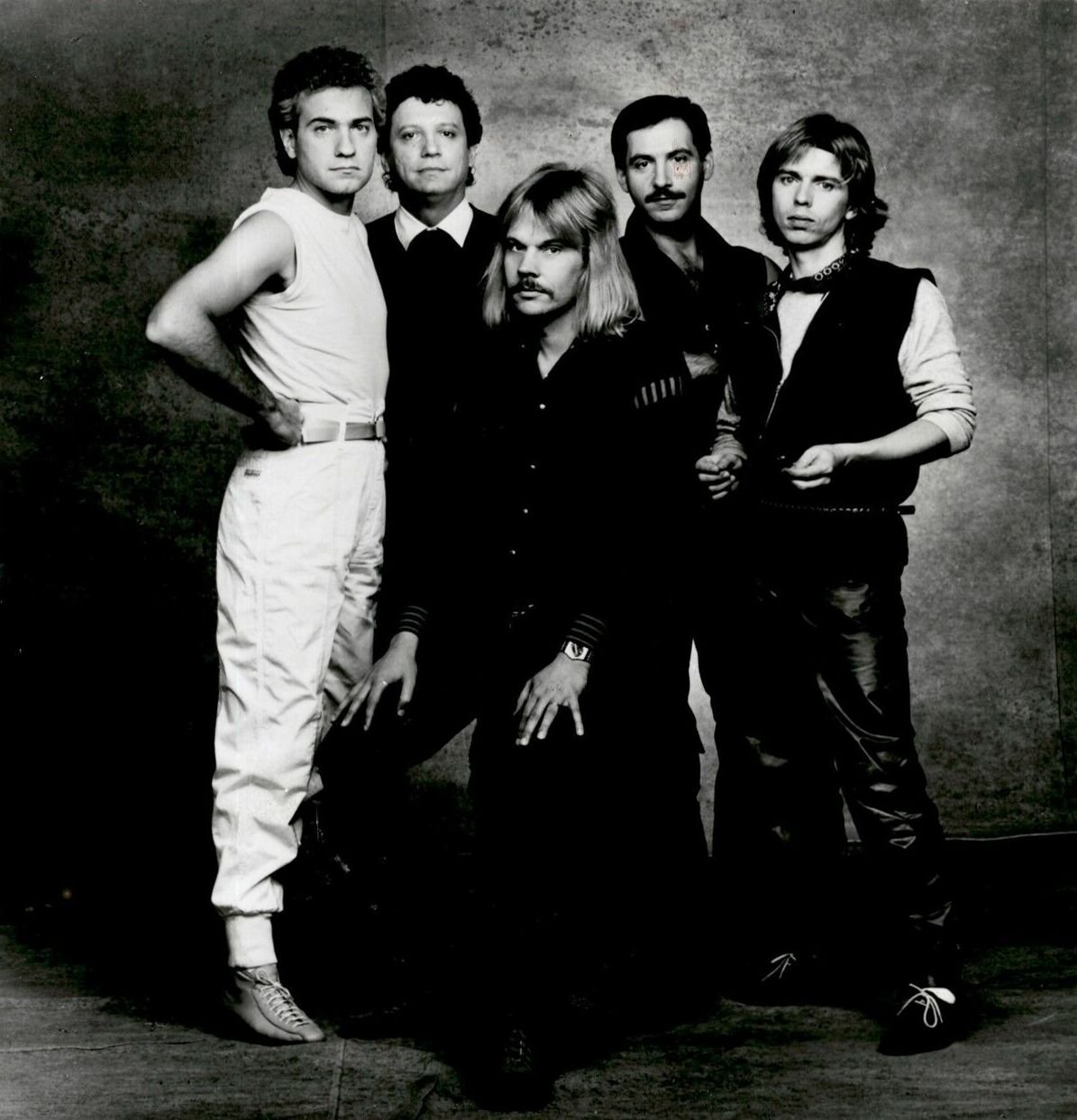
The Hit America Never Heard: The Battles Behind Styx’s ‘Boat on the River’
Here is one of the strangest split decisions in rock history. In the spring of 1980, a gentle, mandolin-led folk ballad by the Chicago arena-rock band Styx spent seven weeks at number one in Switzerland, climbed to number two in Austria and number five in Germany, and went on to become the biggest international hit of the band’s entire career. In the United States — the band’s home country, where Styx were then one of the most popular acts on earth — the song was never released as a single at all. Most American fans of the era never heard it. Many still haven’t.
“Boat on the River” is three minutes and ten seconds of acoustic calm from a band famous for synthesizers and bombast, written and sung by guitarist Tommy Shaw at the precise moment Styx were tearing themselves apart over what kind of band they were going to be. This is the story of that fight — the ballad wars inside Cornerstone, a firing that was reversed before breakfast, a record company that bet differently on two continents — and of how the quiet song the Americans skipped became, almost everywhere else, the sound of Styx itself.
A Mandolin in a Rock Band
Tommy Shaw was always the folk singer hiding inside the arena band. Born in Montgomery, Alabama, in 1953, he had been recruited by Styx in late 1975 after a frantic search to replace departing guitarist John Curulewski, and from his first album with the group, Crystal Ball, he supplied the rootsier counterweight to Dennis DeYoung’s theatrical keyboards and James Young’s hard rock: “Fooling Yourself,” “Blue Collar Man,” songs with dirt under their fingernails.
The hiring had been closer to an emergency than an audition process. Curulewski walked away at the very moment the band’s Wooden Nickel era was ending and their A&M career was beginning, and Shaw — a young Southerner with a tenor voice, a guitar, and a songwriter’s notebook — was folded into the lineup just in time to help build the breakthrough. By 1979 he was no hired hand. He was a co-frontman with his own constituency inside the band and his own idea of what Styx should sound like: earthier, leaner, more American-roots than DeYoung’s Broadway-inflected grandeur. The two men respected each other’s gifts enormously. They simply heard the band’s future in different keys, and Cornerstone is the album where both futures were recorded at full strength, side by side.
“Boat on the River” came from that side of him. Experimenting with a mandolin, Shaw wrote a small, circular folk song — part lullaby, part prayer — about surrendering to the current: take me down to my boat on the river, let it take me away. There is no chorus engineered for radio, no bridge built for a light show. The finished recording is almost defiantly handmade. Shaw sings lead and plays mandolin, autoharp, and acoustic guitar. DeYoung, the band’s keyboard wizard, sets aside the synthesizers to play accordion and sing harmony. Chuck Panozzo puts down his electric bass for a bowed, stand-up double bass. John Panozzo keeps time on tambourine and bass drum. Four-fifths of one of America’s biggest rock bands, playing like a street-corner folk troupe in a port town three centuries ago.
To Shaw’s own surprise, apparently, the song survived the journey into the band’s catalogue. DeYoung — frequently cast, in Styx mythology, as the villain of every internal argument — heard its potential and backed its inclusion on the album. It is worth holding onto that detail. The story of Cornerstone is usually told as a war between DeYoung’s ballads and everyone else’s rock. “Boat on the River,” the album’s most extreme departure, was a Shaw song that DeYoung championed. The battle lines, as we’ll see, were never quite where the legend puts them.
The finished track is built entirely from acoustic instruments — no synthesizer, no electric-guitar riff, none of the machinery that made Styx famous. That was a risk no one in 1979 took lightly. Arena bands were armoring up for the eighties with bigger keyboards and harder production, and here was one of the biggest of them all voluntarily disarming. But the risk is the meaning. “Boat on the River” works because it sounds exposed — because you can hear fingers on strings and a singer with nowhere to hide. Shaw had written a song about surrender, and the band surrendered with it, laying down every weapon in their arsenal to play it.
The Band at the Crossroads
By the autumn of 1979, Styx had everything to lose. The Grand Illusion, released on July 7, 1977 — 7/7/77, a date the band chose with a marketer’s flair — had broken them nationally, and Pieces of Eight (1978) had repeated the trick; the run would eventually extend to five consecutive multi-platinum albums and sixteen American Top 40 singles. Cornerstone, their ninth album, was the record that would either consolidate the empire or crack it. Everyone in the band understood the stakes, and everyone had a different theory of what had made them huge.
DeYoung’s theory was melody and concept: big choruses, emotional directness, a pop instinct that had already given them “Lady” and “Come Sail Away.” Shaw and Young’s theory was that Styx were a rock band first, and that the rock audience — the kids filling the arenas — would drift away if the records turned soft. Both theories had evidence. Both men had egos to match their evidence. The result was an album of genuine range and barely contained civil war, a record on which DeYoung and Shaw each wrote or co-wrote five of the tracks, like two governments sharing a small country.
Cornerstone was released on October 19, 1979, and the public rendered its verdict quickly. The album peaked at number two on the Billboard 200. It became the band’s third straight multi-platinum seller. It earned Styx their first Grammy nomination, for Best Rock Performance by a Duo or Group. By 1980, a Gallup poll would name Styx the most popular rock band in America. None of that success settled the argument about who was right. If anything, it raised the value of every decision — because the decision that now mattered most, which songs would be pushed as singles, would define what “Styx” meant to the millions who only ever heard the band on the radio.
The Album Around It
Listen to Cornerstone whole and you can hear the coalition government at work. It opens with DeYoung’s “Lights,” a bright piece of pop craftsmanship, and moves through his “Why Me” — the song that would become the compromise single — to “Babe.” Shaw’s contributions carry the band’s folk and rock bloodlines, Young supplies muscle, and the two principals even collaborate: “Borrowed Time,” the side-two opener, is a DeYoung–Shaw co-write, proof that the partnership could still function beautifully when neither man was trying to steer the whole ship. The album’s range was its selling point and its fault line. Every faction in the band could point to Cornerstone and say: that is what we are. Every faction was right, which is precisely why the argument could not be settled.
“Boat on the River,” sequenced fifth, is where the coalition produced something none of its factions would have made alone. It took Shaw’s folk instincts, DeYoung’s ear for a melody’s commercial and emotional core, and the Panozzos’ willingness to play like a street band. The battles around the album have tended to flatten it into a DeYoung-versus-Shaw story, but the boat song is the standing evidence that the tension itself was generative — that Styx’s civil war, before it destroyed the band, first forced its members to stretch into each other’s territory.
Three Minutes, Ten Seconds
Before the fighting, though, there is the record itself — because “Boat on the River” could not be less like a weapon. It opens with Shaw’s mandolin figures, doubled and rippling, more Balkan café than Chicago arena. The accordion breathes underneath. The rhythm is a gentle procession, tambourine marking the steps like a walk down to a dock. Shaw’s voice, high and unadorned, circles a lyric of release: the river as the one journey that asks nothing of you, the boatman’s world where striving stops.
In Greek myth — and the band’s name makes the resonance unavoidable — the Styx is the river of the underworld, across which the ferryman Charon rows the dead. Shaw has never presented the song as a classical allusion, and it would be wrong to force the reading. But a band named for that river made its most beloved European record out of a song about letting the current take you where it will, and audiences across a continent heard something ancient in it: a folk melody that sounded less like 1979 than like something remembered.
The recording’s handmade quality was not an accident of budget. This was a band with a hit factory’s resources choosing, for three minutes, to sound like buskers. In the context of Cornerstone — an album that also contained synthesizer rockers and a number one pop ballad — “Boat on the River” is the sound of the folk singer inside the machine, allowed out for one track. The question that split the band was what to do with the machine itself.
A Song About Letting Go
It is worth pausing on what the song actually says, because its afterlife was determined by how it feels rather than by anything the industry planned. The lyric is a small liturgy of surrender. The singer asks to be taken down to the boat, to be given over to the water; the river will do the rest. There is weariness in it — the sense of a man who has been rowing against something for a long time — and there is peace in it, the particular peace of deciding to stop. Set it beside the rest of Styx’s catalogue, with its striving dreamers and angry young men, and “Boat on the River” is the one moment of complete acceptance the classic band ever recorded.
That quality helps explain the pattern of its success — and its rejection. Program directors in America in 1980 were buying energy, identity, brand. A three-minute acoustic meditation on letting go offered none of those handles; in the trade language of the day it was an album track, a mood, a breather between rockers. European programmers heard the same record and recognized a melody built to the oldest specifications in popular music: a tune a crowd could carry. Both judgments were rational within their systems. Only one of them was about the song.
Shaw’s singing is the record’s secret weapon. Styx’s vocal identity was a three-man weave — DeYoung’s Broadway projection, Young’s grit, Shaw’s high country tenor — and on “Boat on the River” Shaw sings almost alone, close and unforced, with DeYoung tucked underneath in harmony like a friend walking him down to the dock. There is no vibrato-heavy emoting, no arena reach. It is the sound of a man who has stopped performing calm and started feeling it, and it is precisely the quality that no amount of production budget can counterfeit. Listeners in Zurich and Vienna in 1980 may not have parsed a word of the analysis above. They heard that voice, and they believed it.
The critics, characteristically, were no help in sorting it out. Styx were by then a band the American rock press reviewed with its mind made up — Rolling Stone in particular maintained what one Styx chronicler called a vendetta against the group — and Cornerstone was largely received through the argument about the band rather than on its own terms. A folk miniature was never going to be rescued by the reviewers. It would have to save itself, in public, in the only court that has ever mattered for a song like this: foreign radio, foreign jukeboxes, foreign voices singing it back.
Two Ballads Too Many
The war over Cornerstone’s singles began with a triumph. The album’s first single was “Babe,” a DeYoung ballad he had written for his wife, and in December 1979 it reached number one on the Billboard Hot 100, where it stayed for two weeks — the only American number one of Styx’s career, their first million-selling single, and a number six hit in Britain besides. It was the biggest song in the country. And it was, in the eyes of Shaw and the rock wing, a problem.
A&M and DeYoung intended the follow-up single to be “First Time,” another DeYoung power ballad in the same vein. Shaw objected — strenuously, and on grounds of survival. Two ballads in a row, he argued, would brand Styx as a soft pop act and alienate the hard-rock audience that bought the albums and filled the seats. He felt strongly enough to threaten to quit the band if “First Time” was released. The standoff escalated until it consumed the band’s leadership: DeYoung, the founder and dominant creative force, was briefly fired from Styx over the dispute — and then rehired, quickly and quietly, before the press or the public ever learned it had happened.
The up-tempo “Why Me” was issued as the second single instead and reached number 26. “First Time,” the ballad that nearly ended the band, was never a single at home; released in the Philippines, it became a huge hit there in 1981 — a first hint that Styx’s music was leading very different lives in different parts of the world.
The details of the episode deserve emphasis, because they reveal how close to the edge the biggest band in America was living. Styx ran, unusually for a rock band, as a rough democracy — songs and singles were argued out and voted on. On “First Time,” DeYoung found the record company on his side and the band against him, and he lost the vote. What followed went beyond voting: this was not a disagreement about tempo or taste conducted in memos. A founding member — the band’s principal songwriter, its keyboardist, the singer of its current number one record — was fired by his own bandmates, in early 1980, at the commercial summit of their career, and then unfired before the news could escape the room. The public face never flickered: the tour continued, the album kept selling, the Gallup poll crowned them. Inside, a precedent had been set that everyone remembered. Votes could be taken. Ultimatums worked. The founder could be removed. Every later Styx crisis, up to the final split of the classic lineup, runs on rails laid down in the “First Time” fight — and every singles decision the organization made in its aftermath was taken with a fresh memory of how expensive a wrong guess could be.
Hold that episode in mind, because it explains everything about what happened to “Boat on the River.” The singles war had taught everyone the cost of guessing wrong about the band’s identity. When the time came to choose the next single, the American and international strategies diverged completely — and Shaw’s little folk song was caught in the fork.
The Single That Stayed Home
In March 1980, A&M released “Boat on the River” as a single in territory after territory — Britain, Germany, and across Europe and beyond. The United States was not among them. Even in Britain the record made no real chart impression; its kingdom would be continental Europe and points further east and south. The map of where the song mattered was already being drawn by forces nobody in the band’s American headquarters understood.
At home, the label made a different bet. The American single drawn from that corner of the album was “Borrowed Time,” a harder DeYoung–Shaw rocker that opens with DeYoung cheerfully announcing, “Don’t look now, here comes the ’80s!” — about as far from a mandolin reverie as a record can get. It climbed to a modest number 64 on the Hot 100. The irony is preserved in the physical artifacts: on the international “Boat on the River” singles, “Borrowed Time” is the B-side. The two markets literally flipped the same piece of vinyl over and chose opposite songs.
Why did America pass? No memo survives in the public record, and honesty requires calling it what it most likely was: a judgment, made in the shadow of the “First Time” war, about what an American Styx single was supposed to sound like. A mandolin-and-accordion folk ballad, three minutes long, from the band of “Renegade” and “Blue Collar Man,” did not fit the template the label had just fought a civil war to protect. The American campaign was still managing the band’s identity crisis. The Europeans, who had no such crisis to manage, simply heard a beautiful song — and bought it by the hundreds of thousands.
Seen from a distance, the pattern is almost comic. Twice in the space of a year, Styx’s softer material was judged unfit for the American market — and twice, foreign audiences disagreed at scale. “First Time,” suppressed at home after the firing crisis, became a hit in the Philippines. “Boat on the River,” never offered to American radio at all, became a continental smash in Europe. The band’s own organization kept concluding that the public wanted Styx harder and louder; the public, given unmediated access to the records, kept choosing the gentle ones. The lesson was available in real time, in chart ink, on two continents. There is no evidence anyone in the American operation ever learned it.
Switzerland Says Yes
The song’s European life began at the end of April 1980, and it began at the top. In Switzerland, “Boat on the River” reached number one on April 27, 1980, and stayed there for seven weeks. By the time the year-end tallies were published, the little folk song that America had declined to release stood as the third-biggest single of 1980 in Switzerland.
Austria took it to number two, where it lingered on the chart for months. Germany — then one of the most important record markets in the world — took it to number five and kept it on the chart for roughly half a year, some thirty-two weeks on the official listing with sixteen of them in the top ten, the kind of slow, deep run that signifies a song becoming furniture in a country’s life rather than a week’s novelty. It was a top-five hit in Israel, reached number seven in South Africa (where it spent ten weeks on the Springbok chart), placed at number 29 on the Dutch Top 40, reached number 18 in Zimbabwe, and found a devoted audience in Japan. A&M’s international divisions, which had released it almost as an afterthought to the album campaign, watched it become the biggest European hit Styx would ever have.
The timing sealed its immortality. The Swiss reign ran from late April through early June, and the German and Austrian runs carried it across the whole summer of 1980 — which made “Boat on the River,” by the alchemy of popular memory, a summer song. Summer songs enjoy a special pension in European radio culture: they return with the season, year after year, in holiday programming and anniversary countdowns, accruing nostalgia at compound interest. A hit that peaks in November can vanish by Christmas. A hit that owns a summer gets invited back to every summer for the rest of its life. The boat song has been coming back with the warm weather for more than four decades now.
The statistics only half-capture the oddity of it. Styx’s European profile otherwise rested on the same rock catalogue as everywhere else; this one folk miniature outperformed all of it. The parent album did respectably in Europe — Cornerstone reached number six on the German album chart — but it was the single, not the LP, that achieved liftoff. The band had spent years as American superstars whose European success was respectable but secondary. “Boat on the River” inverted the relationship: for one spring and summer, and in the decades of oldies radio that followed, the biggest Styx song in Europe was a song most of their American fans could not have named.
Why Europe Heard It Differently
Why did it land there? The simplest explanation is in the arrangement. The mandolin, the accordion, the bowed bass, the processional rhythm — these are the sounds of European folk traditions, from Balkan café music to Alpine and Mediterranean street bands, wearing American clothes. German and Austrian and Swiss listeners were not hearing an exotic experiment. They were hearing textures their grandparents’ music had made, arranged by craftsmen, sung with complete sincerity by a band with nothing to prove. The song’s melancholy helped: it is a song about letting go, and it arrived in a Europe that has never been shy about melancholy in its pop charts.
There is also a structural point. European singles markets in 1980 were more permeable to album acts and one-off curiosities; a record could be lifted out of an album and built by radio territory by territory, the way “Boat on the River” was. The American system, then as now, demanded a clearer genre story before it would spend its promotion money. Styx’s genre story in America was contested territory in an active war. In Europe, there was no war — there was just the record.
Radio culture mattered too. In the German-speaking countries especially, the mainstream pop ecosystem had always kept a lane open for the melodic, the sentimental, and the folk-inflected — a lane in which an accordion was not a novelty but a neighbor. A song did not have to declare itself rock to be taken seriously; it had to be singable, and to survive being sung. “Boat on the River” is engineered, almost eerily, for that test: a short refrain, a melody in easy reach, an accompaniment any village band could approximate. What American gatekeepers heard as a lack of identity, European gatekeepers heard as universality. The record had not changed between the two hearings. The ears had.
And once it landed, it stayed. The song passed into the permanent rotation of European oldies and adult-contemporary radio, the kind of exposure that does not show up in weekly charts but compounds for decades. Ask a German or Swiss listener of a certain age about Styx and the odds are strong that the melody they hum is not “Come Sail Away” or “Mr. Roboto.” It is the mandolin figure from the song America skipped.
The Most-Covered Styx Song
The truest measure of a folk song is what other singers do with it, and by that measure “Boat on the River” won its argument completely. It became the most-covered song in the Styx catalogue, recorded again and again — often, as the band’s official histories note, in languages other than English.
The German alternative-metal band Guano Apes — arena headliners in their own right a generation later — cut it, proving the melody could survive even that translation. The German power-metal band Seventh Avenue cut it. German folk-rockers Fiddler’s Green made it a natural fit for their acoustic arsenal. In Finland, singer Riki Sorsa recorded it, and in Turkey, Metin Özülkü carried it into his own language and tradition. Each cover underlines the same point: the song’s identity was never really “Styx song” in the way “Renegade” is a Styx song. It behaves like a standard — portable, translatable, older than its own recording. Shaw had not written a folk-styled rock track. He had, almost by accident, written a folk song, full stop, and the world’s folk singers recognized one of their own.
There is a quiet victory in that for its writer. The Cornerstone wars were fought over which band member’s vision of Styx would define the group. History’s answer turned out to be mischievous: in America, DeYoung’s ballad remains the band’s only number one; in Europe, Shaw’s folk song towers over everything; and the album both men fought over is remembered, on different continents, for different songs entirely. The war had no winner. It had two, separated by an ocean.
Notice what the cover versions collectively prove. A song survives translation — across languages, genres, and generations, from metal bands to folk singers to pop crooners — only when its core is indestructible: a melody and a sentiment that need nothing from their original context. “Boat on the River” shrugs off every arrangement thrown at it because Shaw built it the way anonymous folk writers built the standards he grew up on, verse and refrain and a tune that feels remembered rather than composed. The most self-consciously modern band of its era had produced the one song in its catalogue that behaves like it has no author at all. Europe adopted it the way you adopt a stray that turns out to belong in the house.
A River Runs Through It
Shaw never abandoned the song. When Styx splintered in the mid-1980s, he built a solo career and then a second hit-making life with the supergroup Damn Yankees, formed in 1989 — and when he returned to Styx in the mid-1990s, the reunion documented on Return to Paradise, recorded live in October 1996, carried “Boat on the River” in its set, the prodigal folk song welcomed back into the arena show as an honored elder. It remained the emotional centerpiece of his acoustic performances across the decades, and when he recorded his live solo album Sing for the Day! — released in June 2018, performed with the Contemporary Youth Orchestra — “Boat on the River” stood among its key tracks, a man in his sixties returning to the mandolin miniature he had cut at twenty-six, now with an orchestra of young musicians behind him. Few album tracks from 1979 have been granted so many second lives by their own writer.
Within Styx’s ongoing story, the song occupies a peculiar throne. The band has continued, in its modern incarnation, as a relentless touring institution, and European audiences still expect the boat. The song that the American organization would not release became the song that guarantees the band’s welcome across the Atlantic — the ambassador from the folk singer inside the arena machine.
It is fitting, in the end, that the vehicle was a river. The band took its name from the most famous river in mythology, the boundary water between one world and the next. “Boat on the River” is, in its small way, a song about exactly that crossing — about the moment a person stops rowing against the current and trusts it. Styx themselves never managed that surrender as a band; they fought their currents for years, and the fighting eventually broke the classic lineup apart. The song knew better, and said so, in three minutes, to anyone on the right continent to hear it.
Two Continents, Two Styxes
The long consequence of the split decision is that “Styx” came to mean two different bands on two different landmasses. The American Styx, preserved on classic-rock radio, is the band of “Come Sail Away,” “Renegade,” and “The Best of Times” — piano grandeur and guitar thunder, with “Babe” as the ballad concession. The European Styx, preserved on oldies stations from Zurich to Helsinki, is the band that sang the boat song: gentler, folkier, sadder, older than its years. Neither portrait is false. They are simply the halves of Cornerstone that each continent chose to keep.
That geography still shapes the band’s working life. Styx, in their modern incarnation, are among the most durable touring acts of their generation, and their European welcome rests substantially on a song their American label once judged unreleasable. Promoters and audiences across the Atlantic do not experience the band as an American nostalgia import with a curious local footnote. The boat song is a headline asset — the one that must be played, the one whose opening mandolin figure functions, in those halls, the way the opening of “Renegade” functions in Ohio.
Consider how complete the reversal is. In 1980, the American organization treated “Boat on the River” as the expendable track, the one that could be left off the campaign to protect the brand. Four decades on, the expendable track is the brand in half the world — the song that out-traveled, out-covered, and out-lasted the carefully chosen singles it was sacrificed for. “Borrowed Time,” the record America picked instead, is a trivia answer now. The B-side’s A-side, the afterthought, the folk miniature: that is the one still crossing borders.
Why It Endures
“Boat on the River” endures because it is two rarities at once. As a recording, it is a moment of complete unguardedness from a band not famous for unguardedness — four famous rock musicians playing quietly, in a folk idiom, with a singer trusting a melody to do all the work. As a story, it is the great counterexample of the blockbuster era: proof that the machinery of hits — the singles meetings, the label strategies, the band’s own civil war over identity — could be flat wrong in both directions at once, wrong to fear the song in America and wrong to underestimate it everywhere else.
The battles behind it resolved nothing and revealed everything. DeYoung was briefly fired over a different ballad; Shaw’s song was protected from American radio by the very identity politics that fight created; and then Europe, indifferent to all of it, turned the throwaway into the signature. Somewhere in that chain of ironies is the whole truth about how popular music actually works — fought over by the people who make it, decided by strangers who simply hear a mandolin one spring morning and recognize a song they seem to have known forever.
It also stands as the gentlest possible rebuke to the way Styx’s story is usually told. The band’s history is written as a war, and mostly it was one — votes, ultimatums, a firing, an eventual divorce. But the war’s most durable artifact is a song about the refusal to fight: about putting down the oars. Shaw wrote it while the battle for the band’s soul was at its height, sang it like a man stepping out of the argument, and watched the world reward exactly the qualities the argument despised — softness, simplicity, surrender. The battles behind “Boat on the River” were real, and bitter, and consequential. The song itself floats above all of them, untouched, still going down to the water.
Play it now, and the strangest part is how little it sounds like a relic. No synthesizer dates it, no production trick pins it to 1979. It could be a century old. In Switzerland they understood that instantly, seven weeks at number one’s worth of instantly. America, busy arguing about what Styx was supposed to be, missed the song that showed what Styx, at its best, simply was.
The digital era has quietly begun repairing the omission. The song’s period promo film now sits on the band’s official VEVO channel, accumulating the kind of global, borderless audience that the territorial music business of 1980 could not have imagined, and streaming has dissolved the old geography altogether: a first-time listener in Chicago today meets the same “Boat on the River” as a first-time listener in Zurich. The hit America never heard is, at last, available to be heard in America on the same terms as everywhere else. It only took forty years and the end of the system that made the decision. The river, as the song always said, takes its own time — and gets there anyway.