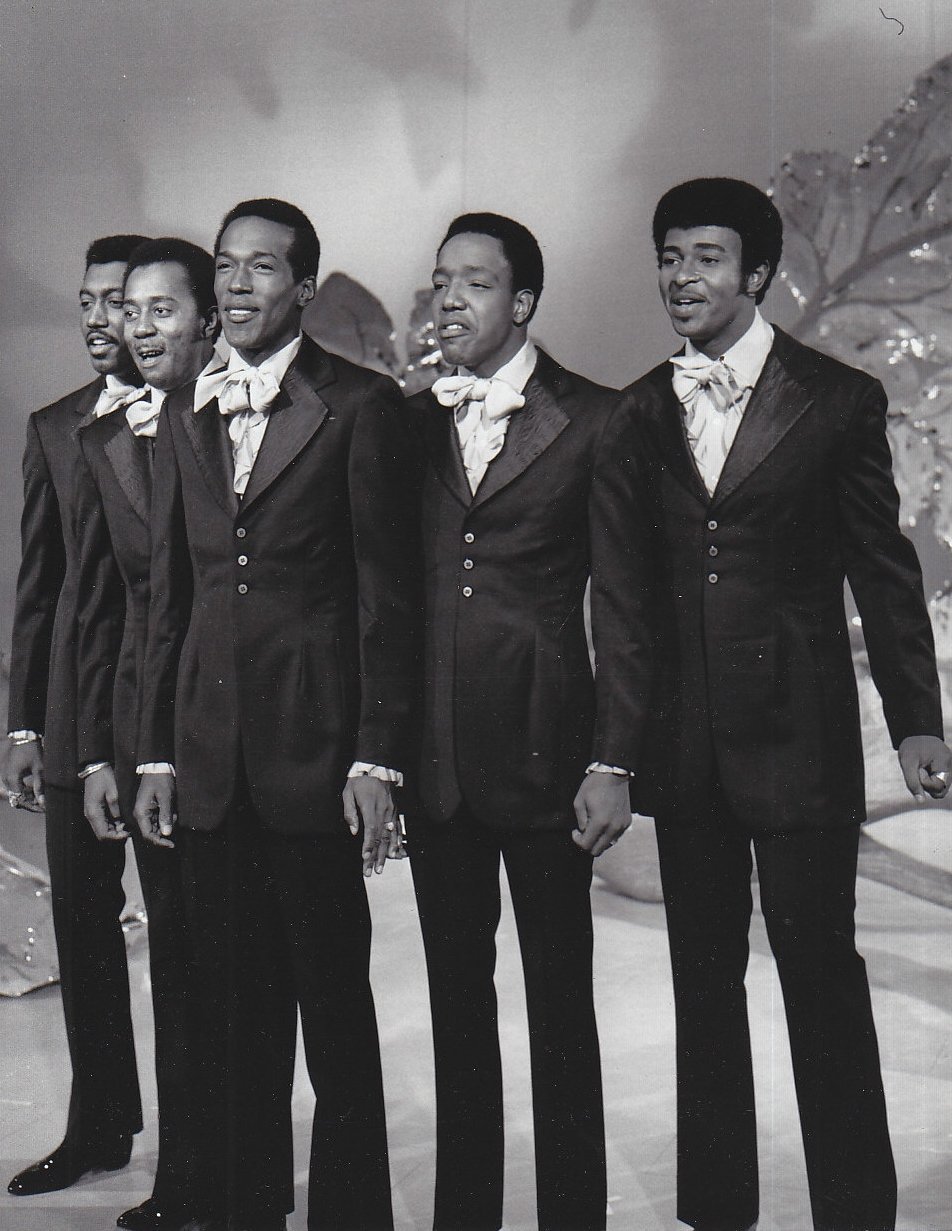
It begins with a guitar that sounds like a door being kicked in. Before David Ruffin sings a word of (I Know) I’m Losing You, Cornelius Grant’s jagged, blues-drenched riff has already told you everything: this is not the Temptations of My Girl, all sunlight and strings. This is a man who can feel the exact temperature of a love affair dropping, and a record built to make that dread sound thrilling. Released in November 1966, the song topped the R&B chart, reached No. 8 on the Hot 100, and announced that the Temptations — and Motown itself — were entering a tougher, louder era. It also completed a feat no group had ever managed: four No. 1 R&B singles in a single calendar year.
Whitfield Takes the Wheel
To hear how the song happened, start with a producer’s coup. Through 1965, the Temptations belonged to Smokey Robinson, whose tailored pop-soul had made them stars. But Norman Whitfield, a young Motown producer with a taste for harder rhythms, wanted the assignment, and in the spring of 1966 he took it by force of results. His production of Ain’t Too Proud to Beg — pushed on a reluctant Berry Gordy after the Robinson-produced Get Ready stalled just short of the pop Top 20 — went to No. 1 R&B and No. 13 pop, and the Temptations were Whitfield’s from then on. The pattern he established was consistent: where Robinson framed Ruffin’s voice in velvet, Whitfield put it in a storm — bigger drums, stabbing horns, arrangements that sounded like arguments.
(I Know) I’m Losing You was written by Whitfield with Eddie Holland, of the Holland–Dozier–Holland empire, and Grant, the group’s guitarist, musical director and road manager — the man the Temptations themselves regarded as the unofficial sixth member of the group. The lyric Holland helped shape is a model of compression: no accusations, no pleading speeches, just a man reading the evidence. Her love is fading; he can feel it in her touch, see it leaving her eyes. The song gives Ruffin a single devastating premise and lets him worry it for two and a half minutes.
Grant’s Riff, Ruffin’s Growl
Grant deserves his own paragraph in Motown history. Born in Texas in 1943, he had joined the Temptations’ organisation as guitarist and bandleader for their touring revue — the man responsible for turning five singers and a rhythm section into a stage machine — and he wrote songs on the side, including the Temptations’ own You’ve Got to Earn It. For I’m Losing You he supplied the element Whitfield’s production had been missing: a riff with genuine menace. It remains one of the most recognisable guitar introductions in soul music, and it came not from the Funk Brothers’ studio pool but from the bandstand — a road musician’s instinct for what stops a room.
The record was cut at Hitsville U.S.A. on September 12 and 16, 1966, and its architecture was unusual for Motown in almost every respect. Grant’s opening guitar figure — part blues lick, part alarm bell — drives the entire track, a rock-styled riff far outside the label’s customary polish. Around it Whitfield stacks sharp horn blasts and sets the four backing Temptations to chanting doo-wop figures, so that the record keeps swinging between street-corner harmony and something close to rock and roll. The tension is deliberate and brilliant: the sweetest voices in Detroit singing over a track that sounds like it is being torn loose from the floor.
At the centre stands Ruffin, delivering one of the signature performances of his career. Where Eddie Kendricks floated, Ruffin rasped, and I’m Losing You is built for the rasp — a lead vocal that begins at the edge of control and keeps slipping. The other Temptations answer him like a Greek chorus that already knows the ending, and midway through, the record performs its most quoted trick: the bridge drops into pure doo-wop, the five voices chanting nonsense syllables over flying horns, as if the group’s street-corner origins were rising up through the floor of Whitfield’s modern arrangement to remind everyone where this music came from. Critics have long singled the record out as a turning point: another clear step away from the softer Robinson productions and toward the dramatic, guitar-forward sound that Whitfield would soon push into psychedelic soul. In 2 minutes 30 seconds, the blueprint for Cloud Nine and Papa Was a Rollin’ Stone is already audible.
The Holland connection is a footnote with its own resonance. Eddie Holland was one third of Holland–Dozier–Holland, the writing team that had built Motown’s mid-sixties empire for the Supremes, the Four Tops and Martha and the Vandellas — and by late 1966 that team was quietly at war with Gordy over royalties, a dispute that would end with their departure and a decade of litigation. I’m Losing You, then, is a small piece of Motown diplomacy: the company’s rising producer borrowing the company’s greatest lyricist to help displace its founding hitmaker, Robinson, from the Temptations’ career. The record business rarely produces transitions this audible. You can hear the empire changing hands in the space between My Girl‘s bass line and Grant’s opening snarl.


Four Number Ones in One Year
Motown released the single on November 2, 1966, and it completed an unprecedented year. Following Get Ready, Ain’t Too Proud to Beg and Beauty Is Only Skin Deep, I’m Losing You became the Temptations’ fourth R&B No. 1 of 1966 — the first time any group had scored four No. 1 R&B hits in a single calendar year — while climbing to No. 8 on the Billboard Hot 100 and No. 19 in the UK, in an era when Motown singles were only beginning to cross the Atlantic in force. The template Whitfield forged here — drama, tension, a groove that sounds like weather coming in — became his house style, soon to be applied to Gladys Knight & the Pips and Marvin Gaye on I Heard It Through the Grapevine and to the Temptations themselves on everything from I Wish It Would Rain to Papa Was a Rollin’ Stone. If Motown’s first era was written in Robinson’s cursive, its second was typed, in block capitals, by Whitfield — and this record is where the typewriter first appears. It anchored the July 1967 album The Temptations with a Lot o’ Soul, alongside fellow Top 10 singles You’re My Everything and All I Need, and helped make that album the first Temptations LP to crack the Top 10 of Billboard‘s main album chart, peaking at No. 7.
The group carried the song to the biggest stages in America, performing it on The Ed Sullivan Show on May 28, 1967, and again that November in a celebrated joint appearance with Diana Ross & the Supremes — Motown’s two flagship acts sharing one stage at the height of their powers. When Motown assembled Greatest Hits II in 1970 to document the Whitfield era, I’m Losing You took its place among the final Ruffin-led singles, the hinge between the group’s harmony-pop past and their psychedelic future. That is precisely its historical position: it closes the story of 1966, the year the Temptations owned American R&B outright, and it opens the story of everything Whitfield would do next.
The Song Everybody Wanted
Few Motown records have been re-fought over by as many generations. The Jackson 5 covered it on their 1969 debut album, Diana Ross Presents The Jackson 5, with Jermaine Jackson — himself soon to be a Temptations-style lead singer — taking Ruffin’s part. Motown’s own rock band Rare Earth stretched it into a ten-minute jam on their 1970 album Ecology, and the edited single climbed to No. 7 on the Hot 100 — one place higher than the Temptations’ original, a feat almost no cover of a Motown classic managed. Rod Stewart, recording with the Faces for his breakthrough album Every Picture Tells a Story, cut it in 1971 and took it to No. 24, sandpaper voice and all, as if the song had been written in a London pub rather than a Detroit studio. The Undisputed Truth — Whitfield’s own laboratory group — gave it a psychedelic-funk reading on their 1975 album Cosmic Truth. The Dallas group Uptown turned it into a sleek dance record in the mid-eighties, riding early play at Dallas’s famed Starck Club into the Hot 100 in 1987. And in 2016 Kanye West sampled the Rare Earth and Undisputed Truth versions for Fade, meaning that by its fiftieth birthday Grant’s riff was powering a hit built from covers of the song it introduced.
That afterlife confirms what the record’s first listeners felt. I’m Losing You is the sound of Motown’s most elegant group discovering its edge — the moment the suits stayed sharp but the music learned to growl. Whitfield, Holland and Grant wrote a breakup song; the Temptations made it a declaration of intent, and American soul music followed them through the door Grant’s guitar had kicked open.