Waylon Jennings / Behind the Songs
I’m a Ramblin’ Man: The Road Song That Took Him to Number One
Ray Pennington wrote it as back-porch blues; Waylon Jennings turned it into a personal manifesto — and the biggest record of his career so far.
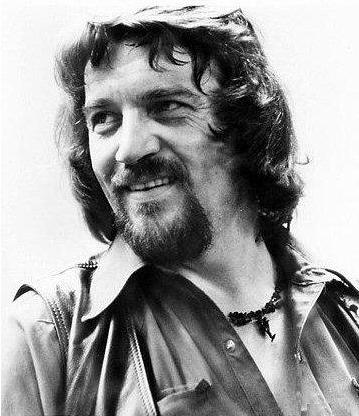
The record in context
The song began as back-porch blues. Ray Pennington was born on December 22, 1933, in Clay County, Kentucky, and by the mid-1950s he was working at King Records in Cincinnati, surrounded by the raw, electric sounds that made that little Ohio label a rhythm-and-blues powerhouse. The tune he carried around in his head for years was, by his own description, a back-porch blues — a laid-back, loping groove deeply inspired by the easy swing of Jimmy Reed, the bluesman whose songs seemed to shuffle along on their own two feet. Pennington was not yet a famous man; he was a singer, songwriter, and musician hustling through the same border country between blues and country that King Records had been mining for a decade. The song he was polishing had no hurry in it. It moved like a man walking somewhere because he had to, not because anyone was waiting.
Pennington recorded his own version for Capitol Records in 1967, and it climbed to number 29 on the country chart — respectable, a Top 30 hit, the only one he would ever have, and a sign that the song had legs even in his own straightforward reading of it. He was not done with the music business by a long shot: over the years he wrote hits for Kenny Price and others, and he later founded Step One Records, which signed Roger Miller and a roster of A-list acts. But “I’m a Ramblin’ Man” sat in his catalog like an unclaimed inheritance, waiting for someone whose life actually matched the lyric. That someone walked into the picture in 1974. By one account of those sessions, Pennington arrived at RCA’s legendary Studio A in Nashville that February with two songs in hand — “I’m a Ramblin’ Man” and another number called “Oklahoma Sunshine” — and played them for Jennings, who was then riding a new wave of confidence after renegotiating his RCA contract and taking charge of his own sessions. Waylon heard the song and recognized himself in it. The production credit on the album would be shared by the two men: Waylon Jennings and Ray Pennington, a songwriter finally getting his due alongside the star who made his song famous.
RCA released “I’m a Ramblin’ Man” in July 1974 as the lead single from the album The Ramblin’ Man, and the timing could not have been better. Waylon had just scored his first number-one country single with “This Time,” and the new record proved it was no fluke: on September 28, 1974, “I’m a Ramblin’ Man” climbed to the top of the Billboard Hot Country Singles chart, becoming his second number one. It stayed there a single week, but a single week at the top was enough — it also crossed over to the pop chart, reaching number 75 on the Billboard Hot 100, a rare achievement for a country record in that era. The album itself, which Jennings produced in its entirety, climbed to number three on the country album chart — the most successful album of his career to that point — and yielded a follow-up single, “Rainy Day Woman.” With “I’m a Ramblin’ Man,” Waylon Jennings had more than a hit. He had a signature road song, the anthem of his restless image, and proof that an artist making records on his own terms could beat Nashville at its own game.
Listen closely
Start with the groove, because the groove is the whole thesis of the song. This is a country shuffle in its purest form — a walking bass line that never stops moving, a rhythm guitar chopping out steady eighths, drums that swing rather than pound. It is the sound of tires on a highway at a legal speed, and it never lets up from the first bar to the last. Waylon cut the record with his own road band, the Waylors, men who had played this beat in bars and dance halls across the country, and you can hear the difference between a band that learned the song in the studio and a band that had lived it. The rhythm section does not decorate the song; it embodies it. Every element of the arrangement says the same thing the lyric says: this man is not stopping.
Then listen to the lyric itself, which is a catalog of places and a confession at once. “I’m a ramblin’ man,” the chorus insists, and the verses sketch a life spent moving — the towns, the highways, the nights that blur together. There is a woman in the song, too, one who loves him and tries to hold him, and the narrator’s answer is not cruelty but a kind of helpless honesty: this is simply what he is. What made the song land so hard in 1974 is that it was not really Ray Pennington’s story anymore. Waylon Jennings had been born in Littlefield, Texas, in 1937; he had been a teenage disc jockey in Lubbock, then Buddy Holly’s bass player on the fateful Winter Dance Party tour of 1959, then a journeyman singer bouncing between Phoenix nightclubs and Nashville studios for a decade and a half. When he sang “I was born a ramblin’ man,” nobody in the audience doubted him. Pennington had written a song about a rambler. Jennings was one.

Listen next to the vocal, and compare it in your memory with Pennington’s 1967 original. Pennington’s version is a fine, straight-ahead country shuffle, sung clean and earnest. Waylon’s is something else entirely — a baritone with gravel in it, phrasing that leans back against the beat instead of riding it, the word “ramblin'” stretched out so it sounds like both a boast and an apology. He does not oversing a single line; he lets the weariness in his voice do the storytelling. There is a moment in every great Waylon performance where you can hear him deciding not to push, trusting the song to carry itself, and this record is full of them. He sounds like a man who has made his peace with never arriving anywhere. The defiance is there, but so is the cost — you can hear, in the spaces between the lines, ten years of one-night stands and speed-fueled mornings, the life the song’s narrator claims to love and the singer has actually survived.
Finally, listen for what the record set in motion. “I’m a Ramblin’ Man” was the opening shot of the most extraordinary run of Waylon Jennings’ career. In its wake came Dreaming My Dreams and the self-written “Are You Sure Hank Done It This Way” in 1975, the self-produced masterpieces of the outlaw era, and then 1976’s Wanted! The Outlaws — the compilation that became the first country album in history to go platinum. The road song had proved something essential: that Waylon’s restless image was not a pose cooked up by a record label, but a real life that millions of listeners recognized and wanted to hear sung back to them. Every outlaw anthem that followed, every arena crowd singing along with a baritone about highways and heartache, starts here — with a shuffle beat, a Kentucky songwriter’s old blues, and a Texas singer who finally had the freedom to sound exactly like himself.
There is one more layer worth hearing, and it is the whole album. The Ramblin’ Man is the sound of a singer discovering that self-production is not just a contract clause — it is a way of hearing. Waylon produced every track himself, and the record has a coherence his earlier RCA albums lacked: the same band, the same road-worn feel, the same refusal to sweeten anything. “Rainy Day Woman,” the follow-up single, reached the Top 20 and kept the album alive on the charts for months, but it is the title song that defines the set. Pennington’s name beside Waylon’s on the production credit is a small, telling detail: the songwriter was not just being paid off with a royalty check, he was being brought inside the process. That generosity — a star sharing the console with the man who wrote his hit — tells you something about how Waylon wanted to run his career from then on. He had spent a decade being produced by committee. Now he was choosing his own collaborators, and his own songs, and his own sound.
Release and recording reference ↗
Release context is sourced above. Listening observations are Past Tunes’ original interpretation, not quotations from the artist.
More from Waylon Jennings
Two outlaws writing about the women who loved them — and a Number One together.
1978 / Behind the SongsMammas Don’t Let Your Babies Grow Up to Be Cowboys: The Million-Selling DuetEd Bruce wrote it; Waylon and Willie took it to Number One — a crossover smash.
1977 / Behind the SongsLuckenbach, Texas (Back to the Basics of Love): The Anthem of Simpler DaysBack to basics, back to the hill country — his biggest hit and his gentlest statement.
1975 / Behind the SongsAre You Sure Hank Done It This Way: The Song He Wrote Himself Against NashvilleTen minutes to write, ten years to think up — the outlaw movement’s mission statement.
1973 / Behind the SongsHonky Tonk Heroes: The Billy Joe Shaver Record That Lit the RebellionAn unknown Texas songwriter walked into a Nashville session and changed country music.
1973 / Behind the SongsLonesome, On’ry and Mean: The First Record Made on His Own TermsSteve Young’s title song became the sound of Waylon taking control.
1979 / Behind the SongsAmanda: The Ballad That Waited Five Years for Number OneRecorded in 1974 and shelved, then a surprise chart-topper in 1979.
1977 / Behind the SongsThe Wurlitzer Prize (I Don’t Want to Get Over You): The Last Dance at the JukeboxA barroom ballad about a lost love, a neon sign, and a quarter in the jukebox.
1980 / Behind the SongsGood Ol’ Boys: The Dukes of Hazzard ThemeJust the good ol’ boys — how a TV theme became one of his signature songs.