Waylon Jennings / Behind the Songs
Amanda: The Love Song the Outlaw Kept in His Back Pocket for Five Years
Recorded in 1974, released in 1979 — the tenderest song Waylon Jennings ever sang, and a three-week number one.
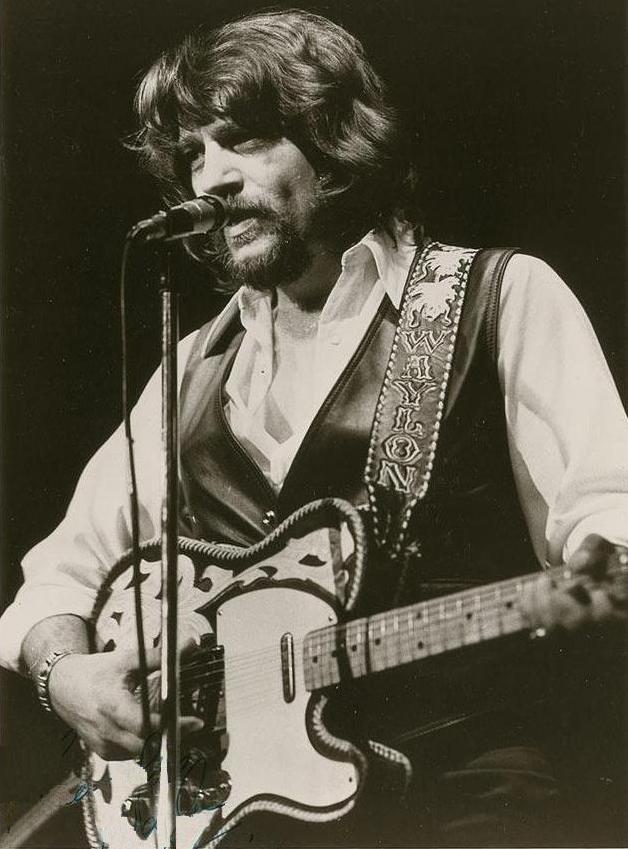
The record in context
It began with a songwriter knocking on a door that nobody answered. Bob McDill had written “Amanda” in about thirty minutes — a love song so direct it barely needed arranging — and he wanted Waylon Jennings to hear it. He carried it over to Waylon’s office, but Waylon wasn’t there, and the song went looking for a singer instead. Don Williams recorded it first, releasing it as a single in the summer of 1973; his gentle version climbed to number 33 on the country chart. It was a respectable showing — Williams was still building his own career as a solo star — but the song was clearly still waiting for the voice it was written for. According to the Country Music Hall of Fame and Museum, Waylon loved “Amanda” from the moment he heard the Don Williams version. He had already assured McDill that he was going to record the song someday, and the following year he kept his word. McDill, for his part, would go on to become one of Nashville’s most celebrated songwriters, but he always knew this one had belonged to Waylon from the start.
On July 15, 1974, Waylon cut “Amanda” at RCA for the album The Ramblin’ Man. It went on the record as an album track and stayed exactly there — not released as a single, while “I’m a Ramblin’ Man” and “Rainy Day Woman” got the single treatment and the radio attention. In the middle of the outlaw years, with Wanted! The Outlaws and Ol’ Waylon still to come, the tenderest performance Waylon had ever put on tape sat quietly between the rowdier numbers for five years. Then, in 1979, new overdubs were added to the original 1974 track, and the refreshed recording was issued as the lead single from Waylon’s first Greatest Hits collection in April 1979, with “Lonesome, On’ry, and Mean” on the B-side — a sly pairing of his softest recording with his toughest. The song reached number one on the Billboard Hot Country Singles chart within six weeks and stayed there for three weeks — his eighth solo number one — becoming one of the biggest country hits of 1979. It was nominated for Single of the Year by both the CMA and the ACM. Consider what that chart run meant: a five-year-old recording, dusted off and overdubbed, outperforming nearly everything cut fresh that year. Radio had finally caught up with what Waylon had known in the studio back in 1974.
What makes the story remarkable is the contradiction it resolves. By 1979 Waylon Jennings was the baddest hombre in country music, the man who had asked Nashville whether Hank done it this way and sung about honky tonk heroes and ramblin’ men. “Amanda” is none of that. It is a man’s quiet confession of guilt toward the woman who has endured him — “Amanda, light of my life, fate should have made you a gentleman’s wife” — sung without a shred of the outlaw’s defiance. That was the point. The song revealed the tenderness underneath the rebellion, and audiences heard it instantly. Five years on a shelf hadn’t aged the performance at all; if anything, the wait made it hit harder. Listeners who had followed Waylon through the outlaw years — through the drug busts, the industry fights, the insistence on recording his own way — could hear the song as something close to a reckoning: the baddest man in Nashville admitting, in public, that a woman had carried him. The outlaw could be the toughest singer in Nashville and the most vulnerable in the same breath, and “Amanda” is the recording that proved it.
Listen closely
Start with the vocal, because everything else in the recording is built around it. This is Waylon singing lower and quieter than almost anywhere else in his catalogue — not the baritone swagger of “Good Hearted Woman” or the lonesome wail of “I’m a Ramblin’ Man,” but a voice that has been humbled by its own subject. He doesn’t declaim the lyric; he confesses it, almost speaking in places, letting the melody carry the emotion instead of forcing it. Listen to the way he treats the name itself: “Amanda” arrives soft and unhurried, two syllables that contain an apology, a thank-you, and a lifetime of regret. The outlaw voice that could fill an arena is here singing to one person in a quiet room, and the intimacy is startling precisely because we know how big that voice can get. It is worth remembering that this is the same man who, in concert, could roar through “Lonesome, On’ry and Mean” with the band at full throttle. Here there is no roar at all. The decision to hold back — to let the microphone do the traveling — is what separates a great singer from a merely powerful one, and it is why “Amanda” still stops listeners cold half a century later.
Then follow the lyric, because Bob McDill wrote one of the great apology songs in country music and it deserves close reading. The song is structured as a series of admissions: the singer knows he has been difficult, knows the woman beside him deserved better, knows that the life he offered her — the road, the restlessness, the bad habits — was never the life she was meant for. “I’ve held it all inward, Lord knows I’ve tried, it’s an awful awakening in a country boy’s life.” That last phrase is the whole song in miniature: a tough man finally seeing himself clearly, and finding the sight unbearable. McDill wrote it in thirty minutes, and it sounds like it — not rushed, but inevitable, as if the song had been waiting complete in the air and he merely wrote it down. Nothing in the lyric is clever for cleverness’s sake; every line is doing the work of saying sorry. And notice the tense: this is not a song about losing a woman, but about failing one — a harder confession, because there is no one to blame and nothing to win back. The regret is permanent, which is why the song never asks for forgiveness. It only asks to be heard.

Now listen to what surrounds the voice, because the arrangement understands exactly what this song needs and refuses to give it anything more. A steel guitar cries softly behind the verses — the classic country instrument of heartbreak, played here with unusual restraint, commenting rather than interrupting. The rhythm section keeps time without pushing it; the piano is sparse, the strings (where the 1979 overdubs added warmth) never swell into sentimentality. At two minutes and fifty-six seconds, the record is almost shockingly brief for a song of this weight, and the brevity is the point: Waylon states his case, says his sorry, and stops. There is no bridge that tries to deepen the song, no instrumental break that shows off, no final chorus that repeats the hook for radio. The recording trusts the material completely, and that trust is what makes it devastating. Waylon, who produced the session himself, clearly understood that a song this exposed could be ruined by a single heavy hand on the faders. So the mix stays close and dry, the instruments tucked just behind the voice, as if the whole band agreed to tiptoe. It is the opposite of the big Nashville productions of the era, and it may be why the record still sounds fresh: nothing in it was ever fashionable enough to go out of fashion.
Finally, listen to what the record meant in 1979, because context is part of the sound. The country audience that took “Amanda” to number one for three weeks had spent the decade watching Waylon Jennings redefine what a country singer was allowed to be — independent, defiant, unwilling to be produced into a Nashville product. And then he gave them this: no outlaw posture, no attitude, just a man singing a love song with his whole heart exposed. The fact that it came from the Greatest Hits album only deepened the meaning — here was a career retrospective, and its newest, biggest statement was the softest thing he’d ever done. Decades later it remains one of his signature songs, the one that concert audiences still sing back to him in memory, the proof that the outlaw movement had room in its heart for a ballad. It also remains one of the great second acts in country chart history — a song that missed its moment in 1974 and found a bigger one in 1979, carried there by nothing but its own quality and a singer who had never stopped believing in it. Listen once more to the final fade. He never raises his voice, not once. He never needed to.
Release and recording reference ↗
Release context is sourced above. Listening observations are Past Tunes’ original interpretation, not quotations from the artist.
More from Waylon Jennings
Waylon and Willie turned a song about good women loving bad men into the outlaw movement’s signature duet.
1978 / Behind the SongsMammas Don’t Let Your Babies Grow Up to Be Cowboys: The Warning That Went All the WayTwo outlaws, one perfect duet, and a cautionary tale that became a number one.
1977 / Behind the SongsLuckenbach, Texas: Back to the Basics of LoveSix weeks at number one on a song about getting away from the money and the fame.
1974 / Behind the SongsI’m a Ramblin’ Man: The Restlessness in a ChorusA Ray Pennington song that turned Waylon’s wanderlust into a chart-topping signature.
1975 / Behind the SongsAre You Sure Hank Done It This Way: The Question That Started the Outlaw MovementThe song that asked Nashville its most uncomfortable question — and became the outlaws’ mission statement.
1973 / Behind the SongsHonky Tonk Heroes: Billy Joe Shaver’s Songs, Waylon’s VoiceThe album that put Waylon Jennings and Billy Joe Shaver on the outlaw map together.
1973 / Behind the SongsLonesome, On’ry and Mean: The Title Track That Named the OutlawThe declaration of independence that gave Waylon Jennings his outlaw identity.
1977 / Behind the SongsThe Wurlitzer Prize (I Don’t Want to Get Over You): The Outlaw’s Love Letter to the JukeboxTwo minutes and eight seconds of pure refusal — the prettiest heartbreak he ever put on a record.
1980 / Behind the SongsTheme from The Dukes of Hazzard (Good Ol’ Boys): The Balladeer Who Sang With His Hands on the ScreenHe wrote it, he narrated the show, and you never saw his face — his biggest pop hit ever.