Do you remember the happiest songs on the radio in 1977? Two of them came from the same album, and they could hardly have been more different in subject — yet they shared the same feeling, a kind of pure, overflowing joy that made listeners smile before they even knew the words. One was a celebration of music itself, written for a jazz legend who had recently died. The other was a father’s song to his newborn daughter, so tender that it felt like eavesdropping on a private moment. Together, Sir Duke and Isn’t She Lovely showed the two sides of Stevie Wonder at his peak: the joyful musician and the loving father, both pouring their hearts into song.
Both songs come from Songs in the Key of Life, the great double album of 1976, and they were among the first songs many listeners discovered on it. Sir Duke was released as a single and became a No. 1 hit in America in 1977, its horns and rhythm instantly recognisable. Isn’t She Lovely was never released as a commercial single in America, yet it became one of the most beloved songs on the album anyway, played on the radio, at celebrations, and in family homes for decades. That two songs from one record could travel such different paths to the same place — the hearts of millions — says something about the album they came from and the artist who made it.
Sir Duke is, at its heart, a thank-you note set to music. It honours Duke Ellington, the great jazz bandleader and composer who had died in 1974, and it celebrates not only Ellington himself but all the musicians whose playing had shaped American music. The song’s horns swing with the spirit of a big band, its rhythm bounces with the energy of a dance floor, and its feeling is one of gratitude: gratitude for the music that came before, and for the joy that music can bring to ordinary life. Stevie Wonder, who had grown up listening to jazz as well as soul and gospel, was paying tribute to a tradition he loved, and he did it the best way a musician can — by making a record that itself swings.
The song also carries a wider message that listeners have always loved: that music belongs to everyone. It is not only for experts or for the concert hall. It is for people dancing in their kitchens, singing in their cars, and teaching their children the songs they grew up with. When the horns kick in on Sir Duke, it is hard not to move, and that is exactly the point. The song argues, without ever lecturing, that music is one of life’s great gifts, and that the musicians who make it deserve to be celebrated while they are here and remembered when they are gone.
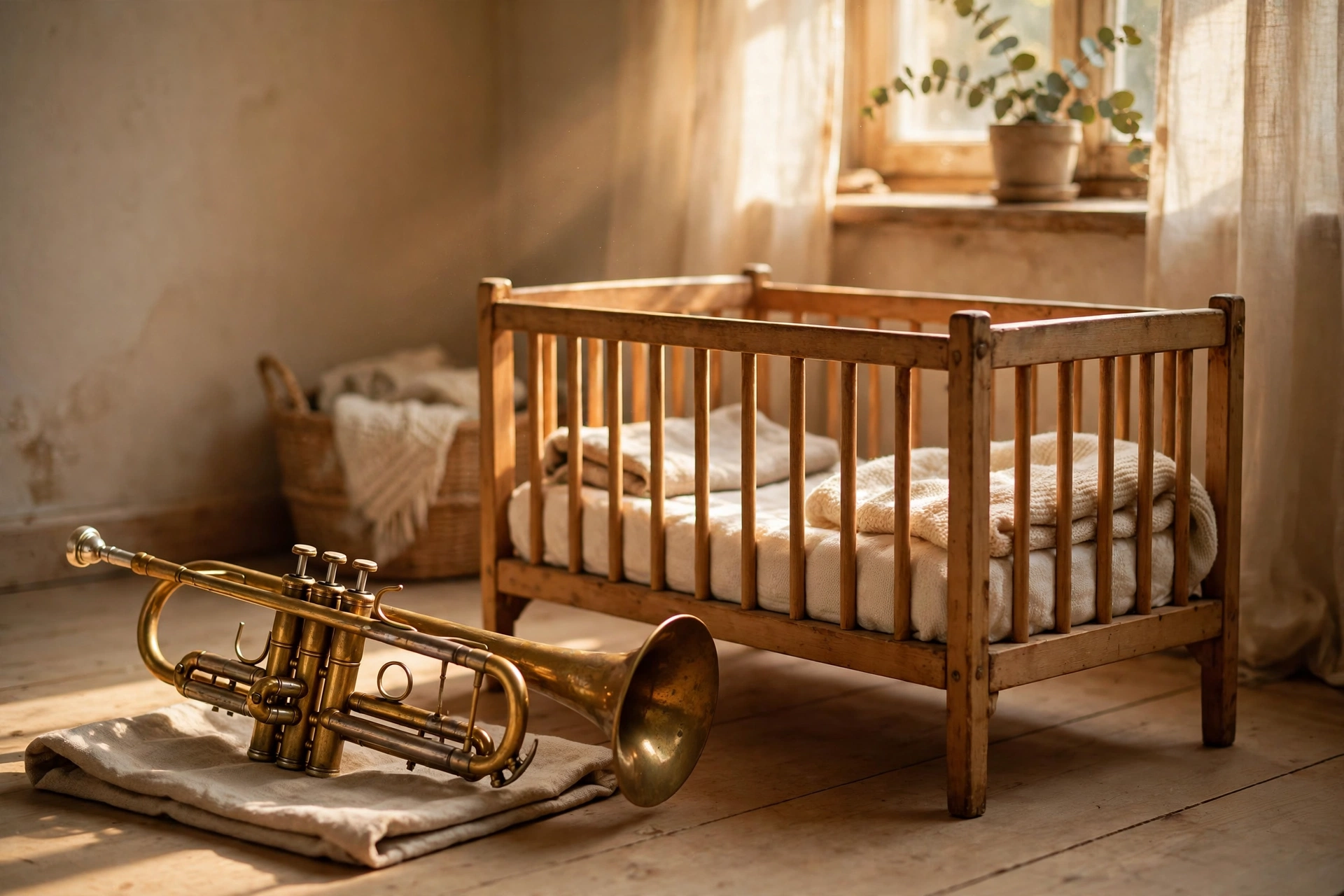
Isn’t She Lovely comes from a quieter and more intimate place. Stevie Wonder wrote it for his daughter Aisha, who was born around the time of the album, and the song captures the wonder of new parenthood: the first sounds a baby makes, the feeling of holding a tiny person who has changed your whole world, the rush of love that arrives without warning. The recording itself is unusually personal. It opens with the sounds of a baby, and the melody unfolds gently, like a lullaby that grew into a full song. There is no grand production trick, no showy arrangement. There is just a father, singing to his daughter, with a warmth that has made the song a favourite at births, birthdays, and family celebrations ever since.
What makes the two songs work so well together is that they show the full range of joy. Sir Duke is public joy: a party, a dance floor, a room full of horns and people moving together. Isn’t She Lovely is private joy: a quiet room, a newborn baby, a parent whispering a song that only his family will fully understand. Most artists can manage one kind of joy or the other. Stevie Wonder, in 1976, managed both on the same album, and both songs have lasted because both kinds of joy are universal. Everyone has danced to music they love. Everyone who has held a newborn knows the feeling the second song describes.
The songs have also lived long second lives. Sir Duke is still played at celebrations, school concerts, and sporting events, wherever a crowd needs instant energy and happiness. Isn’t She Lovely is still sung to babies, played at christenings and birthdays, and chosen by parents who want a song that says what they feel but cannot quite put into words. Cover versions of both songs are everywhere, from jazz bands to school choirs to solo singers with a guitar, and each new version is a small tribute to the originals. Few songwriters have written two songs so different that both became part of everyday life, and fewer still have done it on a single album.
For fans who bought Songs in the Key of Life in 1976, the two songs are tied to memories of a particular time: the excitement of a long-awaited album, the discovery of favourite tracks over repeated listens, the moments when a song on the record suddenly matched something happening in their own lives — a wedding, a birth, a dance, a reunion. That is the mark of songs that go beyond the charts. They stop belonging only to the artist and start belonging to the listeners, who carry them into their own stories.
So here is the question for you. Which of these two songs is yours? Is it Sir Duke, with its horns and its dancing celebration of music, or Isn’t She Lovely, with its tender welcome to a new life? And do you have a memory attached to either one — a dance, a birth, a family gathering — that you still think of when the song plays? Tell us, because for millions of listeners, these two songs are not just tracks from a 1976 album. They are the sound of joy itself, in its loudest and its quietest forms, from an artist who knew how to capture both.
About the author: Tommy Hayes writes about the songs that defined America in the 1970s and 1980s. He grew up with a radio always on — in the kitchen, in the car, in a bedroom with posters on the wall — and he writes from that memory: what these songs meant then, and why they still matter now.
Keep reading:
Sir Duke
Stevie Wonder · Original album era: 1976 · Official YouTube audio
Played from the artist’s official YouTube channel. Availability may vary by country. Watch on YouTube ↗