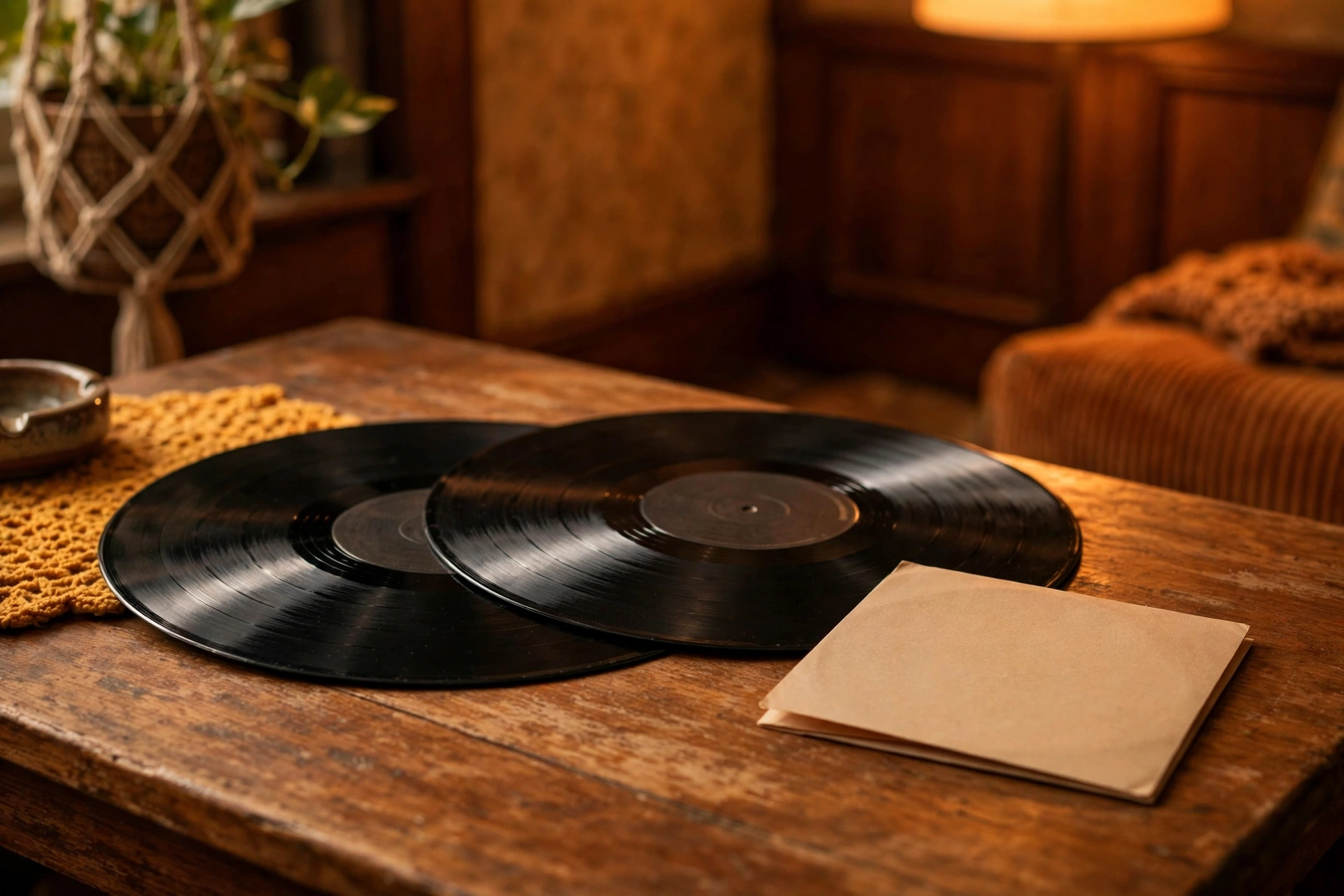
Do you remember waiting for a record that seemed to take forever to arrive? In the mid-1970s, Stevie Wonder’s fans knew that feeling well. His previous albums had set an almost impossible standard, and word spread that his next record would be something bigger: a double album, years in the making, that would sum up everything he had learned about music and life. When Songs in the Key of Life finally arrived in September 1976, it did not disappoint. It was long, generous, and full of songs that ranged from pure joy to deep reflection, and it is still regarded by many listeners as the greatest album of his career — and one of the greatest albums anyone made in the 1970s.
The wait itself was part of the story. By 1976, Stevie Wonder was one of the most successful artists in America, and he had earned the freedom to work at his own pace. The new album took a long time to finish, and fans and journalists speculated about when it would appear and what it would sound like. When it finally came, the scale of it was astonishing: two full records plus an extra bonus record, more than twenty songs in total, covering funk, soul, jazz, pop, and even classical touches. It was not a collection of singles with filler. It was a world, and listeners were invited to spend time inside it.
The album’s range is what makes it endure. It opens with songs of love and celebration, moves through memories of childhood, turns to questions about society and faith, and ends with a sense of peace. Sir Duke, a joyful tribute to the jazz bandleader Duke Ellington, celebrates the power of music itself, with horns that seem to dance. I Wish looks back on childhood with warmth and humour, remembering the small mischief of growing up. Isn’t She Lovely, written for his newborn daughter, is one of the tenderest songs he ever recorded, full of the wonder of a new parent hearing a baby’s first sounds. Pastime Paradise takes a darker turn, reflecting on people who escape into nostalgia instead of facing the present, over a rhythm that would echo through later decades of music. Few albums have ever held so many moods together so naturally.
Commercially, the album was a triumph. It went straight to the top of the American album charts and stayed there, and it won the Grammy Award for Album of the Year, confirming what listeners already knew: this was a major work by an artist at his peak. But the numbers only tell part of the story. What mattered more was how the album made people feel. It was the kind of record that families played together, that friends gave each other as gifts, that couples associated with their weddings and their children, and that young musicians studied note by note to understand how a song could be both simple and sophisticated at the same time.
Part of the album’s magic lies in its sound. Stevie Wonder played most of the keyboards himself, layering synthesizers, pianos, and harmonicas into arrangements that felt both rich and intimate. He was helped by fine musicians, including a horn section that gave the joyful songs their lift, but the vision was unmistakably his. The production was warm and detailed, the kind of sound that rewards listening on good speakers with the lights low, and the kind of sound that still feels fresh because it was built on real instruments and real feeling rather than studio fashion.
The album also marked the high point of an extraordinary run. In the first half of the 1970s, Stevie Wonder had released a series of albums that each pushed his music further: Music of My Mind, Talking Book, Innervisions, and Fulfillingness’ First Finale. Songs in the Key of Life was the summit of that climb, the record where everything he had been working towards came together. After it, he would take a long break from recording, and when he returned, the music world had changed. But nothing could take away what he had achieved in 1976: a double album that felt less like a product and more like a gift, offered generously to anyone willing to listen all the way through.
For fans who bought the album when it came out, the memories are vivid: the large gatefold sleeve, the bonus record tucked inside, the excitement of putting on the first side and hearing a new Stevie Wonder song after so long a wait. Many listeners remember playing it on long car journeys, at family gatherings, or alone in a bedroom with headphones, discovering a new favourite song on every listen. That is the mark of a masterpiece. It does not reveal itself all at once. It grows with you, and different songs speak to you at different ages.
Part of that slow discovery comes from the album’s quieter corners. Beyond the famous singles, there are songs about ordinary life that reward patient listening: reflections on love that lasts, on neighbourhoods and neighbours, on the simple routines that make up a life. These are not songs designed to grab you in the first ten seconds. They are songs that settle in gradually, the way a friendship deepens over years, and many fans will tell you that their favourite track on the album is not one of the hits at all but one of these slower, deeper songs that they only truly noticed on the fifth or tenth listen.
So here is the question for you. When did Songs in the Key of Life first enter your life? Was it in 1976, on the day it came out, or years later, when someone you loved played it for you? And which song on it is yours — the joyful one, the tender one, or the thoughtful one? Tell us, because for millions of listeners, this album is not just a record from 1976. It is a companion for a lifetime, a double album that somehow contains a whole life inside it.
About the author: Tommy Hayes writes about the songs that defined America in the 1970s and 1980s. He grew up with a radio always on — in the kitchen, in the car, in a bedroom with posters on the wall — and he writes from that memory: what these songs meant then, and why they still matter now.
Keep reading:
Sir Duke
Stevie Wonder · Original album era: 1976 · Official YouTube audio
Played from the artist’s official YouTube channel. Availability may vary by country. Watch on YouTube ↗
3 thoughts on “Songs in the Key of Life (1976)”