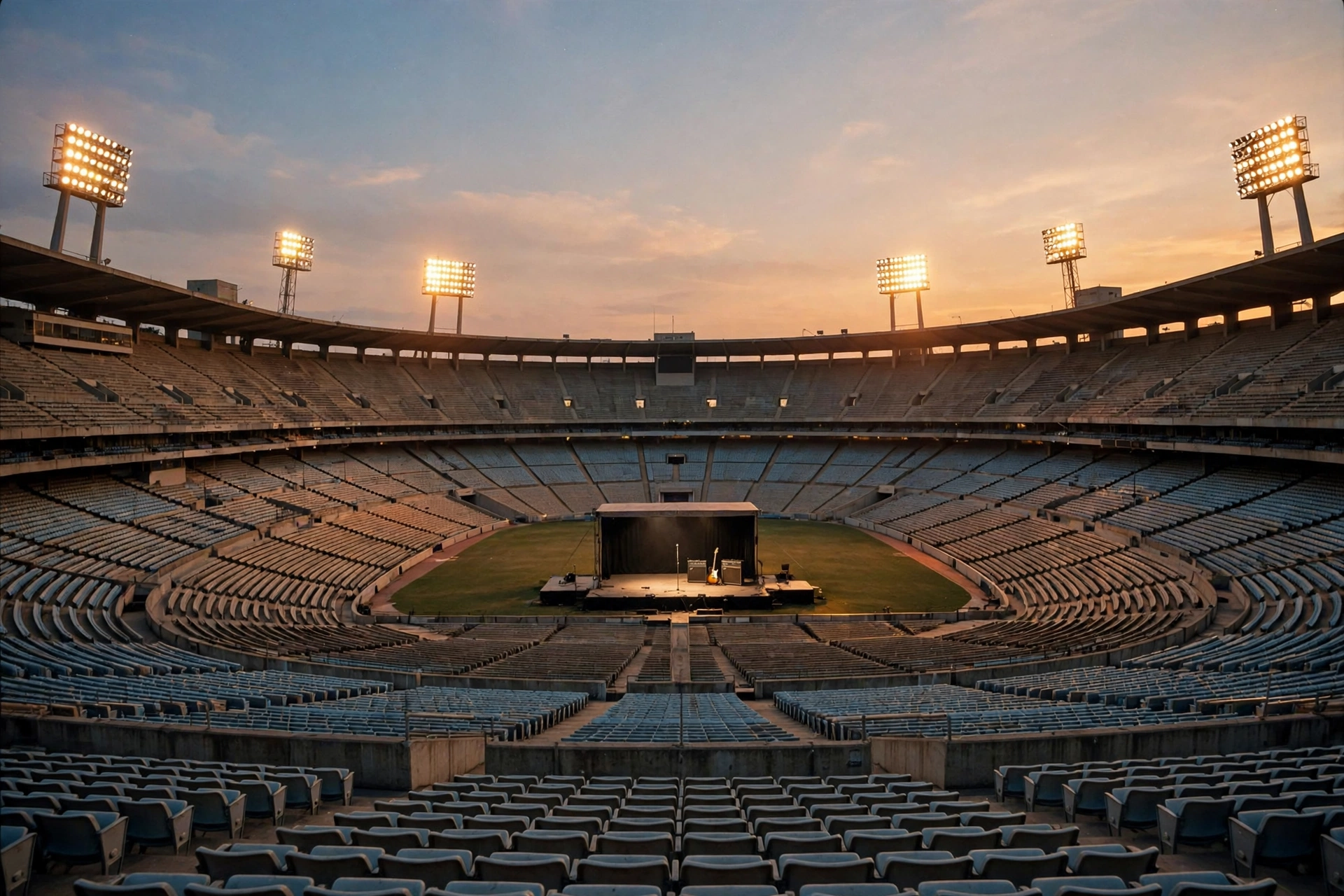
Picture a summer Saturday afternoon in London, with a stadium crowd already on its feet hours before the biggest names are due to appear. On the other side of the Atlantic, another stadium crowd is gathering in Philadelphia, in the morning heat. Between them, a satellite link carries pictures and sound back and forth, so that a singer finishing a song in London can be followed, moments later, by a band taking the stage in Philadelphia. It was July 13, 1985, and for one long day, pop music tried to do something it had never attempted at this scale: play two continents at once, for a cause larger than any single star.
Live Aid grew out of a terrible famine in Ethiopia, where drought and war had left millions of people without enough food. The year before, the Irish musician Bob Geldof had organised a charity single in Britain, bringing pop stars together to record a song for famine relief. The record was a huge success, and it gave Geldof a bigger idea: a pair of concerts, staged on the same day in London and Philadelphia, broadcast around the world, with viewers asked to donate while they watched. The concerts would raise money, but they would also do something just as important, which was to make people who had never thought about Ethiopia feel that they were part of the same event.
The scale of the day was unlike anything pop music had staged before. Dozens of the biggest acts of the era agreed to appear, many of them cutting their sets short so that more artists could fit into the schedule. In London, the bill ran from the early afternoon into the night, moving from established stars to newer bands and back again. In Philadelphia, the American bill did the same, with its own mix of rock veterans, pop stars, and soul singers. The satellite link between the two cities became part of the show itself, with presenters handing over from one stadium to the other and audiences waving at cameras they knew were carrying their pictures across the ocean.
Some moments from that day have become part of music legend. The British band Queen delivered a short, tightly packed set that fans still talk about as one of the great festival performances, with the whole stadium clapping and singing along. The Irish band U2 played a long, emotional version of one of their songs that stretched far beyond its usual length and ended with the singer pulling a young fan from the crowd to dance. In Philadelphia, one drummer flew across the Atlantic on a supersonic jet so that he could play in London in the afternoon and in Philadelphia the same evening, a journey that became a symbol of the whole frantic, generous day. At the end of the London show, a former Beatle closed the concert at the piano, his voice cracking as the crowd sang along.
Behind the performances, the day was a logistical puzzle. Two stadiums had to be run at once, with dozens of bands, their equipment, and their crews moving on and off stage in minutes. Television networks in many countries carried the broadcast, some for the full day and some for highlights, and phone lines were set up so that viewers could pledge money while they watched. The organisers had hoped for a large audience and large donations, and the response went far beyond a normal concert broadcast. Millions of people watched in dozens of countries, and the money raised, from donations and related sales, was large enough to fund real relief work, food, transport, and medical help, in the months that followed.
Live Aid also changed how the music business thought about charity. Before 1985, benefit concerts were usually single events in one city, organised by one artist or one cause. After Live Aid, the multi-city, televised charity concert became a familiar format, copied for many other causes in the years that followed. The day also showed the power of television to turn a concert into a shared global moment, years before the internet made such moments routine. For a few hours, people in different countries were watching the same stage at the same time, and that shared attention itself became part of the story.
The day was not without arguments afterwards. Some critics questioned how the money was spent and whether a pop concert was the right way to address a famine caused by drought and war. Those questions were serious, and they have followed large charity concerts ever since. But for the audiences who watched, the memory of the day is simpler: a summer Saturday when the biggest stars in the world shared a stage, or rather two stages, for people they would never meet, and when music felt, for once, like it was doing something bigger than entertaining.
Today, Live Aid is still remembered as a high point of the 1980s music era, the day pop music was at its most confident and its most generous at the same time. The footage still circulates, the performances are still debated by fans, and the idea it proved, that a concert can reach across continents in real time, is now something we take for granted. On July 13, 1985, though, it was brand new, and nobody watching knew whether it would work until the first satellite picture came through and the crowd in London roared back at the crowd in Philadelphia.
In living rooms far from either stadium, the day had a second, quieter drama: the phone lines. Viewers who wanted to donate were given numbers to call, and the presenters returned to those numbers again and again between performances, reading out running totals and urging people who had already given to call their friends. For many viewers, that was their first experience of a television event that asked them not just to watch, but to take part.
So here is the question for you. Where were you on Live Aid day, and which performance do you still remember most clearly? Did you watch the whole day, or did you catch it in pieces, on television or on the radio? Tell us, because for millions of people, July 13, 1985 was not just a concert. It was the day the whole world seemed to be watching the same stage.
About the author: Tommy Hayes writes about the songs that defined America in the 1970s and 1980s. He grew up with a radio always on — in the kitchen, in the car, in a bedroom with posters on the wall — and he writes from that memory: what these songs meant then, and why they still matter now.
Keep reading:
August 1, 1981 — The Night MTV Switched On
January 28, 1985 — The Night the Stars Recorded We Are the World
December 14, 1977 — The Night Saturday Night Fever Premiered
2 thoughts on “July 13, 1985 — The Day the Whole World Watched Live Aid”