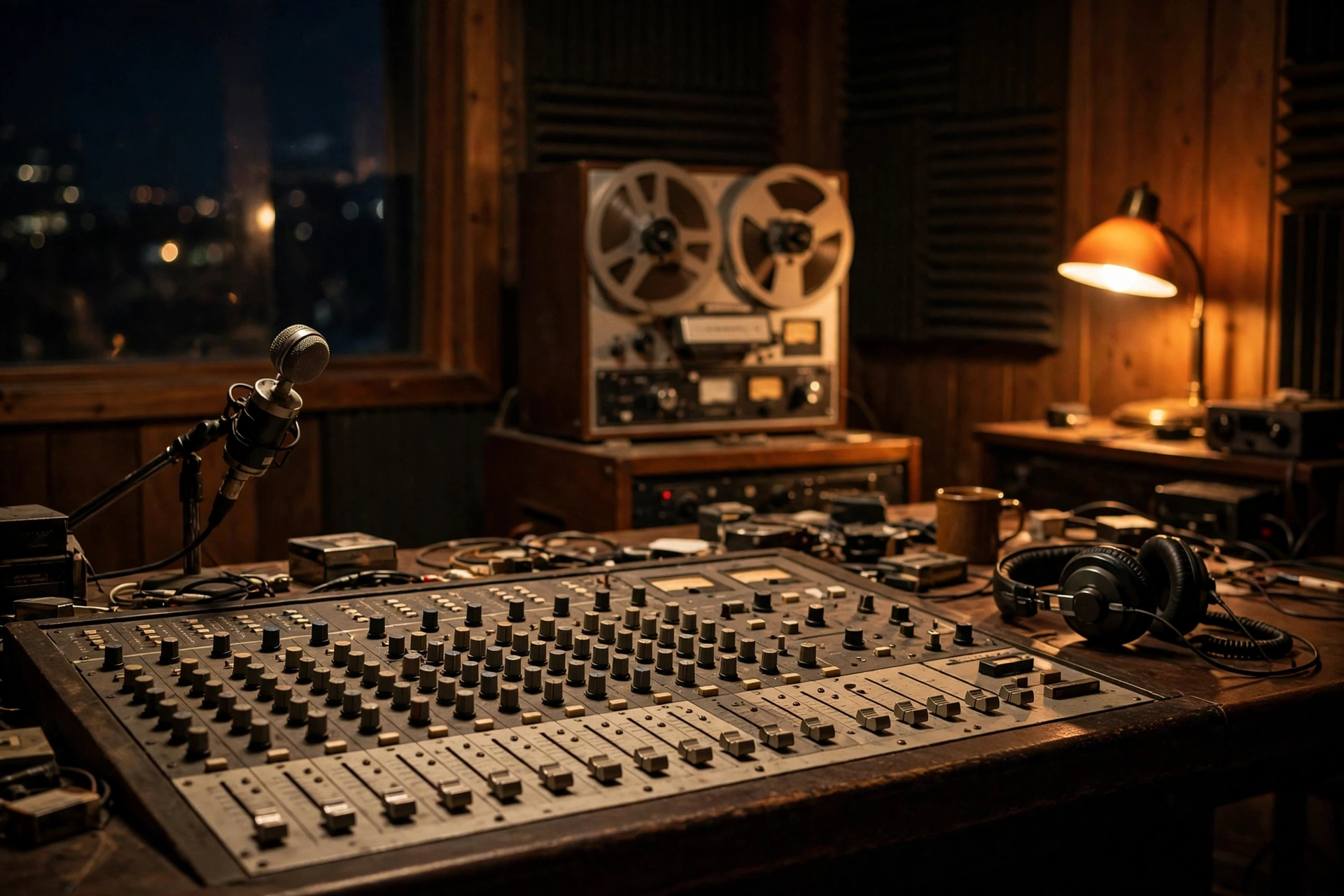
Picture a recording studio in Hollywood after midnight, in the last days of January 1985. The awards ceremony across town has just ended, and instead of going home to parties, dozens of the most famous singers in America are arriving at the same studio, one after another, in evening clothes. Inside, the lights are low, the microphones are ready, and a handwritten sign on the door reminds everyone to leave their egos outside. They are here to sing one song, together, in a single night, for people starving thousands of miles away. It was January 28, 1985, and the song was We Are the World.
The idea had started months earlier, inspired by the British charity record of the previous Christmas. The American singer and actor Harry Belafonte had suggested that American stars should do the same for famine relief in Africa, and the manager Ken Kragen took on the task of organising it. Two of the biggest songwriters in the country, Michael Jackson and Lionel Richie, agreed to write the song, and the producer Quincy Jones agreed to produce the session. The challenge was not just writing a good song. It was getting the biggest names in American music into the same room on the same night, and keeping the whole project secret until the record was ready.
The date was chosen with cunning. January 28 was the night of the American Music Awards, when many of the stars the organisers wanted would already be in Los Angeles, dressed up and in town. Invitations went out quietly, and the singers were asked to come to the studio straight from the ceremony. Some arrived still in their awards outfits. The session was planned to run through the night, with each singer recording a solo line and then joining the big group chorus. The atmosphere, by all accounts, was a mixture of excitement and nerves. These were artists used to being the centre of attention, and now they were being asked to sing one line each and then step back and blend in.
The recording itself was a feat of organisation. The song was arranged so that different voices could take turns in the verses, with the chorus bringing everyone together. Some of the most distinctive voices in American music sang back to back, and the contrast between them became part of the record’s appeal: soul singers, rock singers, country singers, and pop stars, all on the same track. The chorus, sung by the whole group at once, was recorded with the singers standing in rows around the microphones, a scene that later became famous in photographs and in the video made from the session. By the time the sun came up, the main recording was done.
When the record was released a few weeks later, it became one of the biggest charity singles ever made. Radio stations played it constantly, the video was shown everywhere, and the song’s message, that ordinary people could help strangers in need by standing together, struck a chord far beyond the music charts. The money raised went to famine relief and to longer-term aid projects, and the project inspired similar all-star charity records in other countries. For a few months in 1985, it seemed as if the whole pop world had agreed on one thing, and the sound of that agreement was a chorus of famous voices singing in unison.
The session also left a lasting image of the 1980s music world at its peak. The photograph of that crowded studio, with stars standing shoulder to shoulder in a way they never would on stage, became one of the defining pictures of the decade. It showed an industry that, for one night, had put rivalry aside. Younger fans who were not alive in 1985 often discover the song through that image first, and only later learn the story behind it: the secret invitations, the after-midnight session, and the race to finish before dawn.
There were, of course, limits to what a song could do. A single record, however successful, could not end a famine caused by drought and war, and the organisers themselves said so at the time. But the record did something a speech or a news report could not do. It put the faces and voices that millions of Americans already loved behind a distant crisis, and it gave ordinary listeners a simple way to feel involved, by buying a record they would have wanted anyway. That combination of star power and simplicity is why the project is still remembered as the model for the celebrity charity single.
Today, We Are the World is still played at charity events and anniversary concerts, and the story of that one night in the studio is still told as an example of what popular music can do when it acts together. The date matters because the session almost did not happen: it depended on dozens of busy, famous people all saying yes to the same secret night, and on a song written fast enough to be ready when they arrived. On January 28, 1985, all of those pieces fell into place, and a room full of stars sang as one voice until morning.
The video made from the session became almost as famous as the record itself. It showed the rows of singers at their microphones, the soloists stepping forward one by one, and the whole group joining in the chorus, and television channels played it as heavily as they played the song. For viewers who had only heard the record on the radio, the video turned a sound into a picture they could remember: a crowded studio, full of famous faces, all singing for the same reason.
So here is the question for you. Do you remember the first time you heard We Are the World, and could you pick out the voices in the verses? And which all-star charity song since then has ever matched that one night in the studio? Tell us, because for millions of listeners, January 28, 1985 was the night the biggest voices in America stopped competing and started singing together.
About the author: Tommy Hayes writes about the songs that defined America in the 1970s and 1980s. He grew up with a radio always on — in the kitchen, in the car, in a bedroom with posters on the wall — and he writes from that memory: what these songs meant then, and why they still matter now.
Keep reading:
August 1, 1981 — The Night MTV Switched On