Dean Martin / Behind the Songs
Return to Me: The Italian Ballad Comeback
“Ritorna-me” and the sound of home.
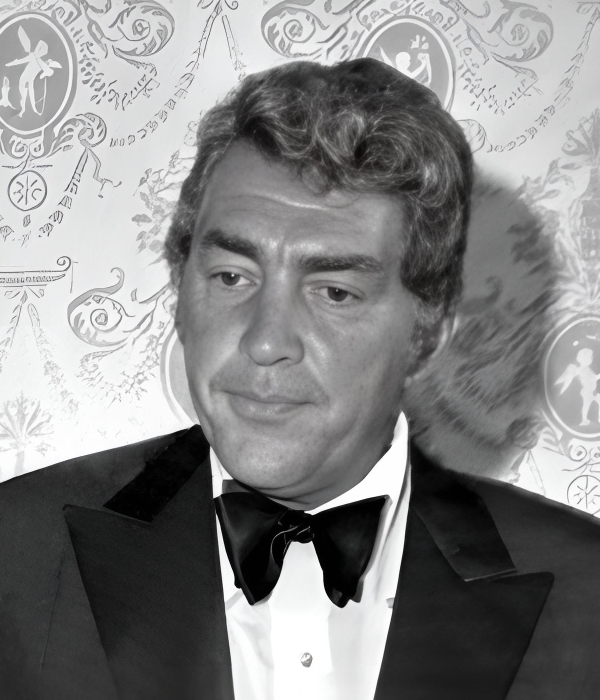
The record in context
“Return to Me” — “Ritorna-me” — was written by Danny Di Minno and Carmen Lombardo (Guy Lombardo’s brother), and Martin’s 1958 recording turned it into one of his biggest hits, reaching No. 4 in the US. It arrived at a moment when rock ‘n’ roll was supposed to have made crooners obsolete, and it proved the opposite: there was still a vast audience for a beautifully sung Italian ballad, delivered without irony by a man who meant every word.
The song sits at the heart of Martin’s Italian repertoire — alongside “That’s Amore” and “Volare” — the trio of records that defined his heritage for the mainstream audience. Where “That’s Amore” was playful and “Volare” was soaring, “Return to Me” is tender: a plea, not a celebration. It showed a different Dino, and the public loved him for it.
Listen closely
The opening is one of Martin’s most beautiful. He enters on “return to me” with a softness that catches you off guard — no swagger, no grin, just a man asking. Listen to the Italian refrain, “ritorna-me”: the pronunciation is natural, unforced, the sound of someone singing in the language he grew up hearing at home. Then the English verses arrive, and the two languages braid together into something that feels like a single emotional statement.

Notice the dynamics. Martin builds the song with extraordinary patience — each verse slightly fuller than the last, the orchestra swelling almost imperceptibly beneath him. Listen for the moment in the final chorus where the voice opens up fully: it’s not a belt, it’s a release, as if the emotion has finally overflowed its banks. The control is total; the feeling is overwhelming. That combination — precision and passion held in perfect balance — is the essence of Martin’s ballad singing.
What the record captures is the other half of the Dino persona: not the King of Cool but the romantic, the son of immigrants singing about longing in two languages. The lounge act was the mask; records like this were the face underneath. Play “Return to Me” after “Ain’t That a Kick in the Head” and you hear the full range of one of popular music’s most underestimated artists.
Carmen Lombardo’s involvement is a nice footnote: the brother of Guy Lombardo, the bandleader whose New Year’s Eve broadcasts were an American institution, writing for the Italian kid from Steubenville. The song’s DNA is pure mid-century pop craftsmanship — a melody that feels inevitable, a lyric that says exactly what it means. “Return to me” is not a complicated sentiment, and the record’s power comes from refusing to complicate it. In an era of increasing studio artifice, there’s something almost radical about a great singer, a great tune, and nothing to hide behind.
The record also marks the moment Martin’s Italian identity became central rather than incidental. “That’s Amore” had played it for laughs; “Volare” had played it for ecstasy; “Return to Me” plays it straight, and the straightness is moving. This is Dino Crocetti’s heritage rendered as high art — no wink, no accent jokes, just a beautiful ballad sung by a man who understands every word in two languages. It reached No. 4 in America, but its real chart was the one it topped in the hearts of every Italian-American family with a record player.
Play it, finally, as the centre of Martin’s Italian trilogy — “That’s Amore,” “Volare,” “Return to Me” — and hear the arc: the joke, the ecstasy, the tenderness. Three songs, one heritage, and a singer who contained all of them. “Return to Me” is the quietest of the three, and in some ways the most revealing. This is Dino Crocetti, no mask at all.
Release and recording reference ↗
Release context is sourced above. Listening observations are Past Tunes’ original interpretation, not quotations from the artist.
More from Dean Martin
His partner paid for the hit — and never told him.
1964 / Behind the SongsEverybody Loves Somebody: The Leftover Hour That Beat the BeatlesOne spare hour of studio time, and Beatlemania met its match.
1960 / Behind the SongsAin’t That a Kick in the Head: The Flop That Became ImmortalIt missed the charts in 1960. Nothing has missed it since.
1958 / Behind the SongsVolare: An Italian-American Claims Italy’s SongModugno’s Grammy winner, sung by the man born to sing it.
1960 / Behind the SongsSway: How “Quien Sera” Became the Lounge StandardA Mexican mambo, an English lyric, and Dino’s definitive version.
1956 / Behind the SongsMemories Are Made of This: Five Weeks at the TopThe million-seller that made him a solo star.
1954 / Behind the SongsMambo Italiano: Bob Merrill’s Novelty, Dino’s WinkComic timing you can dance to.
1965 / Behind the SongsHouston: Lee Hazlewood’s Wry PortraitThe Reprise years find their storyteller.
1967 / Behind the SongsLittle Ole Wine Drinker, Me: The Country CrossoverThe drinking persona becomes a country song.