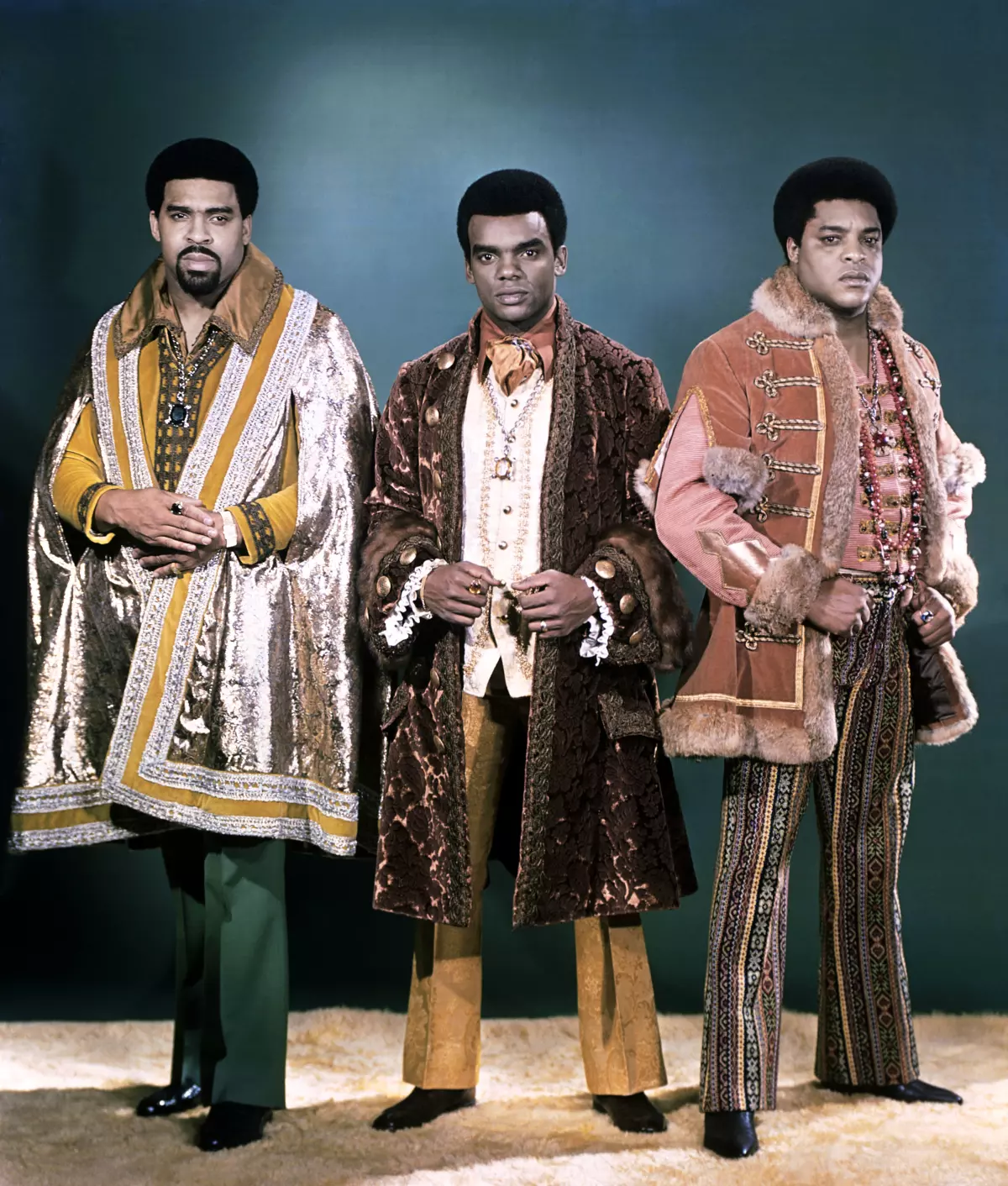
A Place, a Woman, or Both: The Battles Behind The Isley Brothers’ ‘Voyage to Atlantis’
Some records arrive like weather. “Voyage to Atlantis” does not kick a door down; it rises, slowly, out of a wash of guitar and voices, the way a coastline appears through morning haze. By the time Ronald Isley begins to plead his way through the verse, the song has already made its promise: this is a love song built like a journey, four and a half minutes of water and distance, sung by a man asking to be taken somewhere he may never reach. It is one of the most beautiful things the Isley Brothers ever recorded, and in the autumn of 1977 it closed out the campaign for the biggest album of their lives.
And yet, as a single, it nearly vanished. Released in October 1977 as the third and final 45 from Go for Your Guns — a double-platinum album that sat at number one on Billboard’s soul chart and number six on the pop chart — “Voyage to Atlantis” stalled at number fifty on the R&B singles chart and never crossed to the pop chart at all. The song’s story is the story of that contradiction: a masterpiece hiding inside a hit machine, a ballad that had to fight its own family’s funk, fight radio’s racial arithmetic, and fight being cut down to single size — and that won every battle except the one on the charts, which turned out to matter least.
An Album at Full Strength
To understand what “Voyage to Atlantis” was up against, start with the album it lived on. Go for Your Guns, released on April 16, 1977, was the Isley Brothers’ fifteenth studio album and the fifth under their distribution deal with Epic Records. A month after release it stood at number one on Billboard’s Top Soul Albums chart and number six on the Billboard 200, and it stayed on the album charts for forty weeks on its way to double-platinum certification. This was not a band hoping for a hit. This was a band operating at the summit of its commercial power, two years after The Heat Is On had topped the pop album chart outright.
The singles tell the story of that power. “The Pride,” released ahead of the album in February 1977, went to number one on the R&B chart. “Livin’ in the Life” followed in May and reached number four R&B and number forty pop. The album’s sound was a declaration of intent — the title itself a gunfighter’s challenge — packed with hard funk workouts like “Climbin’ Up the Ladder” and the title track’s brief, snarling instrumental. Everything about Go for Your Guns announced a group spoiling for a fight, at exactly the moment they least needed one.
Inside that album, though, sat two slow songs that pointed somewhere else entirely. One of them, “Footsteps in the Dark,” was never released as a single at all and became beloved anyway. The other was “Voyage to Atlantis,” tucked onto side two between “Climbin’ Up the Ladder” and “Livin’ in the Life” — the calm water between two storms. Both songs were largely the work of the youngest man in the room.
Six Names on Every Song
Every track on Go for Your Guns carries the same writing credit: Rudolph Isley, O’Kelly Isley, Ronald Isley, Ernie Isley, Marvin Isley and Chris Jasper — the whole 3+3 lineup, three singing brothers in front, three younger musicians behind. The group produced and arranged everything themselves. On paper, it was the perfect family business: one name, six ways, no outside writers taking a cut of anything.
The reality behind the joint credit was more lopsided, and everybody in the band knew it. The younger trio — Ernie on guitar, Marvin on bass, Chris Jasper on keyboards — had become the group’s musical engine and, increasingly, its songwriting engine too. Jasper, a classically trained pianist, was the band’s principal arranger. Ernie, meanwhile, had blossomed into something rare in soul music: a genuine guitar hero who was also writing the group’s most ambitious love songs. “Footsteps in the Dark” came mainly from his pen. So, decisively, did “Voyage to Atlantis.”
Apple Music’s editorial history of the album states it plainly: most of “Voyage to Atlantis,” including the lyrics, was crafted by Ernie, and it is Ernie who opens the track with a guitar solo before a word is sung. The song, in other words, belonged to a twenty-five-year-old who had joined the front line only four years earlier, in a band his big brothers had founded when he was a small child. The battles behind “Voyage to Atlantis” begin there — with a young writer trying to float a dream inside a machine built for funk.
Jasper’s role in the ballads should not be undersold, either. Trained at the Cincinnati Conservatory and steeped in both jazz harmony and church music, he was the band’s harmonic architect — the man whose keyboard voicings gave the 3+3 ballads their suspended, floating quality, and a writer whose own compositions increasingly steered the group’s late-seventies direction. If Ernie supplied “Voyage to Atlantis” with its melody and its myth, Jasper supplied the water it sails on. The six-name credit flattened all of this into a single signature; the records themselves keep the individual fingerprints perfectly legible.
The Road to the 3+3
None of this was inevitable. The six-man Isley Brothers had existed only since 1973, and the merger that created them was, in its way, another quiet act of war — this one against the music industry’s habit of treating singers as the act and musicians as furniture. Ernie, Marvin and Chris Jasper had first performed on an Isley Brothers album on Givin’ It Back in 1971, still teenagers and students, hired hands in the family firm. Two years later, after the move to Epic distribution, the older brothers made it official: the trio became a sextet, the singers became a band, and the album that announced the arrangement took its title from the arithmetic — 3 + 3.
The transformation was immediate and total. “That Lady,” a 1973 reworking of the brothers’ own 1964 single, gave Ernie a guitar showcase and the group a top-ten pop hit. In 1975, The Heat Is On reached number one on the Billboard 200. The 3+3 albums built a dual engine that no rival could copy: the elders’ church-honed harmony singing, the youngsters’ rock-literate muscle. Ernie in particular became the hinge. He had grown up inside the group’s road bands, played drums on sessions while still in school, and arrived in the front line with a fully formed musical personality — part Hendrix disciple, part romantic balladeer.
By the time of Go for Your Guns, the young trio’s confidence had swollen to fill the whole enterprise. They had relocated the recording operation to Woodstock. They were writing the bulk of the material. And Ernie, at twenty-five, was handing the family a song like “Voyage to Atlantis” — a composition that asked the most seasoned vocal group in soul music to follow him out into uncharted water, at ballad tempo, behind a guitar introduction. That the brothers went, without a fight anyone has ever described, may be the most remarkable thing about the record.
North to Bearsville
The album was made far from the industry’s capitals. For the 3+3 sessions, Ernie, Marvin and Chris Jasper had relocated to Woodstock, in upstate New York, and the group recorded at Bearsville Studios, the rural facility built by Albert Grossman’s Bearsville label. The sessions were engineered by John Holbrook, with the final mixes done back in New York at Mediasound. Bearsville became, for a while, the Isleys’ favorite room.
The relocation mattered to the sound. This was a band that had spent two decades chasing hits in other people’s studios, on other people’s clocks. Now the younger generation had effectively moved the workshop to the countryside, and Jasper — who had to bring his own ARP 2600 synthesizer to the sessions, there being none in the building waiting for him — could spend the time the textures required. The 3+3 albums breathe differently because of it: longer fades, deeper space, arrangements that unfold instead of simply arriving.
You can hear the Bearsville patience all over “Voyage to Atlantis.” Nothing in the record hurries. The groove settles like sediment. Jasper’s keyboards lay down a warm, tidal wash, Marvin’s bass moves underneath like a current, and over the top Ernie’s guitar doesn’t so much solo as drift into view, bending notes that seem to arrive from a long way off. A song about sailing to a drowned city was recorded in the woods, by a band that had finally bought itself the time to dream at full length.
A Place, a Woman, or Both
Ask Ernie Isley what Atlantis is, and he declines to settle it. “When I wrote that one,” he said in a reissue-era interview, “I didn’t know whether ‘Atlantis’ was a place, a woman — or both.” It is the perfect author’s note for the song, because the lyric works exactly that way on the listener. Atlantis is the lost continent of Plato’s telling, a civilization swallowed by the sea in a single day and night. In Ernie’s hands it becomes a figure for a love that exists somewhere below the surface of ordinary life — too deep to reach by ordinary means, reachable, if at all, only by voyage.
That double meaning is what lifts the song out of the slow-jam category it is so often filed under. A lesser ballad would simply name the woman. “Voyage to Atlantis” instead builds an entire geography of longing: the singer stands on the shore of the everyday, asking to be carried out and down to where the real thing is hidden. The repeated title phrase, chanted by the brothers over the closing stretch, stops sounding like a destination and starts sounding like an incantation — say it enough times and the water might open.
Ernie has also said of the recording, “When we recorded ‘Atlantis,’ we travelled to uncharted musical waters.” The two remarks belong together. The song was a voyage in method as much as in metaphor: a young guitarist-writer steering the family’s hit machine off its charted course, toward somewhere none of their singles had ever gone.
The Guitar Speaks First
Before Ronald sings a note, “Voyage to Atlantis” has already made its argument — in guitar. Ernie’s opening solo is the record’s handshake: liquid, echoing, unhurried, a melody that seems to be remembering itself. Guitarists talk about tone the way singers talk about phrasing, and Ernie’s tone here is unmistakable, a singing sustain wrapped in chorus-like shimmer, notes bending upward like things rising through water toward light.
The choice to open with the guitar was a quiet declaration of where the band’s center of gravity had moved. The Isley Brothers had begun, in the 1950s, as a vocal group; the singing brothers were the stars, and musicians were hired help. By 1977 the youngest brother’s instrument was introducing the songs, framing them, and — in the long closing passages of “Voyage to Atlantis,” where the guitar drifts and answers the voices — effectively co-starring in them. Ernie’s lead work is all over Go for Your Guns, from the Hendrix-flavored attack of “Climbin’ Up the Ladder” to the talk-box-tinged lines elsewhere on the album, but “Atlantis” is his purest canvas: a ballad whose emotional weather is set by six strings.
It is worth remembering that Ernie Isley did not begin as a guitarist at all. He began as a drummer — he is behind the kit on some of the group’s early-seventies recordings — and took up the guitar as a teenager with an almost unreasonable example close at hand. The feel he brought to “Atlantis,” that understated, breathing pulse under the guitar, is a drummer’s feel. The song moves the way it does because its author was thinking like two musicians at once.
Built Like Water
Listen to how the record is assembled and you can hear the Bearsville patience doing structural work. “Voyage to Atlantis” does not use the standard soul-ballad architecture of verse, chorus, verse, bridge. It behaves like the element it describes: it gathers. The guitar introduces a theme rather than a riff. The rhythm section enters without emphasis, Marvin Isley’s bass choosing long tones over busy figures, the drums settling into a pulse so unforced it feels less played than breathed. Jasper’s keyboards spread behind everything, a warm haze of electric piano and synthesizer — the ARP he had hauled to Woodstock with him — that keeps the harmony suspended, unresolved, inviting the voices to do the resolving.
Ronald’s verses ride on top of that suspension, and the brothers’ harmonies answer in swells. Then, rather than building to a conventional climax, the song opens out into its closing movement: the title phrase, sung over and over, the lead guitar uncoiling above the chant, the whole record gradually less a song than a place. It is an ending designed for album listening and for the late-night hours — for repetition inside a single play, and for thefade that FM and quiet-storm programmers would learn to talk over, night after night, until the record was part of the furniture of American romance.
The six-minute alternate version preserved on the reissues shows the design even more nakedly: given room, the band simply stays in the water longer. Nothing in “Voyage to Atlantis” is an accident of jamming, though. The restraint is the composition. A song about submerging could not rush, and a band secure enough to hold a tempo this patient, on the biggest album of its career, was a band that had stopped asking the market’s permission.
Hendrix in the House
The shadow over every note Ernie Isley plays belongs to Jimi Hendrix, and it is not a metaphorical shadow. In 1964 and 1965, before the Experience, Hendrix was a sideman in the Isley Brothers’ touring band, and for stretches of that time he lived with the family in New Jersey. Young Ernie grew up with one of the century’s defining guitarists practicing in the house — watching the hands, hearing the experiments, absorbing the idea that the guitar could be a voice rather than an accompaniment.
By 1977 Hendrix had been dead for seven years, and Ernie had become the most prominent inheritor of his language working in Black popular music: the liquid bends, the feedback-kissed sustain, the willingness to let a solo carry a song’s meaning. Critics writing about the Isleys’ 3+3 records reach for Hendrix comparisons constantly, and on the rock-leaning tracks the debt is obvious. What “Voyage to Atlantis” proves is that Ernie had metabolized the influence rather than merely copying it. Hendrix’s ballad playing — the underwater shimmer of his quieter recordings — is the ancestor here, but the patience is Ernie’s own.
There is a pleasing historical symmetry in it. The Isleys had once employed the future; now the future, in the person of their little brother, was writing their present. “Voyage to Atlantis” is where that arrangement sounds least like a rock band borrowing fire and most like a family speaking its own second language fluently.
A Voice Over Deep Water
For all of Ernie’s authorship, the song belongs equally to the man who sings it. Ronald Isley’s lead vocal on “Voyage to Atlantis” is a masterclass in controlled yearning. He does not belt the lyric; he leans into it, letting phrases trail off at the edges, rising into that weightless upper register that would become his signature across the Isleys’ ballad catalogue. Where the funk singles made Ronald a ringmaster, the ballads made him a confessor, and “Atlantis” is among the most exposed performances he ever gave.
Around him, O’Kelly and Rudolph do the work the brothers had done since childhood in Cincinnati church choirs: they answer. The harmonies on “Voyage to Atlantis” don’t decorate the lead so much as surround it, swelling and receding like the element the song keeps invoking. When the record reaches its closing chant — the title phrase repeated as the guitar floats free — the three voices and the guitar become a single instrument, and the distinction between the singing brothers and the playing brothers, the old guard and the new, dissolves entirely.
This was the 3+3 formula at its most complete: not funk with ballads attached, nor ballads with funk attached, but a six-man band in which any element could carry any song. It is also why the track has never dated the way many of its 1977 contemporaries have. Production fashions change; a family singing like this does not.
Ronald’s performance, in particular, became a kind of template. The patient, pleading lover he embodies on “Voyage to Atlantis” — too proud to demand, too far gone to turn back — is the character he would inhabit across the Isleys’ ballad catalogue for the rest of his career, the voice a generation of slow-jam singers studied the way guitarists studied Ernie. The song did not just showcase the family’s two front men. It defined the roles they would play for the next forty years.
The White-Label Gambit
Here is where the battles turn outward. By 1977, American radio was a segregated map. The Isleys could top the R&B chart at will, and their albums crossed over handsomely, but rock radio — the FM album-rock stations that made reputations with white audiences — remained stubbornly resistant to a Black vocal group, however loud its guitars. “Voyage to Atlantis,” a guitar-led ballad that sounded like nothing else on either side of the dial, was exactly the record to test the wall. And, according to the liner-note history written for the album’s expanded reissue, CBS Records devised an extraordinary experiment to test it.
In a few markets, the story goes, CBS hand-delivered plain white-label singles of “Voyage to Atlantis” to rock stations — just the song title typed on a blank label, no artist name at all. Programmers who would have filed an Isley Brothers record straight into the R&B pile were invited to hear the record before they were allowed to know whose it was. And in those markets, the record got the rock airplay the band had been denied. The music, heard blind, was undeniable. It was the name — and everything the name signaled to a formatted industry — that had been the obstacle.
The episode deserves to be remembered alongside better-known stories of radio segregation, because it lays the mechanism bare. Nothing about the grooves changed when the label was blanked. What changed was the permission structure. “Voyage to Atlantis” did not fail to cross over because white rock audiences rejected it; in the places where they were allowed to simply hear it, they didn’t. The song’s modest chart numbers were not a verdict. They were a border crossing, and the border was guarded.
Consider what the gambit conceded. This was a group with a number-one pop album two years behind it, a group whose records white artists had been covering since the Beatles — a group, by any commercial measure, already “crossed over.” Yet in 1977 a major label still judged that the surest way to get its ballad onto rock radio was to pretend, for one listen, that the record had no makers at all. The Isleys’ side of the bargain never changed: make the music undeniable and let others argue about the category. The white labels are remembered now not as a promotion trick but as a document — evidence, preserved in the reissue notes, of exactly what the band was up against even at its peak.
The Ballad Problem
The choice of singles from Go for Your Guns tells its own story about 1977. The album campaign led with muscle: “The Pride” in February, “Livin’ in the Life” in May, both aimed at the dance floor and the R&B chart’s summit. This was the height of the disco era, when tempo was a commercial argument and a ballad was what an album kept for its believers. The Isleys’ own history reinforced the pattern — their ballads had a habit of becoming beloved album tracks rather than chart singles, admired in the long term and discounted in the short one.
So “Voyage to Atlantis” waited until October, after the album had already done its double-platinum work, and arrived as the third single almost as an afterthought — the victory lap for the faithful. That sequencing mattered. A lead single gets a campaign; a third single gets whatever momentum is left. Radio had already extracted two hits from the album and moved on to the season’s new releases. The ballad’s natural constituency — the album buyers, the late-night listeners — had owned the song for six months already and had no need of the 45.
None of this makes the number-fifty peak less remarkable as a statistic. It makes it more explicable as one. The industry in 1977 measured songs in the first ninety days. “Voyage to Atlantis” was not built for the first ninety days. It was built, almost defiantly, for the long term — and the long term is exactly where it did its conquering.
Three Minutes and Fifty-Three Seconds
Against radio’s walls, the song also had to fight its own shape. The album version of “Voyage to Atlantis” runs four minutes and thirty-two seconds — already, by 1977 single standards, a long record — and its drama depends on accumulation: the slow build, the traded voices, the long closing chant. For the 45, Epic cut it to three minutes and fifty-three seconds, a version preserved today on the expanded reissues alongside an even longer alternate take that runs six minutes and thirty-four seconds. The single edit is not butchered, exactly, but it is a postcard of a place the album lets you live in.
Released in October 1977 as the album’s third single, “Voyage to Atlantis” peaked at number fifty on Billboard’s R&B chart — a startling result for a record drawn from the number-one soul album in the country, by a group that had topped that same singles chart months earlier with “The Pride.” On the pop chart it did not register at all. In the ledger of the moment, the song was a flop, and the band’s singles momentum rolled on without it.
Yet the chart tells only the part of the story that happened in the autumn of 1977. Singles were becoming the least reliable measure of the Isleys’ real reach. Go for Your Guns stayed on the album charts for forty weeks; the audience was buying the voyage whole, not in excerpts. “Voyage to Atlantis” was built for that audience — album listeners, late-night listeners, listeners with the lights low — and those listeners were about to get a radio format built precisely for them.
The Slow Conquest of the Night
In the late 1970s, Black radio developed a new after-hours language: quiet storm, the lush, slow, intensely romantic programming style pioneered at WHUR in Washington and soon imitated nationwide. The format had been born in 1976, when WHUR’s Melvin Lindsey — taking his cue and his show’s name from Smokey Robinson’s album A Quiet Storm — began filling the late hours with exactly the kind of unhurried, candlelit soul that daytime formatting squeezed out. “Voyage to Atlantis” sounded as if it had been composed for the format before the format had a name. Programming directors building late-night blocks reached for it the way an earlier generation had reached for a standard, and it stayed in that rotation for years — decades — after its chart run had been forgotten.
There is an irony in the fit that the band’s people could not have missed. Quiet storm was, in part, Black radio’s own answer to the same wall the white-label singles had been smuggled past: if the mainstream formats would not give slow Black music its due in daylight, Black programmers would build it a palace at night. “Voyage to Atlantis” became one of the palace’s foundation stones — proof, spun nightly, that the audience the industry undervalued was the audience that stayed.
The concert stage told the same story. AllMusic’s history of the album calls “Voyage to Atlantis” a staple of the Isleys’ live show, its opening strains greeted by deafening, enthusiastic applause — the response of an audience for whom the song’s first guitar notes were a shared memory, not an introduction. Night after night, in arenas full of people who had bought the funk hits, the biggest roar was reserved for the slow voyage to a fictional drowned city.
This is the song’s real chart history: not number fifty, but ubiquity. It became one of those records — like its album-mate “Footsteps in the Dark,” which was never a single at all — whose reputation compounded quietly while flashier hits depreciated. By the time the CD reissue era arrived, “Voyage to Atlantis” was routinely named among the two or three most beloved tracks on one of the decade’s most beloved soul albums.
Answers and Echoes
A song built on a woman-or-place ambiguity eventually received its literal answer record. Nicki Richards, a singer born in Honolulu, was so taken with the record’s atmosphere that she cut her own version of “Voyage to Atlantis” for her 1991 debut album, Naked to the World, on Atlantic — explicitly reimagining it, as the reissue notes describe, from a woman’s point of view. Where Ronald had asked to be taken on the voyage, Richards answered from the destination. She later contributed her recollections to the Go for Your Guns reissue project, closing a circle the original single never could.
Hip-hop, as it did with so much of the 3+3 catalogue, found the record too. MC Ren built “Voyage to Compton,” the title track of his 1998 album Ruthless for Life, on a sample of “Voyage to Atlantis” — Ernie’s underwater guitar rerouted to South Central Los Angeles, the voyage metaphor intact: a journey to a place that exists, for outsiders, mostly as legend. Producers kept returning to the 3+3 ballads because they offered what loop-based music craves: space, mood, and chord changes that feel like weather.
The reissue campaigns completed the rehabilitation. Big Break Records’ 2011 expanded edition of Go for Your Guns added the alternate and single versions of “Voyage to Atlantis” and new interviews with Ernie and Ronald; the later Iconoclassic expanded edition, remastered by Mark Wilder, restored the white-label story to print and presented the mono single version. The song that radio once had to be tricked into playing is now the track the archivists lead with.
The Critics Catch Up
For years, the standard critical line on the Isleys held that the funk was the achievement and the ballads the decoration. The reassessment of the 3+3 catalogue that came with the reissue era reversed the polarity. Writers returning to Go for Your Guns — now routinely described as arguably the hardest, funkiest and most consistent album of the band’s peak, and one of the most influential soul albums of its decade — kept singling out the same two slow songs as its deepest water. The 2015 box set The RCA Victor & T-Neck Album Masters (1959–1983), which gathered the group’s T-Neck catalogue in remastered form, prompted a fresh round of critics to treat the ballad writing of Ernie Isley and Chris Jasper as the era’s distinguishing genius.
Within that reassessment, “Voyage to Atlantis” occupies a particular place: it is the exhibit offered when the argument turns to what the 3+3 band could do that no one else could. Plenty of groups in 1977 could out-funk their rivals for four minutes. Almost none could sustain a dream for four and a half — could make a hit album’s quietest track the one that audiences, decades later, would greet like a headliner. The white-label experiment had proven the point in miniature back in 1977: strip the name away, and the record needed no advocate.
The roar that greets its opening notes in concert is the same verdict, delivered by the jury that never got the blank-label memo. “Voyage to Atlantis” did not need the industry’s machinery to find its audience in the end. It needed only time, and the patience — the very patience built into its tempo — to let the audience find it.
The Cracks in the Family Business
There is one more battle behind “Voyage to Atlantis,” and it is the saddest: the battle the song’s own credits foreshadowed. Six names shared every song on Go for Your Guns, but the creative labor, as everyone involved later acknowledged, was not shared equally. Ernie, Marvin and Chris Jasper were writing and shaping the music; the older brothers fronted it. For a time, shared credit was the price of family unity. It could not hold forever.
Through the early 1980s, arguments over money and songwriting built inside the 3+3 arrangement, and in 1984 the younger trio walked, forming Isley-Jasper-Isley and promptly topping the R&B chart with “Caravan of Love.” The Isley Brothers continued as the elder trio and then as Ronald’s vehicle, and the two camps spent years in the familiar music-business weather of disputes and distance. The official story of Go for Your Guns — six equal names on songs largely authored by two or three men — reads, in hindsight, like the treaty that delayed the war rather than the peace that prevented it.
“Voyage to Atlantis” survived the split untouched by it. In concert, across the decades since, it has belonged to whoever in the family was on stage — Ronald’s voice, Ernie’s guitar, the two surviving brothers eventually reuniting the song’s poles in a single duo. The drowned city outlasted the kingdom that recorded it.
Why Atlantis Keeps Surfacing
Most hit singles are answers to their moment. “Voyage to Atlantis” was a question its moment couldn’t price: too slow for the funk market that made its parent album a giant, too Black for the rock stations that had to be fooled with blank labels into hearing it, too long for the single format that trimmed it, too dreamlike for a chart system built on immediacy. Every structure the industry offered it in 1977, it failed. Every structure that mattered over the following half-century — the album, the late-night format, the concert stage, the sample, the reissue — it won.
That is the final battle, and the song won it by refusing to fight on the industry’s terms. Ernie Isley wrote a place that might be a woman, or a woman who might be a place, and his brothers sang it like a hymn and played it like a tide. Radio needed the name hidden to hear it. The audience needed no such help. Nearly fifty years on, the opening guitar figure still draws the roar that AllMusic documented, and the voyage still departs nightly — proof that some records don’t sink. They submerge, deliberately, and wait for the world to come down to where they are.
Plato’s Atlantis was punished for its pride, swallowed for reaching too far. The Isleys’ Atlantis inverted the myth: here the drowned place is not a warning but a refuge, the one address where love is still at full strength, sunk beneath a surface world that undervalues it. A band that spent its career being underestimated by the industry that profited from it could hardly have chosen a better emblem. They hid their masterpiece in plain sight, on a hit album, at ballad tempo — and let the tide, and the years, do the rest.