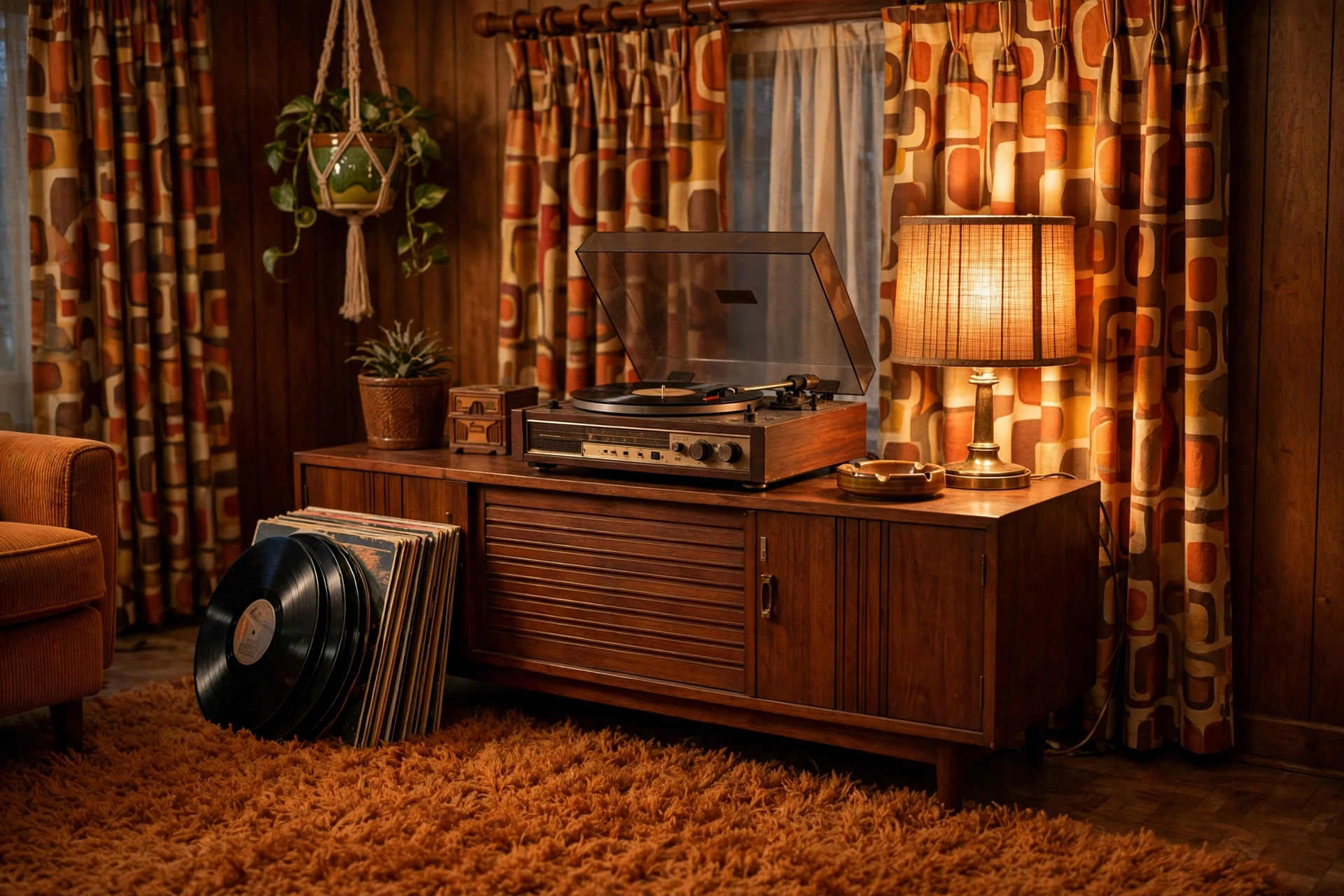
Do you remember a living room in the 1970s where the record player never seemed to stop? In many homes, the record on the turntable belonged to four Swedes in bright costumes with harmonies so clean they sounded almost impossible. Their name was ABBA, and for much of the decade they were the biggest pop group on earth. Their songs played at parties, at weddings, on car radios, and in school discos, and their voices — two women singing together in perfect harmony over irresistible melodies — became one of the most recognisable sounds in music history. Even people who claimed not to like pop music knew every word.
The group’s breakthrough came in 1974, when they won the Eurovision Song Contest with Waterloo. Eurovision was then a contest that rarely produced lasting stars, but ABBA were different. They arrived with a song that was pure energy: a glam-rock stomp dressed in glittering costumes, sung with total confidence by a group that looked like they were having the time of their lives. Europe noticed immediately. Waterloo became a hit across the continent and beyond, and suddenly a Swedish pop group was on its way to conquering the world.
What followed was one of the most extraordinary runs in pop history. Across the second half of the 1970s, ABBA released hit after hit, each one polished to a shine. Dancing Queen became their signature song, a disco-era anthem about a young woman dancing through the night, with a piano introduction that millions of listeners can recognise within seconds. Mamma Mia turned heartbreak into a sing-along. Take a Chance on Me built an entire chorus out of rhythm and repetition, proving that a pop song could be both simple and brilliant. Fernando told a story of old soldiers remembering their youth, showing that the group could handle nostalgia as well as celebration. Each song sounded different, yet each one sounded unmistakably like ABBA.
The secret of the group’s sound lay in their voices and their songwriting. The group was made up of two couples: Agnetha Fältskog and Björn Ulvaeus, Anni-Frid Lyngstad and Benny Andersson. Benny and Björn wrote the songs, crafting melodies with a craftsman’s care, while Agnetha and Anni-Frid sang them, often in close harmony, their two voices blending into something larger than either one alone. That blend was the group’s magic. One voice sang the melody, the other wrapped around it, and together they created a sound that was bright, warm, and instantly emotional. It was harmony as architecture: every note in its place, every part supporting the whole.
The group’s image was as bold as their music. In an era of denim and understatement, ABBA wore platform boots, satin, sequins, and flares, posing for photographs that looked like they had stepped out of a dream of the future. Some critics laughed at the costumes, but audiences loved them. The look said what the music said: pop music should be fun, glamorous, and a little bit larger than life. For fans, especially young fans, ABBA offered escape. Their records were a world of dancing queens and summer nights, of romance and heartbreak set to melodies you could hum after a single listen.
Behind the glitter, however, the group’s story was also a human one. The two couples who made up ABBA eventually separated, and the emotional weight of those endings found its way into their later songs, which grew more reflective and bittersweet. The Winner Takes It All, released in 1980, is one of the most heartbreaking songs they ever recorded, sung with a rawness that surprised listeners who knew the group only for their sparkle. It was a reminder that the people behind the harmonies were real, and that even the brightest pop group carried sadness within it. The group’s final album of that era, The Visitors, released in 1981, sounded more serious and grown-up than anything they had made before, as if the party were ending and the morning light were coming in.
By the early 1980s, ABBA had stopped working together as a group. There was no dramatic farewell, no final concert announced with fanfare. They simply drifted apart, each member going on to other projects, leaving behind a catalogue of songs that refused to fade. And fade they did not. Through the rest of the 1980s and beyond, their music kept playing: on oldies radio, at parties, in films and stage shows that introduced the songs to new generations. Children who had not been born when Dancing Queen topped the charts grew up singing it anyway, taught by parents who had danced to it themselves. That is the rarest achievement in pop music: songs that pass from one generation to the next as if they had always existed.
For fans who were there in the 1970s, ABBA is tied to memories of pure joy: a school disco where everyone danced to the same songs, a family car journey with a cassette playing on repeat, a party where someone put on their greatest hits and nobody sat down for an hour. The group’s music belonged to everyone at once, cutting across age and taste, because it was built on the two things that never fail: a great melody and voices singing in harmony. Their songs have been learned by children from their parents’ records, sung at karaoke nights, and played at every kind of celebration, from birthdays to New Year’s Eve parties. You did not need to know anything about Sweden or Eurovision or pop history to love ABBA. You only needed ears.
So here is the question for you. Which ABBA song is yours — the dancing queen, the heartbreak ballad, the sing-along that everyone knows? And where were you when you first heard those harmonies: in a living room, at a disco, in a car with the windows down? Tell us, because for millions of listeners, ABBA is not just a group from the 1970s. They are proof that four voices, singing together in perfect harmony, can make the whole world dance — and keep it dancing, long after the party was supposed to end.
About the author: Tommy Hayes writes about the songs that defined America in the 1970s and 1980s. He grew up with a radio always on — in the kitchen, in the car, in a bedroom with posters on the wall — and he writes from that memory: what these songs meant then, and why they still matter now.
Keep reading: