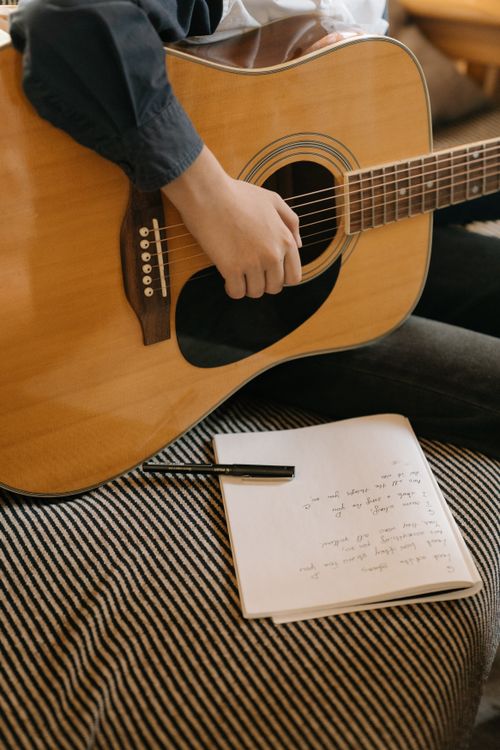
It begins with a shrug that sounds like a confession. A laid-back shuffle, a guitar that barely raises its voice, and a singer who sounds less like a man pleading for love than like a man who has stopped pretending love works the way the songs say it should. When Eric Clapton released “Promises” in September 1978, it did not sound like the work of a guitar god. It sounded like a tired, honest man at the end of a long evening, telling the truth because there was nothing left to lose by telling it. It became a Top 10 hit in America. And it carried a secret that made the whole thing stranger: Clapton, one of the most celebrated songwriters in rock, had not written a word of it. The story of “Promises” is the story of a song that arrived from two outsiders, landed in the hands of a star at exactly the right moment, and said something he could not quite have said himself — about vows, about weariness, and about what happens when the promises run out.
To understand why the record mattered, you have to understand where Eric Clapton stood in 1978. He was not a newcomer, and he was not, in the ordinary sense, in trouble. He was, by then, a living legend twice over: the Yardbirds and Cream guitarist who had been called “God” on a London wall in the 1960s, and the solo star who had rebuilt himself in the 1970s after heroin addiction nearly ended his career. His 1977 album Slowhand had been a triumph — mellow, assured, country-tinged, and commercially huge, reaching number 2 on the Billboard 200 and producing the hits “Lay Down Sally” and “Wonderful Tonight.” Slowhand had given Clapton a new identity: no longer the blazing bluesman of the Cream years, but a relaxed, mature singer-guitarist who could make understatement feel like mastery. The question facing him in 1978 was the question facing every artist after a career-redefining album: could he do it again without simply repeating himself? His answer was Backless, his sixth solo studio album, released in November 1978. It kept the same producer, Glyn Johns, and the same easy, unhurried atmosphere as Slowhand, recorded at Olympic Studios in London with his regular band. But it needed a single that could prove the new Clapton was not a one-album mood. “Promises” was that single — and, unusually for him, it came from somebody else entirely.
The song itself began not with Clapton but with two writers whose names most listeners had never heard. Richard Feldman and Roger Linn wrote “Promises” together, and the pairing itself is one of pop’s small oddities. Feldman was a working songwriter who would go on to collaborate with artists including Joe Cocker and Belinda Carlisle. Linn, meanwhile, was a musician and inventor who, within a couple of years of writing this gentle shuffle, would change the sound of popular music altogether by creating the Linn LM-1, the first programmable digital drum machine — the machine that put the beat under much of 1980s pop. In 1978, though, Linn was still just a songwriter with a tune, and the tune he and Feldman wrote was a small masterpiece of resignation. The narrator of “Promises” is not angry and not heartbroken in the dramatic sense. He is worn down. He tells his partner, in effect, that he no longer cares what she does at night or how she takes her pleasures; he will leave her alone and let things be, because they no longer love each other and they both know it. The problem, as the song frames it, is a woman calling love hate — a relationship in which the word love has curdled into its opposite. And the wound at the centre of it is the title itself: they made a vow that they would always be friends, and then discovered, too late, that promises end. It is not a song about a dramatic betrayal. It is a song about the slow, quiet collapse of a bargain two people once believed in.
The recording captures that weariness in sound, and the way it was made explains why it feels so unforced. “Promises” was produced by Glyn Johns, the veteran producer who had shaped Slowhand and who understood, better than most, that Clapton’s late-1970s strength was restraint. Johns kept the arrangement sparse: a relaxed shuffle groove, understated keyboards from Dick Sims, subtle guitar interplay between Clapton and George Terry, bass from Carl Radle, and, crucially, backing vocals from Marcy Levy — the singer who had already co-written “Lay Down Sally” with Clapton and Terry and whose voice gives the chorus its soft, slightly weary lift. Nothing in the track shows off. There is no long solo, no crescendo, no moment where the guitar reminds you who is playing it. That is the point. Because Clapton did not write the song, he could step inside it the way an actor steps into a role: he sings it not as a man defending his own words but as a man recognising someone else’s truth. The distance helped. A songwriter singing his own breakup song can sound self-pitying; a singer inhabiting a stranger’s breakup song can sound simply honest. “Promises” sounds honest in exactly that way — like a man who has heard the story before, perhaps lived a version of it, and knows how it ends.
The single’s chart story was a genuine success, and it is worth telling precisely, because the numbers show a song travelling further than anyone expected from such a quiet record. “Promises” was released in September 1978 on RSO Records as the lead single from Backless, backed with “Watch Out for Lucy.” In America it climbed steadily through the autumn and into the new year, reaching number 9 on the Billboard Hot 100 on January 20, 1979, and spending 18 weeks on the chart in total. It also reached number 6 on Billboard’s Adult Contemporary chart — a sign of how broadly the song connected beyond rock radio — and even number 82 on the Top Country Singles chart, a nod to the country flavour Johns and Clapton had been cultivating since Slowhand. Abroad the picture was more modest but still respectable: number 37 in the United Kingdom, number 26 in Australia, and number 7 in Canada. The album around it, Backless, peaked at number 8 on the Billboard 200 in January 1979. And “Promises” had one more trick up its sleeve: its B-side, “Watch Out for Lucy,” was itself promoted to radio and reached number 40 on the Hot 100 in its own right — a rare case of a single carrying two charting songs. For a laid-back shuffle written by two outsiders, that is a remarkable return.
Its afterlife began, as afterlives for hit singles usually do, with the song quietly detaching itself from its moment and becoming part of the furniture of Clapton’s career. “Promises” was not one of the songs Clapton built his legend on — it never had the mythic weight of “Layla,” the tenderness of “Wonderful Tonight,” or the blues authority of “Cocaine” — but it did something those songs did not: it proved that the Slowhand-era Clapton, the mellow singer rather than the guitar hero, was a durable commercial artist in his own right, not a one-album experiment. The song turned up on compilations, most notably Timepieces: The Best of Eric Clapton, where its clean, unhurried groove sits comfortably alongside the bigger names, a reminder that a career is built as much from solid singles as from monuments. It also became a favourite of a particular kind of listener: the Clapton fan who prefers the singer to the shredder, the person who reaches for Backless rather than Cream’s live albums. In that quieter corner of his catalogue, “Promises” is not a footnote. It is a thesis statement — the sound of a man who had survived the loudest decade in rock and decided that the bravest thing left to do was to play softly and tell the truth.
There is a final pleasure in the story, and it belongs to the writers. Richard Feldman and Roger Linn never became household names, and in a sense that is fitting: “Promises” is a song about the gap between what people say and what they do, and its own history has a version of that gap built in. Millions of people know the record and assume Clapton wrote it, because it sounds so much like him — weary, melodic, unshowy, true. He did not. Two other men wrote it, and one of them went on to invent the drum machine that would define the next decade’s idea of rhythm, a machine that made beats perfect and repeatable in exactly the way human promises are not. The irony is almost too neat: the man who would mechanise the beat wrote, with Feldman, a song about the most human failure of all — the vow that does not hold. Clapton’s gift was to hear that irony and sing straight through it, without winking, without showing off, letting a stranger’s words sound like his own life.
That is why “Promises” still works, more than forty-five years later, for listeners who have never bought Backless and never will. It is not Eric Clapton’s biggest song, and it was never trying to be. It is the one that tells the truth about the end of things: not with a slammed door or a shouted accusation, but with a shrug, a shuffle, and the quiet admission that two people who once vowed to stay friends have discovered that promises end. The charts gave it number 9 in America and a B-side that charted on its own. The album gave it the opening slot of a new chapter. And two writers most listeners never heard of gave it the rest: a lyric honest enough that a guitar legend could sing it as if it were his own story — and, for three and a half minutes, make it everybody’s.
Watch the video below and listen for the moment Marcy Levy’s backing vocal lifts under Clapton’s lead and the whole song seems to exhale. It is the sound of a star who did not need to write a hit to recognise one — and of a promise, kept just long enough to become a song about promises ending.