The Grammy That Came Five Months Too Late: The Battles Behind Willie Nelson’s ‘City of New Orleans’
On the night of February 26, 1985, at the 27th Grammy Awards, Willie Nelson stood on stage and sang a dead man’s song. “City of New Orleans” had been nominated twice that evening — once for Nelson’s performance of it, and once, in the category that matters to history, for its writing. The performance award went elsewhere, to Merle Haggard. The songwriting award went to Steve Goodman of Chicago, who had written the song on a train in 1970, at the age of twenty-two, and who had died of leukemia on September 20, 1984 — five months earlier, while Nelson’s recording of his song was still climbing the country chart. Nelson’s single had reached No. 1 in November. The writer was not alive to see it get there. The Grammy that confirmed “City of New Orleans” as a permanent piece of American music was accepted, necessarily, in the past tense.
The battles behind this song are unlike those behind any other in this series, because the central figure never got to fight the last of them. Steve Goodman wrote the song in secret — not the song itself, but the fact that he was dying while he wrote it, a fact he concealed from the music business for fifteen years. He then had to fight to get the song heard at all: his own recording went nowhere, and he talked Arlo Guthrie into rescuing it for the price of one beer. He had to fight a superstar friend, John Denver, who recorded it with altered words and a shared writing credit before Guthrie’s version was even released. And after his death, the song had to fight its way home, carried by Willie Nelson — the greatest song-conservator of his generation — to the top of the chart and into the Grammy record books, in a final campaign its author could direct no longer. Nelson’s role in the story is real but secondary, and this article will treat it that way. He was the song’s last and best champion. He was never its author, and he never pretended to be.
Chicago’s Little Prince, Carrying a Secret
Steven Benjamin Goodman was born on July 25, 1948, on Chicago’s North Side, and raised in the suburb of Park Ridge, where he graduated from Maine East High School in 1968 already known locally as a performer. Chicago in those years was building one of the great folk scenes in America, centered on the clubs of Old Town — above all the Earl of Old Town, where Goodman became a fixture from 1968 alongside a circle that included John Prine, then a mailman writing songs of terrifying quality, and where the two young men would be championed by Kris Kristofferson. Goodman sang advertising jingles to pay his bills, developed a reputation as the most purely entertaining live act in the folk clubs — friends called him the Little Prince, and Chicago Shorty — and in September 1969 met Nancy Pruter, a student working as a waitress. They married in February 1970.
Underneath all of this, from 1969 onward, ran the fact that organized the rest of his life. Goodman had been suffering from persistent fatigue, and in 1969 he learned its cause: leukemia. He was twenty years old, or just past it. He dropped out of college and pursued music full-time, and — this is the crucial decision — he told almost no one in the business. Record labels, promoters, audiences and most colleagues knew nothing. He treated his illness as private information and his remaining time as a budget, and he spent it with an urgency that everyone who knew him remarked on and few understood. He called himself, with the gallows cheerfulness that became his signature, “Cool Hand Leuk.” His wife Nancy, writing after his death in the liner notes to the posthumous anthology No Big Surprise, put the philosophy in one sentence: he wanted to live as normal a life as possible, only he had to live it as fast as he could. Everything Goodman wrote, including the gentle travelogue that made him immortal, was written by a man who had been told, in effect, that his train was running on a shortened schedule.
A Sketch Pad on the Illinois Central
In 1970, Goodman and Nancy rode the Illinois Central Railroad’s City of New Orleans south from Chicago toward Mattoon, Illinois, to visit her grandmother. The standard account of what happened next — documented in Trains magazine’s definitive 2017 chronicle of the song, and repeated in every serious Goodman biography — is that Nancy fell asleep, and Goodman, watching Illinois roll past the window, began writing on a sketch pad. What he wrote was not a love song or a protest song. It was a census of a train: the porters and the club car, the mail sacks and the passengers, the towns and the junctions, taken down with a reporter’s eye by a young man who understood, perhaps better than any healthy twenty-two-year-old could have, that the world he was describing was temporary.
The train itself was worth describing. The City of New Orleans was the Illinois Central’s flagship daytime run between Chicago and New Orleans, some nine hundred miles through the American midsection — Kankakee, Memphis, the Mississippi delta — and by 1970 the American passenger train was a dying institution, its routes being pruned as the country chose highways and jets. Goodman knew the run he was riding was threatened; the song’s famous farewell refrain, in which the train is addressed as a “native son” being bid goodnight, is an elegy folded inside a travel song. He was writing about a train the way he was living his own life: in full knowledge that it was scheduled for discontinuation.
One honest complication belongs in the record. The liner notes to No Big Surprise — the anthology Nancy herself introduced — associate the song’s writing with Goodman’s time on the campaign trail of Senator Edmund Muskie, for whom he had performed. Songwriting origins are often like this: a song arrives over weeks, in fragments, and later gets compressed into one good story. The Mattoon trip is the account supported by the Trains investigation and by Goodman’s own tellings, and the details inside the lyric — the sleeping wife’s journey, the southward geography — support it. But the dispute itself is instructive. Even the birth of this most factual of songs comes down to us in two versions, and the man who could have settled it spent his authority on better things.
A Debut Album, a Single, and Silence
Goodman’s break came through Kristofferson, who with producer Norbert Putnam took him into Quadrafonic Sound in Nashville to record his debut album, Steve Goodman, released by Buddah Records in 1971, with Paul Anka as executive producer. “City of New Orleans,” at 3:52, was its centerpiece. Buddah released it as a single in January 1972, backed with “Would You Like to Learn to Dance?” It went nowhere. The song that would be recorded by hundreds of artists, that would name a television institution and win a Grammy, could not get arrested as its author’s own record.
The failure deserves a moment’s attention, because it established the pattern of Goodman’s career: the writing outran the vehicle. He was a dazzling live performer and a songwriter’s songwriter, but he was a small, elfin folk singer on a bubblegum label in an era of singer-songwriter giants, and his own recordings consistently underperformed his material. A less driven writer might have concluded the song was a near-miss. Goodman, who knew exactly how much time he had and what the song could earn for Nancy and their daughters if it ever caught, concluded instead that the song needed a bigger voice. He went looking for one in a Chicago bar.
The Songbook He Built While No One Watched
“City of New Orleans” was the flagship of a catalog that the folk world already revered, even if the charts ignored it, and the catalog matters here because it explains the respect Goodman commanded in rooms like the Quiet Knight. With John Prine he had written “You Never Even Call Me by My Name,” the parody-of-everything country song that David Allan Coe turned into a hit in 1975; Prine, characteristically, declined a writing credit on it, and Goodman, just as characteristically, thanked him with a jukebox bought from the publishing royalties. His “Banana Republics” became a Jimmy Buffett staple. His “The Dutchman,” a heartbreaking portrait of an Amsterdam couple aging into memory loss, became a folk standard sung wherever serious folk singers gather. Chicagoans claimed his local songs — the Cubs laments, the neighborhood sketches — the way a city claims a mural.
This was the writer Arlo Guthrie was being asked to listen to: not a hopeful amateur, but the acknowledged engine of the Chicago folk renaissance, a man whose songs were already being carried by Kristofferson, Buffett, Coe and Prine’s entire generation — and who remained, to the general public, almost entirely unknown. Goodman’s career is one of the sharpest case studies in the difference between fame and reputation. He had all of the second and nearly none of the first, and he had arranged it that way without ever quite choosing to: the illness that gave his writing its urgency also capped his touring, his promotion, his availability for the machinery that makes stars. He built the songbook in the time he had, and trusted the songs to travel on their own papers. “City of New Orleans” was simply the one he pushed hardest, because it was the one built to carry weight — his family’s weight — the farthest.
The Beer at the Quiet Knight
The Quiet Knight was a folk club on North Lincoln Avenue in Chicago, and one night Arlo Guthrie — folk royalty, son of Woody, fresh off the success of “Alice’s Restaurant” — was in the bar. Goodman asked if he could play him a song. Guthrie, by his own oft-told account, agreed on one condition: Goodman would buy him a beer, and Guthrie would listen for exactly as long as the beer lasted. It is the most famous audition in American folk music, and it is worth dwelling on why it worked. “City of New Orleans” is a long song, a journey in verses. It does not detonate in thirty seconds. But it builds the way the train builds, stop by stop, and by the time Guthrie’s glass was empty, the song had done what it was designed to do. He asked to record it.
Guthrie cut the song in late 1971 for his album Hobo’s Lullaby, produced by Lenny Waronker and John Pilla, and released it as a single in June 1972. His version, a touch longer than Goodman’s at 4:31, did everything the original could not. It reached No. 18 on the Billboard Hot 100 and No. 4 on the Easy Listening chart; it finished 1972 among the year’s top fifty singles; in New Zealand it spent two weeks at No. 1 in the winter of 1973. It remains, remarkably, the only Top 40 hit of Arlo Guthrie’s long career — the eighteen-minute talking blues that made him famous never came close — and in 2017 his recording was inducted into the Grammy Hall of Fame. One small change entered the song in his hands and stayed: where Goodman’s trains passed towns that had no name, Guthrie’s passed trains that had no names, a single word’s difference that folk audiences have debated ever since.
Notice what the hit did and did not do. It made the song’s reputation and its author’s finances — Goodman could now write full-time, and the royalties mattered to a man quietly planning for a family that would lose him. But it typecast the song as a folk record, a Guthrie record, a piece of early-seventies Americana. For a dozen years it stayed in that frame. Turning it into something else — into a country standard, a Grammy winner, a No. 1 — required first a threat, and then a champion.
The Denver Detour: A Fight Over a Name
The threat arrived almost immediately, and from inside the family. Guthrie had played the song for his friend John Denver at the Troubadour in Los Angeles. What happened next is told two ways, and because this series reports disputes rather than resolving them, both deserve their place. In Clay Eals’ biography Steve Goodman: Facing the Music, the most thoroughly researched account of Goodman’s life, Denver asked Goodman directly for permission to adjust the song: Denver felt the lyric could be more commercial, Goodman — thinking of the royalties his wife and daughters would need — reluctantly agreed to tinker with the last verse together, and Denver then went further than the agreement, altering words and chords, releasing his version on the album Aerie in 1971 before Guthrie’s record was out, with the song credited to “Steve Goodman and John Denver.” Goodman was devastated: the watered-down version might become the standard, and half his writer’s income had been signed away in a bar-room spirit of cooperation.
Guthrie’s version of events, given in a 2020 interview with American Songwriter, differs in its allocation of blame. Denver, he recalled, had assured him he didn’t want to record the song at all; when Denver’s album appeared two weeks later with Denver’s name on the song, Guthrie confronted him years afterward, and Denver — apparently genuinely surprised — said he hadn’t realized his name was on it, blamed the paperwork of managers and agents, and had the credit corrected the next day. Guthrie added that he was glad the correction happened while Goodman was still alive, since the diverted money belonged to a sick man with a wife and three children.
Both accounts agree on the essentials, and the essentials are the battle: the song’s sole authorship was challenged within months of its first release, by a friend, through paperwork. The resolution also matters. The Aerie album was a commercial failure and its diluted “City of New Orleans” vanished; the credit was restored to Goodman alone; Denver and Goodman reconciled. But the episode taught everyone in Goodman’s circle a lesson that hangs over the song’s later history: a great song, unattended, will be taken. What it needed was a guardian with nothing to gain from taking it. Twelve years later, it found one.
And the correction, when it came, was worth a fortune in the most literal sense. Because Goodman’s sole credit was restored while he lived, every dollar of writer’s royalty generated by Willie Nelson’s 1984 recording — a No. 1 country single, a platinum album’s title track, decades of airplay since — flowed to Goodman and then to his estate undiminished. Had the shared credit survived, half of the songwriting income from the biggest payday of Goodman’s career would have been diverted, permanently, to a man who had not written the song. The Quiet Knight beer bought the song its first hit. The unglamorous paperwork fight of the early 1970s secured its second one, and secured Nancy Goodman’s future with it. Battles over songs are usually fought in studios and on stages. This one was won at a registrar’s desk, by a sick writer who insisted, against a superstar, on the radical proposition that his name was his name.
A Standard in Four Languages
While the song’s American custody was being fought over, its melody quietly emigrated. Goodman’s tune proved so portable that European writers kept the music and replaced the words wholesale. In France, Joe Dassin recorded it as “Salut les amoureux” — “Hi, lovebirds” — with new lyrics by Claude Lemesle and Richelle Dassin about the end of a brief affair; released in 1973, it reached No. 8 in France and sold over two hundred thousand copies. In the Netherlands, Gerard Cox heard Dassin’s version while on holiday and reworked it into Dutch as “’t Is weer voorbij die mooie zomer,” a nostalgia piece about a vanished summer, which reached No. 1 in the Netherlands in 1973. Rudi Carrell then carried the Dutch lyric into German as “Wann wird’s mal wieder richtig Sommer?” in 1975, a No. 18 hit in West Germany that German audiences loved so durably that the Frankfurt band Creme 21 took it back into the charts in 1996.
At home, the straight covers accumulated: Johnny Cash recorded it, as did Judy Collins, Chet Atkins and Lynn Anderson; Dolly Parton performed it on her television show in 1977; decades later the punk pranksters Me First and the Gimme Gimmes were still finding it irresistible. By the early 1980s “City of New Orleans” had achieved the strange status of a song everyone knew and nobody owned — an American standard in the public’s ear, a Guthrie artifact in the industry’s filing system, and, in a small house in Chicago, the principal asset of a thirty-five-year-old writer whose leukemia had returned to end the remissions. What it had never been was a country No. 1. That transformation required Willie Nelson, and Willie Nelson required Chips Moman.
The Song That Rescued Its Own Train
Before the champion enters, the song deserves credit for a rescue of its own. When Amtrak took over American passenger rail in 1971, it renamed the City of New Orleans the Panama Limited, and the name Goodman had sung might have passed entirely into history. It did not. The song’s popularity kept the old name alive in the public imagination so effectively that in 1981 Amtrak restored the name City of New Orleans to the Chicago–New Orleans run — a rare case of a piece of music reversing a corporate decision and preserving, in daily use, the very thing it commemorates. The train still runs today, and every departure board that lists it is, in a small way, a royalty statement.
The song’s greeting did similar work. Its chorus opens with a salutation to the whole country — “Good morning, America, how are you?” — and that line became the namesake of ABC’s Good Morning America, which has spoken Goodman’s words, in effect, to the nation every weekday since 1975. Consider the strangeness of it: a folk singer almost no television viewer could name wrote the phrase with which American television wakes up. Goodman spent his career being more famous inside other people’s successes than in his own name. The pattern would hold to the very end — and the end was now close.
The train, for its part, is still out there. Amtrak’s City of New Orleans runs the old Illinois Central route to this day, departing Chicago in the evening and rolling through the night past Kankakee and Memphis and the delta towns, arriving in New Orleans the following afternoon — the same geography, in the same order, that a twenty-two-year-old with a sketch pad transcribed in 1970. Passengers who know the song ride it as a pilgrimage; passengers who don’t are riding inside a piece of music without being told. Rail historians, when they write about the train, now write about the song in the same breath, because the two preserved each other. The institution kept the melody’s subject alive; the melody kept the institution’s name alive. It may be the only case in American history of a folk song functioning, successfully, as a preservation society.
Enter Willie: Memphis Men in Nashville, October 1983
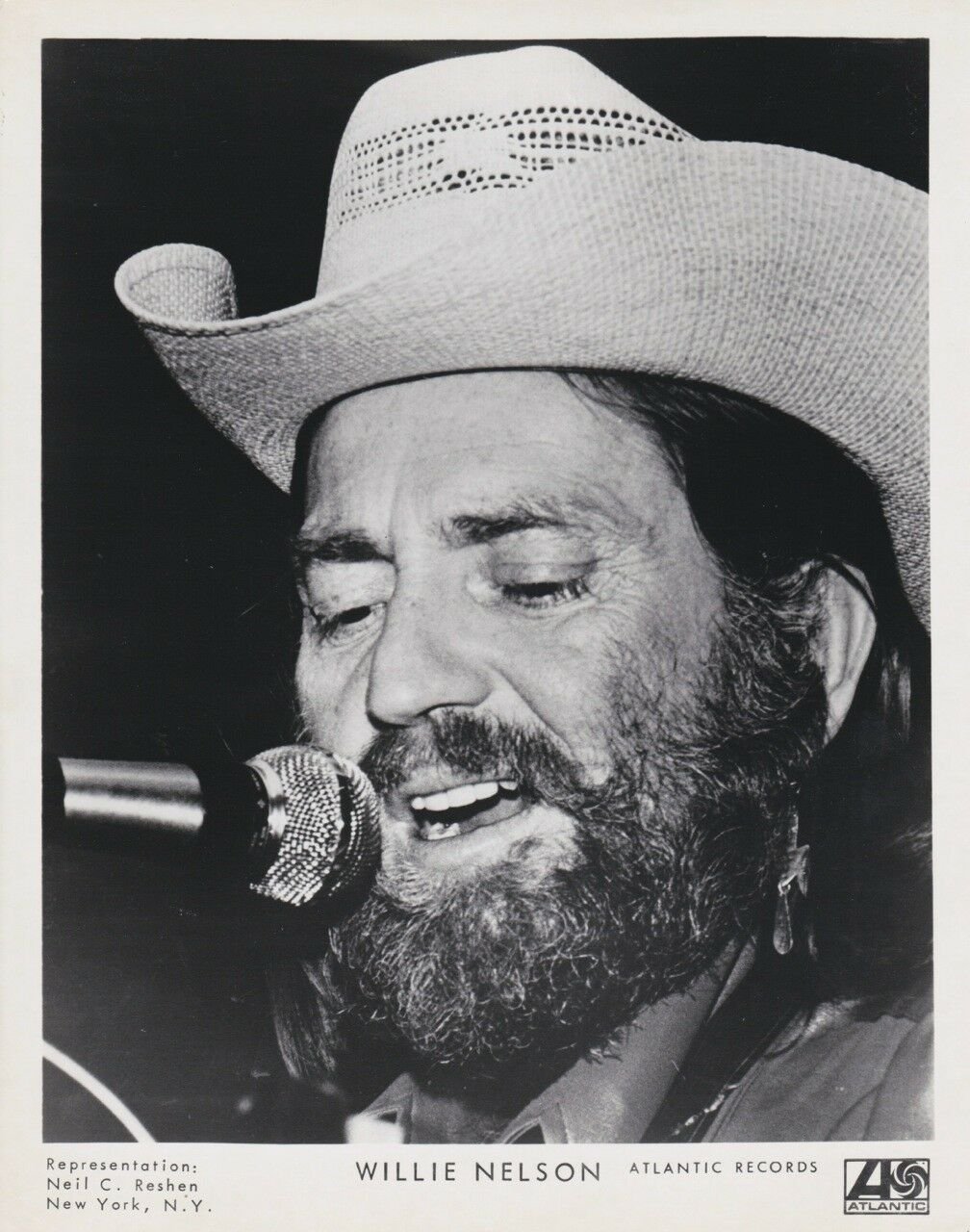
Willie Nelson cut “City of New Orleans” in October 1983, at the height of his imperial period, and the circumstances of the session were themselves a statement about what kind of record he intended to make. The producer was Chips Moman, the Memphis guitarist-turned-producer who had run American Sound Studio, cut Elvis Presley’s great 1969 comeback sessions, and produced Nelson’s Always on My Mind album in 1982. Working at Moman’s own Nashville studio, the band was built from Moman’s Memphis circle — guitarists Reggie Young and J.R. Cobb, bassist Mike Leech, keyboard men Bobby Emmons and Bobby Wood, drummer Gene Chrisman — with Nelson’s own Mickey Raphael on harmonica, whose wail drifts through the record like a whistle heard from the next county. These were men who made records by feel, in a room, and the song — loose, rolling, unhurried — was exactly their native language.
The album that resulted, City of New Orleans, released by Columbia in July 1984, was a covers album with a single Nelson original, “Why Are You Pickin’ on Me” — which also served, fittingly, as the B-side of the title song’s single. Around the title track Nelson assembled a tour of the American songbook as he heard it: Danny O’Keefe’s “Good Time Charlie’s Got the Blues,” Dave Loggins’ “Please Come to Boston,” Buffy Sainte-Marie’s “Until It’s Time for You to Go,” the standard “Cry,” and “Wind Beneath My Wings,” which Nelson recorded years before Bette Midler made it a phenomenon. Not every critic was persuaded — The Philadelphia Inquirer accused Nelson of pushing his all-purpose interpretive powers too far — but the market delivered its own verdict, sending the album to No. 1 on the Top Country Albums chart, No. 69 on the Billboard 200, and an eventual platinum certification.
Nelson’s reading of the title song is a study in what a great interpreter actually does. Guthrie’s version, at 4:31, is a young man’s bright-eyed journey. Nelson, at fifty-one, takes 4:48 and finds the dusk in it. The tempo relaxes into a train’s true rhythm rather than a folk singer’s strum; the phrasing lags and leans the way Nelson’s always does; and the farewell at the song’s heart — a whole train, a whole way of life, being wished goodnight — lands differently in the voice of a man who had spent twenty-five years riding night conveyances between one-night stands. Goodman had written an elegy at twenty-two without fully knowing for whom. Nelson sang it as a man who knew exactly what it cost to keep moving. The recording reached the public in the summer of 1984. Its author had weeks to live, though there is no evidence Nelson knew that, and no reason to think Goodman begrudged the timing. It was the break he had been buying beers to find for thirteen years.
The session was also one product of an almost absurdly productive season. In the eighteen months around the City of New Orleans recordings, Nelson released or appeared on album after album — Without a Song, the jazz-leaning Angel Eyes with guitarist Jackie King, the soundtrack to Alan Rudolph’s film Songwriter, in which he starred alongside Kristofferson — and headlined the largest stages in country music, all while absorbing new material at a rate no A&R department could schedule. Critics sometimes treated this flood as carelessness. In this case it was the opposite: a singer with a curator’s ear working through the American songbook at speed, choosing, among hundreds of candidates, a thirteen-year-old folk song as the title track and first single of his summer album. Goodman had spent a decade trying to place the song at the center of something. Nelson simply placed it.
1984: A Number One and a Funeral in the Same Season
Columbia released Nelson’s “City of New Orleans” as a single on July 30, 1984, in a season when Nelson could seemingly do nothing wrong: the single that preceded it in his chronology was “To All the Girls I’ve Loved Before,” his duet with Julio Iglesias, a country No. 1 that had crossed to No. 5 on the pop chart. The new single climbed steadily through the autumn. In Canada it would top the RPM country chart and reach No. 5 on the adult contemporary list; in the United States it reached No. 30 on the Adult Contemporary chart alongside its country run. In the week dated November 3, 1984, it stood at No. 1 on Billboard‘s Hot Country Singles chart — the largest country audience in America, delivered to a song written on a dying institution by a folk singer from Chicago, fourteen years after he wrote it.
Steve Goodman did not see November. His leukemia, managed through the 1970s, had worsened, and he had gone to Seattle for a bone marrow transplant, the era’s desperate remedy. He died at the University of Washington Medical Center on September 20, 1984, six weeks before his song reached No. 1, leaving Nancy and their three daughters. He was thirty-six years old. Four days later — four days — his beloved Chicago Cubs, the team for whom he had written the rueful anthem “A Dying Cub Fan’s Last Request,” clinched their division and reached the postseason for the first time since 1945, an event he had spent his whole life ironically certain he would never witness. Chicago noticed the coincidence and has never stopped noticing it. In April 1988 some of Goodman’s ashes were scattered at Wrigley Field, and his other Cubs song, “Go, Cubs, Go,” went on to become the team’s victory anthem, played after every home win — the sound, since 2016’s championship season especially, of a whole city singing a dead man’s song in joy.
It is the cruelest timeline in this series of articles, and there is no point softening it. Goodman had structured his entire adult life around the knowledge of an early death, had written his masterpiece at twenty-two, had fought for its credit at twenty-three, and had waited thirteen years for its coronation. The coronation came. He missed it by six weeks.
Grammy Night: The Award Goes to the Writer
The 27th Grammy Awards, on February 26, 1985, gave the song its formal honors, and the evening’s choreography could hardly have been improved by a screenwriter. Nelson performed “City of New Orleans” on the telecast. The recording had two nominations. For Best Country Vocal Performance, Male, Nelson lost — to Merle Haggard’s “That’s the Way Love Goes,” a defeat no one could call unjust. But Best Country Song, the songwriter’s category, the one engraved with the writer’s name rather than the singer’s, went to Steve Goodman. Posthumously. For a song he had been unable to give away for the price of its own hit recording’s success, recorded by a singer who sought nothing from it but the singing.
The distinction between the two categories is the whole story of Goodman’s life in miniature, and it is why this series has treated Nelson’s part with such care. Had Nelson won the vocal award, the night would have belonged to the interpreter, and Goodman would have remained what he had always been: the credited name in small print. Instead the industry put its highest songwriting honor, for that year, on the name of a thirty-six-year-old Chicago folk singer who had been dead for five months. The royalties and the prestige flowed where Goodman had always intended them to flow — to Nancy and the girls, the family for whom he had hustled the song through bars and boardrooms while concealing the reason for his haste. He won a second Grammy, too, in 1988, when his posthumous album Unfinished Business, on his own Red Pajamas label, took Best Contemporary Folk Album. The business that never made him a star has spent forty years making him, steadily, a monument.
Goodman had prepared for his own absence more deliberately than the public knew. Frustrated with the majors, he had co-founded Red Pajamas Records in his final years to control his own catalog, and his last album, Santa Ana Winds, appeared on the label in 1984, assembled by a man literally recording against a deadline no reviewer was told about. After his death came the archival work — the anthologies Nancy introduced, and eventually Clay Eals’ exhaustive 2007 biography Steve Goodman: Facing the Music, which restored the full shape of the life, illness included, to the record. The Goodman revival that followed was not nostalgia. It was the correction of an information problem: once the world learned what the songs had cost, it could no longer hear them as merely charming. The Grammy of 1985 was the first public installment of that correction, delivered, fittingly, by the profession itself.
Riding It Together: Farm Aid and the Long Afterlife
Seven months after the Grammys, the song produced the image that this article’s video preserves. On September 22, 1985, in Champaign, Illinois, Willie Nelson co-founded Farm Aid — the benefit he built with Neil Young and John Mellencamp for America’s family farmers — and during that first concert, Nelson, Arlo Guthrie and Dottie West sang “City of New Orleans” together. Watch what the performance means. Guthrie, who rescued the song for a beer; Nelson, who carried it to No. 1 and a Grammy — the song’s two champions, sharing its choruses a year after its author’s death, at a benefit for the rural America the song’s train runs through. Goodman is the invisible fourth presence on the stage. The Highwaymen — Nelson with Cash, Jennings and Kristofferson, the last of whom had produced Goodman’s debut album — would keep the song in their live repertoire into the 1990s, Kristofferson singing harmony on his old protégé’s song, which closed a circle almost too neat for nonfiction.
The song’s public service continued. When Hurricane Katrina drowned New Orleans in 2005 and the train was restored to the city, Arlo Guthrie and his family rode the City of New Orleans itself from Chicago to New Orleans that December, playing benefit concerts down the line for musicians who had lost everything. Jimmy Buffett closed his Labor Day weekend show at Wrigley Field — Goodman’s own shrine — with the song in September 2005, and opened with it at the first New Orleans Jazz & Heritage Festival after the storm. Trains magazine devoted a definitive feature to the song’s writing and recording in 2017, treating a folk song with the archival seriousness of a railroad history — which, by then, is what it was.
Why It Endures
Every song in this series has battled something, but “City of New Orleans” battled the erasure of everything it touched. The train it celebrates was renamed out of existence; the song brought the name back. Its author was concealed by his own privacy, nearly robbed by a friend’s paperwork, and dead at thirty-six; the song carried his name to a Grammy, to a ballpark, to a television network’s every morning. Its first hit singer and its last one were a generation apart in style and temperament, and the song fit both, because what Goodman actually wrote — under the travelogue, inside the train — was a song about how to say goodbye to a country while it is still passing the window. Americans have never stopped needing that song. A healthy man could not have written it at twenty-two. Goodman could, because he was already practicing the farewell it describes.
And Willie Nelson’s place in it is, finally, the purest expression of what he is for. The history of American music is full of singers who covered other men’s songs to enrich themselves. Nelson covered this one the way he covered “Blue Eyes Crying in the Rain” and the whole of Stardust — as an act of stewardship, applying the most trusted voice in country music to material he judged better than fame had treated it. He took no writing credit, altered no word that mattered, and when the awards came, the one that counted went where he would have wanted it: to the writer. The Grammy came five months too late for Steve Goodman to hold it. Thanks to the battles fought by a Chicago folksinger, a folk prince, and an old outlaw from Texas, it has never stopped arriving since.