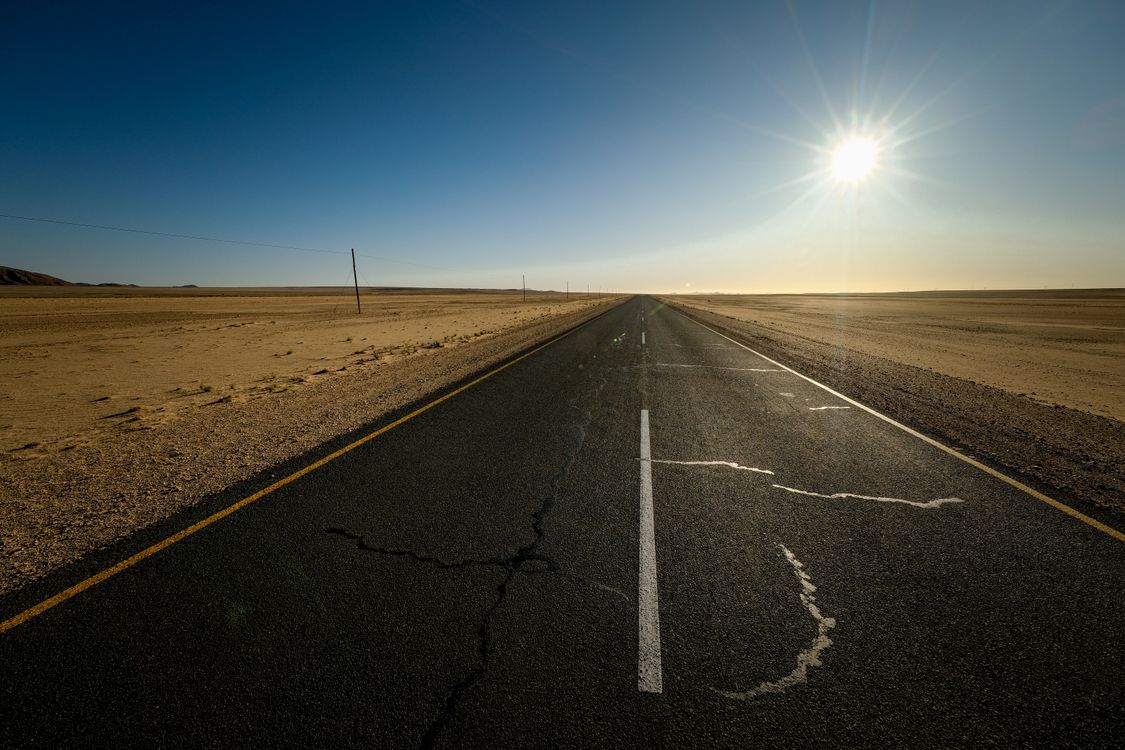
It opens with a guitar figure so sunny and syncopated that you can almost feel the heat coming off the road, and then James Taylor’s voice, warm and unhurried, starts telling you about a night in a Mexican border town: the music, the margaritas, the girl, the feeling that everything is easy for once. “Mexico” is only three minutes long, but it is one of the happiest records James Taylor ever made, a little vacation in song form from a man famous for writing about sadness. And it carries a joke right at its heart. After three minutes of describing Mexico in loving, first-hand detail, Taylor admits, almost with a shrug, that he has never actually been there. The whole song is a daydream, a postcard from a place he invented in his head. That twist is the reason it has lasted half a century: it is not really a song about Mexico at all. It is a song about wanting to get away, and that is a feeling everybody understands.
To understand why the song mattered in 1975, you have to understand where James Taylor stood. He was not a newcomer, and he was not quite the star he had been a few years earlier. His breakthrough had come in 1970 with Sweet Baby James, an album that made him the face of the confessional singer-songwriter movement, and in 1971 he had scored his only Billboard Hot 100 number one with his version of Carole King’s “You’ve Got a Friend.” But the albums that followed had not kept up. One Man Dog in 1972 was loose and uneven, and Walking Man in 1974 was a commercial disappointment, his first album since signing to Warner Bros. to miss the Top 5, selling only about 300,000 copies in America. Critics were kind but cool, and the sense was growing that Taylor, the defining voice of the early seventies, might be drifting. He needed a record that reminded people why they had loved him in the first place, and he needed it to sound like he was enjoying himself again.
That record was Gorilla, his sixth studio album, released on April 30, 1975. Taylor changed producers for it, turning not to his old manager and producer Peter Asher but to the Warner Bros. house team of Lenny Waronker and Russ Titelman, the men behind hit records by Randy Newman, Gordon Lightfoot, and Ry Cooder. The sessions took place in Los Angeles, at Warner Bros. Studios in North Hollywood and the Burbank Studios, between March 17 and April 24, 1975, and they drew in a remarkable cast: Taylor’s trusted band, “The Section” — Danny Kortchmar on guitar, Leland Sklar on bass, Russ Kunkel on drums — plus guests including Lowell George of Little Feat, David Sanborn on saxophone, and his wife Carly Simon. The album was a deliberate change of mood. Where the early seventies records had been introspective and often melancholy, Gorilla was lighter, warmer, and more playful, and Taylor himself later seemed to recognize it as a turning point, the moment he shook off the brooding image that had defined him. “Mexico” was its opening track, and it set the tone for everything that followed: a man in a good mood, in a groove, going somewhere fun.
The song itself is a small masterpiece of misdirection. Taylor wrote it himself, and it is one of several songs on Gorilla that use a stream-of-consciousness technique, letting the singer’s fantasy unspool in real time. The lyric describes a night in a Mexican border town in vivid, sensory detail — the band playing, the drinks flowing, the sense of freedom that comes from being somewhere nobody knows you — and it sounds for all the world like a memory. Then, near the end, comes the confession: he has never really been, but he would sure like to go. Musicologist James Perone has pointed out that the song’s structure mirrors that trick. The verses sit in E major, describing the imagined Mexico, and then the music jumps abruptly to F-sharp major for the refrain, as if the singer has suddenly declared, out loud, that he needs to get there. It is a clever piece of songwriting, but it never feels clever. It feels like a man talking himself into a holiday.
The recording matches the lyric’s lightness. Taylor sings and plays acoustic guitar, with Kortchmar on electric guitar, Sklar on bass, and Kunkel on drums and shaker, plus Milt Holland on percussion and Gayle Levant on harp. The rhythm is medium-tempo and buoyant, with a Latin lilt, congas and vibraphone coloring the arrangement, and a touch of country rock in the guitars. Billboard, reviewing the single, called it an “easy, mid-tempo cut” with smooth vocals and percussion and steel drums dominating the instrumentation, while Cash Box described it as “a bright change of pace in the form of a bubbling Latin beat dressed in la ropa de conga, vibraphone, and acoustic guitar.” But the detail that lifts the record from pleasant to special is the harmony singing. David Crosby and Graham Nash, Taylor’s old friends from the Laurel Canyon days, sing backup vocals, and their high, clear harmonies float above Taylor’s voice like sunlight. One contemporary critic singled out Nash’s harmony as “lovely,” and it is easy to hear why: Crosby and Nash were the finest harmony singers of their generation, and their presence turns a solo daydream into something shared, as if the whole trip is happening with friends along.
“Mexico” was released as a single in August 1975, with the album’s title track “Gorilla” on the B-side. Its chart story is a small lesson in how a song can succeed without topping the charts. On the Billboard Hot 100 it peaked at only No. 49, missing the Top 40 entirely, a fact that surprises people who assume every beloved Taylor song was a big pop hit. But on Billboard’s Adult Contemporary chart it reached No. 5, and it received substantial radio play, becoming one of the most familiar songs on the album. In Canada the pattern was similar: No. 83 on the main singles chart, No. 8 on the adult contemporary list. The album itself did the heavy lifting. Gorilla reached No. 6 on the Billboard 200 and went gold, and its first single, Taylor’s version of Marvin Gaye’s “How Sweet It Is (To Be Loved by You),” with Carly Simon singing harmony, reached No. 5 on the Hot 100 and No. 1 on the Adult Contemporary chart. Together, the two singles re-established Taylor as a hitmaker, and Gorilla is now remembered as the album that arrested his commercial slide. It would be his penultimate Warner Bros. album; after one more, In the Pocket in 1976, he moved to Columbia Records, where JT in 1977 would give him another wave of success.
The critics liked “Mexico” from the start, and they have kept liking it. Rolling Stone’s Bud Scoppa, reviewing Gorilla in July 1975, called the song “delightful.” Robert Christgau named “Mexico” and its B-side “Gorilla” as the two songs on the album he liked. Martin Smith, writing a biography of Taylor, called it his favorite song from Gorilla, and author Martin Charles Strong described it as “demonstrating what Taylor was capable of when he decided to step up a gear.” The Rolling Stone Album Guide’s Mark Coleman praised its sense of humor. And the song has aged gracefully: in 2003, AllMusic critic Thom Jurek wrote that it “hasn’t aged” and still seemed “as immediate and relevant in the 21st century as [it] did in the 1970s.” That durability is not an accident. The song’s joke — the confession that the trip never happened — protects it from dating. A song about a real holiday in 1975 would be a period piece. A song about imagining a holiday is timeless, because everybody, in every decade, has imagined one.
It is also a song that other musicians have wanted to live inside. Jimmy Buffett, whose entire career is built on the same philosophy of escape that “Mexico” celebrates, covered it on his 1995 album Barometer Soup, a choice one critic called entirely appropriate, since the song was “consistent with Buffett’s philosophy.” The guitarist Alex de Grassi recorded an instrumental version on his 1999 album of Taylor interpretations, and the British broadcaster Lauren Laverne covered it for a BBC Radio 1 session in August 2000. The John Tesh Project released an instrumental version in 1997. And Taylor himself has never let the song go. It appeared on his 1976 Greatest Hits album, the compilation that closed out his Warner Bros. years, and on later collections including Classic Songs in 1990, The Best of James Taylor in 2003, and The Essential James Taylor in 2013. Live versions have appeared on Live in Rio in 1991, on all versions of his 1993 Live album, and on Live at the Beacon Theatre in 1998. On stage, half a century after Gorilla, it still gets one of the warmest receptions of the night, and Taylor’s setlists in recent years, including his 2026 tour, have kept it in regular rotation alongside “Fire and Rain” and “Carolina in My Mind.”
There is something fitting about that longevity. Taylor’s greatest songs are often about specific places and specific sorrows: a friend lost to heroin in “Fire and Rain,” a childhood home in “Carolina in My Mind,” a road in “Sweet Baby James.” “Mexico” is the exception that proves the rule, a song about a place he had never been, written by a man who was, by his own later account, dreaming of a trip to Puerto Vallarta that he would eventually take. It works because the feeling is real even when the geography is not. The song understands that a daydream can be as restorative as a holiday, and sometimes more so, because a daydream never gets rained on, never loses your luggage, and never ends. Taylor has spent a career writing about the gap between the life he has and the life he wants. In “Mexico,” for once, he closes that gap with a grin, and invites the listener to come along.
That is why the record endures, and why it belongs in any honest account of Taylor’s career. It is not his biggest hit, not his deepest song, and not the one that made his reputation. It is the song that showed he could be funny, loose, and light without losing the warmth and craft that made him matter. It is three minutes of sun from a man who spent years writing about clouds, sung with two of the greatest harmony singers alive backing him up, about a trip he had not taken to a town he had invented. And it is still, fifty years on, the sound of somebody deciding that the best place to be is somewhere else, anywhere else, as long as the music is playing and the night is young.
Watch the video below and let the song take you there, even if, like James Taylor in 1975, you have never really been.