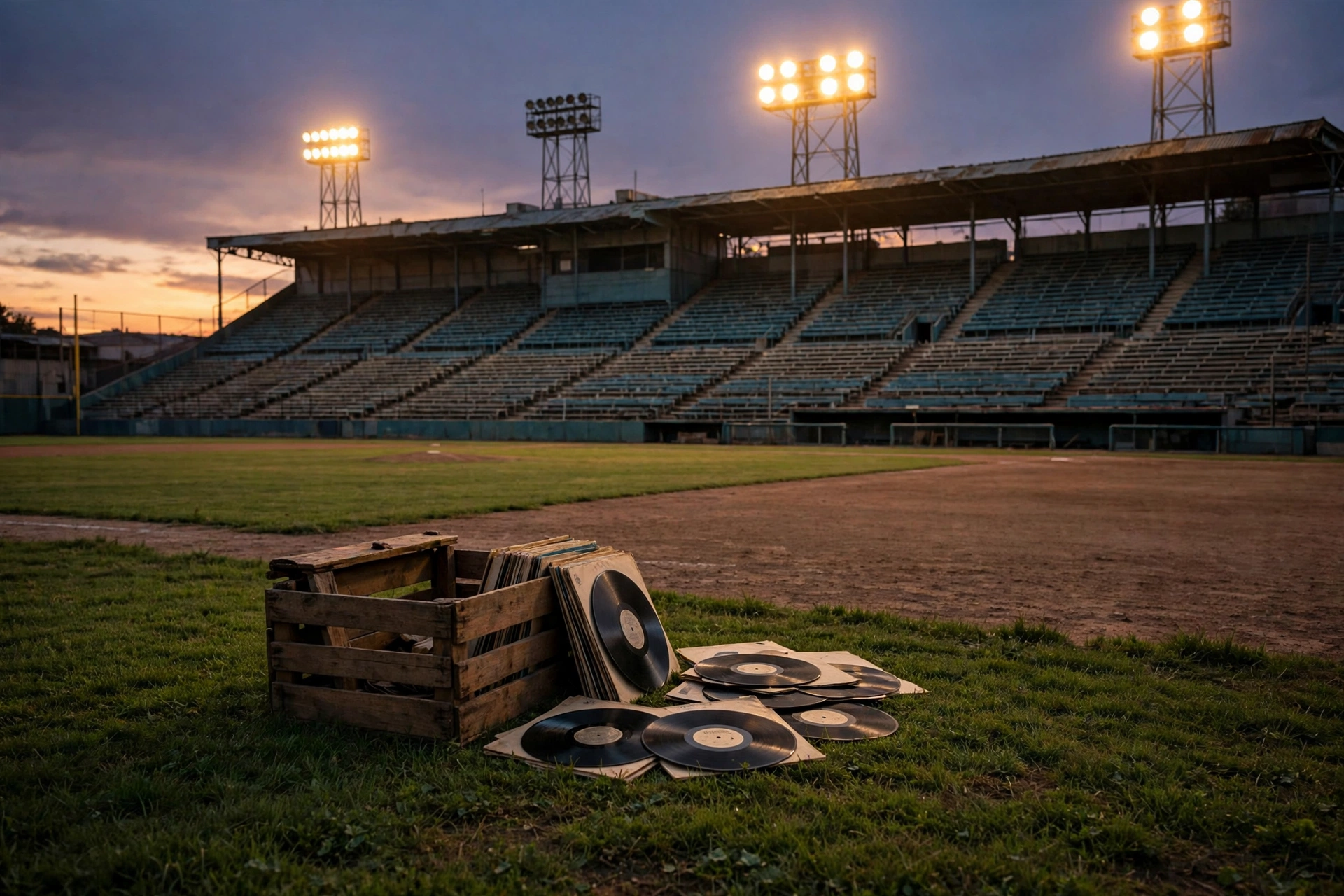
Picture a baseball stadium in Chicago on a warm summer night in July 1979. The home team has just finished the first game of a doubleheader, and the crowd is in a cheerful, restless mood. Between the two games, the stadium has promised something unusual: a crate full of disco records, collected from fans at the gate, will be blown up on the field as part of a radio promotion. The fans in the stands are mostly young, mostly rock fans, and many of them have come as much for the promotion as for the baseball. What happens next will be talked about for decades, and not for the reasons anyone planned.
July 12, 1979 was the night of Disco Demolition Night at Comiskey Park, home of the Chicago White Sox. The promotion was the idea of a local rock radio disc jockey, Steve Dahl, who had built a following by mocking disco music on his show. His station offered a cheap ticket to anyone who brought a disco record to the ballpark, and the records would be destroyed in a crate on the field between the two games of a doubleheader against the Detroit Tigers. The idea was meant as a joke, a bit of radio theatre for a summer night. By the evening of the game, the stadium was packed far beyond a normal weeknight crowd, and many of the fans had come ready for a party.
The first game went ahead as normal, and the White Sox won it. Then, between games, the crate was brought onto the field and the records inside were blown up, as promised. The explosion was louder and more damaging than expected. It tore up part of the outfield grass and left a hole in the ground. That alone would have been a problem, but what followed was worse. Thousands of fans poured out of the stands and onto the field, running, sliding, and tearing up more of the turf. The stadium staff could not get them back to their seats. The field, which had to be ready for the second game, was in no state for baseball.
After a long delay, with the field still full of people and the damage impossible to repair in time, the officials made a decision that is still rare in professional baseball: the second game was forfeited to the visiting Detroit Tigers. The crowd was eventually cleared, but the night had already become a story far bigger than a radio promotion. Newspapers and television stations across the country reported it, and the pictures of a baseball field overrun by fans became one of the enduring images of the summer of 1979.
To understand why the night got so out of hand, it helps to remember what disco meant in 1979. For a few years, disco had dominated the pop charts, the radio, and the dance floors, and its success had annoyed plenty of rock fans, who felt that their music was being pushed aside. Radio rivalries were fierce, and the joke at the heart of the promotion, that disco records deserved to be destroyed, landed with an audience that was already in the mood to cheer it on. The promotion also drew a much larger and rowdier crowd than a normal Thursday night game, and the stadium was not prepared for what that crowd would do once the explosion went off. A stunt designed for radio ended up being performed in front of tens of thousands of people, live, with no way to control the ending.
The night is still discussed today, and people disagree about what it meant. Some remember it as a harmless prank that simply went wrong, a summer night when a joke got bigger than anyone expected. Others see it as a turning point, the moment when the backlash against disco spilled out of record shops and radio studios and into public view. Still others point out that the crowd’s anger was aimed at a style of music associated with particular communities, and that the celebration of destroying those records looks different in hindsight than it did on the night. The event itself, though, is a matter of record: a promotion, an explosion, a damaged field, and a forfeited game.
What is certain is that disco’s dominance was already fading by the summer of 1979, and the night at Comiskey Park did not single-handedly kill a musical style. Disco records continued to sell, disco songs continued to chart, and the dance music of the late 1970s fed directly into the pop and dance music of the 1980s. But the night became a symbol, shorthand for the moment when one era of pop music gave way to another, and for the way a joke on the radio could escape into the real world with real consequences.
For baseball fans, the night is remembered differently: as one of the strangest forfeits in the history of the game, a second game that was never played because the field could not be cleared. For music fans, it is a reminder that musical tastes are never just about taste. They are about identity, about belonging to a crowd, and about what happens when a crowd is given permission to cheer for destruction. On July 12, 1979, a stadium full of people learned that lesson in the most literal way possible, standing on a ruined outfield where a baseball game was supposed to be played.
In the months that followed, disco records kept appearing on the charts, and dance music kept filling clubs and radio playlists. The night at Comiskey Park had not ended a style of music, whatever the crowd that night may have hoped. What it had done was give the backlash a picture that newspapers could print and television could replay, and that picture stuck in the public mind long after the field itself had been repaired.
So here is the question for you. Do you remember Disco Demolition Night, and did you see it as a joke, a protest, or something else entirely? And when a musical style falls out of fashion, should fans celebrate its fall, or just move on to whatever comes next? Tell us, because for millions of people, July 12, 1979 is still the night a record-blowing stunt became a piece of music history nobody had planned.
About the author: Tommy Hayes writes about the songs that defined America in the 1970s and 1980s. He grew up with a radio always on — in the kitchen, in the car, in a bedroom with posters on the wall — and he writes from that memory: what these songs meant then, and why they still matter now.
Keep reading:
August 1, 1981 — The Night MTV Switched On
January 28, 1985 — The Night the Stars Recorded We Are the World
December 14, 1977 — The Night Saturday Night Fever Premiered