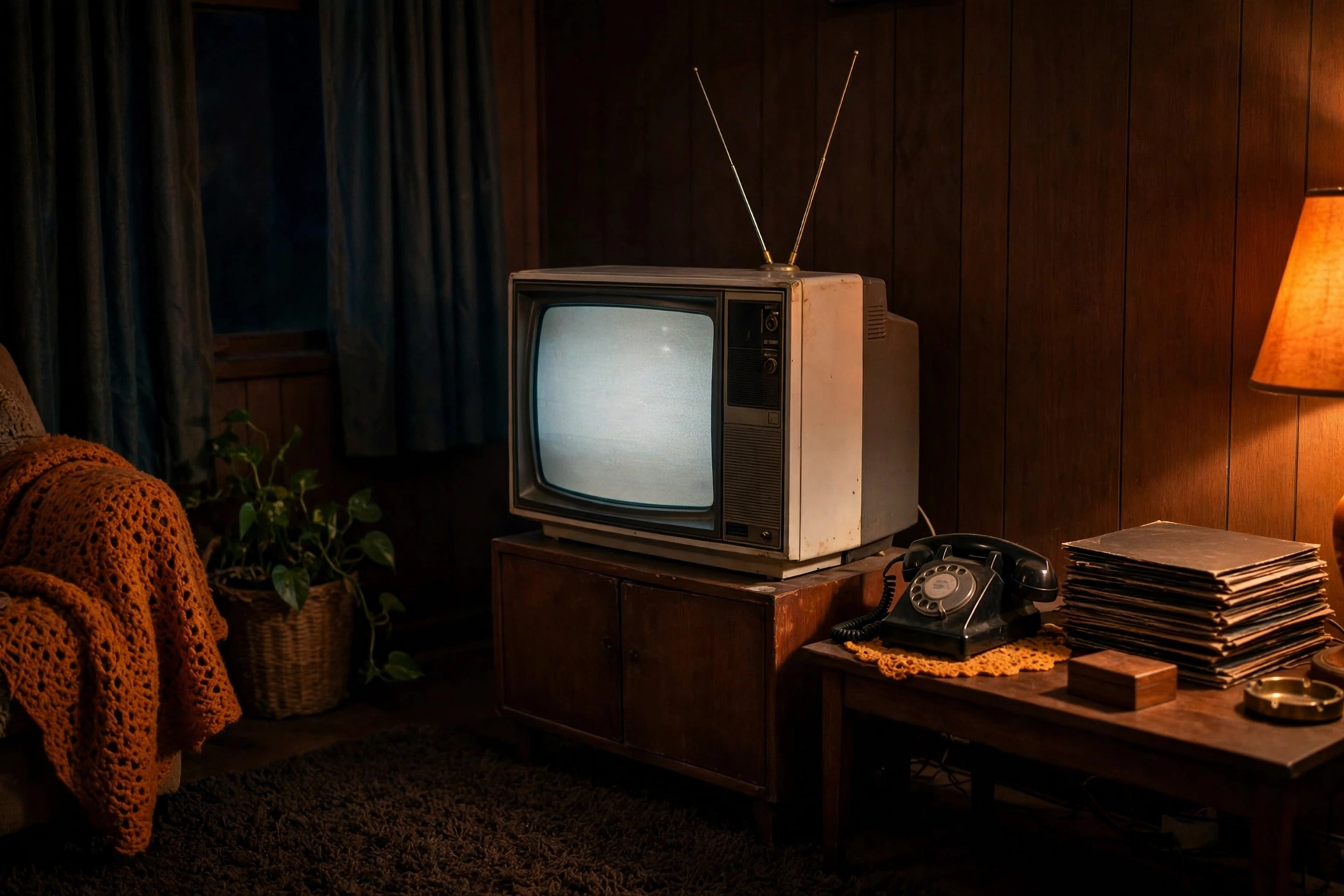
Picture a living room late on a Friday night in the summer of 1981. The television is on, but the family is not watching a movie or a late-night talk show. On the screen, a countdown finishes, a rocket lifts off, and a short, strange, catchy song begins, with a video full of old radios and televisions exploding into pieces. The channel logo in the corner reads MTV. For most of America, that moment passed unnoticed. Only a small number of cable homes could even receive the new channel that night. But for the viewers who were watching, something had just changed: music now had a television channel of its own, running around the clock.
August 1, 1981 was the day MTV went on the air. The idea was simple and, at the time, uncertain. Radio had always been the way people discovered new songs, and record companies spent their money on radio promotion. Television appearances were occasional treats, a few minutes on a variety show or a late-night stage. MTV bet that young viewers would watch music all day if it were presented like radio, with hosts, a playlist, and a steady stream of short videos. The channel called its hosts video jockeys, or VJs, and they introduced clips the way disc jockeys introduced records.
The first video ever played was Video Killed the Radio Star, by the British group The Buggles. The choice was a joke and a prophecy at the same time. The song was about how new technology was pushing out the old, and here it was, opening a channel that would do exactly that to the way music was sold. After the video, the VJs took turns introducing themselves and the clips to come. The early playlist leaned heavily on rock and new wave, much of it from British acts who had already been making videos for the European market, because American record companies had not yet started producing videos in large numbers.
In those first months, MTV was a small operation with a big idea. The channel was available only to cable subscribers, and cable itself was still growing in the United States. Many towns had no cable at all, and many record executives were unsure whether teenagers would sit and watch music videos for hours. But the viewers who did have the channel became devoted to it quickly. They learned the names of the VJs, they requested their favourite clips, and they began to talk about songs in terms of what the video looked like, not just what it sounded like. A song could now have a face, a costume, a dance, and a story told in three minutes.
The change did not happen overnight, but it happened fast. Within a couple of years, record companies were budgeting for videos as a normal part of releasing a single, and artists were thinking about how a song would look on screen as well as how it would sound on the radio. Directors who had worked in commercials and short films found a new canvas, and a whole visual language grew up around the three-minute song: quick cuts, bold colours, costumes, and dance routines. Some artists who might have struggled on radio alone found a home on MTV, while others discovered that a memorable video could carry a song much further than airplay alone.
The channel also changed who got seen. In its earliest days, the playlist was narrow, and the channel faced criticism for showing too few Black artists. That criticism grew louder as the decade went on, and the breakthrough of major Black stars on the channel became a story in itself, tied to the biggest albums of the era. By the middle of the 1980s, MTV was no longer a curiosity for cable subscribers. It was a central part of popular culture, shaping fashion, slang, and the way young people talked about music. Award shows, news programmes, and even films began to borrow its fast, visual style.
What is easy to forget, looking back, is how strange the idea seemed in 1981. Television executives had long believed that music belonged on the radio and that television viewers wanted dramas, comedies, and news. MTV argued the opposite: that a generation raised on television would want its music on television too, and that watching a song could be as natural as listening to one. The gamble paid off so completely that it is now hard to imagine a time when it seemed risky. The music video became one of the basic forms of popular culture, and the habits MTV created, discovering a song by watching it, are still with us in the age of online video.
For fans who were there at the start, the memory is specific: the rocket launch, the first VJs, the feeling of stumbling on a channel that seemed to be broadcasting just for them. For younger listeners, August 1, 1981 is the day the music business became a visual business, for better and for worse. The songs did not change that night. But the way America met its songs did, and it never went back.
The VJs themselves soon became minor celebrities, recognised on the street by the young viewers who watched them every day. That was new, too. Before MTV, the people who introduced records were voices on the radio, familiar but faceless. Now the hosts had faces, clothes, and opinions of their own, and viewers wrote in to argue with them about which videos deserved more airtime.
So here is the question for you. Do you remember the first music video you ever saw, and did it change how you heard the song? And if you were watching on that first night in 1981, what did you think this strange new channel would become? Tell us, because for millions of fans, MTV began not with a grand announcement, but with a rocket, a song about radio, and a small audience that had no idea what it was starting.
About the author: Tommy Hayes writes about the songs that defined America in the 1970s and 1980s. He grew up with a radio always on — in the kitchen, in the car, in a bedroom with posters on the wall — and he writes from that memory: what these songs meant then, and why they still matter now.
Keep reading:
July 13, 1985 — The Day the Whole World Watched Live Aid
January 28, 1985 — The Night the Stars Recorded We Are the World
3 thoughts on “August 1, 1981 — The Night MTV Switched On”