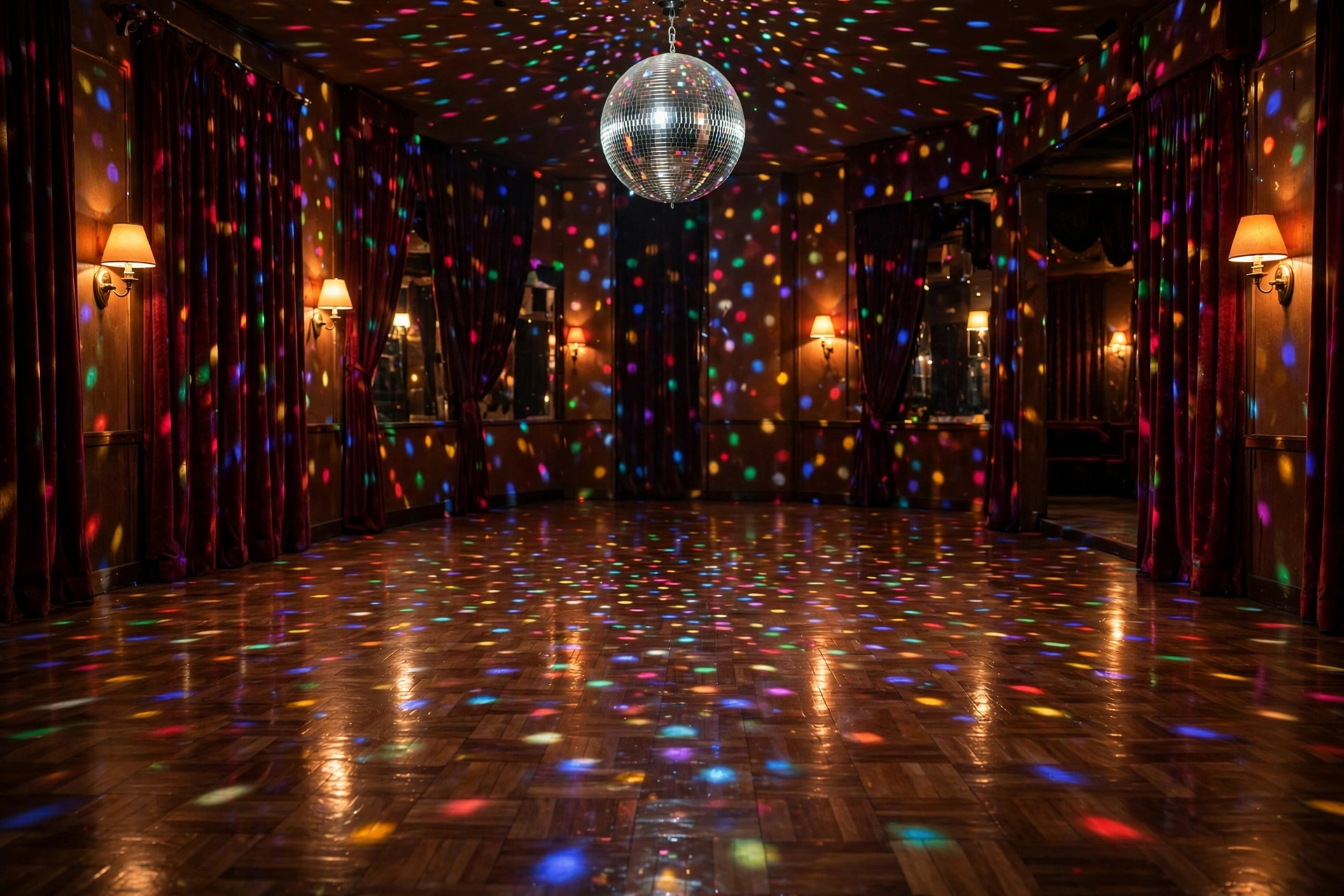
Picture a cinema in New York on a cold December night in 1977. Outside, the city is already in its Christmas mood. Inside, the audience is about to watch a film about a young man from Brooklyn who works in a paint store by day and lives for Saturday night, when he puts on a white suit and dances at a local disco club. The film is called Saturday Night Fever, and when the lights go down, the opening scene follows its hero walking down a Brooklyn street, a paint can in one hand, strutting in time to a song with a beat like a heartbeat. On December 14, 1977, the night the film premiered, disco was about to leave the dance floor and take over the whole culture.
The film told the story of Tony Manero, a nineteen-year-old from the Brooklyn neighbourhood of Bay Ridge, played by John Travolta, who was already a television star but not yet a film star. By day, Tony works a dead-end job and argues with his family. By night, he is a king on the dance floor of the local disco, a club where the floor itself lights up beneath the dancers. The film follows Tony through a dance competition, a troubled romance, and a friendship that ends in tragedy, and it treats the disco not as a joke or a fad, but as the one place where a young working-class man can feel important. That seriousness, mixed with the sheer pleasure of the dancing, was part of why the film struck such a nerve.
The music was the other half of the story. The soundtrack was built around new songs by the Bee Gees, the brothers whose harmonies and falsetto vocals gave the film its sound: a driving opening track that became the film’s signature, a tender ballad, and a pulsing dance number that seemed to be playing everywhere within weeks of the premiere. Other artists filled out the rest of the soundtrack, but it was the Bee Gees songs that audiences carried out of the cinema, humming on the street and requesting on the radio. The album became one of the best-selling soundtracks ever made, and for a long time afterwards, the sound of disco in the public mind was the sound of that record.
The film’s success was enormous, and it changed the lives of everyone involved. Travolta, who had trained hard for the dance scenes, became a film star overnight, and his white suit became one of the most recognisable costumes in movie history. The Bee Gees, who had already been successful for a decade, became the defining sound of an era, for better and for worse. Discos, which had been a mostly urban, mostly nighttime world, suddenly opened in small towns across America, and dance floors with light-up panels appeared in clubs that had never had them before. Fashion followed too: wide collars, platform shoes, and shiny fabrics moved from the clubs into ordinary shops.
The film also arrived at a moment when disco was already huge but not yet fully mainstream. Before Saturday Night Fever, disco was the music of clubs and cities, loved by its fans and ignored or dismissed by much of the rest of the country. After the film, disco was everywhere: on the radio, in the shops, at school dances, and in living rooms where parents who had never set foot in a club knew the songs by heart. The film did not invent disco, but it gave disco a story, a hero, and a face, and that story carried the music further than any hit single could have done on its own.
Not everyone loved what followed. As disco became a commercial juggernaut, some musicians and fans complained that the music had been watered down, turned from a dance-floor culture into a product. The backlash that would explode a year and a half later at a baseball stadium in Chicago was already gathering in some corners, and the film’s success made disco an even bigger target. But in December 1977, none of that was visible yet. What audiences saw was a film that took young people’s Saturday nights seriously, that treated dancing as something that mattered, and that wrapped a coming-of-age story in some of the most irresistible music of the decade.
The film’s reputation has survived its era. The dance scenes are still studied by dancers, the soundtrack is still played at parties and weddings, and the image of the white suit under the disco lights is still one of the first pictures that comes to mind when anyone says the words nineteen seventy-seven. Later generations have discovered the film on television and on streaming services, sometimes surprised by how serious it is beneath the glitter, and sometimes surprised by how much of the decade’s story, about work, family, friendship, and escape, is packed into a film about dancing.
For fans who were there in December 1977, the memory is tied to a specific feeling: walking out of the cinema and hearing the songs everywhere, on every radio, in every shop, for months afterwards. The film did not just reflect a moment. It created one, and that moment lasted long enough to define a whole year in popular culture. On December 14, 1977, a film about a Brooklyn dancer premiered, and disco, which had been a world of its own, became everybody’s world, at least for a little while.
Part of the film’s power was that audiences went back to see it more than once. Teenagers returned with friends, couples made it their Saturday night out, and dance schools reported new pupils asking to learn the steps they had seen on screen. A film that might have been a single season’s hit became a shared reference point, quoted in conversation and copied on dance floors far from Brooklyn.
So here is the question for you. Did you see Saturday Night Fever when it first came out, and did you dance to its songs that winter? Or did you discover the film later, and wonder what all the fuss was about? Tell us, because for millions of fans, December 14, 1977 was the night disco put on a white suit and walked out of the club and into the mainstream.
About the author: Tommy Hayes writes about the songs that defined America in the 1970s and 1980s. He grew up with a radio always on — in the kitchen, in the car, in a bedroom with posters on the wall — and he writes from that memory: what these songs meant then, and why they still matter now.
Keep reading:
July 13, 1985 — The Day the Whole World Watched Live Aid
January 28, 1985 — The Night the Stars Recorded We Are the World