It begins not with a guitar riff or a drum fill but with a sound that seems to arrive from somewhere just out of reach: a synthesizer sighing over a gentle, loping groove, and then a voice, high and almost fragile, singing about a mind that cannot settle. When Electric Light Orchestra released “Confusion” in the autumn of 1979, it was not the loudest song on its album, and it was not the one that sold the most copies. It was, instead, the quiet centre of one of the biggest records of the year: a mid-tempo ballad about feeling lost, built on the newest machine in the studio, by a band that had just thrown away its own trademark sound. The story of “Confusion” is the story of a group that had conquered the world with strings and spaceships, and then, at the height of its fame, decided to see what it could do with four men and a synthesizer — and of a song that turned uncertainty itself into something you could dance to, slowly, in the dark.
To understand why the record mattered, you have to understand where Electric Light Orchestra stood in 1979. They were not newcomers, and they were not a cult act. They were one of the biggest bands on the planet, and they were exhausted. Formed in Birmingham in 1970 by Jeff Lynne, Roy Wood and drummer Bev Bevan, ELO had spent the decade building a sound nobody else had: Beatles-inspired pop melodies dressed in orchestral clothing, with a string section playing alongside electric guitars. Their 1977 double album Out of the Blue had been a huge success, and the tour behind it had featured a giant replica of the band’s iconic album-cover spacecraft descending over the stage. But that tour, for all its spectacle, had actually lost the band money, and by the time they returned to the studio, something had changed. The string players — violinist Mik Kaminski and cellists Hugh McDowell and Melvyn Gale — were gone as full members, and the band that walked into Musicland Studios in Munich in March 1979 was a quartet: Lynne on vocals, guitars and keyboards, Bevan on drums, Richard Tandy on keyboards, and Kelly Groucutt on bass. It was the first ELO album without an orchestral component in the old sense, and nobody, least of all the band, quite knew how it would sound.
The answer, when it came, was Discovery, released in the United Kingdom on May 31, 1979, on Jet Records, and in the United States on June 8 on Jet through Columbia. It became the band’s first number one album in Britain, where it stayed at the top for five weeks, and it reached number five in America. Its sound was a deliberate turn toward the dance floor. Where the old ELO had piled strings onto rock songs, the new ELO leaned on synthesizers, steady four-on-the-floor grooves and gleaming production, and keyboardist Richard Tandy joked that the album should have been called “Disco Very.” The joke stuck because it was true: several of the album’s tracks were unabashedly disco-influenced, and the album’s five hit singles — “Shine a Little Love,” “The Diary of Horace Wimp,” “Don’t Bring Me Down,” “Last Train to London” and “Confusion” — kept the band on the charts for months. But Discovery was not a disco album in any simple sense. It was a pop album made by a songwriter who loved the Beatles, working with machines that could make his melodies sound like they came from the future. “Confusion,” the second track on the album’s first side, is where that balancing act is at its most delicate — and its most moving.
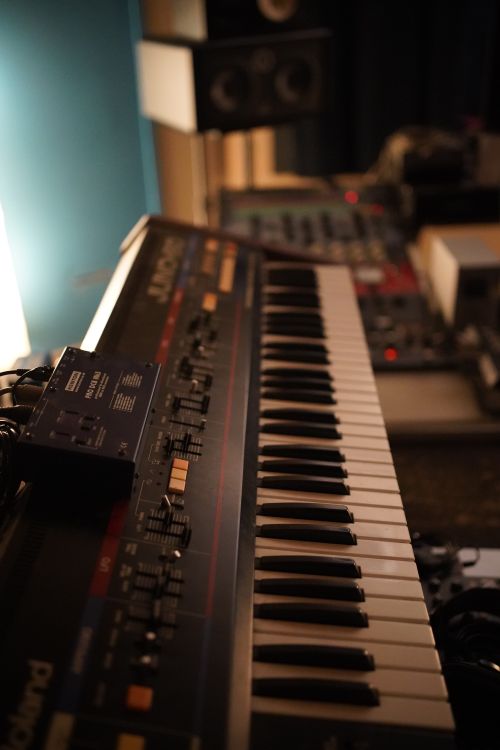
The song itself was written and produced by Lynne, as almost everything ELO recorded was, and its creation story is, fittingly, a story about a machine. In the notes for the 2001 remaster of Discovery, Lynne recalled that he had just got hold of the very latest synthesizer, the Yamaha CS-80, and that the song was based entirely on the sound it made. That is a revealing admission, because it tells you how Lynne worked: he did not write a song and then look for a sound to dress it in. He heard a sound and built a song around it. The CS-80, a large, expressive polyphonic synthesizer, gave “Confusion” its distinctive voice: warm, slightly mournful, with a human quality that most synthesizers of the era did not have. Over it, Lynne layered a 12-string acoustic guitar, which gave the track its folk-rock shimmer, and a vocoder, which bent his voice into something part-human and part-machine. He sang the lead in a near-falsetto, a high, exposed vocal that made the song’s subject — a person whose thoughts will not sit still — feel personal rather than theatrical. At three minutes and forty-two seconds, it was the shortest track on the album, and one of its most concentrated: every sound in it earns its place, and nothing is wasted.
The recording, made at Musicland Studios in Munich in the spring of 1979, captured a band learning to be smaller without sounding small. The original album liner notes credit Lynne with lead and backing vocals, lead and rhythm guitars, piano and synthesizer; Bevan with drums and backing vocals; Tandy with piano, synthesizer, Wurlitzer electric piano and clavinet; and Groucutt with bass and backing vocals, with Lynne handling the orchestral and choral arrangements. There were no string players in the room in the old sense, though the departed trio did reappear in the album’s music videos, a nod to the band’s past that the new sound had left behind. The result, on “Confusion,” is a record that sounds spacious rather than empty: the synthesizer carries the weight that strings once carried, the 12-string guitar sparkles at the edges, and the rhythm section — Bevan’s steady drumming, Groucutt’s melodic bass — keeps the whole thing moving forward at a walking pace, as if the song itself were trying to find its way somewhere. It is a production of great polish, and that polish is the point. Lynne had always been a producer as much as a songwriter, and on Discovery he proved that a band could lose its orchestra and still sound unmistakably like itself, as long as the melodies were strong enough and the studio craft was careful enough.
The single’s release story is where things get interesting, because “Confusion” behaved differently on different sides of the Atlantic, and that difference tells you something about how ELO’s audience worked in 1979. In Britain, it was released as a double A-side with “Last Train to London,” and it reached number eight on the UK Singles Chart — the fourth consecutive top ten single taken from Discovery, after “Shine a Little Love,” “The Diary of Horace Wimp” and “Don’t Bring Me Down.” It was the first time the band had ever taken four top ten singles from a single album, and it confirmed Discovery as the most commercially successful record of their career to that point. In the United States, the song was released as a single on October 8, 1979, with “Poker” on the B-side, and it became a more modest hit, reaching number 37 on the Billboard Hot 100. It entered the Hot 100 in the chart dated October 20, 1979, at number 75, climbed to its peak of 37 in the issues dated November 17 and November 24, and spent eight weeks on the chart in total, with two of those weeks inside the top forty. It also reached number 41 on Billboard’s Adult Contemporary chart and number 47 on the Cash Box Top 100. Elsewhere it travelled well: number five in Austria, number six in Germany, number nine in Ireland, number ten in South Africa, number nineteen in New Zealand and number twenty in Canada. It was, in short, a worldwide hit that stopped just short of being a big American hit — and that near-miss is part of its story, because ELO, for all their British success, never quite conquered America the way they conquered Britain.
The contemporary reviews, tellingly, heard exactly what Lynne had intended. Billboard rated “Confusion” a “superbly crafted single,” describing it as a mid-tempo rock track that mixed a Beatlesque sound with a hint of disco. Cash Box called it a bubbly Lynne concoction, mixing glossy pop melody with alternately grandiose and circus-like keyboard fills, and praised its hook and craftsmanship. Record World called it a mellifluous pop disc with everpresent falsetto vocals and keyboard gymnastics. None of those reviews treated the song as a novelty or a throwaway. They heard a songwriter at the top of his craft, using new technology not to show off but to serve a melody — and they heard, in the falsetto and the synthesizer, a band that had found a new way to sound like itself without repeating itself. That was no small achievement in 1979, a year when disco was already beginning to curdle into backlash in America, and when a band associated with orchestral excess could easily have sounded out of step. “Confusion” sounded, instead, like the future arriving quietly, in a mid-tempo ballad, while everyone else was shouting about it.
The song’s afterlife has been quieter than that of its album-mates, which suits it. “Don’t Bring Me Down” became the band’s signature rocker, and “Last Train to London” became a disco-era staple, but “Confusion” became something else: the track that fans and critics reach for when they want to explain what Discovery really was — not just a disco detour, but a record about a songwriter discovering what his songs sounded like without an orchestra behind them. It has lived on through compilations, radio play and anniversary pieces about the album, and through the 2001 remaster notes that preserved Lynne’s CS-80 story for a new generation of listeners. It was not, notably, part of the set when Jeff Lynne’s ELO returned to Wembley Stadium in June 2017 for the Wembley or Bust concerts; that night’s Discovery representation came from “Last Train to London” and “Shine a Little Love,” and “Confusion” stayed on the shelf, as it often has. That absence is, in its way, a tribute to the song’s character. It was never a stadium song. It was a headphone song, a late-night song, a song for the moment when the party is over and the thoughts you have been dancing away from come back and ask to be heard.
There is a final pleasure in the story, and it belongs to the title itself. “Confusion” is, as one critic later put it, one of the least confusing songs about being confused ever written — and that is precisely why it works. The lyric does not try to resolve the feeling it describes. It does not offer advice, or a happy ending, or a clever twist. It simply lets the feeling sit there, in the open, carried by a synthesizer that sounds like it understands, and a voice that sounds like it has been there. Lynne built the whole song out of a single new sound, and the sound turned out to be the right one for the subject: warm, uncertain, beautiful, and slightly out of reach, like a thought you can almost hold onto. It is a small miracle of pop songwriting that a song about not knowing what you feel can make the listener feel so completely understood.
That is why “Confusion” still works, more than forty-five years later, for listeners who have never been to Munich and never will. It is not ELO’s biggest hit, and it is not their most famous song. It is the one that tells the truth about what the band became in 1979: smaller, stranger, more modern, and still, unmistakably, themselves. The strings were gone. The spaceship had landed, and it had cost them money. What was left was four men, a new synthesizer, and a melody about a mind that would not settle — and that, it turned out, was more than enough. A note of caution for the unwary: this is not Genesis’s “Land of Confusion,” the 1986 hit by a different band about a different kind of confusion altogether. This is ELO’s “Confusion,” a quieter, sadder, more personal song, and it deserves to be heard on its own terms, without the other song’s shadow falling across it.
Watch the video below and listen for the moment the synthesizer first breathes over the groove. It is the sound of a band that had lost its orchestra and found something else instead — and of a songwriter who, handed the newest machine in the world, used it to write about the oldest feeling there is: not knowing, quite, where you stand.