Bobby Darin / Behind the Songs
Queen of the Hop: Proving the First Hit Wasn’t Luck
The second single nobody remembers writing — but everybody remembers dancing to.

The record in context
“Splish Splash” had exploded in the summer of 1958, and Bobby Darin was suddenly the hottest new voice in rock and roll. But in the music business, the first hit is the easy part — everybody gets one lucky afternoon. The real test is the follow-up. Record companies, radio DJs and a public with very short memories were all asking the same question by autumn: was this kid a singer or a stunt? “Queen of the Hop,” the 1958 follow-up rocker, was Darin’s answer.
The record doubled down on everything that had worked the first time: the driving backbeat, the honking sax, the sense of a party you were invited to. But where “Splish Splash” was a novelty, “Queen of the Hop” was a dance record — a song built for the sock-hop crowds Darin was now playing to. It was released while the first hit was still warm on the charts, and it did its job: it kept Bobby Darin on the radio, in the jukeboxes and on the road. He was no longer a fifteen-minute miracle. He was a working rock-and-roll star, and he was proving it the hardest way — one record at a time.
The pressure was enormous. In 1958 the industry was littered with one-hit wonders — names the summer had loved and the autumn had forgotten. Darin knew that better than anyone: his Decca years had taught him how quickly the phone stops ringing. “Queen of the Hop” was released into that anxiety, and it answered it. The record kept him in the charts, on the package tours, and — crucially — in the studio with the leverage to keep making records his way. Without it, there is no “Dream Lover,” no “That’s All,” no “Mack the Knife.” The second hit is the one that makes a career possible; everything after it is built on its shoulders.
Listen closely
Start with the title phrase and the way Darin delivers it: there is a boast in it, a teenage swagger. He is not just singing about the queen of the hop; he is singing like the king of it. Listen for the confidence. This is a different singer from the kid who laughed through “Splish Splash” — or rather, it is the same kid a few months later, with a hit under his belt and something to prove. The vocal has more muscle now. He pushes harder on the choruses, and the band pushes right back.
Pay attention to the rhythm section, because this record is really about movement. The beat is built for dancing — for the hop itself — and everything in the arrangement serves the feet. The sax punctuates, the drums drive, and Darin rides it all like a jockey. Listen for the little stops and starts, the moments where the band pulls back and lets him have the floor alone before crashing back in. That call-and-response tension is what makes a dance record feel alive instead of mechanical: it is a band and a singer showing off for each other, and for you.
Listen, too, for the arrangement’s economy. Nothing on “Queen of the Hop” is wasted: the intro is short, the verses are tight, and the whole record is over before you can catch your breath. That brevity is a form of confidence — the band knows it has you, so it does not need to beg. Notice the sax breaks, punchy and brief, like exclamation marks. And notice how Darin’s voice sits right on top of the beat, never behind it: he is not chasing the song, he is leading it. That command of the rhythm is what separates a singer from a passenger, and it is audible in every bar.
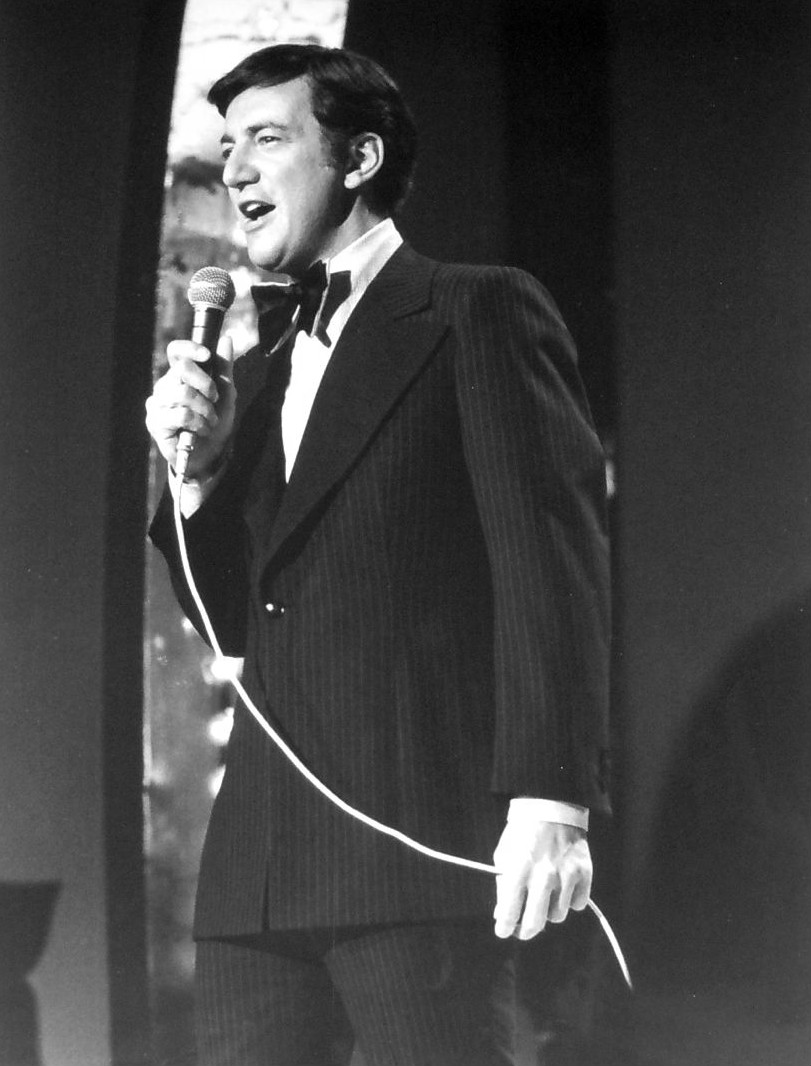
And then listen for what the record quietly tells you about its singer. “Queen of the Hop” is not a deep song — it never pretends to be. But it is a sure song. The phrasing is sharp, the timing is exact, and nothing is wasted. History mostly remembers Darin for the standards and the Grammy glory that came later, but this record is the hinge: it is the sound of a novelty-hit kid becoming a professional. If “Splish Splash” was the lucky afternoon, “Queen of the Hop” was the proof of work. Listen for the craft underneath the party — it is the first hint of the singer who would, within a year, conquer an entirely different world of music.
Release and recording reference ↗
Release context is sourced above. Listening observations are Past Tunes’ original interpretation, not quotations from the artist.
More from Bobby Darin
A dare, a bath line from a DJ’s mother, and a fifteen-minute miracle.
1959 / Behind the SongsDream Lover: The Song That Bought Him His FreedomThe million-seller that won him creative control.
1959 / Behind the SongsMack the Knife: The Song He Didn’t Want to ReleaseThe nine-week number one that made him a Grammy winner overnight.
1960 / Behind the SongsBeyond the Sea: Sailing After the Biggest Hit of 1959How you follow the best-selling record of the year: with style.
1960 / Behind the SongsClementine: A Folk Song, a Novelty Record, a HitThe playful folk novelty that showed he never took himself too seriously.
1962 / Behind the SongsThings: The Bossa-Nova Heartbreak He Wrote HimselfThe self-penned heartbreak with a swaying Latin pulse.
1963 / Behind the SongsYou’re the Reason I’m Living: The Country TurnThe country ballad that revealed his Nashville heart.
1966 / Behind the SongsIf I Were a Carpenter: The 1966 ReinventionTuxedo off, denim on — the folk-rock rebirth of Bobby Darin.
1969 / Behind the SongsSimple Song of Freedom: The Protest YearsWhen the showman became a voice of conscience.