Artist collection / Rock and Roll · Swing · Folk
Bobby Darin
He sang like the clock was running out — because, for him, it was.
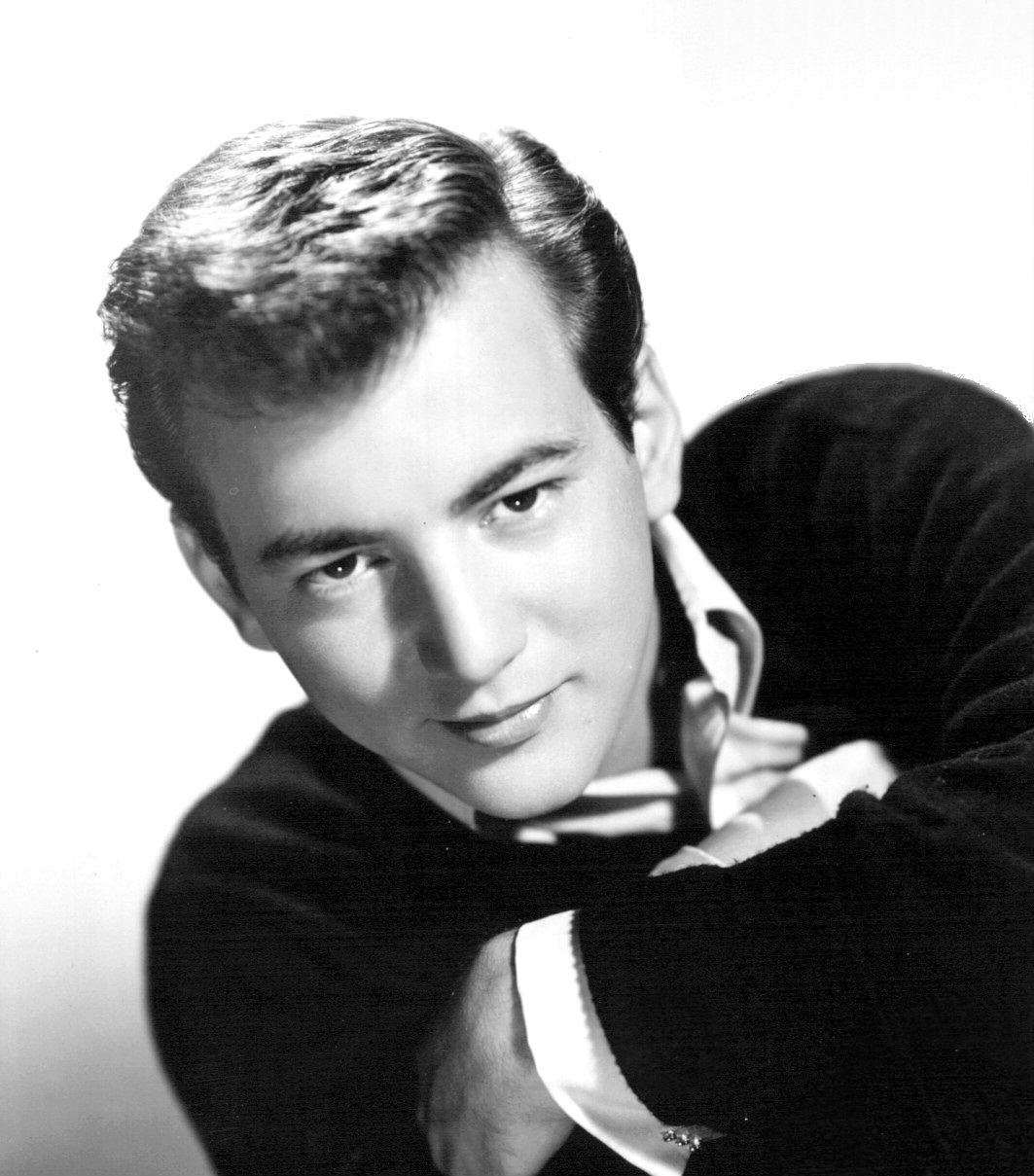
A life lived at double speed
Bobby Darin was born Walden Robert Cassotto on May 14, 1936, in the Bronx, New York City, into an Italian-American family of modest means. He grew up believing his grandmother was his mother and his real mother was his sister — a family secret he did not learn the truth of until adulthood. Childhood rheumatic fever left his heart permanently damaged, and doctors made it plain that his time was likely short. Darin lived the rest of his life as if they were right. The urgency that made him a star was not an act; it was his daily condition.
After a string of failed singles for Decca, Darin found a home at ATCO, the Atlantic subsidiary, under Ahmet Ertegun. On April 10, 1958, he walked into the studio and, on a dare from disc jockey Murray Kaufman, wrote a novelty rocker in about fifteen minutes around a line Kaufman’s mother Jean had tossed off: “Splish, splash, I was taking a bath.” Released that June, “Splish Splash” hit number three on the Billboard Hot 100, topped the R&B chart and sold a million copies. The twenty-two-year-old nobody was suddenly somebody — and he had written his own ticket.
The rock-and-roll hits kept coming: the 1958 follow-up “Queen of the Hop” proved the first one was not luck, and the self-penned “Dream Lover” of March 1959 — a Latin- and calypso-flavoured ballad — reached number two in America, number one in Britain for four weeks, and sold another million. That success bought Darin something few young stars got: creative control. He spent it immediately and audaciously. Late in 1958, on the advice of his publicist Harriet Wasser, he recorded “That’s All,” a full album of standards — at a moment when rockers were expected to keep rocking.

The gamble paid off beyond anyone’s imagining. “Mack the Knife,” his swaggering take on Kurt Weill and Bertolt Brecht’s murder ballad from the 1928 Threepenny Opera, was released as a single in August 1959 against his wishes — and became the biggest-selling record of 1959, nine weeks at number one, two million copies. At the second Grammy Awards in 1960 it won Record of the Year and made him Best New Artist. He had jumped from teenage rock to big-band swing in a single leap, and landed perfectly.
The next chapter brought a run of elegant, varied hits: the breezy “Beyond the Sea” (1960), the folk novelty “Clementine” (1960), the self-written “Things” (1962), and the country turn “You’re the Reason I’m Living” (1963). He married actress Sandra Dee in 1960 — America’s golden couple — and conquered Hollywood too, earning an Oscar nomination for Captain Newman, M.D. in 1963. Then, just as it seemed the machine would roll on forever, Darin tore it up again: in 1966 he traded the tuxedo for denim and reinvention, cutting Tim Hardin’s folk-rock “If I Were a Carpenter” and climbing to number eight, then moving into the protest era with Hardin’s “Simple Song of Freedom” in 1969.
Darin died on December 20, 1973, at only 37, hours after open-heart surgery at Cedars-Sinai — a body finally undone by the same damaged heart he had outrun for a lifetime, following complications that set in after a dental procedure. The tributes that followed kept returning to the same image: a man who treated every performance like it might be the last, because he knew it might be. This collection follows the records he made in that hurry — ten listening stories across rock, swing, folk and protest. Listen for the speed, the swing and the tenderness. You will hear a man singing like he means every word, because he did.
Follow the years
Ten stories to start with
A dare, a bath line from a DJ’s mother, and a fifteen-minute miracle.
02 / 1958 / Behind the SongsQueen of the Hop: Proving the First Hit Wasn’t LuckThe high-pressure second single that kept the rock dream alive.
03 / 1959 / Behind the SongsDream Lover: The Song That Bought Him His FreedomThe million-seller that won him creative control.
04 / 1959 / Behind the SongsMack the Knife: The Song He Didn’t Want to ReleaseThe nine-week number one that made him a Grammy winner overnight.
05 / 1960 / Behind the SongsBeyond the Sea: Sailing After the Biggest Hit of 1959How you follow the best-selling record of the year: with style.
06 / 1960 / Behind the SongsClementine: A Folk Song, a Novelty Record, a HitThe playful folk novelty that showed he never took himself too seriously.
07 / 1962 / Behind the SongsThings: The Bossa-Nova Heartbreak He Wrote HimselfThe self-penned heartbreak with a swaying Latin pulse.
08 / 1963 / Behind the SongsYou’re the Reason I’m Living: The Country TurnThe country ballad that revealed his Nashville heart.
09 / 1966 / Behind the SongsIf I Were a Carpenter: The 1966 ReinventionTuxedo off, denim on — the folk-rock rebirth of Bobby Darin.
10 / 1969 / Behind the SongsSimple Song of Freedom: The Protest YearsWhen the showman became a voice of conscience.
Artist biography / authoritative profile ↗
Discography and recording context ↗
Past Tunes’ listening notes are original editorial interpretation. Release years refer to the particular album or recording identified in each article.