Bobby Darin / Behind the Songs
Beyond the Sea: Sailing After the Biggest Hit of 1959
A French chanson becomes an American standard — the cool, swinging follow-up to “Mack the Knife.”

The record in context
How do you follow the biggest-selling record of 1959? After “Mack the Knife” spent nine weeks at number one, won Record of the Year and made Bobby Darin a Grammy-winning Best New Artist, anything he released next would be measured against a phenomenon. Darin’s answer, in 1960, was elegance: “Beyond the Sea,” his English-language adaptation of Charles Trenet’s beloved French chanson “La Mer,” swung with a full orchestra and climbed to number six on the American chart.
It was a perfect strategic choice and a perfect artistic one. Strategically, it confirmed that the “Mack the Knife” transformation was no fluke — Darin really was a big-band singer now, comfortable in a tuxedo, commanding an orchestra. Artistically, it showed his range within that new world. Where “Mack the Knife” was swagger and menace, “Beyond the Sea” was romance and longing: a sailor’s daydream of the woman waiting on the shore. The record cemented the second act of his career. The rock-and-roll kid had become, in barely two years, one of America’s great pop stylists.
The song’s journey to Darin began in France. Charles Trenet had written “La Mer” in 1943, and it had become one of the great French chansons — a song the French knew the way Americans knew “White Christmas.” Darin’s English adaptation kept the melody’s rolling, wave-like motion and gave it an American romantic lyric, and the transformation was seamless. In choosing it, he was doing something quietly radical: treating a foreign-language art song as American pop material. It was the act of a singer who thought of himself as a citizen of world music, not just the charts.
Listen closely
Start with the orchestra, because this record belongs to the band as much as to the singer. Listen for the strings and brass moving like water — the arrangement swells and recedes in waves, and the whole recording seems to rock gently, as if the studio itself were at sea. It is a gorgeous piece of big-band painting: you can practically feel the tide in the brass swells. Darin, to his credit, does not try to out-sing it. He rides it. Listen for the discipline in the vocal — he places every phrase with a jazz singer’s precision, letting the orchestra do the surging while he stays cool at the centre.
Then listen for the longing. This is a song about distance — about someone far away, across the water — and Darin colours the performance with a kind of ache he had never shown on the rock records. Notice the tenderness in the quieter passages, the way his voice softens when the lyric turns to the waiting lover. There is real yearning here, and it is not acted; you believe him. That was the revelation of Darin’s standards period: beneath the finger-snapping showman was a romantic who meant every word. Listen for the moments when the cool surface cracks just slightly — they are the most moving seconds on the record.
Listen for the ending, because it is perfect. After all the orchestral surging, the record does not crash to a close — it settles, like a tide going out. Darin’s final phrases are soft, satisfied, almost whispered, and the orchestra recedes with him. Notice the discipline that takes: a lesser singer would have ended with a roar, a high note, a show of force. Darin ends with a sigh. It is the most confident choice on the record — the sound of a man who knows he has already won you, and does not need to prove it twice. Listen for that last breath of strings. It is the whole performance in miniature: power, held in reserve.
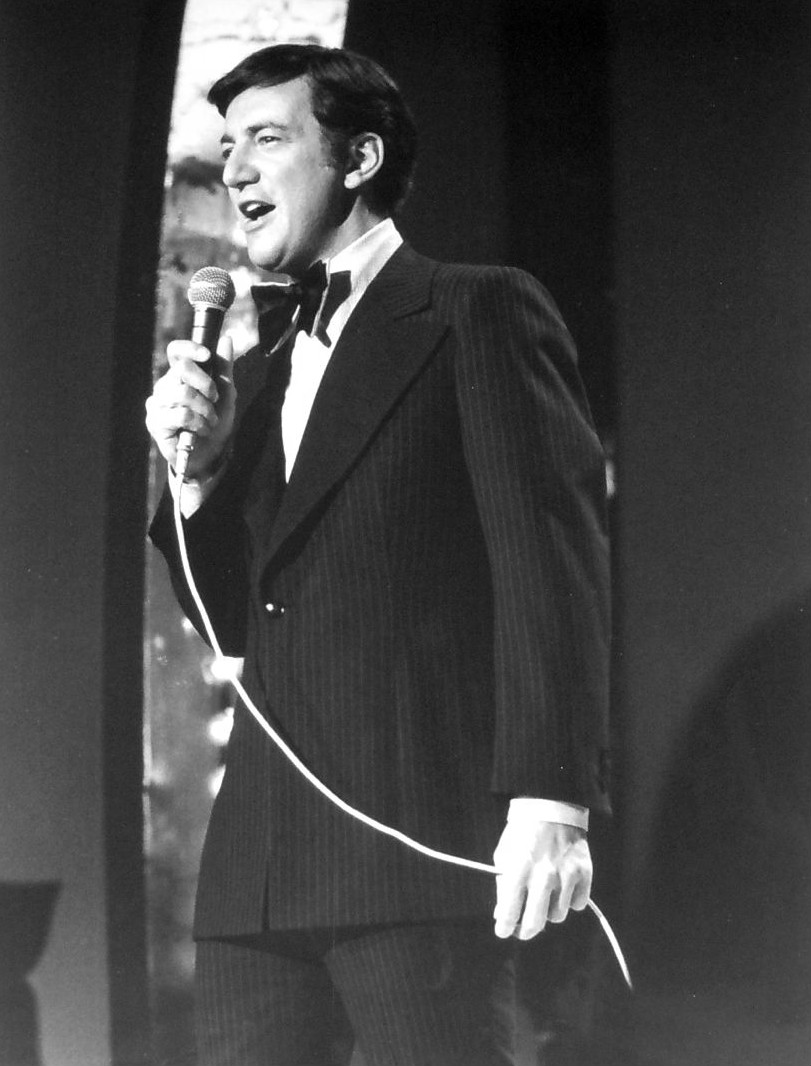
Finally, listen for the confidence of a man at the absolute peak of his powers. “Beyond the Sea” is not trying to be “Mack the Knife” — it is not a sequel, it is a statement of range. Listen for how completely at home Darin sounds in this idiom, as if he had been singing with big bands his whole life instead of for eighteen months. The phrasing is immaculate, the dynamics are exact, and the ending lands with a soft, satisfied sigh rather than a roar. He had nothing left to prove after 1959, and you can hear it: this is a singer enjoying his own mastery. The sea, the strings, the voice — everything is in its place, and the place is lovely.
Release and recording reference ↗
Release context is sourced above. Listening observations are Past Tunes’ original interpretation, not quotations from the artist.
More from Bobby Darin
A dare, a bath line from a DJ’s mother, and a fifteen-minute miracle.
1958 / Behind the SongsQueen of the Hop: Proving the First Hit Wasn’t LuckThe high-pressure second single that kept the rock dream alive.
1959 / Behind the SongsDream Lover: The Song That Bought Him His FreedomThe million-seller that won him creative control.
1959 / Behind the SongsMack the Knife: The Song He Didn’t Want to ReleaseThe nine-week number one that made him a Grammy winner overnight.
1960 / Behind the SongsClementine: A Folk Song, a Novelty Record, a HitThe playful folk novelty that showed he never took himself too seriously.
1962 / Behind the SongsThings: The Bossa-Nova Heartbreak He Wrote HimselfThe self-penned heartbreak with a swaying Latin pulse.
1963 / Behind the SongsYou’re the Reason I’m Living: The Country TurnThe country ballad that revealed his Nashville heart.
1966 / Behind the SongsIf I Were a Carpenter: The 1966 ReinventionTuxedo off, denim on — the folk-rock rebirth of Bobby Darin.
1969 / Behind the SongsSimple Song of Freedom: The Protest YearsWhen the showman became a voice of conscience.