Patsy Cline / Behind the Songs
I Fall to Pieces: The Hit She Almost Refused
She thought it was too slow, too sad, too much like everything she was tired of singing. It became her first No. 1.
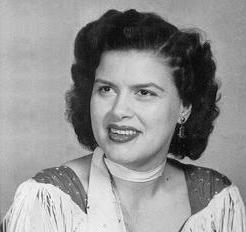
The record in context
By 1960, Patsy Cline’s career was stalled. “Walkin’ After Midnight” was three years behind her, Four Star Records had spent the interval feeding her material she didn’t believe in, and her contract was nearing its end. Then producer Owen Bradley took charge of her sessions and began building what would be called the Nashville Sound around her: pop-smooth arrangements, strings, background vocals, and Cline’s contralto placed unmistakably in front.
The song that broke the drought was “I Fall to Pieces,” written by Hank Cochran and Harlan Howard. Cline initially resisted it — she wanted uptempo material, and this was a slow ballad of the kind she’d grown tired of. Bradley and the songwriters persisted, and she relented. Released in early 1961 on Decca, the single climbed to No. 1 on the Billboard country chart — her first chart-topper — and crossed to No. 12 on the pop chart. It was the record that announced the new Patsy Cline: no longer a honky-tonk singer chasing hits, but an interpretive artist with a signature sound.
Listen closely
The opening is all patience: a gentle guitar figure, the soft cushion of background vocals, and then Cline’s voice entering at conversational volume, as if she’s telling you something she can barely bring herself to say. The lyric is a study in composure collapsing — “I fall to pieces each time I see you again” — and the performance mirrors it exactly. She holds the first verses together; by the bridge, the control starts to slip in the most controlled way imaginable.
Listen for the Nashville Sound architecture that Bradley built here. The strings don’t swell theatrically; they hover. The Jordanaires murmur behind her like a memory. Everything is designed to leave space for the voice, and Cline fills that space with micro-decisions: a slight catch before “pieces,” a lengthened vowel on “again,” a final chorus where she lets the vibrato widen just enough to suggest the tears the lyric describes. Nothing is oversung. That was the revelation — a country singer who could break your heart at half volume.

There’s a particular irony worth sitting with: Cline resisted this song because she thought slow ballads were her trap, and she was right that ballads would define her — but wrong that it was a trap. “I Fall to Pieces” didn’t limit her; it liberated her from the novelty-chasing of the Four Star years and gave her the template for “Crazy” and “She’s Got You.” The songs she fought hardest against became the monuments. Perhaps she knew something the rest of us didn’t: that singing heartbreak this well, this often, takes a toll. Or perhaps she just wanted to dance a little. Either way, the record endures because the reluctance is nowhere in it — only the mastery.
Play it after “Walkin’ After Midnight” and you hear four years of artistic growth in under six minutes of music: from a talented singer with a hit to a great singer with a sound.
Artist biography and discography reference ↗
Release context is sourced above. Listening observations are Past Tunes’ original interpretation, not quotations from the artist.
More from Patsy Cline
A reluctant recording, a TV talent show, and the accident that made her a star.
1957 / Behind the SongsA Poor Man’s Roses: The Song She Chose Over the HitThe B-side she actually wanted to sing — and the tug-of-war behind it.
1961 / Behind the SongsCrazy: The One-Take Vocal She Recorded on CrutchesBroken ribs, a borrowed Willie Nelson demo, and one perfect take.
1962 / Behind the SongsShe’s Got You: Heartbreak Worn Like Evening WearHank Cochran’s song of dignified jealousy, sung without a crack.
1962 / Behind the SongsSo Wrong: The Uptempo HeartbreakProof she could swing a sad song without slowing it down.
1963 / Behind the SongsSweet Dreams: Twenty-Eight Days Before the EndHer final session produced the elegy she never heard on the radio.
1963 / Behind the SongsFaded Love: Borrowing a Western Swing StandardA Bob Wills classic, remade in the Nashville Sound image.
1963 / Behind the SongsLeavin’ on Your Mind: The Posthumous GoodbyeReleased after her death, a farewell she didn’t know she was singing.
1963 / Behind the SongsBack in Baby’s Arms: Tenderness at Full StrengthThe gentlest record of her final year — no heartbreak required.