Patsy Cline / Behind the Songs
Sweet Dreams: Twenty-Eight Days Before the End
She recorded it on February 5, 1963. She died on March 5. She never heard it on the radio.

The record in context
“Sweet Dreams” was written by Don Gibson — the Nashville songwriter known as the “Sad Poet,” who also wrote “I Can’t Stop Loving You” — and first recorded by Gibson himself in the mid-1950s. By 1963 it was a country standard. Patsy Cline cut her version on February 5, 1963, at Bradley Studios in Nashville, in one of her final recording sessions, with producer Owen Bradley wrapping her voice in lush strings.
Twenty-eight days later, on March 5, 1963, Cline was killed in a plane crash near Camden, Tennessee. Decca released “Sweet Dreams” posthumously that April. It reached No. 5 on the Billboard country chart, No. 44 on the pop chart, and No. 15 on the Adult Contemporary chart — a major hit by a singer who never heard it played back on the radio. The story passed down from that February session is that Cline held up a copy of her first record beside the new one and said, “Well, here it is: the first and the last.”
Listen closely
Knowing the date changes everything about how you hear this record — and the challenge is to hear it as music first, elegy second. Start with the vocal: it is Cline at absolute peak control. The long, arching lines of the chorus (“sweet dreams of you”) are sustained with a steadiness that makes the emotion feel inevitable rather than performed. The strings that Bradley added — the ones she reportedly half-feared were making her “too pop” — don’t sweeten the song so much as widen its frame, giving her loneliness a cathedral to echo in.
Listen for the way she sings the word “dreams.” She doesn’t float it; she leans into it, giving the vowel a slight ache that suggests she’s not dreaming sweetly at all. The entire performance is a study in the gap between the title’s promise and the lyric’s reality — sweet dreams that are really just the mind replaying what it lost. Cline understood that gap completely, and she sings from inside it.
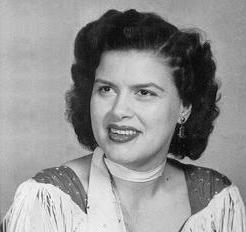
It is impossible, and perhaps wrong, to separate the record from its aftermath — but try, for one listen, to hear it as Cline heard it: a new single, a Gibson standard, another Bradley production, one more step in a career that was still ascending. She was thirty, at the height of her vocal powers, planning an album. The tragedy is not in the recording; the recording is flawless. The tragedy is that we know what she didn’t: that this was the last one. Every posthumous hit carries that weight, but “Sweet Dreams” carries it in the title too, which is almost unbearable — and which is why, sixty years later, it still stops rooms.
Play it after “Crazy” and hear how far the Nashville Sound had come in eighteen months: from the intimate jazz-club hush of the Quonset Hut to this widescreen, string-laden farewell. Both are Cline. Both are perfect. This one just happens to be the last word.
Artist biography and discography reference ↗
Release context is sourced above. Listening observations are Past Tunes’ original interpretation, not quotations from the artist.
More from Patsy Cline
A reluctant recording, a TV talent show, and the accident that made her a star.
1957 / Behind the SongsA Poor Man’s Roses: The Song She Chose Over the HitThe B-side she actually wanted to sing — and the tug-of-war behind it.
1961 / Behind the SongsI Fall to Pieces: The Hit She Almost RefusedShe didn’t want the song. Then it became her first No. 1.
1961 / Behind the SongsCrazy: The One-Take Vocal She Recorded on CrutchesBroken ribs, a borrowed Willie Nelson demo, and one perfect take.
1962 / Behind the SongsShe’s Got You: Heartbreak Worn Like Evening WearHank Cochran’s song of dignified jealousy, sung without a crack.
1962 / Behind the SongsSo Wrong: The Uptempo HeartbreakProof she could swing a sad song without slowing it down.
1963 / Behind the SongsFaded Love: Borrowing a Western Swing StandardA Bob Wills classic, remade in the Nashville Sound image.
1963 / Behind the SongsLeavin’ on Your Mind: The Posthumous GoodbyeReleased after her death, a farewell she didn’t know she was singing.
1963 / Behind the SongsBack in Baby’s Arms: Tenderness at Full StrengthThe gentlest record of her final year — no heartbreak required.